

Automotive
The Best Cargo Liners: 4 Compared (and One to Skip)
We compared four SUV cargo liners on spill containment, fit accuracy, wall coverage, grip and long-term durability from owner reports.
The short version
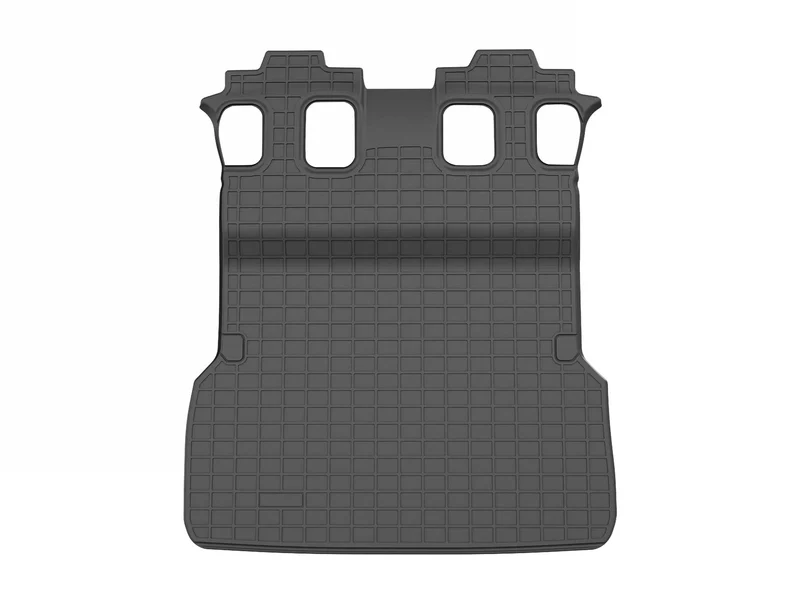
Buy the WeatherTech Cargo/Trunk Liner if you regularly haul anything wet, muddy or living. It has a tall containment lip and a scanned vehicle-specific fit. The Husky Liners WeatherBeater Cargo Liner is the value pick: lower walls, but a softer surface, a warranty, and a lower price. The 3D MAXpider Kagu is the one to pick if looks and weight matter more than containment depth, since its low-profile edges handle drips but not a spilled jug. Skip universal trim-to-fit mats like the Motor Trend FlexTough, which are flat, gap-prone once cut, and let spills run onto the carpet. Best for: anyone who wants their cargo floor to hold up to dogs, snow, groceries and garden runs.
Our picks at a glance
- WeatherTech Cargo/Trunk Liner - Buy. Tall walls and a scanned vehicle-specific fit, which is what you want when a gallon of paint tips over.
- Husky Liners WeatherBeater Cargo Liner - Buy. Softer, friendlier material and a warranty for less money, with lower walls as the tradeoff.
- 3D MAXpider Kagu Cargo Liner - It depends. The best-looking and lightest liner here, but the low-profile design trades away containment depth.
- Motor Trend FlexTough Universal Cargo Liner - Skip. A trimmable rubber mat that costs little and protects about as much as that suggests.
The verdict in 30 seconds
What mattered most
- Fit type
- Raised lip height
- Seat-back and wheel-well coverage
- Material feel
- Weight and handling
- Warranty
A cargo liner only earns its keep the day something leaks. That means the things worth comparing are lip height, how far the liner climbs the seat backs and wheel wells, whether the material stays put in the cold, and whether the fit is genuinely scanned for your vehicle or trimmed by you with scissors. Two of these four are easy recommendations, one is a style-first choice with a real tradeoff, and one is a mat pretending to be a liner.
Tall walls and a scanned vehicle-specific fit, which is what you want when a gallon of paint tips over.
Best for: Dog owners, contractors, garden-center regulars, and anyone in a snow or road-salt climate who wants maximum spill containment.
- Tall raised perimeter lip, so a tipped container stays contained instead of running into the carpet
- Laser-measured vehicle-specific fit that follows wheel wells and seat-back contours
- Rigid non-porous material that wipes or hoses clean
- Third-row-up and third-row-down versions are offered for many SUVs
- Premium-priced option in this group
- The stiff material can be awkward to wrestle out of a tight hatch, and owners report a shipping curl that settles over time
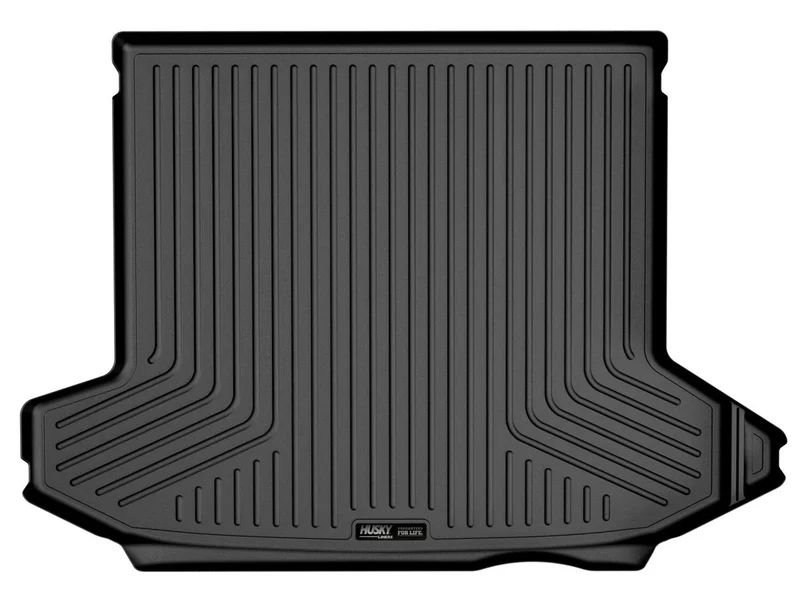
Softer, friendlier material and a warranty for less money, with lower walls as the tradeoff.
Best for: Daily-driver families who want real protection and a warranty, without paying the top-tier price.
- Priced below the premium liners while still being molded for your specific vehicle
- Softer TPO feels better to kneel on and load against, and owners report less edge curling over the years
- Backed by a manufacturer warranty; check the current terms on the maker's site
- Textured surface and nibbed underside help keep both the liner and the cargo from sliding around
- Lower perimeter lip than the premium option, so a large spill can reach the edge faster
- Variant availability differs by model, so check the exact application before ordering
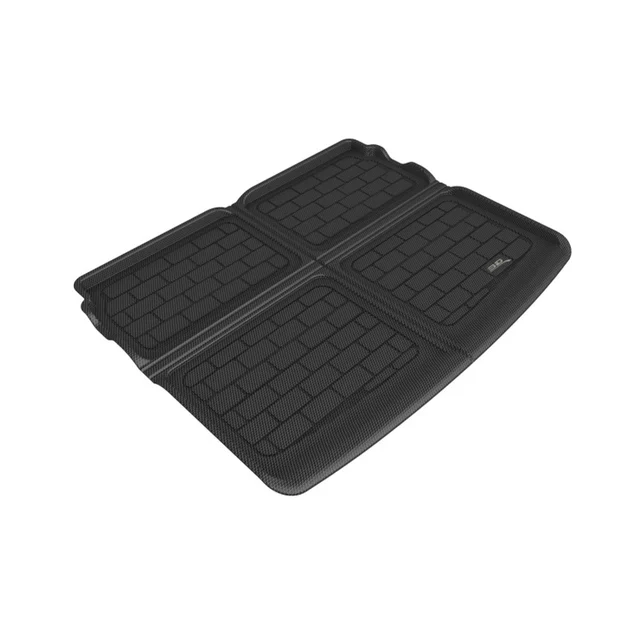
The best-looking and lightest liner here, but the low-profile design trades away containment depth.
Best for: Owners who care about how the cargo area looks and mostly haul dry gear, groceries and luggage.
- Multi-layer construction with a foam core makes it lighter than solid rubber liners
- Carbon-fiber-look textured surface reads as a factory accessory rather than an aftermarket tray
- Foam middle layer helps damp rattle and cargo noise compared with a bare load floor
- Anti-skid backing grips carpet without molded nibs
- Lower edges than the top two, so it handles drips and slush better than a knocked-over jug
- Reviewers note the firm surface can let smooth boxes and grocery bags slide more than a soft rubber mat would
- Color matching to a tan or grey interior is not always exact
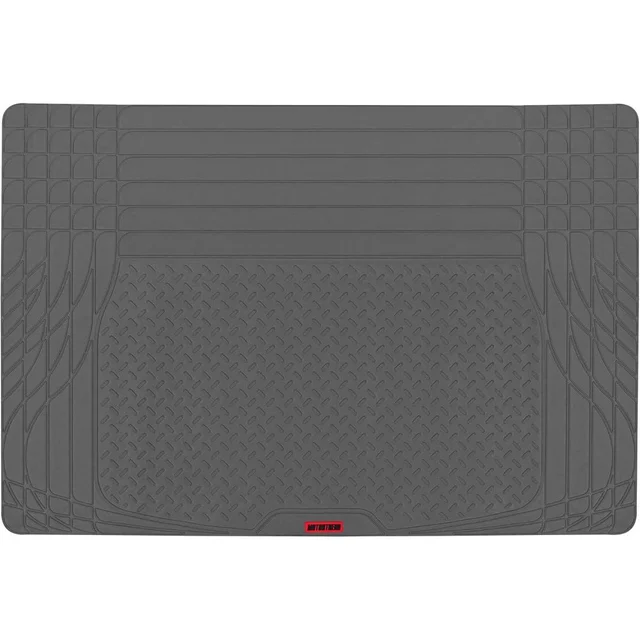
A trimmable rubber mat that costs little and protects about as much as that suggests.
Best for: A temporary stopgap in a lease return or a beater, not a real cargo liner.
- Low-cost way to stop groceries and tools from grinding into the factory carpet
- Universal fit helps if you change cars often or run a work fleet
- Rolls up and stores flat, and hoses off in seconds
- Essentially flat, so liquid can run off the edge into the carpet it was bought to protect
- Trimming to shape is permanent and one bad scissor cut leaves gaps at the wheel wells
- No coverage up the seat backs or side walls
- Owners report the rubber stiffens and the trimmed edges curl in cold weather
| Criteria | WeatherTech Cargo/Trunk Liner Top pick | Husky Liners WeatherBeater Cargo Liner | 3D MAXpider Kagu Cargo Liner | Motor Trend FlexTough Universal Cargo Liner |
|---|---|---|---|---|
| Verdict | Buy it | Buy it | It depends | Skip it |
| Best for | Dog owners, contractors, garden-center regulars, and anyone in a snow or road-salt climate who wants maximum spill containment. | Daily-driver families who want real protection and a warranty, without paying the top-tier price. | Owners who care about how the cargo area looks and mostly haul dry gear, groceries and luggage. | A temporary stopgap in a lease return or a beater, not a real cargo liner. |
| Price tier | $$ · premium | $ · mid-range | $$ · premium | $ · budget |
| Fit type | Vehicle-specific, laser measured | Vehicle-specific, molded | Vehicle-specific, laser cut | Universal, trim with scissors |
| Raised lip height | Tall | Moderate | Low profile | Essentially flat |
| Seat-back and wheel-well coverage | Full, with bumper-lip versions on some applications | Full on many applications | Full but shallow walls | None |
| Material feel | Rigid TPE, hoses clean | Softer TPO, pleasant to kneel on | Firm textured top over foam core | Soft trimmable rubber |
| Weight and handling | Heavier, stiff to remove | Heavy but flexible | Lighter | Light and rolls up |
| Warranty | Check maker terms | Check maker terms | Check maker terms | Check maker terms |
| Best use case | Wet, muddy, messy hauling | All-round family duty | Dry gear and good looks | Stopgap protection |
| Price tier | $$ · premium | $ · mid-range | $$ · premium | $ · budget |
Which one is right for you?
- Dog owners, contractors, garden-center regulars, and anyone in a snow or road-salt climate who wants maximum spill containment. Buy it WeatherTech Cargo/Trunk Liner
- Daily-driver families who want real protection and a warranty, without paying the top-tier price. Buy it Husky Liners WeatherBeater Cargo Liner
- Owners who care about how the cargo area looks and mostly haul dry gear, groceries and luggage. It depends 3D MAXpider Kagu Cargo Liner
- A temporary stopgap in a lease return or a beater, not a real cargo liner. Skip it Motor Trend FlexTough Universal Cargo Liner
How we judged the field
We do not run a lab. We read across brand fitment data and a large volume of owner reports, then look for the points where they agree. For cargo liners, four things separate the good from the merely present.
The first is containment. A liner’s whole reason to exist is that when a container tips over, the mess stays in the tray. That comes down to lip height and whether the walls actually climb the wheel wells and seat backs, or just stop at the load floor. The second is fit accuracy. Vehicle-specific, laser-measured liners follow the contours; universal mats leave gaps at exactly the corners where liquid heads. The third is material behavior over time. Non-porous thermoplastics do not absorb, but they differ in how stiff they get in cold weather and how much the edges curl after a few years. The fourth is grip, both under the liner so it does not shift, and on top so your cargo does not slide.
Price mattered too, but mostly as a question of whether the extra money buys extra protection or just extra brand.
This is the liner to reach for when the brief is “assume something will spill.” The raised perimeter is tall. The scanned fit is the other half of the story: the tray follows the wheel arches and rides up the seat backs, so there is no open channel for liquid to escape through. Several applications add a bumper-lip version that folds over the rear sill, which is the detail that saves your paint when you drag a bag of mulch out.
The material is rigid TPE. That rigidity is what holds the walls up under a sloshing load, and it is also the source of the two complaints owners raise: it is heavy, and in a tight hatch it can be a two-handed wrestle to lift out for cleaning. Newly shipped liners also hold a shipping curl for a day or two before they settle. Neither is a reason to buy something else if containment is your priority.
It is the premium-priced option in this comparison. You are paying for the walls and the fit. If you use them, it is fair value.
The WeatherBeater is the answer to “do I really need to spend that much?” For most families, no. It is still a molded, vehicle-specific liner with wheel-well coverage and a nibbed underside, and it lands well below the premium tier.
The material is a softer TPO, and owners are consistent about liking it. It is nicer to kneel on when you are reaching into the back, easier to flex out of the vehicle, and long-term reports show less edge curling than owners expected. Check the current warranty terms on Husky’s site, which matter for a part that lives under abrasive cargo.
The tradeoff is simple. The perimeter lip is lower. It handles snowmelt, wet dogs and dripping gear without complaint, but a knocked-over gallon jug has less room before it finds the edge. Variant availability differs by model, so verify your exact application rather than assuming coverage exists.
The Kagu is the one people buy partly because of how it looks, and there is nothing wrong with that. The three-layer build, a textured thermoplastic top over a cross-linked polyethylene foam core over an anti-skid backing, gives it two genuine advantages. It weighs less than a solid rubber tray, so lifting it out to clean is trivial. And the foam core deadens sound, which owners notice most on rough roads where a bare cargo floor drums.
The carbon-fiber-look surface reads as a factory-fitted accessory rather than an aftermarket tray, and the laser-cut fit is accurate. The anti-skid bottom holds without nibs, which is the safer choice on plush factory carpet.
The reason it is a “depends” rather than a “buy” is depth. The low-profile edges are lower than both picks above. That is fine for melting snow, drips and muddy boots. It is not what you want if you regularly carry open liquids or plants. Owners also note that the firm surface can be less grippy under smooth cardboard and grocery bags than a soft rubber mat. And color matching to tan or grey interiors is approximate rather than exact. Buy it for looks, light weight and quiet. Do not buy it expecting maximum containment.
This category exists for a reason: it is cheap, and cheap protection beats no protection. If you need something under the toolbox in a work truck tomorrow, this does that.
But it is not a cargo liner in the sense that matters. It is a flat trimmable rubber mat. There are no walls, so any liquid that lands on it runs to the edge and off, onto the carpet you bought it to protect. Fitting it means cutting it yourself along molded guide lines, and one imprecise cut leaves permanent gaps around the wheel wells. There is no seat-back or side-wall coverage at all, which is where a surprising amount of cargo mess ends up. Owners also report the rubber stiffening in cold weather and the cut edges curling up after a season or two.
If your budget genuinely tops out here, a mid-range molded liner on sale is worth waiting for. The gap in real protection is much larger than the gap in price.
WeatherTech Cargo/Trunk Liner vs Husky Liners WeatherBeater: which should you buy?
Both are molded, vehicle-specific and non-porous, and both carry a manufacturer warranty. The differences come down to three things.
Containment: WeatherTech wins. Its lip is taller, and on applications that offer the bumper-lip version, the coverage extends over the rear sill. If you have already had one spill soak into your carpet, this is the deciding factor and nothing else matters much.
Feel and handling: Husky wins. The softer TPO is more pleasant to lean and kneel on, easier to flex out of the vehicle for cleaning, and owners report fewer shape complaints than with rigid liners.
Price: Husky wins. For a household hauling groceries, sports bags, luggage and the occasional wet umbrella, the WeatherBeater covers the real-world cases and leaves money on the table.
The clean way to decide: if your cargo area regularly carries anything that can pour, buy the WeatherTech. If it mostly carries things that are damp at worst, buy the Husky and do not feel like you compromised.
What to look for
- Raised perimeter walls, not a flat edge. This is the single feature that separates a liner from a mat. Measure or check the spec rather than trusting a product photo taken at a flattering angle.
- Vehicle-specific fitment, entered by year, make, model and trim. Universal mats always leave the gaps that matter, at the wheel wells and rear sill.
- The right third-row variant. Three-row SUVs need either a third-row-up or third-row-down part. They are not interchangeable and they are usually not returnable once trimmed or used.
- Non-porous material. Anything carpet-faced will absorb and hold odor. Thermoplastic surfaces wipe or hose clean.
- Anti-skid backing. Nibs grip hard but can mark plush carpet. Nib-free textured backings are gentler and still hold on most factory surfaces.
- Bumper or sill coverage, if you load heavy or abrasive items. It protects the painted lip that gets scraped every time something slides out.
- A warranty you can actually use. Compare coverage terms on the maker’s site.
Our final take
Cargo liners are one of the few accessories where the expensive option is expensive for a measurable reason. The WeatherTech Cargo/Trunk Liner has tall walls and a scanned fit, and that is worth paying for if your cargo area sees dogs, snow, plants, paint or anything that can pour. It earns the top pick without much argument.
For most people, though, the Husky Liners WeatherBeater Cargo Liner is the smarter buy: solid protection for real-world messes, a nicer surface to live with, a warranty, and a price that leaves room in the budget for floor liners too. The 3D MAXpider Kagu is a legitimate choice if you want the cargo area to look sharp and stay quiet, as long as you accept shallower containment. And universal trim-to-fit mats like the Motor Trend FlexTough should be treated as temporary carpet covers, not protection. Buy the liner that matches the worst thing you actually haul, not the average thing.
Questions, answered
What is the difference between a cargo liner and a trunk mat?
A trunk mat is a flat piece of rubber or carpet that sits on the load floor. A cargo liner is a molded tray with raised perimeter walls that follows your vehicle's wheel wells and climbs the seat backs, so liquid pools inside it instead of running off the edge. If containment matters to you at all, you want a liner.
Do I need a third-row-specific version?
Yes, if you have a three-row SUV. Manufacturers sell separate parts for third row up (a small liner behind the last row) and third row down (a long liner covering the folded seats). Buying the wrong one leaves either a huge exposed gap or a liner that will not lie flat. Check the fitment selector carefully before ordering.
Will a cargo liner damage the factory carpet underneath?
Not normally. The bigger risk is trapping moisture. If something soaks the liner, pull it out and let both the liner and the carpet dry before putting it back. Liners with aggressive gripping nibs can leave faint impressions in plush carpet over time, which is one reason some brands use a nib-free anti-skid backing instead.
Are the expensive liners actually worth the extra money?
It depends on what you carry. If your cargo area sees groceries and luggage, a mid-range molded liner does the job and you keep the difference. If you carry dogs, wet sports gear, potted plants, paint or firewood, the taller walls and tighter fit of a premium liner pay for themselves the first time something tips over.
How do I clean a cargo liner?
Pull it out, shake off the loose debris, then hose it down and scrub with mild soap and a soft brush. Let it dry fully before reinstalling. Avoid oily protectant sprays: they make the surface slick, which is the last thing you want under a load of cargo.
Deciding between the top two? See our head-to-head: WeatherTech Cargo/Trunk Liner vs Husky Liners WeatherBeater Cargo Liner.
More Automotive reviews
 The Best Carpet and Upholstery Cleaners: 4 Compared
  The Best DIY Car Ceramic Coatings: 4 Compared (and One to Skip)
  The Best Car Detailing Clay: 4 Compared (and One to Skip)
  The Best Engine Compression Testers: 4 Compared (and One to Skip)
  The Best Dash Cams: Four Current Models Compared
  The Best Detail Brushes: 4 Compared (and One to Skip)