

Automotive
The Best Car Ramps: 4 Compared (and One to Skip)
We compared four current car service ramps on approach angle, lift height, rated axle capacity, tread width, and floor grip.
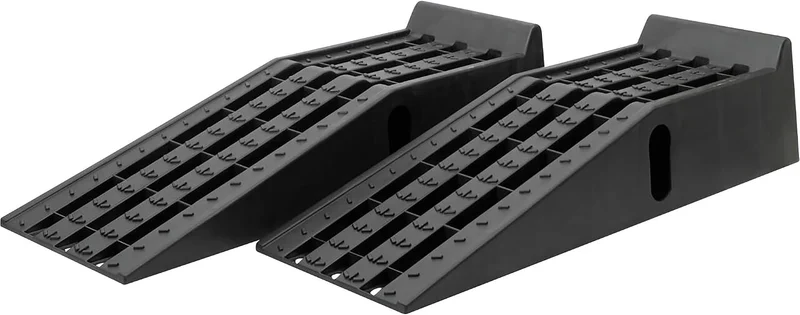
The short version
The Ironton Poly Car Ramp Set is the best pick for most people, with 8.5 inches of lift, a 12 inch tread, and a 12,000 lb GVW pair listing that leaves real headroom. If your car is low or lowered, buy the 56 inch Race Ramps instead: a 10.8 degree approach angle and 8 inches of lift on a 10 pound ramp, with the trade being a 3,000 lb per axle ceiling. The MaxxHaul 50516 is a jack access ramp rather than a service ramp, worth owning only if 2.5 inches of rise is all you need. The Big RED AGT16PR is marketed for under vehicle access but tops out at under four inches of lift, so skip it. Whatever you buy, check the pair rating against your axle weight rather than your vehicle weight, use level hard ground with the parking brake set and the other wheels chocked, and follow the manufacturer's instructions before you go underneath. Best for: DIY owners doing oil changes, underbody inspections, and exhaust or suspension work at home.
Our picks at a glance
- Ironton Poly Car Ramp Set, 12,000 lb. GVW - Buy. The set most DIY owners should buy: 8.5 inches of lift, a wide tread, and capacity headroom to spare.
- Race Ramps 56" Single Piece Race Ramps (RR-56) - Buy. A 10.8 degree approach angle and 8 inches of lift on a 10 pound ramp: the answer for low cars.
- MaxxHaul 50516 Low Profile Car Ramps - It depends. A shallow 9.05 degree jack access ramp, useful for lowered cars and misleading if you expected to work underneath.
- Big RED AGT16PR 3 Height Low Profile Car Ramps - Skip. Sold as an oil change ramp, but under four inches of lift makes it a leveling block with better marketing.
The verdict in 30 seconds
What mattered most
- Lift height
- Approach angle (published)
- Rated capacity
- Material
- Tread width
- Ramp length
Car ramps look interchangeable until you try to drive a low car onto one, or read the capacity rating closely enough to notice it applies to an axle rather than a whole vehicle. Those two things, approach angle and how the rating is expressed, separate a ramp you will keep for a decade from one that sits unused in a corner. We looked at four sets that are current and buyable in 2026: one premium foam ramp built around a very shallow approach angle, one high capacity poly set that suits most driveways, one low lift ramp that is really a jack aid, and one that oversells what it can do.
The set most DIY owners should buy: 8.5 inches of lift, a wide tread, and capacity headroom to spare.
Best for: Sedans, crossovers, vans, and light trucks with normal ride height, where lift and capacity matter more than a shallow entry.
- Listed at 12,000 lb GVW for the pair, which is generous next to most front axles
- 8.5 inches of lift gives genuine working room, not just jack clearance
- 12 inch tread width suits truck and SUV tires
- High impact poly with a honeycomb core will not rust in a damp garage
- Rubber feet on the base are meant to resist sliding as the tire loads
- No published approach angle, and 8.5 inches over a 35.5 inch body is a steep climb for a low car
- Owners report plastic ramps can skate on freshly sealed concrete before the tread bites
- The pair figure is a capacity number, not permission to skip checking your axle weight
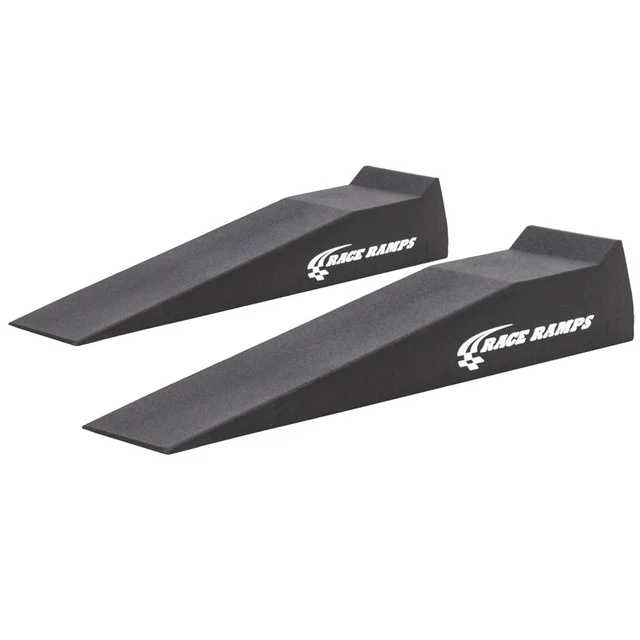
A 10.8 degree approach angle and 8 inches of lift on a 10 pound ramp: the answer for low cars.
Best for: Owners of low or lowered cars, sports cars, and anything with a front lip that catches on ordinary ramps.
- 10.8 degree approach angle, the gentlest published figure among mainstream service ramps
- 8 inches of lift, so it is a real service ramp and not just jack clearance
- 10 lb per ramp, light enough to carry and reposition one handed
- Solid high density foam will not rust, and the maker says it will not scratch or damage floors
- Made in the USA with a published spec sheet you can actually check
- Rated 1,500 lb per ramp, so 3,000 lb across the axle, which rules out trucks and heavy SUVs
- 10 inch maximum tire width is tight for wide rear tires
- 56 inches long, so it needs garage depth and storage space
- Premium pricing next to poly ramps with more capacity
Amazon had no buyable listing for this when we last checked. The link still works if it returns.
Check price on Amazon Read our detailed assessment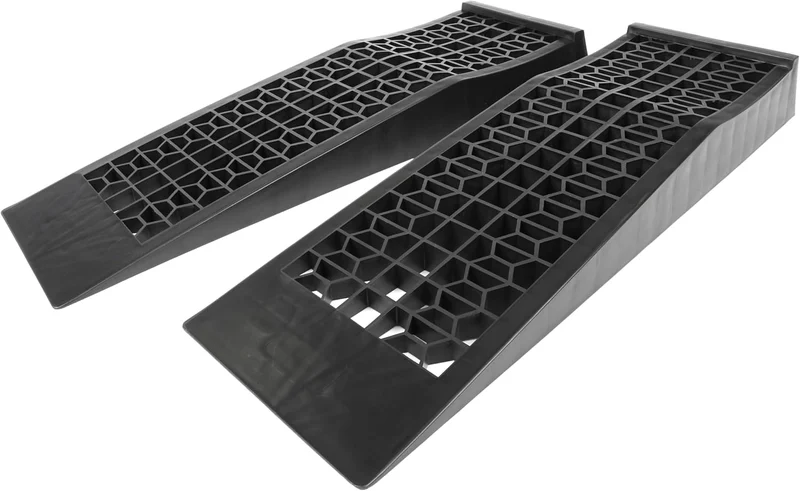
A shallow 9.05 degree jack access ramp, useful for lowered cars and misleading if you expected to work underneath.
Best for: Lowered cars that need just enough rise for a floor jack to slide under the pinch weld.
- 9.05 degree published loading angle clears low bumpers and lips
- Small 27 inch footprint stores on a shelf
- Honeycomb channels shed dirt and water instead of trapping them
- Inexpensive way to get a low profile jack under a lowered car
- 2.5 inch maximum lift is not enough to work under most vehicles
- 4,400 lb per pair means the axle you lift has to be light
- 7.75 inch tread is narrow for wide tires
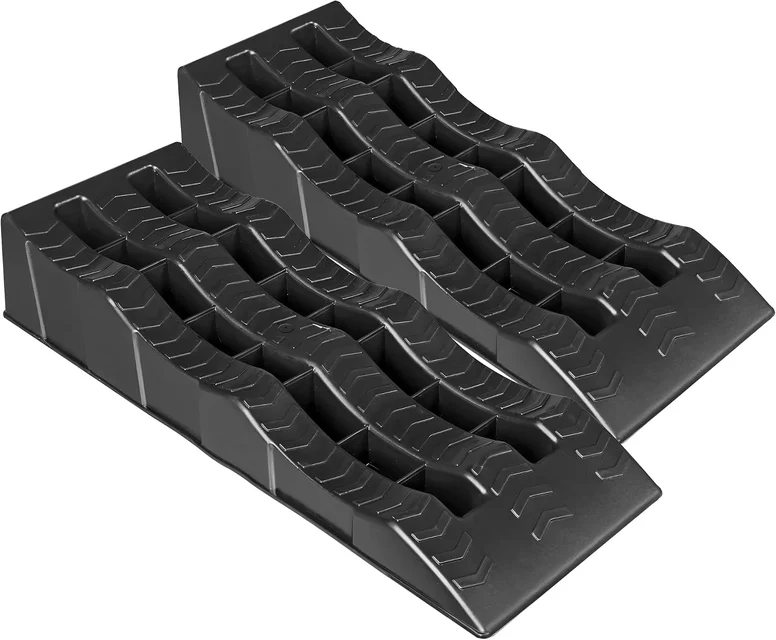
Sold as an oil change ramp, but under four inches of lift makes it a leveling block with better marketing.
Best for: Leveling a parked vehicle or trailer, which is not what most buyers are shopping for here.
- Very light at about 5.7 lb for the pair
- HDPE construction with a drained, hollowed base
- Three selectable heights and a one year limited warranty
- Tops out at 3.94 inches of lift, which does not get you under a vehicle
- The tallest setting uses the shortest run up and the smallest platform, the least stable way to load it
- Listed at roughly 6,000 lb for the pair, modest for anything larger than a light car
- Marketed for under vehicle access it cannot realistically deliver
| Criteria | Ironton Poly Car Ramp Set, 12,000 lb. GVW Top pick | 56" Single Piece Race Ramps (RR-56) | MaxxHaul 50516 Low Profile Car Ramps | Big RED AGT16PR 3 Height Low Profile Car Ramps |
|---|---|---|---|---|
| Verdict | Buy it | Buy it | It depends | Skip it |
| Best for | Sedans, crossovers, vans, and light trucks with normal ride height, where lift and capacity matter more than a shallow entry. | Owners of low or lowered cars, sports cars, and anything with a front lip that catches on ordinary ramps. | Lowered cars that need just enough rise for a floor jack to slide under the pinch weld. | Leveling a parked vehicle or trailer, which is not what most buyers are shopping for here. |
| Price tier | $ · mid-range | $$ · premium | $ · budget | $ · budget |
| Lift height | 8.5 in | 8 in | 2.5 in | 1.57 / 2.76 / 3.94 in |
| Approach angle (published) | Not published | 10.8 degrees | 9.05 degrees | Not published |
| Rated capacity | 12,000 lb GVW pair (as listed) | 1,500 lb per ramp (3,000 lb pair) | 2,200 lb per ramp (4,400 lb pair) | Roughly 6,000 lb per pair |
| Material | High impact poly, honeycomb core | Solid high density foam | Heavy duty plastic, honeycomb | HDPE |
| Tread width | 12 in | 12 in ramp, 10 in max tire | 7.75 in | 8.27 in |
| Ramp length | 35.5 in | 56 in | 27 in | 24 in |
| Best vehicle type | Sedans, crossovers, vans, light trucks | Low and lowered cars | Lowered cars needing jack access | Leveling only |
| Price tier | $ · mid-range | $$ · premium | $ · budget | $ · budget |
Which one is right for you?
- Sedans, crossovers, vans, and light trucks with normal ride height, where lift and capacity matter more than a shallow entry. Buy it Ironton Poly Car Ramp Set, 12,000 lb. GVW
- Owners of low or lowered cars, sports cars, and anything with a front lip that catches on ordinary ramps. Buy it Race Ramps 56" Single Piece Race Ramps (RR-56)
- Lowered cars that need just enough rise for a floor jack to slide under the pinch weld. It depends MaxxHaul 50516 Low Profile Car Ramps
- Leveling a parked vehicle or trailer, which is not what most buyers are shopping for here. Skip it Big RED AGT16PR 3 Height Low Profile Car Ramps
How we judged the field
We do not run a lab, and we are not going to pretend otherwise. This comparison pulls together published manufacturer specifications, independent testing writeups, and aggregated owner reports, then weighs all of it against what actually matters when you drive two tons of car up a wedge of foam or plastic and then put your body next to it.
Four things decided the order. Rated capacity came first, and specifically whether the published number is a per pair axle rating or a whole vehicle figure, because those are very different claims. Approach angle came second, since it is the one spec that decides whether a ramp is usable at all on anything lower than a crossover. Lift height came third: a ramp that raises the car two and a half inches gets a jack underneath but does not get you underneath. Floor behavior came fourth, meaning grip, footprint, and whether the ramp walks forward as the tire loads it.
Two safety points run through everything below, and neither is optional. Ramps are rated as a pair, and that pair rating has to exceed the weight sitting on the axle you are lifting, not the weight of the whole vehicle. On a front engine car the front axle usually carries well over half of curb weight, so check the placard in the door jamb or a scale ticket instead of guessing. And ramps only work on level, hard ground: concrete or asphalt, never grass, gravel, dirt, or a sloped driveway. Set the parking brake, leave the transmission in park or in gear, chock the wheels still on the ground, and read the manufacturer’s instructions before you go under the vehicle. Race Ramps’ own guidelines say to always use a jack stand if a person will be going under the vehicle, so put jack stands under the car as well.
56” Single Piece Race Ramps (RR-56)
Buy itRace Ramps builds these from solid high density foam with a traction coating, and the spec sheet is the reason they keep winning this category: a 10.8 degree approach angle, 8 inches of lift, 56 inches of length, 12 inches of width, and 10 pounds per ramp. That approach angle is the gentlest published number among mainstream service ramps, which is exactly what a low front bumper or an aftermarket lip needs. Reviewers with lowered cars report driving on without contact where standard plastic ramps scrape.
The catch is the rating. Race Ramps lists 1,500 pounds per ramp, so 3,000 pounds across the axle. That covers most sports cars, sedans, and hatchbacks, and it does not cover a half ton pickup or a heavy three row SUV. Maximum tire width is 10 inches, which rules out a lot of staggered rear setups. And 56 inches of ramp needs both garage depth and somewhere to store it. The maker says the foam will not scratch or damage floors, and at 10 pounds per ramp with a carrying strap a single ramp is easy to carry.
This is the practical answer for the majority of readers. The Ironton set is high impact poly with an internal honeycomb structure, listed at 12,000 pounds GVW for the pair, and it measures 35.5 inches long by 12 inches wide by 8.5 inches tall. That 12 inch tread is genuinely wide, which matters if you are running truck or SUV tires, and 8.5 inches of lift is real working room rather than jack clearance. Rubber feet on the underside are there to stop the ramp sliding forward as the tire pushes into it.
Ironton does not publish an approach angle, and that omission is the real weak point. Eight and a half inches of rise across a 35.5 inch body is a much steeper climb than the Race Ramps, and the effective incline is shorter still because the top of the ramp is flat. Anything with a low air dam is going to touch. Owner reports also flag the usual plastic ramp behavior: on freshly sealed or painted concrete they can skate a little before the tread bites, so a scrap of rubber mat or a piece of plywood under the base is worth the ten seconds. Treat the 12,000 pound pair figure as a per axle number and check it against your actual front axle load rather than against your truck’s gross rating.
Read the spec sheet before you read the marketing. This is a 27 inch long, 7.75 inch wide ramp with a 9.05 degree loading angle and a maximum lift of 2.5 inches, rated at 4,400 pounds per pair, which is 2,200 pounds per ramp. That combination makes it a jack access ramp, not a service ramp. Roll a lowered car onto these and a low profile floor jack will finally slide under the pinch weld. It will not give you room to lie under the car and work.
If that is what you need, it is a sensible tool: the loading angle is shallow, the footprint stores on a shelf, and it costs very little. If you bought it expecting to change oil from underneath, you will be disappointed, and the 4,400 pound pair rating means the axle you are lifting has to be genuinely light. The narrow 7.75 inch tread is also tight for wide tires. Buy it as a companion to a jack, not as a replacement for a proper ramp.
The listing sells this as a car ramp for oil changes and easy under vehicle access. The specification says otherwise. The three available lift settings are 1.57 inches, 2.76 inches, and 3.94 inches, on a 24 inch long body, with a listed 3 ton pair capacity. Even at the tallest setting you are gaining under four inches, which is leveling block territory rather than service ramp territory. The product copy itself describes it as a leveling system in places, which tells you where it really belongs.
There is a second problem. Reaching the tallest setting means using the shortest run up and parking the tire on the smallest usable platform, which is the least stable way to use a stepped ramp. That is a bad trade on a product whose whole pitch is getting under a vehicle. If you want jack clearance, the MaxxHaul does the same job with a published approach angle and a longer ramp. If you want to work under the car, none of these three heights get you there. Skip it and buy the tool that matches the job.
Ironton Poly Car Ramp Set, 12,000 lb. GVW vs 56” Single Piece Race Ramps (RR-56): which should you buy?
Measure your car first, because that decides it more than anything else. If your front bumper or lip clears a roughly 14 degree ramp and your front axle load is comfortably inside the pair rating, the Ironton set is the better buy for most people: more lift, a wider tread, far more capacity headroom, and a much lower price. It handles sedans, crossovers, vans, and light trucks with room to spare, and poly means no rust in a damp garage.
If you drive anything low, the Race Ramps win outright and the price gap stops mattering. A 10.8 degree approach angle is a specification no plastic ramp in this price range comes close to, and it is the difference between driving on and scraping. The trade is capacity: 3,000 pounds across the axle is a hard ceiling, and it is not enough for a truck. In short, Ironton for height clearance and capacity, Race Ramps for low cars and easy handling. Owners of a lowered car and a truck in the same garage end up owning both, which is a legitimate outcome.
What to look for
- Match the pair rating to your axle, not your vehicle. A pair of ramps supports one axle at a time, and the front axle of a front engine car typically carries more than half the curb weight. Check the placard or a scale ticket.
- Check the approach angle against your front overhang. Published angles under about 12 degrees suit most low cars. Anything unpublished should be assumed steep.
- Ask how much lift you actually get. Under four inches is jack clearance. Around eight inches is working room.
- Compare tread width to your tire width. A 10 inch maximum on a 275 section tire is a problem, not a detail.
- Look at what stops the ramp moving. Rubber feet, a textured base, or a mat underneath all help on sealed concrete.
- Measure your garage depth. A 56 inch ramp plus a car needs more room than you think, and it needs somewhere to live afterwards.
- Budget for chocks and jack stands separately. Ramps hold the car up, chocks stop it rolling, and stands are what you rely on when you are underneath for a while.
Our final take
Most people should buy the Ironton set. It gives real lift, wide tread, and a capacity figure with genuine headroom, and it costs a fraction of the specialist option. The only thing it asks in return is ground clearance, so measure before you order.
If your car is low, stop reading spec sheets and buy the Race Ramps. The 10.8 degree approach angle is the whole product, it is the one thing no budget ramp matches, and 8 inches of lift on a 10 pound ramp is a genuinely pleasant thing to own. The MaxxHaul is worth having only if your problem is fitting a jack under a lowered car, and the Big RED is the wrong tool for the job it advertises. Whichever you pick, level hard ground, parking brake, chocks, and the manufacturer’s instructions before anything of yours goes under the car.
Questions, answered
How much weight can car ramps actually hold?
Read the rating as a pair, and compare it to the axle you are lifting rather than to the whole vehicle. A pair of ramps carries one axle at a time, and on a front engine car the front axle usually carries well over half of curb weight. The Race Ramps set is rated 1,500 lb per ramp, so 3,000 lb across the axle. The Ironton set is listed at 12,000 lb GVW for the pair. Find your axle load on the placard in the driver's door jamb or from a scale ticket, and leave margin rather than sitting right at the limit.
Is it safe to work under a car on ramps?
It can be, if you set them up properly and follow the manufacturer's instructions, which take priority over anything you read here. Use level, hard ground only: concrete or asphalt, never grass, gravel, dirt, or a sloped driveway. Drive on slowly and squarely, stop when the tires seat on the flat top, set the parking brake, leave the transmission in park or in gear, and chock the wheels still on the ground on both sides. Race Ramps' own guidelines say to always use a jack stand if a person will be going under the vehicle, so put jack stands under proper lift points as well.
Will car ramps fit a low or lowered car?
Only if the approach angle is shallow enough. That is the spec that matters most. Around 10 to 11 degrees clears most low bumpers, which is why the 56 inch Race Ramps at 10.8 degrees are the usual recommendation for sports cars. Steeper plastic ramps often catch the front lip before the tire reaches the incline. If you are close, ramp extenders or a length of board ahead of the ramp reduce the effective angle, and measuring your front overhang and ground clearance before ordering saves a return.
Are plastic ramps as good as steel ones?
For home use, modern poly and high density foam ramps are generally the more practical choice. They do not rust, they are far lighter to move and store, and the rated capacities on quality sets are well beyond what a typical car axle needs. Steel is rigid and long lived but heavy, prone to corrosion in a damp garage, and it can slide on smooth concrete. Whatever the material, look for a textured surface, a stable base, and a published capacity rather than a vague claim.
Do I still need jack stands if I own ramps?
Yes, and they do different jobs. Ramps lift a whole axle quickly with the wheels still attached, which suits oil changes, underbody inspections, and exhaust work. Jack stands are what you use once a wheel is off, and they are the sensible backup any time you will be under the vehicle for a while. Chocks are separate again and stop the car rolling. The three together cost less than one trip to a shop and none of them substitutes for reading the manufacturer's instructions.
Deciding between the top two? See our head-to-head: Ironton Poly Car Ramp Set, 12,000 lb. GVW vs Race Ramps 56" Single Piece Race Ramps (RR-56).
More Automotive reviews
 The Best Car Scratch Removers: 4 Compared (and One to Skip)
  The Best Car Seat Covers: 4 Compared (and One to Skip)
  The Best Car Backseat & Trunk Organizers: 4 Compared (and One to Skip)
  The Best Car Trash Cans: 4 Compared (and One to Skip)
  The Best Car Undercoating: 4 Compared (and One to Skip)
  The Best Car Vacuums: 4 Compared (and One to Skip)