Explained
Car Trash Cans, Explained
After reading this you will be able to look at any car trash can listing and tell in under a minute whether it will leak, slump, or sit unused in a cupboard by March.
In this guide
A car trash can looks like the simplest product you will ever buy, which is exactly why so many of them are bad. Almost every listing leads with capacity and fabric color, while the things that decide whether the bin stays in your car are the liner, the lid and whether the walls hold their shape when it is half empty. This guide translates the spec sheet so you can spot those three in seconds.
The 30-second version
- The liner decides everything. A removable, rinseable liner means you can empty the bin without unstrapping it, and that single convenience is the best predictor of whether a bin is still in use six months later.
- A lid that closes by itself beats a lid you have to close. Overlapping flaps, elastic openings and spring frames all shut on their own; open-top bins and loose flaps broadcast every coffee cup in the cabin.
- Structure is a feature, not a bonus. Reinforced sides and a stiffened base keep the mouth open when the bin is nearly empty, so you are not holding it apart one-handed while driving.
- Mounting is where bins fail silently. Headrest posts, console straps, glovebox hooks and floor grip pads are four different problems, and a bin that only solves one may not fit your next car.
- Capacity stops mattering surprisingly early. Above a couple of gallons the limiting factor is how often you remember to empty it, not volume, so extra liters mostly buy you lost footwell space.
The products this guide is about
Our verdict on each, with the full reasoning on the companion review.
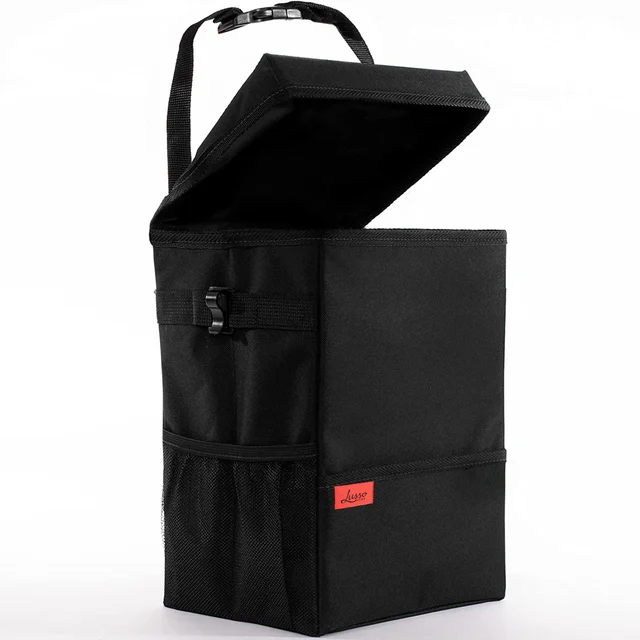
- Buy Lusso Gear XL Car Trash Can (3.5 Gallon) The bin here built to stand up on its own whether it is empty or stuffed, with a liner you lift out without unclipping anything. Amazon
- Buy EPAuto Waterproof Car Trash Can with Lid and Pockets Gets the two things that matter right, a sealed interior and a lid that closes, for the least money in the category. Amazon
- It depends High Road TrashStash Car Trash Bag The best-executed hanging bag in the category, provided a hanging bag is what you actually want. Amazon
- Skip Garoopion Soft Silicone Car Trash Can Charges premium-tier money for the smallest capacity, no pockets and walls that flex under load. Amazon
What actually matters
- Removable leakproof liner. A sealed inner sleeve you can lift out, empty and rinse. Without it you either unclip the whole bin and carry it dripping to the curb, or you commit to plastic bags forever. This is the feature owners cite most when a bin sticks.
- Self-closing lid. Look for overlapping flip-top edges, an elastic-rimmed opening or a spring frame with a pull tab. A lid that requires a deliberate action gets skipped, and skipped lids are why cars smell.
- Wall and base rigidity. Reinforced panels or a stiffened board in the base stop the bin from folding inward as it empties. Soft-sided bins lean in until there is enough weight inside to hold them square.
- Mounting range. The more anchor methods a bin supports, the more likely it fits your seat, your console width and your next vehicle. Strap length matters more than it sounds: wide truck and SUV consoles defeat short straps.
- Cleanability. Wipe-clean vinyl or a rinseable insert beats bare fabric, because dried spills, not fresh ones, are what create smell. Check whether the whole unit is washable or only the insert.
- Opening size versus what you throw away. An elastic opening hides trash but narrows the mouth. If you routinely bin takeaway containers rather than cups and wrappers, a wider mouth is worth the reduced concealment.
- Footprint in your specific car. Large-capacity bins are genuinely large objects. In a small hatchback a large bin competes with a passenger's feet, whatever the product photo of an SUV suggests.
The specs, in plain English
Green flags vs red flags
Green flags
- The liner is shown lifted out of the bin in the product photos, not just described as leakproof
- The lid closes by itself, via overlapping flaps, an elastic rim or a spring frame with a pull tab
- The listing names the mounting options individually: headrest, seatback, console, glovebox, floor
- There is a photo of the bin standing empty and square, which is the state where bad bins fail
- Grip pads or non-slip material on the base if you plan to use it on the floorboard
- The maximum strap length is stated, so you can check it against a wide console before ordering
Red flags
- Open top with no lid at all, sold on the convenience of dropping things in without looking
- Waterproof described only as a fabric coating, with no separate inner liner mentioned
- Every photo shows the bin full, which usually hides walls that collapse when it is empty
- Capacity headlined in liters or gallons with nothing said about structure, liner or lid
- Premium pricing on a moulded silicone or plastic bin that has less capacity and fewer features than fabric rivals
- Reviews repeatedly mentioning that the lid will not stay shut or the straps loosen on the move
Who's who: the brands
- Lusso Gear - Sells reinforced fabric bins with removable leakproof liners and multiple mounting options; the structural end of the category.
- EPAuto - Car accessories brand whose bin offers a waterproof interior and a closing lid at the budget tier.
- High Road - Travel organization maker with a hanging trash bag design; check the listing for current availability.
- Drive Auto - Seatback bin brand; compare capacity, pockets and wall rigidity listing by listing.
- Garoopion and similar silicone brands - Sellers of one-piece moulded silicone bins on rinse-clean convenience, often with less capacity and no pockets for the money.
- Generic marketplace sellers - Rotating brand names on near-identical fabric bins; quality varies batch to batch, so judge the liner and lid photos rather than the name.
How to read a listing without getting fooled
Start at the bottom of the listing, not the top. Headline capacity tells you almost nothing, so scroll to the images and look for two specific shots: the liner held outside the bin, and the bin standing empty. If neither exists, assume the liner is bonded in and the walls collapse. Next, read the mounting section literally. Listings sometimes claim several mounting positions, then show one strap; count the actual hardware in the photos, and note whether the strap length is given anywhere. Treat the words waterproof, leakproof and water-resistant as three different claims, because they are: only a sealed inner sleeve reliably holds a spilled drink. Denier figures tell you the outer cloth is tough, not that it is sealed. Finally, ignore the volume comparison chart against a hand or a coffee cup, and instead measure the footwell or console gap in your own car; the most common regret in this category is a bin that is objectively good and physically too big for the space you had in mind.
How much should you spend?
This is a category where the budget tier already buys the two features that matter, a waterproof interior and a lid that closes, so the floor of the market is usable rather than a trap. What you pay more for, in ascending order of usefulness, is a removable liner you can lift out while the bin stays mounted, reinforced sides and base, extra mounting methods, and larger capacity with pockets. If your car generates a coffee cup and a receipt a day, the cheaper lidded bin will feel like a smart purchase for years and spending up buys you little. If you are running school pickups, road trips or drive-through habits, the mid and upper tiers earn the difference through structure and the liner system, because that is what stops the bin becoming a chore. The one place to be skeptical is premium pricing on moulded silicone: those bins usually deliver less capacity, no pockets and flexing walls at the same money as the best-equipped fabric option, so the rinse-clean convenience needs to matter a lot to you before it adds up.
Questions, answered
Where should a car trash can go?
The passenger seatback is the default, because it is reachable from the driver's seat and keeps the footwell clear. A center console strap works well in trucks and SUVs with wide flat consoles, and puts the bin within reach of both front seats. The floor behind the passenger seat takes the largest bins but is the easiest place to kick something over, so only use it with a bin that has reinforced sides and grip pads on the base.
Do I need bin bags inside it?
Not if the bin has a sealed waterproof interior or a removable liner you can rinse. Bags make emptying faster and keep the inside from staining, and most bins include hooks or a rim designed to grip carrier bag handles. If you skip bags, plan on rinsing the liner every week or two, because dried spills are what create the smell.
How do I stop it smelling?
A lid that closes without you thinking about it does most of the work, which is the main argument against open-top bins. After that it is frequency and cleaning: rinse or wipe the liner regularly, and keep anything wet, such as cups and food packaging, out of a bin you are not going to empty soon. Odor absorbers help at the margin but do not fix an open bin.
Will it tip over when I corner?
A bin hung from a headrest or console strap will swing a little but is unlikely to tip. A floor-standing bin can tip if it has soft walls and nothing anchoring it, which is why grip pads and reinforced sides matter more than the marketing implies. If it is going on the floor, choose one the manufacturer explicitly describes as freestanding.
Is silicone or hard plastic better than fabric?
For most drivers, no. Moulded bins rinse easily but weigh more for the same volume, rarely have pockets, and the flexible ones sag as they fill. A reinforced fabric bin with a removable waterproof liner gives you similar cleanability with more structure and more mounting options, usually for less. Moulded makes sense mainly if your trash is consistently wet and you would genuinely rather rinse a bin than swap a liner.
What size should I get?
A couple of gallons suits most drivers. Below that you will empty it more often than you want to; above it you are mainly buying footwell space back from your passenger. Families, long trips and anyone with kids in the back are the real case for the larger bins, and even then check the measurement against your own car rather than the product photo.
Or jump to the head-to-head: Lusso Gear XL Car Trash Can (3.5 Gallon) vs EPAuto Waterproof Car Trash Can with Lid and Pockets.