Explained
Carpet and Upholstery Cleaners, Explained
After reading, you'll know whether you need foam, why headliners are the risky surface, and how to check what a cleaner is really rated for.
In this guide
Interior cleaning goes wrong in a specific and predictable way: the seat looks perfect when it dries and grubby again within weeks. That is almost always residue rather than dirt, and residue is a function of what you used and how much of it stayed behind. Getting this right is less about finding a stronger cleaner than about understanding what each type leaves in the fibre.
The 30-second version
- Foam is a delivery choice, holding cleaner on top of the pile instead of letting it sink, at the cost of more soap to remove.
- Residue attracts soil, which is why a cleaned seat can look dirtier a month later than it did before you touched it.
- Headliners are the risk, because they are fabric glued to board and saturating them can loosen the adhesive permanently.
- The front label defines scope, and it will sometimes name fewer surfaces than the product description on the website.
- Agitation does the work, so a product without a brush is only part of a system no matter how good the chemistry is.
The products this guide is about
Our verdict on each, with the full reasoning on the companion review.
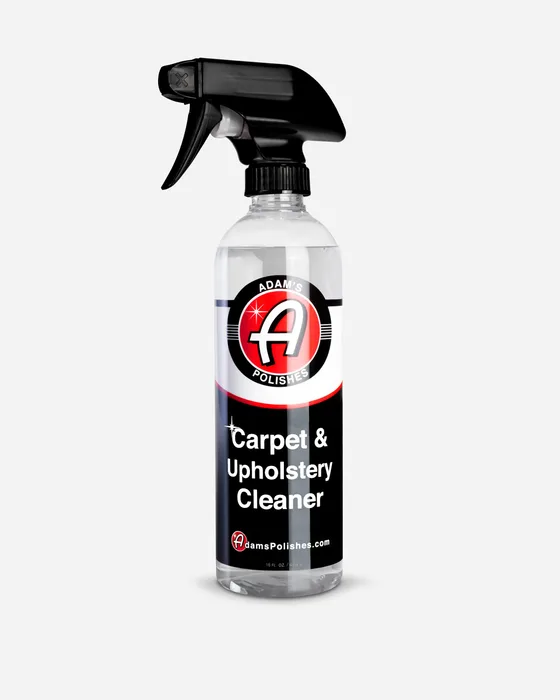
- Buy Adam's Polishes Carpet & Upholstery Cleaner The only non-foaming cleaner here, which is the whole argument for it. Amazon
- Buy Meguiar's Carpet & Upholstery Cleaner (19 oz) An aerosol foam with the scrubbing brush built into the lid, so nothing else is required. Amazon
- It depends Chemical Guys Foaming Citrus Fabric Clean Carpet & Upholstery Shampoo Low cost per use if you buy the concentrate, but it arrives as an ingredient rather than a tool. Amazon
- Skip Turtle Wax FRESH Carpet & Mats Heavy Duty Cleaner (18 fl oz) Sold as a car upholstery cleaner, labelled for carpet, rubber and plastic, which is a mats product.
What actually matters
- Foaming behaviour - whether the product produces suds that sit on the surface or a liquid that penetrates. Foam suits deep horizontal pile and works against you on vertical and overhead panels where control matters more than dwell.
- Residue profile - how much cleaning agent stays in the fibre after it dries. Soap left behind is hygroscopic and tacky, so it collects fresh soil and undoes the cleaning faster than doing nothing would have.
- Substrate rating - which materials the formula was actually built for. Seat fabric, floor carpet, rubber mats and vinyl tolerate very different chemistry, and a mats formula on upholstery is a mismatch even when it cleans.
- Delivery format - trigger spray, aerosol or concentrate. This determines how precisely you can place product, whether you can work overhead, and whether you are buying a finished tool or an ingredient.
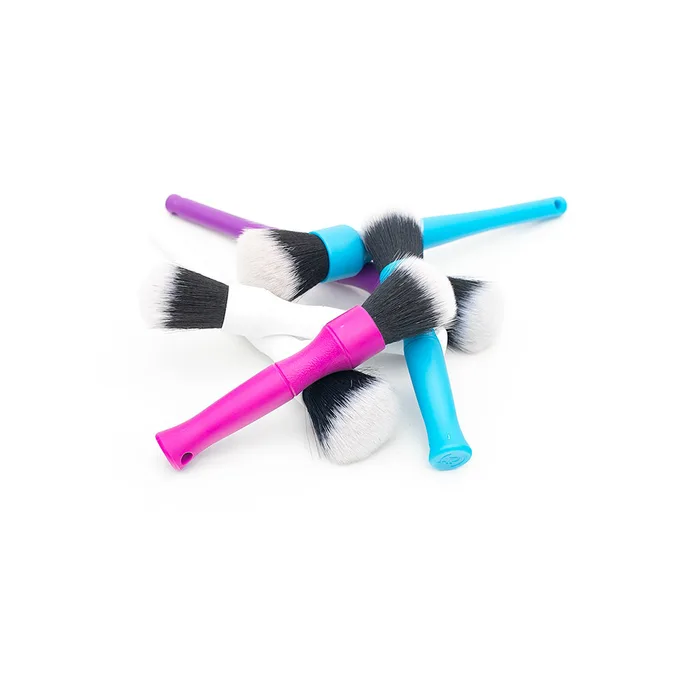
- Agitation - the mechanical part of the job. A brush breaks the bond between soil and fibre so the chemistry can carry it away, and most interior cleaners work poorly without one.
- Fragrance and dye - what the product adds that you cannot remove. A cabin is a small sealed volume that holds scent for weeks, and dye transfer onto pale fabric is not reversible.
- Extraction - how the loosened soil comes back out. Blotting with clean towels handles surface work, while a wet extractor pulls contamination and cleaner out of the padding and shortens drying.
The specs, in plain English
Green flags vs red flags
Green flags
- The front label names the specific substrates the formula is rated for.
- Foaming behaviour is stated rather than left for you to discover on the first spray.
- Dilution ratios are published for any product sold as a concentrate.
- An agitation brush is supplied or the need for one is stated plainly.
- The maker recommends a colour fastness test before use.
Red flags
- The product description names a surface that the front label does not list.
- A concentrate is offered in several sizes with no ratio anywhere on the page.
- An odour claim is made in units that cannot be compared with any competitor.
- Heavy duty or professional strength appears where a substrate rating should be.
- No fragrance-free option in a category used inside a sealed cabin.
Who's who: the brands
- Adam's Polishes - Consumer detailing brand that argues its formulation choices openly on the product page, including why it avoids foam.
- Meguiar's - Long-established car care brand whose carpet and upholstery cleaner is an aerosol with a removable scrubber top.
- Chemical Guys - Detailing brand that sells its foaming citrus fabric cleaner as a dilutable concentrate alongside a ready to use spray.
- Turtle Wax - Mass-market brand; its Carpet & Mats cleaner is named narrower than its online description, which calls it an upholstery cleaner.
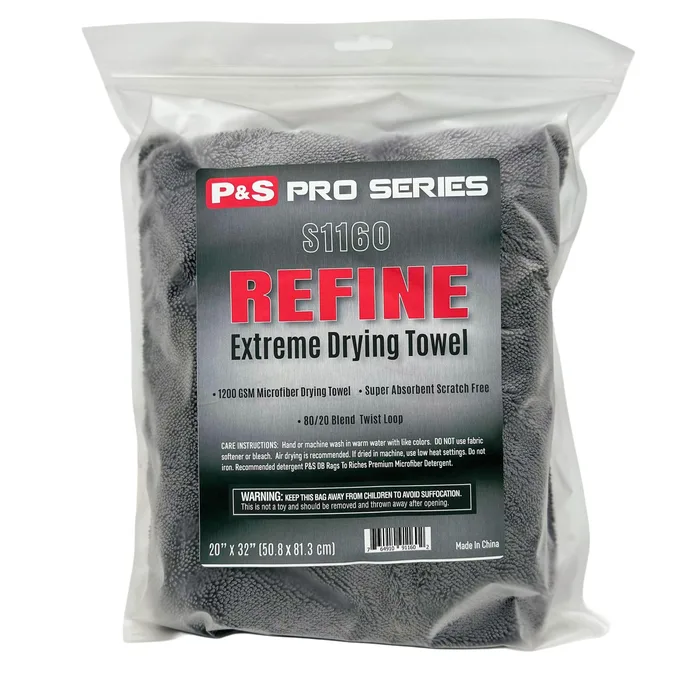
- P&S Detail Products - Professional-channel brand; check its label or page for dilution ratios on any concentrate.
How to read a listing without getting fooled
Read the can before the listing. The front panel carries the product name and usually a row of surface badges, and those badges are the scope the formula was built for. If the badges say carpet, rubber and plastic, that is a mats product regardless of what the website paragraph calls it. Next find the word foam or suds, because that single property predicts residue risk, headliner suitability and how much rinsing follows. Then check whether a brush is in the package, since the chemistry only does half the job. For a concentrate, look for a dilution ratio and treat its absence as a missing specification rather than a detail. Finally read any odour claim to the end, including the asterisk, which usually narrows a permanent claim to the odours already present.
How much should you spend?
Interior cleaners are inexpensive and the price differences are mostly about packaging rather than chemistry. Budget covers ready to use sprays and aerosols in retail sizes, and an aerosol with a brush cap at this tier can be better value than a cheaper bottle once you add the brush you would have to buy anyway. Mid-range buys larger formats, fragrance-free and dye-free formulations, and the option of the same chemistry in gallon sizes, which is where the cost per interior actually falls. Concentrates sit at the bottom on cost per use and only realise that saving when the maker publishes ratios. Premium in this category tends to mean kits pairing a cleaner with brushes and a protectant, which are convenient but rarely contain anything you could not assemble more cheaply. Given how long a bottle lasts on one car, buy on substrate rating rather than on volume.
Questions, answered
Why does my seat look dirty again a few weeks after cleaning it?
That is usually residue rather than returning dirt. Cleaning agent left in the fibre stays slightly tacky and attracts soil from clothing and shoes faster than clean fabric does, so the area you treated becomes the area that grubs up first. The fix is using less product than feels necessary, agitating properly so the chemistry does the work instead of the volume, and blotting repeatedly with clean dry towels until they come away clean.
Can I use household carpet cleaner in a car?
It will clean, but the risks are different in a car. Automotive interiors combine fabric with vinyl, plastic trim, electronics under the seats and a glued headliner, and household products are formulated without those neighbours in mind. Household carpet cleaners are also generally higher foaming, which means more residue in a space you cannot extract easily and cannot air out the way you would a room. The saving is small relative to what is at risk.
How long should an interior take to dry?
With spray and blot technique, several hours with the windows cracked, and considerably longer in humid weather. With a wet extractor, often under an hour because most of the moisture never stays in the padding. Drying time matters beyond convenience: fabric that stays damp in a closed cabin is how interiors develop a musty smell, which is a harder problem to solve than the stain you started with. Ventilate until it is genuinely dry rather than until it feels dry.
Does a fabric protectant after cleaning actually help?
Somewhat, for spills rather than for wear. A fabric protectant leaves a treatment that raises the surface tension of the fibre, so liquid beads and sits long enough to be blotted before it soaks into the padding. It does nothing about abrasion, dye transfer from clothing or ground-in grit. Applying it makes most sense immediately after a proper clean, when the fibre is genuinely clean and dry, because otherwise you are sealing over whatever was left behind.
Or jump to the head-to-head: Adam's Polishes Carpet & Upholstery Cleaner vs Meguiar's Carpet & Upholstery Cleaner (19 oz).