Explained
Car Vacuums, Explained
After reading this you will know which car-vacuum numbers describe real cleaning power and which are marketing, so you can match the tool to how you actually clean.
In this guide
A car vacuum lives or dies on two things: how hard it pulls, and how long it can keep pulling before the battery quits. Listings bury both behind a wall of units, some of which mean very little on their own. This guide translates the specs so you can tell a genuine deep-cleaner from a glorified crumb-catcher before you buy.
The 30-second version
- Suction numbers only compare within a brand. Air watts and kPa are measured differently by different makers, so a bigger figure is not automatically a stronger vacuum. Read them as a rough tier, not a ranking.
- Runtime is where cordless vacuums disappoint. The headline minutes are almost always at the lowest power setting. On max suction, expect a fraction of that, which is what matters for real dirt.
- Corded means never running out mid-job. A 12-volt or wall-corded vacuum trades convenience for endurance and steadier power, which suits anyone who cleans the whole car in one sitting.
- The bin and filter decide how long you clean before stopping. A tiny bin fills in one footwell, and a filter that clogs kills suction. Both are easy to overlook and quick to annoy you.
- Attachments do half the work. A crevice tool, a brush and a flexible hose reach the seat rails and vents where car dirt actually hides. A vacuum without them cleans only the easy surfaces.
The products this guide is about
Our verdict on each, with the full reasoning on the companion review.
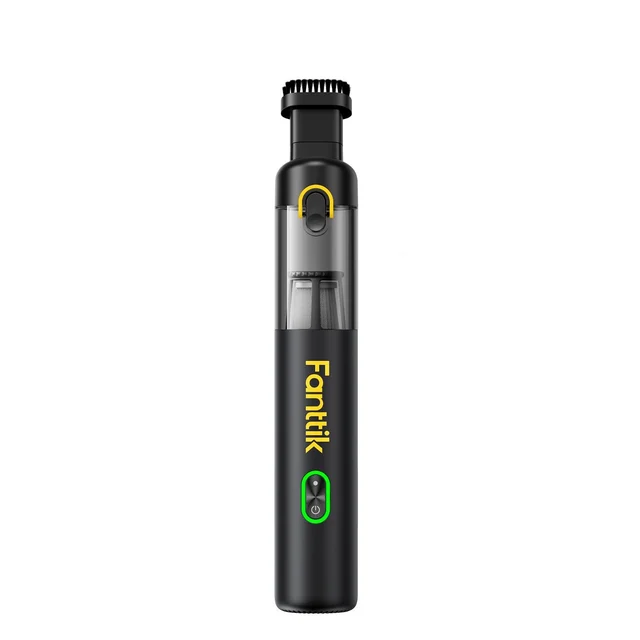
- Buy Fanttik V8 Mate Cordless Car Vacuum Strong suction, a generous attachment kit, and HEPA filtration make this the best all-round cordless for detailing without overpaying.
- Buy Baseus A2 Pro Car Vacuum Cleaner Pocket-sized and cheap, yet it punches well above its footprint for quick, frequent cleanups.
- It depends Fanttik Cruise V11 APEX Cordless Handheld Vacuum A powerful, display-equipped flagship that's more vacuum than most car owners actually need.
- Skip Baseus A1 Car Vacuum Cleaner A neat-looking mini wand that works better as a desk gadget than a genuine detailing tool.
What actually matters
- Suction strength is the whole point, but the units are slippery. kPa measures sealed pressure and air watts estimate real-world pull; treat either as a tier indicator and lean on how a vacuum performs on ground-in dirt rather than the number alone.
- Runtime under load is the honest spec. A vacuum rated for thirty minutes may give you eight on full power, so check whether the quoted time is at max or eco mode before you trust it.
- Power source sets the whole experience: cordless for grab-and-go convenience, corded (wall or 12-volt) for uninterrupted deep cleans. Neither is better; they suit different habits.
- Bin capacity and emptying determine how often you stop. A larger, easy-dump bin keeps a full-car clean flowing; a small one turns detailing into a chore.
- Filtration protects both suction and your lungs. A washable HEPA-style filter holds fine dust and can be rinsed and reused instead of clogging and starving the motor.
- Attachments and reach decide what you can actually clean. A crevice nozzle, a stiff brush and a hose long enough to reach the far seat are worth more than an extra kPa.
The specs, in plain English
Green flags vs red flags
Green flags
- Runtime quoted at max power, not just eco mode
- A washable HEPA-style filter you can rinse and reuse
- A crevice tool plus a brush and a flexible hose in the box
- An easy-empty bin with a decent capacity
Red flags
- A huge kPa number with no mention of runtime under load
- A sealed, non-washable filter that needs paid replacements
- A tiny bin paired with claims of deep-cleaning a whole car
- No usable attachments, so it only reaches flat surfaces
Who's who: the brands
- Fanttik - Known for punchy cordless handhelds that balance suction and a sensible toolkit at a mid-range price.
- Baseus - Popular for compact, pocketable vacuums aimed at everyday crumbs rather than full detailing.
- Black+Decker - Long-running dustbuster line; dependable and widely available, with corded and cordless options.
- ThisWorx - Makes the ubiquitous corded 12-volt car vacuum; modest power but endless runtime for quick cleanups.
How to read a listing without getting fooled
Start with how you clean. If you detail the whole car every few weeks, prioritize suction, a bigger bin and either a corded design or honest max-power runtime. If you just want to zap daily crumbs, a small cordless handheld with a good crevice tool matters more than raw power. Then treat the suction number as a tier, confirm the runtime is measured at full power, and make sure the attachments reach where your car actually gets dirty.
How much should you spend?
Entry-level corded 12-volt vacuums are the cheapest way to get endless runtime, but they are weak. Mid-range cordless handhelds are the sweet spot for most people: enough suction and toolkit to genuinely detail an interior. Premium models add stronger motors, bigger batteries and better filters; worth it if you clean often or deal with pet hair and sand, overkill if you only tidy occasionally.
A car vacuum is one of those tools that looks simple and then buries the two numbers that matter under a pile of ones that don’t. Get past the marketing and it comes down to a question you can answer about yourself: do you clean the whole car in one focused session, or do you zap small messes as they happen? Almost every other choice follows from that.
Suction: read it as a tier, not a score
Every listing leads with a suction figure, usually in kPa or air watts, and every listing wants you to believe bigger is better. Within a single brand, that’s roughly true. Across brands, it falls apart, because there’s no shared test standard: one maker’s 15 kPa and another’s aren’t measured the same way. Treat suction as a rough tier - light-duty, mid, or strong - and then judge a vacuum on how it handles the dirt you actually have. A vacuum with a slightly lower number and a better brush head will out-clean a higher-number rival on embedded pet hair every time.
Runtime is where the honesty gap lives
The single most misleading spec on a cordless car vacuum is runtime. That reassuring “up to 30 minutes” is almost always measured on the lowest power setting, which is useless for anything more than surface dust. Switch to full suction, where real cleaning happens, and the same battery might last eight or ten minutes. That’s fine if you’re doing a quick pass, but frustrating mid-detail. Look for a maker that quotes runtime at max power, or accept that you’ll be cleaning in bursts.
This is exactly why corded vacuums still exist. A 12-volt unit that plugs into the accessory socket, or a wall-corded handheld, never runs out and delivers steady power for as long as you need. The trade is the cable and being tethered to the car. If you sit down to do the whole interior properly, that trade usually favors the cord.
The parts nobody photographs: bin and filter
Two unglamorous details decide whether cleaning stays pleasant. The bin is the first: a tiny dust cup fills up in a single footwell of sand or a lap’s worth of dog hair, and stopping to empty it repeatedly kills the flow of a proper clean. Bigger, easy-dump bins are worth seeking out. The filter is the second: a fine, washable HEPA-style filter traps dust so it doesn’t blow back into the cabin, and rinsing it keeps suction strong. A sealed filter that clogs and needs paid replacements slowly strangles the motor and your wallet.
Attachments do half the cleaning
A car isn’t a flat floor; it’s crevices, seat rails, vents and cupholders. The tools in the box determine how much of that you can actually reach. A narrow crevice nozzle gets between the seat and the console, a stiff brush lifts hair off upholstery, and a flexible hose extends your reach to the far side of the cabin. A powerful vacuum with no useful attachments cleans only the parts you could have wiped by hand.
Matching the tool to your habit
If you deep-clean every few weeks, prioritize suction, a larger bin, a good toolkit, and either a corded design or an honest full-power runtime. If you mainly want to grab something from the door pocket and clear today’s crumbs, a compact cordless handheld with a sharp crevice tool will make you happier than a heavier deep-cleaner you have to fetch and charge.
Once you know which of those you are, the specs stop being intimidating: suction is a tier, runtime is a number to halve, and the bin, filter and attachments are what you actually live with. When you’re ready to see how the popular models stack up against each other, our car vacuum comparison puts them head to head and names the one we’d skip.
Questions, answered
Is a cordless or corded car vacuum better?
Neither is universally better; they suit different habits. Cordless wins for grab-it-and-go convenience and reaching every corner without a cable. Corded (wall or 12-volt) wins for uninterrupted, steady-power deep cleans because it never runs out mid-job. If you clean the whole car in one sitting, corded or a high-capacity cordless is safer; if you mostly zap small messes, cordless is more pleasant.
How much suction do I actually need?
For everyday crumbs and light dust, modest suction is fine. For embedded pet hair, sand and ground-in dirt, you want a higher tier, but don't chase the biggest kPa number blindly; test conditions vary between brands. Pair decent suction with the right brush and crevice tools, which do as much for real cleaning as raw power.
Why does my cordless vacuum die so fast?
Because the advertised runtime is almost always measured on the lowest setting. On full power, where you clean real dirt, batteries drain far quicker, sometimes to a third of the quoted time. If you need sustained power, look for an honest max-power runtime figure or choose a corded model.
Do I need a HEPA filter for a car vacuum?
It helps, especially if you have allergies or pets, because fine dust otherwise blows back into the cabin. More importantly, get a washable filter: a clogged filter starves the motor and kills suction, and a rinse-and-reuse design saves you buying replacements and keeps performance steady.
Can a car vacuum pick up liquid spills?
Only if it is specifically a wet/dry model; using a dry-only vacuum on liquid can damage the motor. If you often deal with drink spills, choose a wet/dry design, and empty and dry it soon after so it doesn't develop odors or mildew.
Or jump to the head-to-head: Fanttik V8 Mate Cordless Car Vacuum vs Baseus A2 Pro Car Vacuum Cleaner.