Explained
Camera Tripods, Explained
After reading this you will understand every number and term on a tripod spec sheet and know which ones actually predict sharp, stable shots.
In this guide
A tripod looks like the simplest thing you can buy for a camera, yet the spec sheets are full of optimistic numbers and unfamiliar jargon that make it hard to compare models honestly. The single trap that catches most first-time buyers is trusting the headline load rating and the folded size without asking how tall the tripod stands, how steady it is in wind, and how well the head actually locks. This guide decodes each term so you can read past the marketing and match a tripod to how you really shoot.
The 30-second version
- Stability is the whole point, so weigh real-world rigidity and vibration damping above the tall-sounding height number or the generous load rating.
- Load ratings are ceilings, not targets, and budget models in particular tend to inflate them, so aim for a tripod rated to at least twice your heaviest camera-and-lens combination.
- The head matters as much as the legs, because a smooth, properly locking ball head is what keeps your framing put once you let go.
- The best tripod is the one you actually bring, so match folded length and weight to how you travel rather than chasing the highest spec.
- Carbon fiber is a comfort upgrade, not a magic one, worth it if you carry a tripod daily but not a reason to buy a flimsy carbon model over a solid aluminum one.
The products this guide is about
Our verdict on each, with the full reasoning on the companion review.
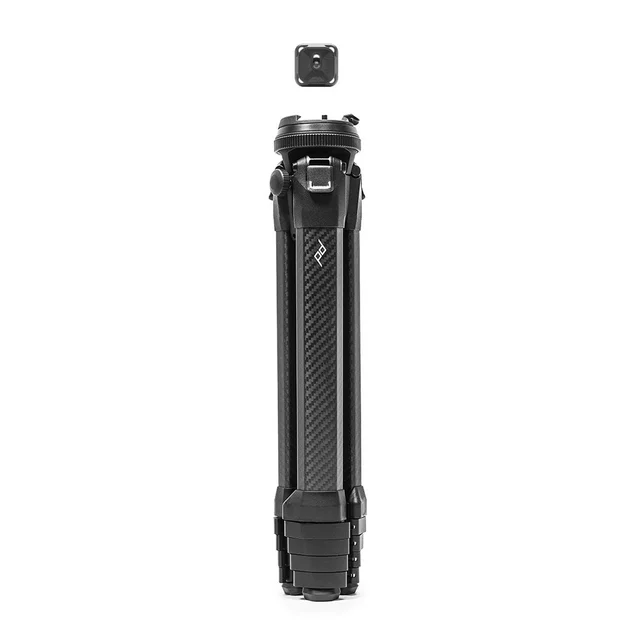
- Buy Peak Design Travel Tripod (Carbon Fiber) The tripod that packs like a water bottle yet holds a full-frame kit steady. Amazon
- Buy Manfrotto Befree Advanced (Aluminum, Ball Head) The sensible all-rounder that does almost everything well for a mid-range price. Amazon
- It depends Neewer 66" Carbon Fiber Tripod / Monopod (15 kg) A lot of carbon-fiber tripod and a bonus monopod for very little money. Amazon
- Skip K&F Concept TC2335 Carbon Fiber Travel Tripod A tidy, cheap carbon travel tripod that newer options have quietly left behind.
What actually matters
- Real-world stability is the criterion everything else serves; a tripod that flexes in a breeze or lets the head creep under a heavy lens produces soft frames no matter how good its other numbers look.
- Honest load capacity tells you how much camera and lens the tripod can hold steady, but treat the printed figure as an optimistic ceiling and give yourself a wide safety margin.
- Working height decides whether you shoot comfortably upright or hunched over; the number that counts is maximum height without raising the center column, which is the least stable extension.
- Folded length and weight determine whether the tripod travels with you at all, and for anyone hiking or flying this often outweighs a slightly taller reach.
- Head type and control govern how quickly and precisely you can frame; a ball head is fast and compact for stills, while a fluid or pan-tilt head suits smooth video motion.
- Leg material and section count trade weight, packed size, and rigidity against each other; more sections fold smaller but add joints that can flex, and carbon saves weight over aluminum.
- Locks, plates, and parts support affect daily use and longevity, from twist-versus-lever leg locks to whether the quick-release plate follows the common Arca-Swiss standard.
The specs, in plain English
Green flags vs red flags
Green flags
- Independent testing and owner reports agree the tripod stays steady and damps vibration well for its size, not just that it looks sturdy.
- A conservative, believable load rating with legs thick enough that the rating seems plausible rather than aspirational.
- Maximum height reaches near eye level with the center column down, so you are not forced to stoop or raise the wobbly column.
- A smooth ball head that locks firmly without creep, ideally on the common Arca-Swiss plate standard.
- A reputable brand with available spare plates and parts, and a meaningful warranty.
Red flags
- A headline load rating that dwarfs the tripod's slim legs and light weight, a classic sign of an optimistic number.
- Reports of the head slipping or creeping under heavier lenses.
- A single-knob head that controls pan and tilt at once, making precise framing frustrating.
- A short maximum height that forces most adults to hunch, disguised by quoting the height only with the column fully raised.
- Very thin lower leg sections (small tube diameter) on a five-section design, which tend to flex and hum in wind.
Who's who: the brands
- Peak Design - Design-led maker known for ultra-compact travel tripods that pack extraordinarily small, at a premium price.
- Manfrotto - Long-established Italian brand with a deep lineup; its Befree line is a popular all-rounder.
- Neewer - Budget-focused brand offering a lot of hardware, including carbon legs and monopod-convertible designs, for little money.
- K&F Concept - Value brand making tidy, affordable carbon and aluminum travel tripods, though some models have been overtaken by newer budget options.
- Gitzo - Premium professional brand (part of the same group as Manfrotto) renowned for very high rigidity and build quality at flagship prices.
- Benro - Mid-range specialist offering broad ranges of travel and studio tripods, often bundling capable Arca-compatible ball heads for the money.
How to read a listing without getting fooled
Start by ignoring the biggest number on the box. The load capacity is often the most inflated spec, so mentally halve it and ask whether the leg thickness looks like it could really hold that much. Next, find the maximum height stated with the center column down, not raised, and compare it to your own eye level; a listing that only quotes the tall, column-up figure is hiding something. Check the folded length and weight against how you actually carry gear, then read what the head is: a plain ball head is fine for stills, but a single-knob design that moves every axis at once is a compromise. Confirm the plate is Arca-Swiss compatible if you want to swap gear later, and note the leg section count, since a five-section travel tripod folds small but relies on skinny lower tubes that flex. Finally, weigh independent testing and aggregated owner reports above the spec sheet, because that is where optimistic ratings and quality-control lotteries reveal themselves.
How much should you spend?
Spend according to how often the tripod will leave the house rather than to chase the biggest numbers. Entry-level tripods can produce sharp results in calm conditions with a light kit, but you often pay for it in flex and less rigidity under load, so a budget model makes sense as a first or backup tripod rather than a forever one. The value sweet spot sits in the mid-range, where a solid aluminum or carbon tripod pairs a smooth, dependable ball head with sensible height and real parts support; this is the right call for most people. Spending more is genuinely worth it in two cases: when you carry a tripod every day and want the smallest possible pack size without giving up stability, where premium travel designs earn their keep, and when you shoot heavy telephoto lenses or demanding long exposures in wind, where thicker legs and a better head pay off in consistently sharper frames. Spending more is not worth it for an occasional shooter whose tripod mostly lives in a closet.
Questions, answered
How much load capacity do I actually need?
Add up your heaviest camera body, lens, and any accessories, then look for a tripod rated for at least twice that total. The doubling gives you a comfortable safety margin because manufacturer ratings, especially on budget models, tend to be optimistic. For a mirrorless body with a mid-size zoom, a real-world 8 kg rating is plenty; big telephoto lenses want a heavier, larger tripod.
Carbon fiber or aluminum, which should I buy?
Carbon fiber is lighter for the same rigidity and damps vibration slightly better, which matters if you hike or fly with your gear. Aluminum is heavier but usually cheaper and durable, and the extra mass can even help steadiness in wind. If budget is tight, a good aluminum tripod beats a flimsy carbon one; if you carry a tripod daily, carbon earns its premium.
Ball head or pan-tilt head?
A ball head is faster and more compact, letting you reposition in any direction with one lock, which suits travel, landscapes, and stills. A pan-tilt or fluid head gives independent control of each axis, which is better for precise leveling and smooth video panning. Choose a ball head unless smooth video motion is your priority.
Is folded length or maximum height more important?
It depends on how you shoot. Frequent travelers should prioritize folded length and weight so the tripod actually comes with them. If you are tall or shoot standing landscapes, prioritize a maximum height at or near eye level so you are not forced to stoop; the least stable way to gain height is raising the center column, so buy enough leg height to avoid relying on it.
Why do two tripods with the same load rating feel so different?
Because the rating measures roughly how much weight the tripod can hold before failing, not how steady it stays under that weight. Leg tube thickness, the number of sections, the quality of the leg locks, and the head all affect real-world rigidity and vibration damping. This is why independent testing and owner reports matter more than the printed number, and why two tripods sharing a spec can behave very differently in wind.
Or jump to the head-to-head: Peak Design Travel Tripod (Carbon Fiber) vs Manfrotto Befree Advanced (Aluminum, Ball Head).