

Tech & Gadgets
The Best Camera Tripods: 4 Compared (and One to Skip)
We compared four current camera tripods on load capacity, height, packed size, head type, leg material, stability, and value.
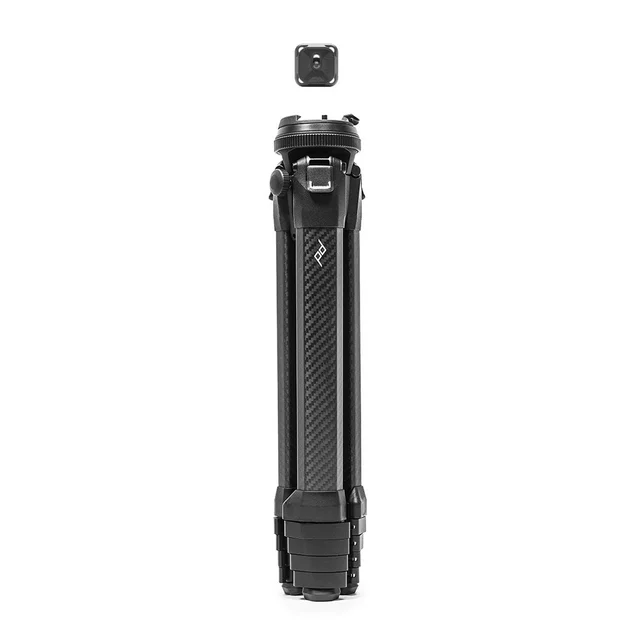
The short version
For travelers and vloggers who carry a tripod constantly, the Peak Design Travel Tripod (Carbon Fiber) is the standout: it collapses to roughly the size of a water bottle and is rated for a full-frame kit with a telephoto lens. The Manfrotto Befree Advanced is the value champion, offering a smooth ball head, sensible height, and easy parts support for a mid-range price. The Neewer 66" carbon tripod-monopod is a lot of hardware for very little money, but treat its load rating as a ceiling and expect budget-level rigidity, so buy it with eyes open. The K&F Concept TC2335 is compact and cheap but too short, wobbly, and hampered by a single-knob head to recommend today. Best for: most photographers should buy the Manfrotto Befree Advanced, while frequent travelers who want the smallest pack size should stretch to the Peak Design.
Our picks at a glance
- Peak Design Travel Tripod (Carbon Fiber) - Buy. The tripod that packs like a water bottle yet holds a full-frame kit steady.
- Manfrotto Befree Advanced (Aluminum, Ball Head) - Buy. The sensible all-rounder that does almost everything well for a mid-range price.
- Neewer 66" Carbon Fiber Tripod / Monopod (15 kg) - It depends. A lot of carbon-fiber tripod and a bonus monopod for very little money.
- K&F Concept TC2335 Carbon Fiber Travel Tripod - Skip. A tidy, cheap carbon travel tripod that newer options have quietly left behind.
The verdict in 30 seconds
What mattered most
- Load capacity (rated)
- Max / min height
- Folded length & weight
- Head type
- Leg material & sections
- Stability (synthesized reports)
A tripod is the one accessory that quietly decides whether your long exposures, landscapes, and locked-off video are sharp or soft. We looked at four models spanning budget carbon to premium travel design, weighing the specifications each maker publishes against how the tripods are used. Two earn a clear buy, one is a value pick with real caveats, and one is outclassed enough that we would steer you elsewhere.
The tripod that packs like a water bottle yet holds a full-frame kit steady.
Best for: Travel, vlogging, and hiking photographers who will carry it daily and want the smallest possible pack size without giving up real stability.
- Exceptionally compact folded footprint (about 15.5 in / 39 cm and roughly the diameter of a water bottle) thanks to legs that nest with almost no dead space
- Integrated low-profile ball head keeps weight and packed size down while still allowing quick framing and portrait flips
- A 20 lb / 9.1 kg weight capacity that Peak Design says is optimized for pro setups, up to a full-frame DSLR with a telephoto lens
- Backed by Peak Design's lifetime guarantee, and described by the maker as 100% serviceable
- Premium pricing that is hard to justify for occasional shooters
- Peak Design supplies its own ball head with the tripod, so you use its head rather than choosing your own
- Five leg sections with aluminum cam locks mean more locks to work than on a three or four section tripod
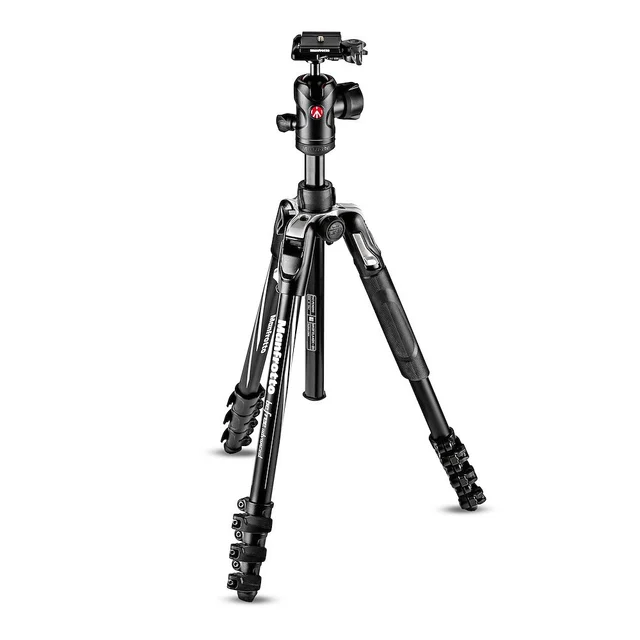
The sensible all-rounder that does almost everything well for a mid-range price.
Best for: Enthusiasts who want one dependable tripod for travel and general DSLR/mirrorless shooting without paying flagship money.
- Well-judged balance of stability, height, and packed size, with a 494 ball head that has three independent controls including a separate pan lock
- Safety payload of 9 kg / 19.8 lb and reaches 59 in / 150 cm, enough for DSLR and mirrorless landscape work
- Plate fits Manfrotto RC2 and Arca-Swiss style attachments
- Available in aluminum or carbon and with twist or lever locks, so you can tune cost against weight
- Aluminum version is a little heavier (3.28 lb / 1.49 kg) than premium carbon rivals
- Four-section legs do not fold as small as the five-section travel specialists
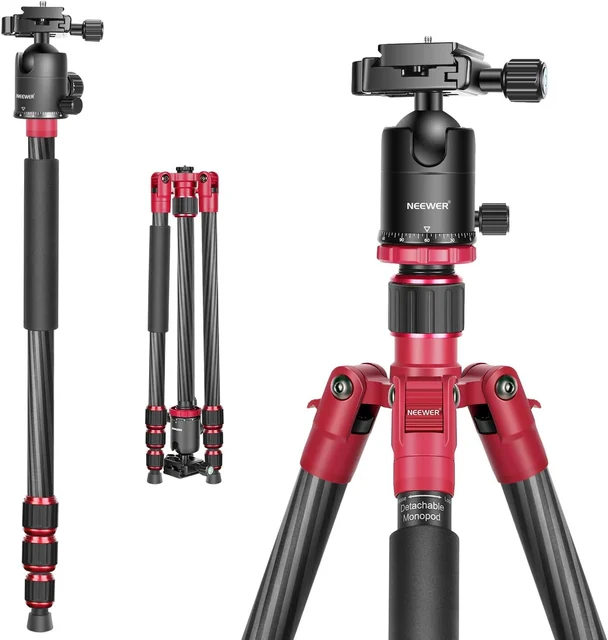
A lot of carbon-fiber tripod and a bonus monopod for very little money.
Best for: Budget-conscious buyers and beginners who want a capable, do-a-bit-of-everything carbon tripod and can live with some quality-control lottery.
- Standout value: carbon-fiber legs, a 360-degree ball head with bubble level, and an Arca-type quick-release plate at a budget price
- Tall reach of about 66 in / 168 cm and a generous rated load (Neewer lists up to 33 lb / 15 kg) for the money
- One leg unscrews to convert into a full-length monopod, and the center column reverses for low-angle work
- Light for its size, though the weight could not be confirmed on a maker page
- The headline load rating is best treated as a ceiling rather than a working figure with heavier lenses
- Budget four-section carbon legs generally flex more in wind than pricier rivals, so expect less rigidity under heavy loads
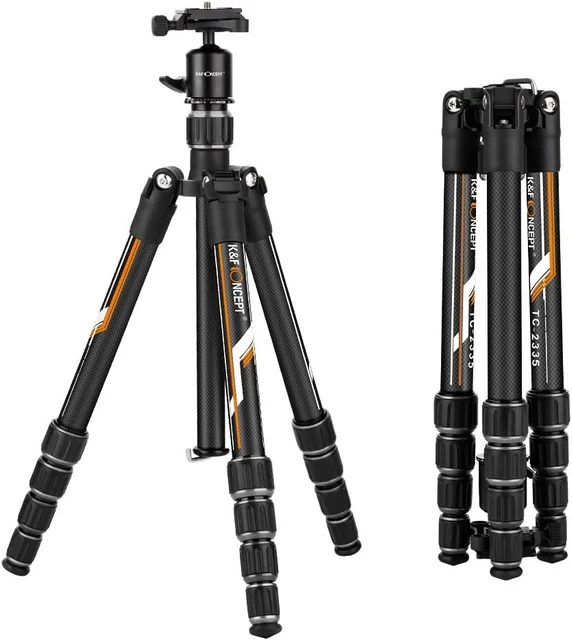
A tidy, cheap carbon travel tripod that newer options have quietly left behind.
Best for: Only phone and very light mirrorless shooters on a tight budget who prize folded size above height and head control.
- Very packable at about 13.6 in / 35 cm folded and light at roughly 2.9 lb / 1.3 kg
- Carbon-fiber legs and an Arca-compatible plate at an entry price
- Center column reverses and the legs fold up 180 degrees for compact storage
- Short maximum height of about 53 in / 135 cm means most adults must stoop
- Single-knob ball head controls both pan and tilt at once, which makes precise framing frustrating
- Skinny five-section legs are likely to wobble under real loads despite the capacity rating; better-value newer models now exist
| Criteria | Peak Design Travel Tripod (Carbon Fiber) Top pick | Manfrotto Befree Advanced (Aluminum, Ball Head) | Neewer 66" Carbon Fiber Tripod / Monopod (15 kg) | K&F Concept TC2335 Carbon Fiber Travel Tripod |
|---|---|---|---|---|
| Verdict | Buy it | Buy it | It depends | Skip it |
| Best for | Travel, vlogging, and hiking photographers who will carry it daily and want the smallest possible pack size without giving up real stability. | Enthusiasts who want one dependable tripod for travel and general DSLR/mirrorless shooting without paying flagship money. | Budget-conscious buyers and beginners who want a capable, do-a-bit-of-everything carbon tripod and can live with some quality-control lottery. | Only phone and very light mirrorless shooters on a tight budget who prize folded size above height and head control. |
| Price tier | $$$ · premium | $$ · mid-range | $ · budget | $ · budget |
| Load capacity (rated) | 20 lb / 9.1 kg - 19.8 lb / 9 kg | Up to 33 lb / 15 kg (optimistic) | Rated ~22 lb / 10 kg (optimistic) | - |
| Max / min height | 60 in / 152 cm; down to 5.5 in / 14 cm | ~59 in / 150 cm; ~16 in / 40 cm | 66 in / 168 cm; low via reversible column | ~53 in / 135 cm; low via reversible column |
| Folded length & weight | 15.5 in / 39 cm; 2.8 lb / 1.27 kg | 15.75 in / 40 cm; 3.28 lb / 1.49 kg | Not confirmed on maker site | 13.6 in / 35 cm; ~2.9 lb / 1.3 kg |
| Head type | Integrated low-profile ball head | 494 ball head (independent pan) | 360 ball head, monopod-convertible | Single-knob ball head |
| Leg material & sections | Carbon fiber, 5 sections | Aluminum, 4 sections | Carbon fiber, 4 sections | Carbon fiber, 5 sections |
| Stability (synthesized reports) | Excellent for its size | Very good, reassuringly solid | Adequate; flexes under heavy gear | Weak under load; noticeable wobble |
| Value | High if used often, costly otherwise | Excellent | Strong on paper, uneven in practice | Undercut by newer options |
| Price tier | $$$ · premium | $$ · mid-range | $ · budget | $ · budget |
Which one is right for you?
- Travel, vlogging, and hiking photographers who will carry it daily and want the smallest possible pack size without giving up real stability. Buy it Peak Design Travel Tripod (Carbon Fiber)
- Enthusiasts who want one dependable tripod for travel and general DSLR/mirrorless shooting without paying flagship money. Buy it Manfrotto Befree Advanced (Aluminum, Ball Head)
- Budget-conscious buyers and beginners who want a capable, do-a-bit-of-everything carbon tripod and can live with some quality-control lottery. It depends Neewer 66" Carbon Fiber Tripod / Monopod (15 kg)
- Only phone and very light mirrorless shooters on a tight budget who prize folded size above height and head control. Skip it K&F Concept TC2335 Carbon Fiber Travel Tripod
How we judged the field
We do not run our own lab. Instead, we work from the specifications each manufacturer publishes and flag what could not be confirmed. For tripods, the criteria that separate good from mediocre are: stability and vibration damping, honest load capacity versus the marketing figure, maximum and minimum working height, folded length and weight, head type and control, and leg material and section count. Ratings on budget tripods in particular are best treated as ceilings rather than working figures.
Our four picks deliberately span the range, from a budget carbon-fiber all-rounder to a premium travel design, so that a vlogger, a weekend hiker, and a landscape shooter can each find themselves here.
Peak Design Travel Tripod (Carbon Fiber)
Buy itThe Peak Design is the tripod to look at when packed size is the deciding factor. Its legs and integrated low-profile ball head nest together with almost no wasted space, so it collapses to about 15.5 inches and roughly the diameter of a water bottle, while still weighing only around 2.8 lb. That compactness comes with a 20 lb weight capacity that Peak Design says is optimized for pro setups, up to a full-frame DSLR with a telephoto lens. The trade-offs are the price and a supplied ball head you cannot choose for yourself. If you will carry a tripod every day, this is the one to beat.
Manfrotto Befree Advanced (Aluminum, Ball Head)
Buy itThe Befree Advanced is the pick we would put in most hands. It is sturdy yet reasonably light, folds to about 15.7 inches, reaches roughly 59 inches, and pairs with Manfrotto’s 494 ball head, which has three independent controls including a separate pan lock. A 9 kg safety payload covers mirrorless and DSLR landscape kits, and the plate fits Manfrotto RC2 and Arca-Swiss style attachments. It does not fold as small as a five-section travel specialist and the aluminum version is a touch heavy, but for the money the balance of capability and cost is hard to fault.
Neewer 66” Carbon Fiber Tripod / Monopod (15 kg)
It dependsOn paper the Neewer is remarkable value: carbon-fiber legs, a 360-degree ball head with a bubble level, an Arca-type plate, a tall 66-inch reach, and a leg that unscrews into a full monopod, all at a budget price. For a beginner or a second body it can be a genuinely useful, capable tripod. The caveats are real, though. The headline 15 kg load rating is best treated as a ceiling, and budget four-section carbon legs generally flex more in wind than pricier rivals. We could not find this exact model on Neewer’s current site, so check it is still sold before buying. Buy it for what it is, a lot of tripod for the money, not as a precision instrument.
K&F Concept TC2335 Carbon Fiber Travel Tripod
Skip itThe TC2335 was a likeable budget travel tripod, and it still has its charms: carbon legs, a tidy 13.6-inch folded length, and a light weight around 1.3 kg. K&F no longer lists this model on its site, so these figures could not be rechecked against a maker page. It has also been overtaken. Its maximum height of roughly 53 inches forces most adults to stoop, the single-knob ball head controls pan and tilt together so precise framing is fiddly, and the skinny five-section legs are likely to wobble under anything approaching the rated load. With newer budget models, including Neewer’s own, offering more height and better heads for similar money, we would steer buyers elsewhere.
Peak Design Travel Tripod vs Manfrotto Befree Advanced: which should you buy?
These are the two strongest tripods here, and the choice comes down to how you shoot and what you will spend. The Peak Design wins decisively on packed size and design refinement: it disappears into a bag, deploys quickly once you learn it, and stays steady beyond what its slim profile suggests. That makes it the better companion for travel, hiking, and vlogging where every centimeter of pack space counts.
The Manfrotto counters with value and everyday practicality. It is a little larger and heavier, but it gives up little on paper, its 494 ball head has an independent pan lock, and it costs meaningfully less. For a photographer who mostly shoots from the car, on trips a few times a year, or around town, the Befree Advanced delivers the same sharp results for a smaller outlay. Choose the Peak Design if minimum pack size is non-negotiable; choose the Manfrotto if you want the most capability per dollar.
What to look for
- Honest load capacity: aim for a tripod rated to at least twice your heaviest camera-and-lens combination, and treat budget ratings as optimistic ceilings.
- Working height: check the maximum height without the center column raised (a raised column is less stable), and confirm it reaches near your eye level if you shoot standing.
- Folded length and weight: the best tripod is the one you actually bring, so match packed size to how you travel.
- Head type: ball heads are fast and compact for stills; choose a fluid or pan-tilt head if smooth video motion matters.
- Leg material and locks: carbon fiber saves weight and damps vibration; twist locks are compact while lever locks are quick to check at a glance.
- Going big: for heavy telephoto lenses or demanding long exposures in wind, step up to a larger, thicker-legged tripod rather than a compact travel model.
Our final take
Most people should buy the Manfrotto Befree Advanced: it is sensibly sized, has a 9 kg safety payload, and is priced so that the value is obvious. Frequent travelers who will carry a tripod daily should stretch to the Peak Design Travel Tripod, whose water-bottle pack size and 20 lb capacity justify the premium. The Neewer 66-inch carbon tripod-monopod is a strong budget option if you treat its ratings as ceilings and confirm it is still sold, making it a smart first tripod rather than a forever one. The K&F Concept TC2335, once a solid budget choice, is simply outclassed today and is the one we would skip.
Questions, answered
Carbon fiber or aluminum: which should I buy?
Carbon fiber is lighter for the same rigidity and damps vibration slightly better, which matters if you hike or fly with your gear. Aluminum is heavier but usually cheaper and durable, and the extra mass can even help steadiness in wind. If budget is tight, a good aluminum tripod like the Manfrotto Befree Advanced beats a flimsy carbon one; if you carry a tripod daily, carbon earns its premium.
Ball head or pan-tilt head?
A ball head is faster and more compact, letting you reposition in any direction with one lock, which suits travel, landscapes, and stills. A pan-tilt (or fluid) head gives independent control of each axis, which is better for precise leveling and video panning. All four tripods here use ball heads; only choose pan-tilt or fluid if smooth video motion is your priority.
How much load capacity do I actually need?
Add up your heaviest camera, lens, and any accessories, then choose a tripod rated for at least twice that for a comfortable safety margin. Manufacturer ratings, especially on budget models, are best treated as a ceiling rather than a target. For a mirrorless body with a mid-size zoom, a real-world 8 kg rating is plenty; big telephoto lenses want a heavier, larger tripod.
Is folded length or maximum height more important?
It depends on how you shoot. Frequent travelers should prioritize folded length and weight so the tripod actually comes with you, which is where the Peak Design and the K&F excel on paper. If you are tall or shoot standing landscapes, prioritize a maximum height at or near eye level, where the Neewer's 66-inch reach and the Manfrotto's roughly 59 inches are more comfortable than the short K&F.
Do budget tripods hold up for serious landscape work?
They can, within limits. A budget carbon model such as the Neewer can produce sharp results in calm conditions with a lighter kit, but expect more flex in wind and less rigidity than a thicker-legged tripod. For demanding long exposures with heavier gear, a mid-range or premium tripod with thicker legs and a better head pays off in consistently sharper frames.
Deciding between the top two? See our head-to-head: Peak Design Travel Tripod (Carbon Fiber) vs Manfrotto Befree Advanced (Aluminum, Ball Head).
More Tech & Gadgets reviews
 The Best Video Capture Cards: 4 Compared (and One to Skip)
  The Best Charging Stations: 4 Compared (and One to Skip)
  The Best Smart Christmas Lights: 4 Compared (and One to Skip)
  The Best Chromebooks: 4 Compared (and One to Skip)
  The Best Coding Robots: 4 Compared (and One to Skip)
  The Best Laptops for College Students: 4 Compared (and One to Skip)