Explained
Bug and Tar Removers, Explained
After reading, you'll understand why bug residue damages paint, and why the same bottle rarely handles tar well.
In this guide
Insect remains and road tar end up in the same product category and have almost nothing in common. Bugs are organic and acidic and they etch clear coat if left to bake. Tar is petroleum, sits on the surface, and needs a solvent to release. The chemistry that handles each is different, the chemistry that handles both is more aggressive than either, and almost no product page tells you which family it belongs to.
The 30-second version
- Bug removal is time-sensitive, because insect acids concentrate as they dry and etch into the clear coat.
- Bugs and tar want different chemistry, alkaline or butyl for organic residue, solvent for petroleum deposits.
- Butyl strips wax, so anything effective enough on baked-on bugs will need protection reapplied after.
- Dwell replaces scrubbing, and scrubbing hardened insect shell is what actually scratches the paint.
- A clinging format matters, since grilles and bumpers are vertical and thin liquids run straight off them.
The products this guide is about
Our verdict on each, with the full reasoning on the companion review.
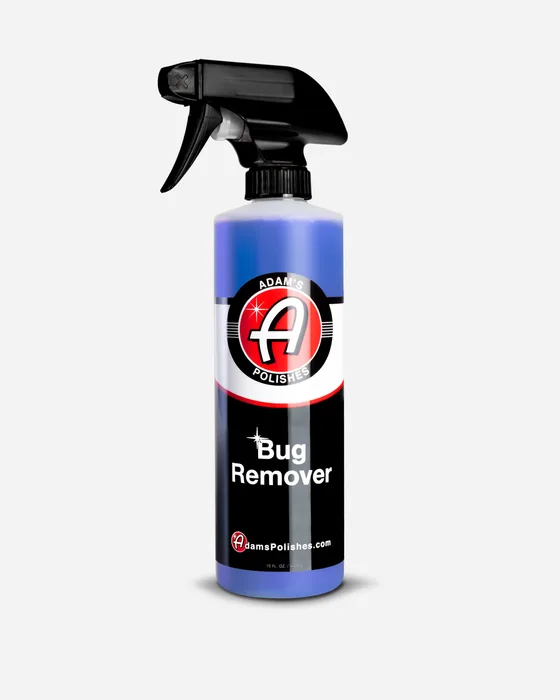
- Buy Adam's Polishes Bug Remover The only bottle here that names its own chemistry, which on a butyl cleaner is information worth having. Amazon
- Buy P&S Detail Products Bug Off Insect Remover A trade pre-soak that says where it belongs in the wash, in sizes that suit doing this every week. Amazon
- It depends Chemical Guys ClingShot Bug, Tar & Sap Remover A clinging foam built around dwell time, with a stated 30 second to one minute starting point and a named list of safe surfaces. Amazon
- Skip Turtle Wax Bug & Tar Remover, 16 fl oz Names two very different contaminants on the label and nothing at all about how it handles either. Amazon
What actually matters
- Chemistry family - butyl and alkaline cleaners break down organic residue; citrus and petroleum solvents dissolve tar. Each has a different effect on wax, trim and rubber, and the family predicts both.
- Cleared surfaces - which materials the brand has tested. Painted panels, unpainted textured plastic, rubber seals and glass all react differently, and tar removers are hardest on the unpainted ones.
- Dwell time - how long the product should sit before rinsing. It is the variable that replaces mechanical scrubbing, and many products do not publish it.
- Format - clinging foams and gels stay on vertical panels where thin liquids run off. A pre-soak treats a whole area; a trigger spray treats spots.
- Wax compatibility - whether the product will strip existing protection. Effective bug chemistry usually does, and knowing means you can plan to reapply.
- Concentration and sizes - trade sizes suit anyone treating the front of a car regularly through summer, which is most people who drive at highway speeds.
- Whether it claims both bugs and tar - a combined product is a compromise, and it generally compromises towards the more aggressive solvent side.
The specs, in plain English
Green flags vs red flags
Green flags
- The chemistry family named, such as butyl, water-based or solvent.
- A specific list of cleared surfaces including unpainted plastic and rubber.
- A dwell time in minutes, especially on any product sold on dwell.
- A clinging or foaming format for vertical panels.
- An explicit note that protection will need reapplying afterwards.
Red flags
- Bugs and tar claimed together with no chemistry stated for either.
- Extended dwell time as the main claim with no dwell figure given.
- No surface list on a product that dissolves tar.
- Results language throughout the page and no ingredient family anywhere.
- No mention of wax stripping on a product strong enough to remove baked residue.
Who's who: the brands
- Adam's Polishes - Names its formulation family openly and advises reapplying protection after use, which is unusual disclosure for this category.
- P&S Detail Products - Professional supply, positioning bug removal as a pre-wash soak and selling it in sizes that suit weekly use.
- Chemical Guys - Strong on formats, particularly clinging foams that hold dwell time on vertical panels, with less detail on chemistry.
- Turtle Wax - Mass-market trigger bottles sold on the problem rather than the formulation, widely stocked at the budget tier.
- Stoner - Best known for a long-running aerosol bug remover, and the reference point many people compare newer products against.
How to read a listing without getting fooled
Look for a chemistry word first: butyl, water-based, citrus, solvent. If one appears you can predict both what the product removes and what it strips, and if none appears you are buying on results language. Then check the cleared surfaces, and pay particular attention to whether unpainted plastic trim and rubber are mentioned, because those are the materials a tar-capable product is most likely to mark. Look for a dwell time, and treat its absence as especially odd on any product sold on dwell. Check the format against the panel: grilles are vertical, so foams and gels stay and liquids do not. Finally, if the page says nothing about reapplying protection, assume you will need to anyway.
How much should you spend?
The budget tier here is a small trigger bottle that will handle light seasonal bug residue and tells you nothing about itself, which is acceptable for occasional use on a painted bumper and less so near trim. Mid-range buys either a named formulation or trade sizing, and both are worth more than they cost. If you drive highway miles through summer, the gallon sizes from professional supply brands turn bug removal into a routine pre-wash step rather than an occasional project, and that shift is what actually prevents etching. Whatever you spend, budget for the wax or sealant you will need to reapply to the front of the car afterwards.
Questions, answered
How quickly do I need to remove bugs?
Sooner than most people do. Insect remains are acidic and the acid concentrates as the moisture evaporates, so a hot week is enough to start etching clear coat. Within a few days is comfortable; within a couple of weeks is usually still recoverable with chemistry alone. After a summer of baking, the marks left behind are physical damage in the clear coat and need polishing rather than cleaning.
Can I use a bug remover on my windscreen?
Often yes, and glass is sometimes specifically cleared, as it is on one product in the comparison above. Glass is far more chemically robust than paint or trim. The caution is around the wiper blades and any rubber cowl trim nearby, which are the parts a strong solvent will dry out. Rinse thoroughly afterwards and avoid letting the product sit on rubber.
What removes tar without damaging trim?
A dedicated tar remover applied to a cloth rather than sprayed directly, so you control exactly where it goes. Tar removers are solvent-based by necessity, and solvents attack unpainted plastic and rubber, so keeping the product off those surfaces matters more than the product choice. Work in small areas, wipe rather than scrub since tar holds grit, and wash the panel afterwards to remove solvent residue.
Will a clay bar remove bugs and tar instead?
It will remove tar reasonably well and it is the wrong tool for baked bugs. Clay works mechanically, shearing bonded contamination off the surface, so hardened insect shell gets dragged rather than dissolved and that is exactly how you mar the clear coat. The efficient order is chemical first, clay second: dissolve what dissolves, then clay whatever is still rough. That also means far less claying, which is where marring risk lives.
Or jump to the head-to-head: Adam's Polishes Bug Remover vs P&S Detail Products Bug Off Insect Remover.