

Automotive
The Best Bug and Tar Removers: 4 Compared (and One to Skip)
We compared four bug and tar removers and found only one that names its own chemistry, and only one that gives a dwell time.
The short version
Adam's Bug Remover is the pick and the only one here that tells you what is in it: a water-based, butyl-heavy formulation with co-solvents, stated safe on painted surfaces, plastic bumpers and glass, in 16 ounce, gallon and five gallon sizes. P&S Bug Off is the value buy for anyone doing this often, sold from pint to five gallon and positioned clearly as a pre-wash step on the grille and bumper. Chemical Guys ClingShot is the depends pick: a thick clinging foam built to hold dwell time on vertical surfaces, which is exactly the right mechanism for baked-on bugs, with a stated 30 second to one minute dwell but no named chemistry. Skip the Turtle Wax Bug & Tar Remover. It is a 16 ounce trigger bottle whose page names no chemistry and no dwell time, on a job where the wrong strength on the wrong plastic is the failure mode. Best for: anyone with a grille full of last summer, or tar spray up the rocker panels.
Our picks at a glance
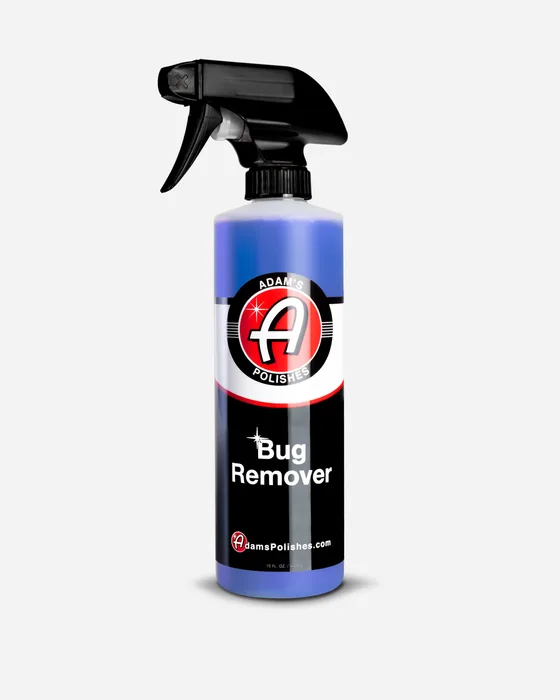
- Adam's Polishes Bug Remover - Buy. The only bottle here that names its own chemistry, which on a butyl cleaner is information worth having.
- P&S Detail Products Bug Off Insect Remover - Buy. A trade pre-soak that says where it belongs in the wash, in sizes that suit doing this every week.
- Chemical Guys ClingShot Bug, Tar & Sap Remover - It depends. A clinging foam built around dwell time, with a stated 30 second to one minute starting point and a named list of safe surfaces.
- Turtle Wax Bug & Tar Remover, 16 fl oz - Skip. Names two very different contaminants on the label and nothing at all about how it handles either.
The verdict in 30 seconds
What mattered most
- Chemistry named
- Cleared surfaces
- Dwell time
- Format
- Contamination covered
- Sizes
Bug remains and road tar are different problems that get sold in the same bottle. Insect residue is organic and acidic, and it etches clear coat if it bakes on for a season. Tar is a petroleum product that needs a solvent to release. A cleaner strong enough for both is strong enough to strip wax and dull trim, which makes chemistry the specification that matters. Across four products, one names its chemistry plainly and three describe results instead.
The only bottle here that names its own chemistry, which on a butyl cleaner is information worth having.
Best for: Grilles, mirrors and leading edges after a long drive, where knowing the chemistry lets you decide what else needs redoing afterwards.
- States a water-based, butyl-heavy formulation with co-solvents specifically to break down organic bug contaminants.
- Cleared surfaces are named: painted surfaces, plastic bumpers and glass, and it is stated as clear coat safe.
- High sudsing formula that the page positions for use before washing or before a dry treatment.
- Sizes from 16 ounces to five gallons.
- Butyl is effective and will also strip wax and sealant from the area you use it on.
- No dilution ratio is published on the page.
- No dwell time stated, which on baked-on bugs is the variable that matters.
- The brand recommends re-applying protection afterwards, which is a real extra step rather than a marketing add-on.
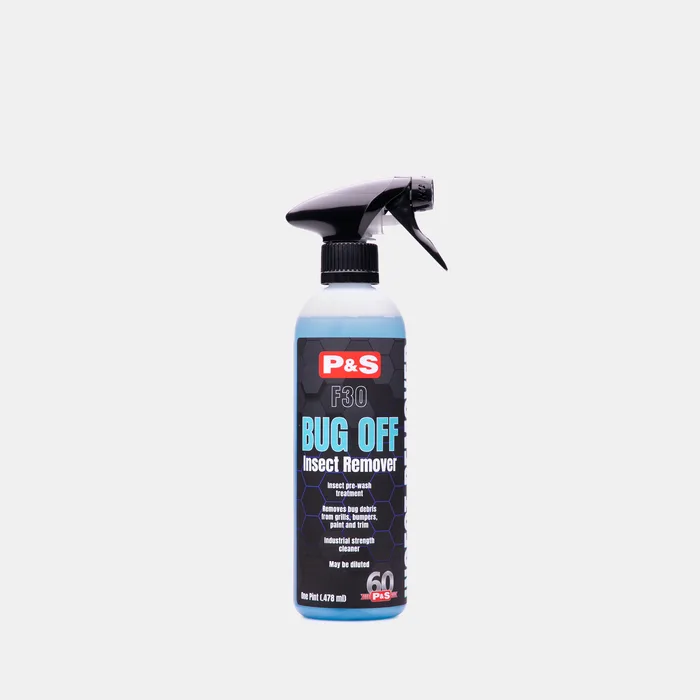
A trade pre-soak that says where it belongs in the wash, in sizes that suit doing this every week.
Best for: Anyone washing regularly through insect season, or covering more than one vehicle, where a pre-soak step saves scrubbing later.
- Positioned explicitly as a pre-wash step, breaking down heavy bug concentrations on the front grille and bumper before washing.
- Pint, quart, gallon and five gallon sizes, the widest range in this comparison.
- Being a pre-soak rather than a spot cleaner, it treats the whole affected area at once.
- Trade sizes up to five gallons make frequent use practical.
- No chemistry named, so you cannot tell whether it will strip wax.
- No dwell time published on a product whose whole function is dwelling.
- No dilution ratio despite the trade sizing implying a concentrate.
- The page names only the grille and bumper, so its clearance on trim, glass and paint elsewhere is unstated.
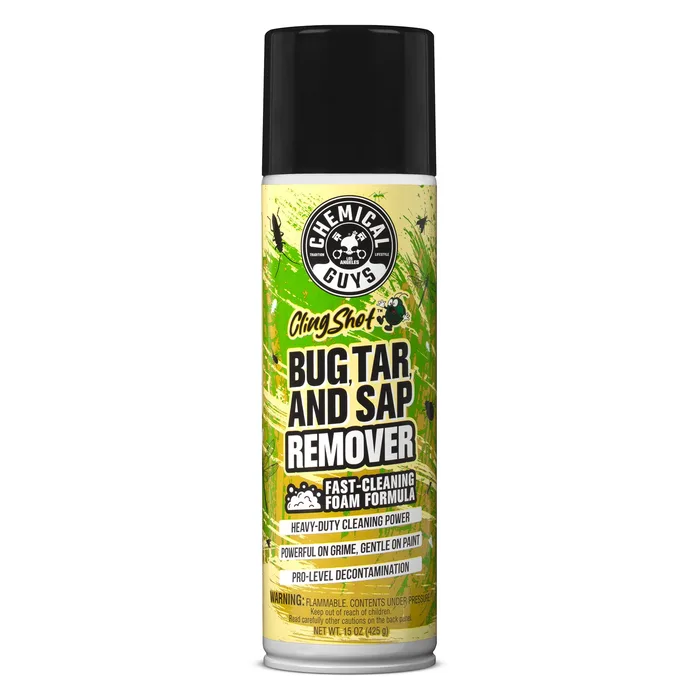
A clinging foam built around dwell time, with a stated 30 second to one minute starting point and a named list of safe surfaces.
Best for: Baked-on bugs on vertical panels where a liquid would run straight off, for someone who will test a hidden spot first and can wait for stock.
- Thick clinging foam sticks to vertical surfaces, which is the correct mechanism for a grille or a bumper.
- Extended dwell time means less scrubbing, and scrubbing is what puts scratches in paint around bug remains.
- Covers bugs, road tar and tree sap in one product, the broadest contamination list here.
- Chemical Guys states it is safe for paint, chrome, plastic, trim and glass, and gives a dwell time of 30 seconds to one minute.
- Directions are to rinse after dwelling, or wipe spot treatments with a damp microfiber towel.
- No chemistry named on the product page, so whether it is butyl, solvent or citrus based is unknown.
- The safe-surface claim is broad, and tar removal usually needs solvents that can attack trim, so test a hidden spot first.
- Sold in 15 ounce sizes only, with a two-pack as the one way to scale up, and its page showed it as sold out at the time of writing.
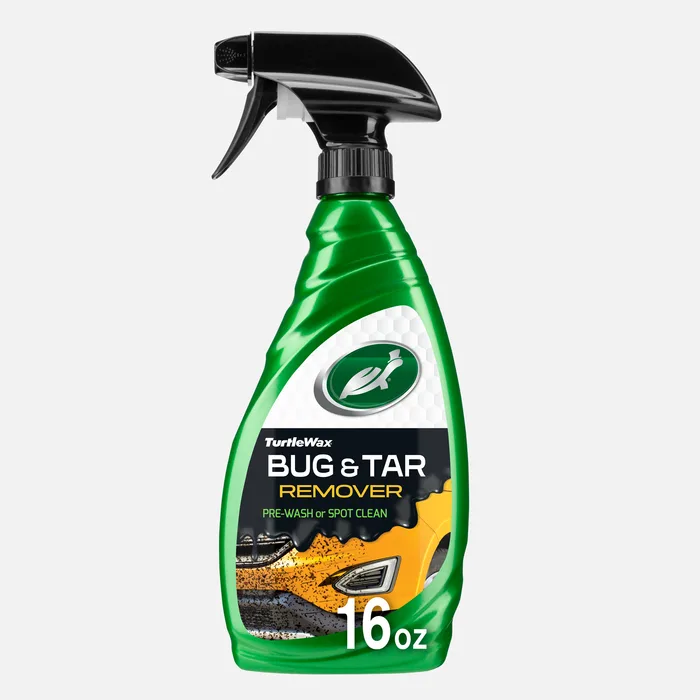
Names two very different contaminants on the label and nothing at all about how it handles either.
Best for: Almost nobody choosing deliberately. It will likely shift light bug residue, and on a tar-spattered rocker panel you are applying an unknown solvent to unknown-compatibility trim.
- Trigger bottle at the budget tier, widely stocked, easy to buy the same afternoon.
- Aimed at stains and soils that survive a normal wash, which is the right target.
- Sixteen ounces is enough for a grille and rocker panels several times over.
- No chemistry named anywhere on the page.
- The only surface claim found is a product image saying safe on plastic and glass, with no list covering paint, rubber or trim.
- Directions say only to let it sit and penetrate, with no dwell time or dilution guidance.
- Bugs and tar need different chemistry, and the page never addresses how one bottle covers both.
| Criteria | Bug Remover Top pick Buy it Buy | Bug Off Insect Remover Buy it Buy | ClingShot Bug, Tar & Sap Remover It depends Buy | Bug & Tar Remover, 16 fl oz Skip it Buy |
|---|---|---|---|---|
| Best for | Grilles, mirrors and leading edges after a long drive, where knowing the chemistry lets you decide what else needs redoing afterwards. | Anyone washing regularly through insect season, or covering more than one vehicle, where a pre-soak step saves scrubbing later. | Baked-on bugs on vertical panels where a liquid would run straight off, for someone who will test a hidden spot first and can wait for stock. | Almost nobody choosing deliberately. It will likely shift light bug residue, and on a tar-spattered rocker panel you are applying an unknown solvent to unknown-compatibility trim. |
| Price tier | $$ · mid-range | $$ · mid-range | $$ · mid-range | $ · budget |
| Chemistry named | Water-based, butyl-heavy, co-solvents | Not named | Not named | Not named |
| Cleared surfaces | Paint, plastic bumpers, glass, clear coat safe | Grille and bumper | Paint, chrome, plastic, trim and glass | Plastic and glass, per product image |
| Dwell time | Not stated | Not stated | 30 seconds to one minute, longer for heavy contamination | Let it sit to penetrate, no time given |
| Format | High sudsing liquid | Pre-soak | Clinging foam | Trigger spray |
| Contamination covered | Bugs | Insects | Bugs, tar and sap | Bugs and tar |
| Sizes | 16 oz, gallon, 5 gallon | Pint, quart, gallon, 5 gallon | 15 oz, or 2-pack | 16 fl oz |
| Dilution ratio | Not published | Not published | Not published | Not published |
| Reprotection advised | Yes, brand recommends topping up protection | Not stated | Not stated | Not stated |
Which one is right for you?
- Grilles, mirrors and leading edges after a long drive, where knowing the chemistry lets you decide what else needs redoing afterwards. Buy it Adam's Polishes Bug Remover
- Anyone washing regularly through insect season, or covering more than one vehicle, where a pre-soak step saves scrubbing later. Buy it P&S Detail Products Bug Off Insect Remover
- Baked-on bugs on vertical panels where a liquid would run straight off, for someone who will test a hidden spot first and can wait for stock. It depends Chemical Guys ClingShot Bug, Tar & Sap Remover
- Almost nobody choosing deliberately. It will likely shift light bug residue, and on a tar-spattered rocker panel you are applying an unknown solvent to unknown-compatibility trim. Skip it Turtle Wax Bug & Tar Remover, 16 fl oz
How we judged the field
Five things decide a bug and tar remover. Chemistry comes first, because it predicts both what the product will remove and what it will remove that you did not want removed, and butyl, citrus and solvent families behave very differently on trim and wax. Cleared surfaces come second, since a product safe on a painted bumper is not automatically safe on unpainted textured plastic or on rubber. Third is dwell behaviour, because the alternative to dwelling is scrubbing and scrubbing is what puts scratches in the clear coat around bug remains. Fourth is format, since a thin liquid runs straight off a vertical grille while a clinging foam stays put. Fifth is size, because insect season is a repeat problem rather than a one-off.
The field splits by what it is really for. Bug-specific products are alkaline or butyl-leaning and are designed as a pre-wash soak on the front of the car. Combined bug and tar products lean more solvent, because tar needs dissolving rather than breaking down, and they are correspondingly harder on trim. We took two bug-focused products and two combined ones, which is roughly how the shelf is divided, and the difference in what each brand was willing to state about its own formula turned out to be the clearest separator.
Adam’s Polishes Bug Remover
Buy itAdam’s Bug Remover is the only product in this comparison that tells you what it is. The page describes a water-based cleaner with a butyl-heavy formulation containing co-solvents, designed to break down organic bug contaminants, and it goes out of its way to distinguish itself from a general all purpose cleaner that happens to be clear coat safe. That matters because butyl is the ingredient doing the work and it is also the ingredient that will strip wax and sealant off the panel you sprayed. Adam’s is consistent about this, recommending a maintenance spray of a wax or ceramic product before a serious road trip, which is a brand telling you its product removes protection. Cleared surfaces are named directly: painted surfaces, plastic bumpers and glass, with clear coat safety stated. Sizes are 16 ounce, gallon and five gallon. The gaps are the category’s: no dwell time and no dilution ratio on the page.
P&S Detail Products Bug Off Insect Remover
Buy itP&S Bug Off is the same job for someone doing it every week. The page is short but it is specific about where the product goes in the process, describing it as breaking down heavy bug concentrations on the front grille and bumper prior to vehicle washing. That is a pre-soak positioning rather than a spot cleaner, which is the right way to handle a grille: wet the whole area, let the chemistry work, then wash normally rather than picking at individual splatters with a cloth. Sizes run from pint through quart and gallon to five gallon, the widest range here, which makes treating the front of a car a routine step rather than a project. What is missing is everything about the formula. No chemistry named, so wax compatibility is unknown, no dwell time, no dilution ratio despite the trade sizing, and the only surfaces named are the grille and the bumper.
Chemical Guys ClingShot Bug, Tar & Sap Remover
It dependsClingShot is the interesting one because the mechanism is right and the chemistry is undisclosed. Chemical Guys built the product around a thick clinging foam that sticks to surfaces for extended dwell time, helping break down bugs, road tar and tree sap with less scrubbing. That is the correct engineering answer to the actual problem: a grille is vertical, a thin liquid runs off it in seconds, and the alternative to dwell is scrubbing, which drags hardened insect shell across clear coat. It also covers the broadest contamination list here, adding tree sap to bugs and tar. Chemical Guys does give a starting point, 30 seconds to one minute with longer allowed on heavy contamination as long as it does not dry, and states it is safe for paint, chrome, plastic, trim and glass. The difficulty is that no chemistry is named, so on a product that claims to handle tar you cannot tell what is doing the dissolving, which is why a hidden-spot test is sensible. It comes in 15 ounce sizes only, and it showed as sold out when we checked its page.
Turtle Wax Bug & Tar Remover, 16 fl oz
Skip itThe Turtle Wax Bug & Tar Remover is the one to skip, and the reason is the gap between what the name promises and what the page supports. It is described as eliminating stains and soils that refuse to budge from the surface of the vehicle even with powerful car wash solutions, which is a fair statement of the problem and not a statement about the product. No chemistry is named. The only surface claim is a product image saying safe on plastic and glass. The directions say only to let it sit, with no dwell time. And the product covers both bugs and tar, which need different chemistry, without ever addressing how one 16 ounce trigger bottle handles both. Bug residue wants something alkaline or butyl to break down protein; tar wants a solvent to dissolve petroleum. A combined product is leaning one way or the other, and on a rocker panel spattered with tar next to unpainted plastic trim, knowing which way matters. It is cheap and widely stocked, and that is the case for it.
Sources
Specs in this review come from these pages.
Adam’s Polishes Bug Remover vs P&S Detail Products Bug Off Insect Remover: which should you buy?
Adam’s Bug Remover and P&S Bug Off are both bug-first products and the choice comes down to how much you want to be told. Adam’s names the chemistry, names the surfaces, states clear coat safety, and is honest that you should reapply protection afterwards. On a cleaner this aggressive that is genuinely useful, because it turns an unknown into a decision: treat the front end, then top the wax back up on the front end rather than wondering.
P&S gives you sizes and a process position instead. Pint through five gallon means the cost of treating a grille every wash through summer becomes trivial, and framing it as a pre-soak before the wash is the right way to use this chemistry, since it means the product is rinsed off as part of the normal process rather than sitting on paint. What it will not tell you is what is in it. Buy the Adam’s if this is a couple of times a year and you want to know what you are putting on the car. Buy the P&S if you are treating the front of a vehicle most weeks and the economics of a gallon matter more than the ingredient list.
What to look for
- Named chemistry: butyl, citrus and solvent families remove different things and damage different things, and only one product here says which it is.
- A cleared surface list: paint, unpainted textured trim, rubber and glass are different exposures, and a tar remover is the product most likely to mark trim.
- A dwell time: the alternative to dwelling is scrubbing, and scrubbing hardened insect shell across clear coat is how the damage happens.
- A format that suits a vertical panel: grilles and bumpers are upright, so a clinging foam or a gel stays put where a thin liquid runs off.
- Advice about reapplying protection: anything that removes baked-on bugs removes wax, and a brand that says so is being straight with you.
- Separate products for bugs and tar where possible: one bottle for both is a compromise, and it usually compromises towards the more aggressive side.
Our final take
This is a category where the strongest chemistry on the shelf is sold with the least information about it. Adam’s Bug Remover is the pick because it names a water-based, butyl-heavy formula, names the surfaces it is cleared for, and tells you that you will need to redo your protection afterwards, which is more useful information than most of the field provides. P&S Bug Off is the better buy if you are doing this weekly, positioned properly as a pre-wash soak in sizes that make it routine. ClingShot has the right mechanism, a clinging foam that holds dwell on a vertical grille, and a stated 30 second to one minute starting point, though it names no chemistry. The Turtle Wax bottle names two different contaminants on the front and addresses neither on the page, which is the wrong place to save words.
Questions, answered
Do bugs actually damage paint, or is it cosmetic?
They damage it. Insect remains are acidic, and as they dry and bake in the sun the acid concentrates and etches into the clear coat. What starts as a removable smear becomes a permanent dimple you can only fix by polishing. The practical rule is that bug removal is time-sensitive rather than optional: a grille cleaned the same week wipes clean, and the same grille after a hot month needs correction. Tar is different, being a surface deposit rather than an etchant, but it holds grit that scratches when you rub it.
Why does it matter that only one names its chemistry?
Because the chemistry tells you what else the product will do. Adam's states a butyl-heavy formulation, and butyl is a powerful degreaser that will also remove wax and sealant from wherever you spray it, which is why that brand recommends topping up protection afterwards. A citrus or solvent-based tar remover will attack plastic trim and rubber. Without knowing which family a product belongs to, you cannot predict either the collateral damage or what needs redoing after.
Should bugs and tar be treated with the same product?
Ideally not. Bug residue is organic and comes off best with an alkaline or butyl cleaner that breaks down protein. Tar is petroleum and needs a solvent to dissolve it. Products that claim both are compromising, usually by leaning solvent, which is the more aggressive side for paint and trim. If you have both problems, a dedicated bug pre-soak before the wash and a targeted tar remover afterwards will do less damage than one bottle doing both jobs at full strength.
How long should I let it dwell?
Only Chemical Guys publishes a figure, 30 seconds to one minute, extended for heavy contamination as long as the product does not dry. The general practice is a few minutes at most on a cool surface in shade, long enough to soften the residue and never long enough for the product to dry on the panel. Working in sections and reapplying is safer than one long dwell. If bugs are baked hard, two shorter applications will do more than one long one and risk far less.
Do I need to re-wax after removing bugs and tar?
On the area you treated, almost certainly. Anything strong enough to break down baked insect remains or dissolve tar is strong enough to take wax and most sealants with it. Adam's says as much on its own page, recommending a maintenance spray of a wax or ceramic product before a serious road trip. The practical routine is to treat the affected area, wash the car normally, then reapply protection to the front end rather than the whole vehicle.
Deciding between the top two? See our head-to-head: Adam's Polishes Bug Remover vs P&S Detail Products Bug Off Insect Remover.
More in Automotive
Bug and Tar Removers, Explained Plain-English guide → Adam's Polishes Bug Remover vs P&S Detail Products Bug Off Insect Remover Head-to-head →  The Best Car Air Fresheners and Odour Eliminators: 4 Compared (and One to Skip)
  The Best Car Battery Chargers & Maintainers: 4 Compared (and One to Skip)
  The Best Car Covers: 4 Compared (and One to Skip)
  The Best Car Detailing Kits: 4 Compared (and One to Skip)