

Automotive
The Best Car Battery Chargers & Maintainers: 4 Compared (and One to Skip)
We compared four popular smart chargers and maintainers on charging speed, battery-chemistry support, desulfation, and safety to find the ones worth keeping in the garage.
The short version
For most drivers the NOCO Genius5 is the smart buy: at 5 amps it charges, maintains, desulfates, and even wakes near-dead batteries across 6V, 12V, and lithium chemistries from one pocket-sized case. Step up to the CTEK MXS 5.0 if you run AGM batteries or store vehicles and want the gentlest, most thorough lead-acid recovery, accepting that it costs more and skips lithium. The Battery Tender Plus is a brilliant set-and-forget maintainer for a stored bike or classic, but its 1.25 amps make it a poor primary charger. The Schumacher SC1355 is cheap and everywhere, yet it is really just a weak float maintainer, so we skip it in favor of a slightly pricier, more capable pick. Best for: keeping any vehicle's battery charged, healthy, and ready through every season.
The verdict in 30 seconds
What mattered most
- Max charging current
- Voltage support
- Battery chemistries
- Desulfation / recovery
- Charge vs maintain
- Safety & durability
A modern battery charger should do two jobs well: revive a run-down battery and then hold it at full charge for months without cooking it. We synthesized independent testing and a large body of owner reports across compact smart chargers and long-term maintainers, and a clear hierarchy emerged. One versatile charger does nearly everything, a premium unit specializes in reviving tired lead-acid batteries, a classic maintainer is superb at one narrow job, and one cheap-and-popular pick is really just a trickle-maintainer wearing a charger's name.
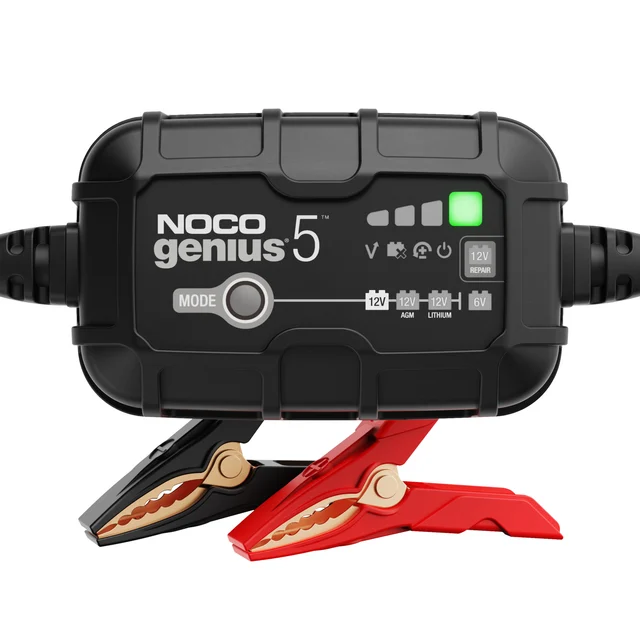
A pocket-sized charger that handles almost every 6V or 12V battery chemistry, recovers dead ones, and maintains for months.
Best for: Anyone who wants one charger for the car, motorcycle, mower, and lithium powersport batteries alike.
- Charges 6V and 12V lead-acid (flooded, gel, AGM, deep-cycle) and lithium LiFePO4 from one unit
- Repair mode uses pulse charging to detect and reverse sulfation on tired batteries
- Force Mode can wake batteries that have dropped near zero volts, which most chargers refuse to touch
- Thermal sensor adjusts the charge for hot or cold ambient temperatures
- Compact, splash-resistant, and safe to leave connected indefinitely
- At 5 amps it is not the fastest way to bulk-charge a large, deeply drained battery
- The many modes and LED icons take a read of the manual to learn
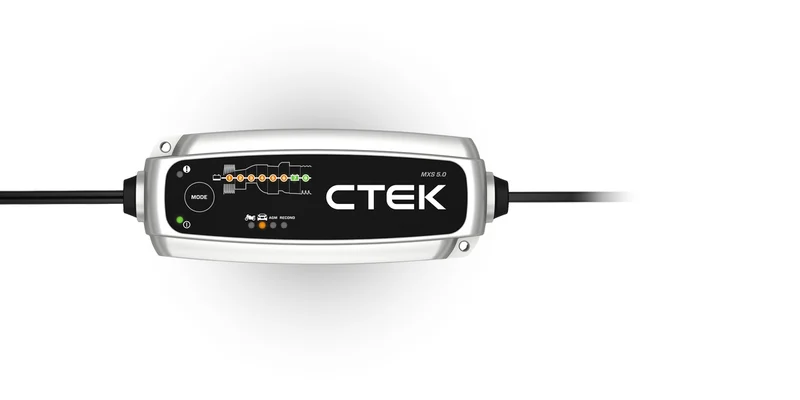
A premium 8-step charger that specializes in gently reviving and reconditioning neglected lead-acid and AGM batteries.
Best for: Owners of AGM-equipped or seasonally stored vehicles who want the most thorough lead-acid recovery and upkeep.
- Eight-stage cycle including desulfation, a dedicated AGM mode, and a RECOND step that can restore deeply discharged batteries
- Independent testing and owner reports praise its gentle, thorough charging and long service life
- Fully automatic connect-and-forget maintenance you can leave on all winter
- Weatherproof, spark-free, and reverse-polarity protected
- Does not charge lithium LiFePO4 batteries, which need CTEK's separate lithium model
- 12V only, so no 6V classics or powersport batteries
- Costs noticeably more than equally capable lead-acid chargers
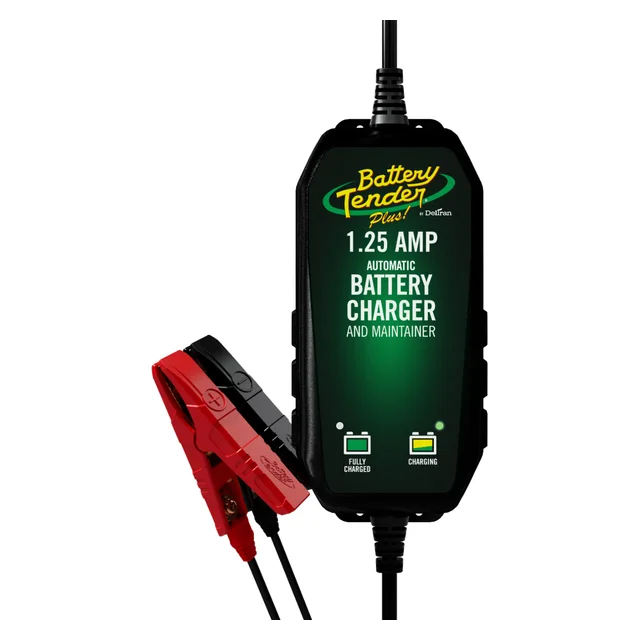
The long-trusted maintainer that keeps a stored battery topped up flawlessly, but is too gentle to be your main charger.
Best for: Someone who mainly needs to keep a motorcycle, classic, or seasonal battery healthy over storage.
- Four-step program with a true float stage that will not overcharge no matter how long it stays connected
- Decades-long reputation for reliability among owners who store seasonal vehicles
- Temperature compensated with reverse-polarity protection
- Quick-connect ring terminals make it easy to hard-wire onto a stored bike or car
- At 1.25 amps it maintains beautifully but charges a drained battery very slowly
- This model handles lead-acid only, not lithium
- No desulfation or recovery mode for badly neglected batteries
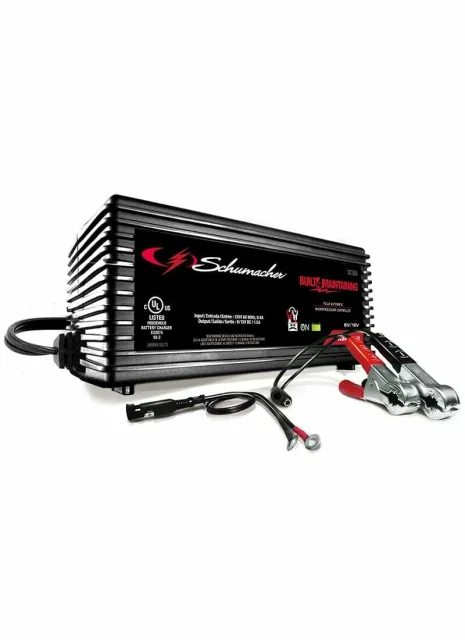
An inexpensive, everywhere-available maintainer that is fine at floating a battery but too weak and basic to recommend over the alternatives.
Best for: Only the most budget-focused buyer who wants nothing more than the cheapest possible float charger.
- Very affordable and stocked at nearly every auto parts store
- Fully automatic 6V/12V float maintenance with auto voltage detection
- Reverse-hookup protection and a simple LED status light
- 1.5 amps makes it a maintainer, not a charger; it will not meaningfully revive a flat car battery
- No lithium support and only a bare-bones status readout
- Owner reports show a wider spread in unit-to-unit longevity than the pricier competition
- For barely more money the Battery Tender Plus is a more trusted maintainer
| Criteria | NOCO Genius5 5-Amp Smart Battery Charger Top pick | CTEK MXS 5.0 Battery Charger | Battery Tender Plus 1.25-Amp Battery Charger and Maintainer | Schumacher SC1355 1.5-Amp Battery Maintainer |
|---|---|---|---|---|
| Verdict | Buy it | Buy it | It depends | Skip it |
| Best for | Anyone who wants one charger for the car, motorcycle, mower, and lithium powersport batteries alike. | Owners of AGM-equipped or seasonally stored vehicles who want the most thorough lead-acid recovery and upkeep. | Someone who mainly needs to keep a motorcycle, classic, or seasonal battery healthy over storage. | Only the most budget-focused buyer who wants nothing more than the cheapest possible float charger. |
| Price tier | $$ · mid-range | $$$ · premium | $$ · mid-range | $ · budget |
| Max charging current | 5 amps | 5 amps | 1.25 amps | 1.5 amps |
| Voltage support | 6V and 12V | 12V only | 12V (this model) | 6V and 12V |
| Battery chemistries | Lead-acid, AGM, gel, deep-cycle, lithium LiFePO4 | Lead-acid, AGM, gel (no lithium) | Lead-acid, AGM, gel (no lithium) | Lead-acid, AGM, deep-cycle (no lithium) |
| Desulfation / recovery | Repair mode + Force Mode from near 0V | Desulfation + RECOND reconditioning step | None | Basic desulfation only |
| Charge vs maintain | Charges and maintains | Charges and maintains | Maintains well, charges slowly | Maintains; barely charges |
| Safety & durability | Splashproof, reverse-polarity, spark-free | Weatherproof, reverse-polarity, spark-free | Reverse-polarity protected | Reverse-hookup protected |
| Best role | All-purpose everyday charger | Premium lead-acid reviver/maintainer | Dedicated storage maintainer | Cheapest float maintainer |
| Price tier | $$ · mid-range | $$$ · premium | $$ · mid-range | $ · budget |
Which one is right for you?
- Anyone who wants one charger for the car, motorcycle, mower, and lithium powersport batteries alike. Buy it NOCO Genius5 5-Amp Smart Battery Charger
- Owners of AGM-equipped or seasonally stored vehicles who want the most thorough lead-acid recovery and upkeep. Buy it CTEK MXS 5.0 Battery Charger
- Someone who mainly needs to keep a motorcycle, classic, or seasonal battery healthy over storage. It depends Battery Tender Plus 1.25-Amp Battery Charger and Maintainer
- Only the most budget-focused buyer who wants nothing more than the cheapest possible float charger. Skip it Schumacher SC1355 1.5-Amp Battery Maintainer
How we judged the field
We do not run our own battery lab, and we are not going to pretend otherwise. What we did was read widely across independent testing and pull together what owners consistently report after living with these chargers through real winters and dead-battery mornings, then boil it down to one verdict per product. For a car battery charger, a handful of things mattered most. First, does it actually charge, or does it only maintain? A unit that trickles at one amp is a very different tool from one that pushes five. Second, which battery chemistries does it support, because a lead-acid-only charger is the wrong tool for a lithium powersport battery, and vice versa. Third, can it help a neglected battery, through desulfation, reconditioning, or a recovery mode that wakes a deeply discharged pack. And finally, is it safe to leave connected for months, with reverse-polarity protection, spark-free connections, and an automatic float that will not cook the battery. We weighted versatility and safety over raw speed, because the charger you can use on every vehicle and forget about is worth more than one that charges a little faster but only fits one job.
NOCO Genius5 5-Amp Smart Battery Charger — buy
This is the charger we would tell most people to buy first, because it quietly does almost everything. In one compact, splash-resistant case it charges 6V and 12V lead-acid batteries in every common flavor, flooded, gel, AGM, and deep-cycle, and it also charges lithium LiFePO4, which very few chargers at this size handle. Its five amps are enough to genuinely charge a car battery rather than just sip at it, while still being gentle enough to maintain one for months. Two features stand out in owner reports: a repair mode that uses precision pulse charging to detect and reverse sulfation on tired batteries, and Force Mode, which starts charging batteries that have dropped so low most chargers refuse to recognize them. A built-in thermal sensor trims the charge for hot or cold conditions so it neither overcharges in summer nor undercharges in a freezing garage. The honest trade-offs are minor: at five amps it is not the fastest way to bulk-charge a very large, very flat battery, and its dense array of mode icons rewards a quick read of the manual. For versatility per dollar, nothing else here matches it.
CTEK MXS 5.0 Battery Charger — buy
The MXS 5.0 is the specialist you buy when reviving and preserving lead-acid batteries is the whole point. It runs an eight-step cycle that includes desulfation, a dedicated AGM mode, and a RECOND reconditioning step that can bring back some deeply discharged or neglected batteries that a simpler charger would give up on. Independent testing and long-term owner reports repeatedly praise how gently and thoroughly it charges, and how long the units themselves last. It is fully automatic, weatherproof, spark-free, and safe to leave connected all winter, which makes it a favorite for AGM-equipped and seasonally stored vehicles. The catches are real and worth stating plainly. It does not charge lithium LiFePO4 batteries at all, which need CTEK’s separate lithium charger, and it is 12V only, so it will not touch a 6V classic or many powersport batteries. It also costs meaningfully more than chargers that do the lead-acid job nearly as well. If your batteries are lead-acid or AGM and you want the most careful recovery and upkeep money can reasonably buy, it earns the premium.
Battery Tender Plus 1.25-Amp Battery Charger and Maintainer — it depends
The Battery Tender Plus has earned its long, loyal following, but you have to buy it for the right reason. As a maintainer it is close to flawless: its four-step program ends in a true float stage that will hold a full battery at the correct voltage indefinitely without ever overcharging it, and owners who store motorcycles, classics, and seasonal cars trust it precisely because it can be left connected and forgotten for months. It is temperature compensated, reverse-polarity protected, and its quick-connect ring terminals make it easy to hard-wire onto a stored vehicle. The reason it is a depends rather than a buy is power and scope. At 1.25 amps it maintains beautifully but charges a genuinely drained battery very slowly, this model handles lead-acid only, and there is no desulfation or recovery mode for a battery that has already been neglected. Buy it if your real need is upkeep during storage. If you also want a charger that can revive a flat battery, spend similar money on the more versatile NOCO instead.
Schumacher SC1355 1.5-Amp Battery Maintainer — skip
The SC1355 is the one it is easy to grab on impulse, because it is cheap and sits on the shelf of nearly every auto parts store. It is not a bad little device: it is fully automatic, detects 6V or 12V on its own, floats a battery safely, and has reverse-hookup protection. But it is the weakest pick here for the job most buyers actually have. At 1.5 amps it is a maintainer, not a charger, so it will not meaningfully revive a flat car battery, and it offers only a bare status light with no lithium support and just basic desulfation. Owner reports also show a wider spread in unit-to-unit longevity than the pricier competition, with more accounts of units that fade after a season or two. The deciding factor is value: for barely more money, the Battery Tender Plus is a more trusted maintainer, and for a small step up the NOCO Genius5 does vastly more. Unless you want nothing beyond the cheapest possible float charger, this is the one to skip.
NOCO Genius5 vs CTEK MXS 5.0: which should you buy?
Both are excellent, so the choice comes down to what you own and how much you want to spend. Choose the NOCO Genius5 if you value versatility: it charges 6V and 12V, handles lithium as well as every lead-acid type, revives near-dead batteries with Force Mode, maintains safely for months, and costs less. It is the better single charger for a mixed garage of car, motorcycle, mower, and powersport batteries. Choose the CTEK MXS 5.0 if your batteries are lead-acid or AGM and your priority is the most thorough, gentle recovery and long-term care, and you are happy to pay a premium for its eight-step cycle and RECOND reconditioning. The tiebreaker is lithium and voltage range: if any of your batteries are lithium or 6V, the decision is made for you and the NOCO wins. If everything you charge is 12V lead-acid and longevity of the battery matters more than the price of the charger, the CTEK is the connoisseur’s pick.
What to look for
- Decide whether you need to charge or only maintain: 1 to 2 amps maintains, but 4 to 10 amps is what actually charges a drained battery in reasonable time.
- Match the charger to your battery chemistry; only buy a lithium-capable charger like the NOCO Genius5 if you actually run lithium LiFePO4 batteries.
- Look for a recovery feature, whether it is desulfation, a reconditioning step, or a mode that can wake a deeply discharged battery.
- Insist on a true automatic float or maintenance mode so it is safe to leave connected; avoid old unregulated trickle chargers that can overcharge.
- Check the safety basics: reverse-polarity protection, spark-free connections, and weather resistance if it will live in a garage or shed.
- Confirm the voltage range you need, since some excellent chargers are 12V only.
Our final take
The NOCO Genius5 is our overall pick because it collapses a whole shelf of specialized chargers into one versatile unit that charges, maintains, desulfates, and recovers across nearly every battery a normal garage contains, lithium included. The CTEK MXS 5.0 is the runner-up and the right buy when lead-acid and AGM longevity is the priority and its premium is justified by the most thorough recovery and upkeep on test. The Battery Tender Plus remains a superb maintainer, so buy it if storage upkeep is genuinely all you need. And the Schumacher SC1355, for all its low price and availability, is the one to skip, because a small step up in budget buys a meaningfully better tool. Buy the charger that fits every battery you own and can be left connected without worry, and a dead-battery morning stops being part of your life.
Questions, answered
What is the difference between a battery charger, a maintainer, and a trickle charger?
A charger delivers enough current to meaningfully refill a drained battery. A maintainer (or float charger) is designed to hold an already-full battery at the right voltage for months without overcharging. An old-style dumb trickle charger pushes constant current with no automatic shutoff, which is why it can boil off electrolyte and ruin a battery if left connected too long. The best modern units, like the NOCO Genius5 and CTEK MXS 5.0, do both jobs and switch to a safe float automatically.
Can I leave a smart charger connected to my battery all winter?
Yes. Every microprocessor-controlled charger here monitors the battery and drops to a float or maintenance mode once it is full, so it is safe to leave connected for months. That is exactly what makes them suitable for stored motorcycles, classics, RVs, and seasonal vehicles, unlike an unregulated trickle charger.
Do I need a charger that supports lithium (LiFePO4) batteries?
Only if you actually have a lithium battery, which is increasingly common in powersports, marine, and some newer vehicles. Lithium packs need a different charging profile than lead-acid, so using a lead-acid-only charger on one can undercharge or stress it. The NOCO Genius5 supports lithium LiFePO4; the CTEK MXS 5.0, Battery Tender Plus, and Schumacher SC1355 are lead-acid only.
Will these chargers recover a completely dead battery?
Sometimes. The NOCO Genius5's Force Mode is built to start charging batteries that have fallen near zero volts, and the CTEK MXS 5.0's desulfation and RECOND steps can revive some deeply discharged or sulfated lead-acid batteries. Neither can save a battery with a failed cell or physical damage, and a battery left flat for a long time may be beyond rescue.
How many amps do I need for a car battery?
For maintaining a healthy battery, 1 to 2 amps is plenty. For actually charging a drained car battery in a reasonable time, 4 to 10 amps is much better, which is why the 5-amp NOCO Genius5 and CTEK MXS 5.0 double as real chargers while the 1.25-amp Battery Tender Plus and 1.5-amp Schumacher are better thought of as maintainers.
More Automotive reviews
 The Best Car Covers: 4 Compared (and One to Skip)
  The Best Car Phone Mounts: 4 Compared (and One to Skip)
  The Best Car Backseat & Trunk Organizers: 4 Compared (and One to Skip)
  The Best Car Vacuums: 4 Compared (and One to Skip)
  The Best Dash Cams: Four Current Models Compared
  The Best Portable Jump Starters: 4 Compared (and One to Skip)