

Automotive
The Best Car Emergency Kits: 4 Compared (and One to Skip)
Four pre-assembled roadside kits compared on jumper cable gauge, tire inflation, first aid substance and how much of the piece count is filler.
The short version
Buy the Lifeline AAA Excursion Road Kit (76-Piece) if you want one box that covers a dead battery, a soft tire and roadside visibility with parts that are not an afterthought. Buy the Everlit Survival Road Guardian if you want similar capability for less, with the longest cables here and a first aid pouch that goes beyond bandages. The Thrive 104-Piece kit has the best hand tools and the neatest case, but its cables are the shortest and there is no compressor, so it suits drivers who already own one. Skip the Always Prepared 125-Piece kit: the number is built from bandages, swabs and glow sticks, and reviewers say it promises more than it delivers. Pre-assembled kits tend to ship thin cables, so if you drive a truck, a diesel or a large SUV, plan on a separate set of 4 gauge cables or a lithium jump pack. Best for: drivers who want real roadside capability rather than a high number on the label.
Our picks at a glance
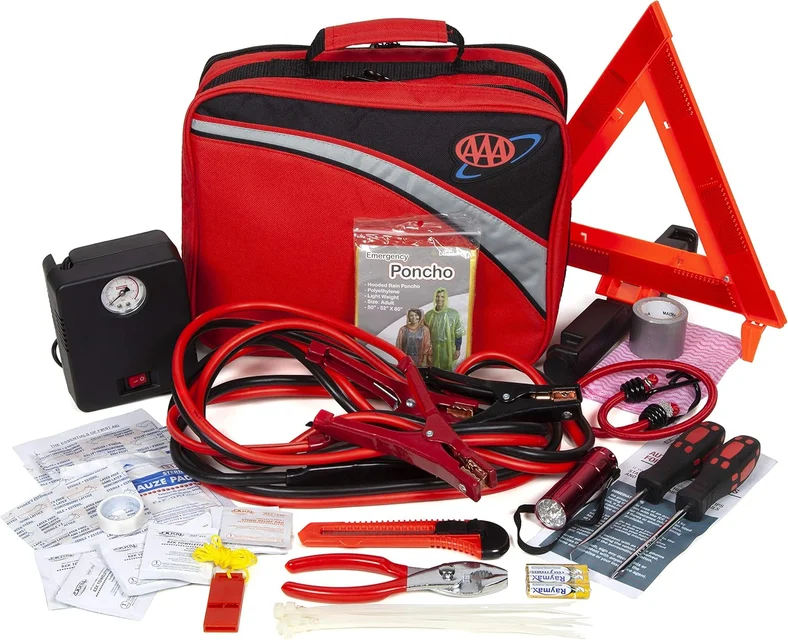
- Lifeline AAA Excursion Road Kit (76-Piece) - Buy. The rare pre-built kit where the important parts are the good parts: long cables, a real 12V compressor and tools with actual handles.
- Everlit Survival Road Guardian Roadside Emergency Kit - Buy. Longest cables in the group, a digital compressor and a 108-piece first aid kit that includes gauze pads.
- Thrive Roadside Emergency Car Kit (104-Piece) - It depends. The best hand tools of the group in the tidiest case, but no way to put air in a tire and the shortest cables here.
- Always Prepared 125-Piece Roadside Emergency Kit - Skip. A textbook example of the piece-count trick: strip out the bandages, swabs and glow sticks and very little capability is left.
The verdict in 30 seconds
What mattered most
- Jumper cables
- Tire inflation
- First aid substance
- Light
- Visibility gear
- Hand tools
Pre-assembled roadside kits are sold on one number: the piece count. That number is close to meaningless, because a kit can reach 125 pieces by counting individual adhesive bandages and cotton swabs while shipping short, thin jumper cables and a light you would not trust to change a tire in the dark. We looked at what independent testing and owner reports say about the parts that actually get used on a shoulder at night: cable gauge and length, whether there is a way to reinflate a soft tire, whether the first aid pouch has anything beyond bandages, and whether the case survives being crushed under a spare wheel. Two of these four are worth buying, one suits a specific kind of driver, and one is a bag of numbers.
The rare pre-built kit where the important parts are the good parts: long cables, a real 12V compressor and tools with actual handles.
Best for: Drivers who want one purchase to cover the common failures (dead battery, soft tire, roadside visibility) without auditing a parts list.
- 10 foot, 8 gauge booster cables reach across a lane, which matters when the dead car cannot be repositioned
- Includes a 12V air compressor with a dial gauge, so a slow leak becomes a drive to the shop instead of a tow
- Full size reflective triangle plus screwdrivers, slip joint pliers and a utility knife that feel like tools rather than souvenirs
- Carried and vetted by a major motor club, and stocked widely enough that replacement parts are easy to find
- The included flashlight is a small AAA cell unit, dim next to any modern pocket light
- Costs noticeably more than the generic kits it sits next to on the shelf
- First aid pouch covers scrapes and nothing more serious
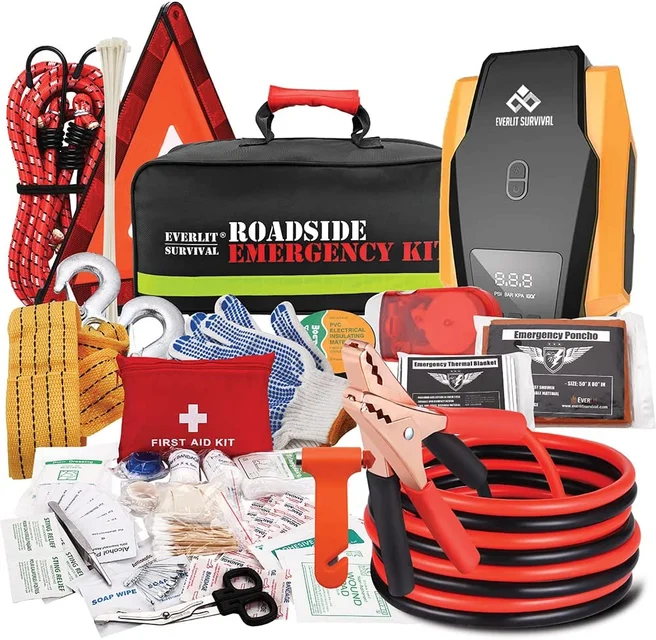
Longest cables in the group, a digital compressor and a 108-piece first aid kit that includes gauze pads.
Best for: Value-focused buyers who want the functional hardware (long cables, compressor, usable first aid) and do not care about brand-name endorsement.
- 12 foot cables, the longest of the four, which removes most of the parking geometry problems
- Air compressor with a digital readout and auto shutoff, easier to use correctly than a bare dial
- First aid section goes past adhesive strips: gauze pads, tape, gloves and wound dressings
- Adds a glass breaker and seat belt cutter and a tow strap without inflating the price
- The bag is packed to capacity, so there is no room to add a jump pack or your own light
- Hand crank flashlight has no batteries to go flat but is weak compared with a battery light
- No fire extinguisher and no tire plug kit, so it is not a complete answer to every roadside failure
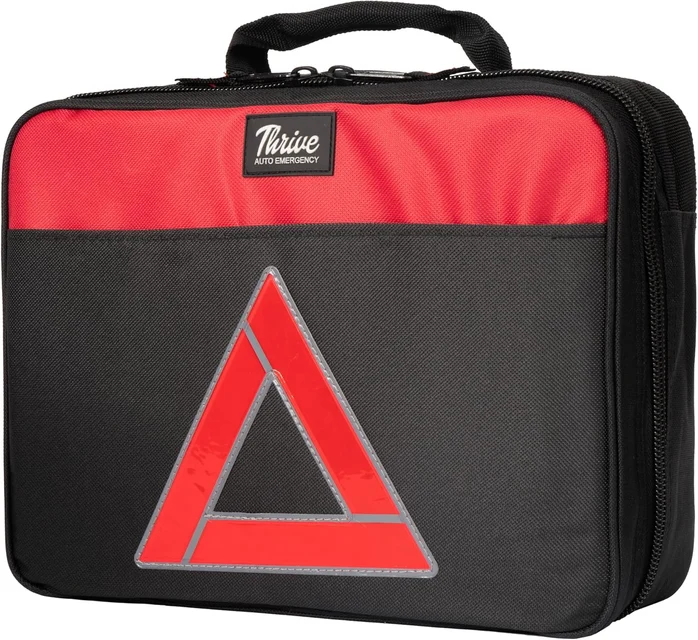
The best hand tools of the group in the tidiest case, but no way to put air in a tire and the shortest cables here.
Best for: City and suburban drivers who mainly want a tidy, well-built tool and first aid roll and already own a compressor or jump pack.
- Reviewers often single out the tool quality: the multi-bit screwdriver and socket driver feel substantial rather than disposable
- Structured 600D case with defined pockets, so items stay put instead of migrating to the bottom of a duffel
- Compact enough to live under a sedan seat or in a small hatchback well
- Reflective warning triangle and escape hammer included
- 8 foot cables are the shortest in this comparison and force awkward nose-to-nose parking
- No air compressor, only a tire pressure gauge, which tells you about the problem without solving it
- 62 of the advertised 104 pieces are the first aid kit, and most of those are bandages
Amazon had no buyable listing for this when we last checked. The link still works if it returns.
Check price on Amazon Read our detailed assessment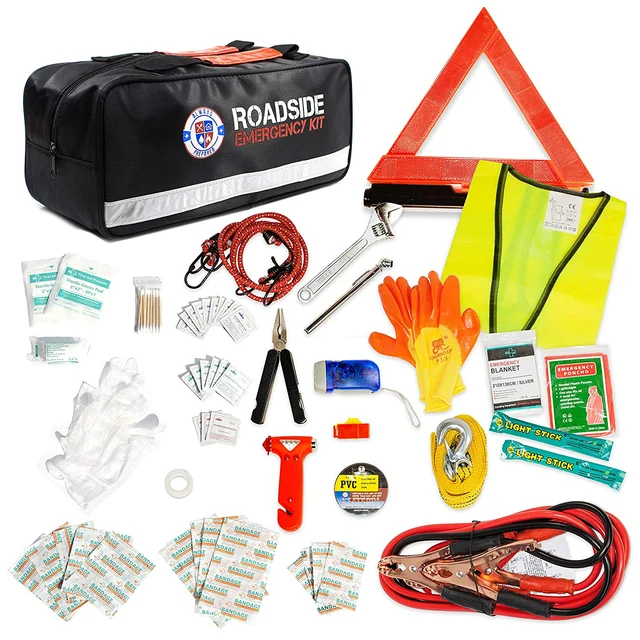
A textbook example of the piece-count trick: strip out the bandages, swabs and glow sticks and very little capability is left.
Best for: Almost nobody as a primary kit. Treat it as a glovebox supplement rather than the thing you rely on.
- Includes both a reflective triangle and a hi-vis vest, which is more visibility gear than most kits at this tier
- Cheapest way to get something in the trunk if the alternative is nothing at all
- Bag is compact and the reflective strip on it is genuinely useful at night
- Reviewers describe it as very basic and as promising more than it delivers
- Cables run roughly 7.5 feet, short enough to be unusable in a lot of real parking situations
- No air compressor at all, and the light is a squeeze-powered mini unit that barely reads as a flashlight
- The piece count leans on individual bandages, cotton swabs, alcohol wipes and glow sticks
Amazon had no buyable listing for this when we last checked. The link still works if it returns.
Check price on Amazon Read our detailed assessment| Criteria | Lifeline AAA Excursion Road Kit (76-Piece) Top pick | Everlit Survival Road Guardian Roadside Emergency Kit | Thrive Roadside Emergency Car Kit (104-Piece) | Always Prepared 125-Piece Roadside Emergency Kit |
|---|---|---|---|---|
| Verdict | Buy it | Buy it | It depends | Skip it |
| Best for | Drivers who want one purchase to cover the common failures (dead battery, soft tire, roadside visibility) without auditing a parts list. | Value-focused buyers who want the functional hardware (long cables, compressor, usable first aid) and do not care about brand-name endorsement. | City and suburban drivers who mainly want a tidy, well-built tool and first aid roll and already own a compressor or jump pack. | Almost nobody as a primary kit. Treat it as a glovebox supplement rather than the thing you rely on. |
| Price tier | $$ · premium | $ · mid-range | $ · mid-range | $ · budget |
| Jumper cables | 10 ft, 8 gauge | 12 ft (longest here) | 8 ft, 8 gauge (shortest here) | About 7.5 ft, 8 gauge |
| Tire inflation | 12V compressor with dial gauge | 12V compressor with digital readout | Pressure gauge only, no compressor | None |
| First aid substance | Basic wound care, thin beyond scrapes | Broadest of the four: gauze pads, tape, gloves, wound dressings | Large count but heavily weighted to adhesive strips | Bandages, swabs and wipes make up most of it |
| Light | Small AAA cell LED flashlight | Hand crank LED, no batteries to go flat | Compact LED flashlight | Squeeze-powered mini light, very dim |
| Visibility gear | Full size reflective triangle | Reflective triangle plus reflective bag panel | Reflective triangle and reflective case panel | Reflective triangle plus hi-vis vest |
| Hand tools | Two screwdrivers, slip joint pliers, utility knife | Glass breaker, belt cutter, tow strap | Best of the group: multi-bit screwdriver and socket driver | Light duty multi-tool and small wrench |
| How honest is the piece count | Reasonable, most pieces are hardware | Inflated by a 108-piece first aid section, but the hardware is real | Inflated: 62 of 104 pieces are first aid | Heavily padded with consumables |
| Price tier | $$ · premium | $ · mid-range | $ · mid-range | $ · budget |
Which one is right for you?
- Drivers who want one purchase to cover the common failures (dead battery, soft tire, roadside visibility) without auditing a parts list. Buy it Lifeline AAA Excursion Road Kit (76-Piece)
- Value-focused buyers who want the functional hardware (long cables, compressor, usable first aid) and do not care about brand-name endorsement. Buy it Everlit Survival Road Guardian Roadside Emergency Kit
- City and suburban drivers who mainly want a tidy, well-built tool and first aid roll and already own a compressor or jump pack. It depends Thrive Roadside Emergency Car Kit (104-Piece)
- Almost nobody as a primary kit. Treat it as a glovebox supplement rather than the thing you rely on. Skip it Always Prepared 125-Piece Roadside Emergency Kit
How we judged the field
We do not run a lab. What we do is read across independent testing, teardown-style comparisons and aggregated owner reports, then weight the findings by what actually gets used on the side of a road. That filter matters here more than in most categories, because roadside kits are marketed almost entirely on a number that has nothing to do with capability.
Five things decided the verdicts.
Cable gauge and length. Jumper cables are the reason most people buy a kit at all. Thicker wire (a lower gauge number) carries more current, and 4 to 6 gauge is what electrical guidance actually recommends for a standard vehicle. The kits in this comparison are generally sold with 8 gauge cables, so length became the tiebreaker: 8 feet demands cooperative parking, 12 feet does not.
Whether you can put air in a tire. A slow leak is at least as common as a dead battery and far more common than any of the scenarios these kits illustrate on the packaging. A 12V compressor turns a tow into a fifteen minute delay. A bare pressure gauge tells you what is wrong and leaves you there.
Whether the first aid pouch has anything real in it. Kits routinely advertise a first aid section in the dozens or hundreds of pieces. Strip out the adhesive strips, swabs and alcohol wipes and many are left with nothing you could use on a bleed. We looked for gauze, tape, tweezers, gloves and a barrier mask.
Light. Several kits ship a light that is technically a flashlight and practically a keychain. Working under a hood or changing a wheel in the dark needs more than that.
Item-count honesty. This is the tell. We counted how much of each advertised total is consumables versus hardware. The spread was large, and it tracked closely with how the kits performed on everything else.
This is the kit that behaves as if someone who has actually jump-started a car specified the parts. The booster cables are 10 feet of 8 gauge, long enough to reach across a lane rather than demanding bumper-to-bumper alignment. There is a genuine 12V air compressor with a dial gauge, which is among the most useful items in a roadside kit and one several competitors omit. The triangle is full size and stands up. The screwdrivers and slip joint pliers have real handles instead of the pressed metal blanks that fall apart the first time you lean on them.
The 76-piece count is also the most honest one here: a majority of what is in the bag is hardware, not wound-care consumables. That restraint is the point. The kit does not need a bigger number because the contents do the work.
Two weaknesses. The flashlight is a small aluminum unit running AAA cells, perfectly fine for reading a label and useless for working by. And the first aid section covers scrapes only. Neither is expensive to fix, and both are worth fixing rather than paying for a different kit.
It also costs more than the generic kits sitting beside it, which is exactly why the generic kits keep selling. If the price is the deciding factor, read the next entry.
The Road Guardian wins on the two numbers that matter and costs less than our top pick. Its jumper cables run 12 feet, the longest in this comparison, which quietly removes most of the parking geometry problems that make roadside jumps miserable. Its air compressor has a digital readout and a set-and-forget shutoff, which is easier to use correctly under stress than a dial you have to watch.
Its first aid section holds up better than most. The maker lists a 108-piece kit that includes gauze pads, tape, gloves and wound dressings alongside the usual bandages. The kit rounds out with a glass breaker and seat belt cutter and a tow strap.
The compromises are real but small. The bag is packed to its limit, so there is no space to add a jump pack or your own light without carrying a second container. The flashlight is hand crank: it has no batteries to go flat, and it will never be bright. The maker does not list a fire extinguisher or a tire plug kit.
If your instinct is to buy the cheaper of two good options and spend the difference on a lithium jump pack, this is the one to buy.
Thrive Roadside Emergency Car Kit (104-Piece)
It dependsThe Thrive kit is genuinely well made in the places you touch. Reviewers who have handled several kits single out its tool quality specifically: the multi-bit screwdriver and socket driver feel substantial rather than disposable, which is not a sentence anyone writes about the tools in a budget roadside kit. The 600D case is structured, with defined pockets that keep contents in place instead of letting everything settle into a heap. It is compact enough to live under a seat in a small car.
What holds it back is scope. The cables are 8 feet, the shortest of the four, which is the difference between jumping a car in a tight parking garage and not. There is no air compressor, only a tire pressure gauge, so the most common roadside failure is diagnosed rather than solved. And the piece count deserves the asterisk: 62 of the advertised 104 pieces are the first aid kit, and most of those are adhesive strips.
So it depends on what you already own. If there is a compressor and a jump pack in your trunk and you want a clean, durable tool and first aid roll to sit beside them, this is a good buy. If this kit is meant to be the whole answer, it is not enough on its own.
Always Prepared 125-Piece Roadside Emergency Kit
Skip itThis kit is the clearest illustration of why the piece count is a trap. Lay the contents out and the visual is unmistakable: rows and rows of individual adhesive bandages, a fan of cotton swabs, alcohol wipes, glow sticks. Those consumables are doing most of the arithmetic that gets the label to 125.
What is left after you subtract them is thin. The cables run roughly 7.5 feet, short enough to be unusable in a lot of real-world parking. There is no air compressor of any kind. The light is a squeeze-powered mini unit that reads more as a novelty than as a tool. Reviewers describe the kit as very basic and say it promises more than it delivers.
Credit where it is due: it includes both a reflective triangle and a hi-vis vest, which is more visibility gear than several pricier kits bother with, and the reflective panel on the bag is useful. If the realistic alternative is an empty trunk, having this is better than having nothing. As the kit you actually depend on, it is not the right purchase, and the money is better spent on the Everlit.
Lifeline AAA Excursion Road Kit (76-Piece) vs Everlit Survival Road Guardian Roadside Emergency Kit: which should you buy?
These two are close, and the choice comes down to what you value in the parts you will rarely see.
The Lifeline kit wins on build quality and on tools. Its screwdrivers, pliers and knife are meaningfully better than the equivalents in the Everlit bag, its compressor is a straightforward mechanical unit with a dial you can read at a glance, and its packing leaves room to add your own gear. It is also backed by a major motor club and stocked in enough places that you can replace pieces without hunting. Against that, it costs more, and the flashlight is a token.
The Everlit kit wins on the two specifications that most affect whether a jump succeeds and whether a flat becomes a tow. Twelve feet of cable beats ten. A digital compressor with automatic shutoff is easier to use correctly than a dial when it is dark and cold. Its first aid section is the broadest of the four. And it is the cheaper of the two.
Our pick is the Lifeline AAA Excursion because the overall build is a level up and it leaves headroom to customize. But the Everlit is the better value, and if you are the sort of buyer who will spend the savings on a lithium jump pack, that combination beats either kit on its own.
What to look for
- Cable gauge first, piece count never. Aim for 4 to 6 gauge if you are buying cables separately. In pre-assembled kits, 8 gauge is the ceiling, so at least insist on length: 10 feet or more.
- A 12V air compressor, not just a pressure gauge. Tire pressure loss is the most common roadside problem and the easiest one to fix yourself.
- First aid contents beyond bandages. Look for gauze, tape, gloves, tweezers and a CPR barrier. A first aid section advertised in the hundreds of pieces usually means hundreds of adhesive strips.
- A light you would use at home. If the kit light is a keychain or a squeeze unit, budget for a proper flashlight or headlamp and keep it in the same bag.
- A case with structure. Soft duffels let everything migrate to the bottom. Defined pockets mean you can find the cables without emptying the bag onto the shoulder.
- Visibility gear you can deploy fast. A triangle that stands on its own, and ideally a hi-vis vest, because being seen is what keeps a breakdown from becoming a crash.
- What the kit does not include. None of these kits lists a fire extinguisher, a tire plug kit, water, or a jump pack. Decide which of those you want to add before you assume you are covered.
Our final take
The useful way to shop this category is to mentally delete the piece count and ask five questions: how thick and how long are the cables, is there a compressor, does the first aid pouch contain anything but bandages, is the light real, and does the case hold its shape. Answer those and the field narrows fast.
The Lifeline AAA Excursion Road Kit (76-Piece) answers them best, with long cables, a proper compressor and tools that are not tokens, and it is the kit we would buy. The Everlit Survival Road Guardian answers them nearly as well for less and adds the only first aid section here worth the name, which makes it the better value and the smarter pick if you want budget left over for a jump pack. The Thrive 104-Piece kit is a well-built tool roll rather than a complete roadside solution, so buy it as a complement to gear you already own. And the Always Prepared 125-Piece kit is the reminder that a bigger number on the bag is usually a smaller kit inside it.
Whatever you buy, do two things afterward: add a real flashlight, and check the compressor and any batteries twice a year. A kit that has been in the trunk untouched for four years is a kit you have never actually tested.
Questions, answered
Does a higher piece count mean a better emergency kit?
No, and it is one of the most misleading numbers in this category. Piece counts are assembled by counting every adhesive bandage, cotton swab, cable tie and alcohol wipe individually. A 125-piece kit and a 76-piece kit can contain the same six pieces of useful hardware. Ignore the headline number and read the parts list for cable gauge and length, whether there is an air compressor, what is in the first aid pouch beyond bandages, and what kind of light is included.
What jumper cable gauge do I actually need?
Lower gauge numbers mean thicker wire and more current. For a standard car, 4 to 6 gauge is the sensible target, and that is what pre-assembled kits rarely give you. These kits are generally sold with 8 gauge cables, which will usually start a mid-size car with a merely tired battery but struggles with a deeply discharged battery, a big V8, or a diesel. Length matters almost as much: 8 feet forces perfect parking, while 10 to 12 feet lets you work with whatever position the dead car is stuck in.
Should I buy a pre-assembled kit or build my own?
Building your own gets you better parts for the same outlay, since you can pick thick cables, a proper compressor and a light you would actually use. The argument for a pre-assembled kit is that it exists, is packed, and lives in the trunk. Many people who plan to build their own never finish. A reasonable middle path is to buy a decent kit, then upgrade the two weakest items in it, usually the cables and the flashlight.
Is a lithium jump starter better than jumper cables?
For most drivers, yes, because it does not require a second car or a stranger willing to stop. A jump pack starts your car alone, doubles as a phone battery, and many include a light. The catch is that it needs to be charged every few months or it will be flat when you need it, while cables never expire. Owners who have been stranded tend to end up carrying both: a jump pack for the usual case and cables as the backup that always works.
What is usually missing from these kits?
Four things, often: a fire extinguisher, a tire plug kit, drinking water, and a light bright enough to work by. Also note that the first aid contents in roadside kits are aimed at minor cuts and scrapes. They are general supplies, not medical advice, and anything beyond a small wound should go to a professional rather than be handled from a trunk pouch.
Deciding between the top two? See our head-to-head: Lifeline AAA Excursion Road Kit (76-Piece) vs Everlit Survival Road Guardian Roadside Emergency Kit.
More Automotive reviews
 The Best Car Glass Cleaners: 4 Compared (and One to Skip)
  The Best Car Leather Cleaners & Conditioners: 4 Compared (and One to Skip)
  The Best Car Phone Mounts: 4 Compared (and One to Skip)
  The Best Car Ramps: 4 Compared (and One to Skip)
  The Best Car Scratch Removers: 4 Compared (and One to Skip)
  The Best Car Seat Covers: 4 Compared (and One to Skip)