Explained
Car Detailing Kits, Explained
After reading this you'll know exactly what a genuinely useful starter detailing kit should contain, and how to tell a real one from a padded box of samples.
In this guide
A car detailing kit is meant to hand a beginner everything needed to wash, protect and refresh a car in one purchase, without you having to guess which bottles matter. The trouble is that piece count sells kits, so many boxes pad the number with trial-size samples and overlapping sprays you'll never rebuy. The trick is learning to look past the count and check what's actually inside, at full size, and whether the wash tools that protect your paint are included.
The 30-second version
- Coverage beats count. a good kit spans the whole car (wash, wheels and tyres, glass, interior, trim) plus real protection, not fifteen versions of the same spray.
- Full-size bottles are the honesty test. trial-size samples inflate the piece count but get replaced immediately, so the true value is in what comes at a size you'd actually rebuy.
- The microfibre and wash media are the tell. cheap thin towels and a bare sponge quietly scratch your paint, so the quality of the cloths, mitt and bucket signals how serious the kit is.
- Protection is not the same as cleaning. a real sealant or ceramic/graphene product lasts far longer than a convenience spray wax, which is where budget kits cut the corner.
- More isn't automatically better for a beginner. an overwhelming enthusiast tower of specialised sprays can sit half-used, while a focused box gets the car clean and protected without confusion.
The products this guide is about
Our verdict on each, with the full reasoning on the companion review.
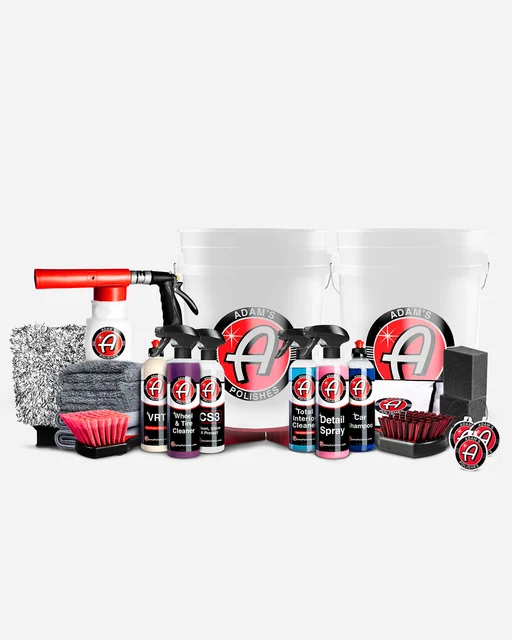
- Buy Adam's Polishes Adam's Essentials Detail Kit The most complete beginner-to-pro box in the field: full-size everything, real accessories and no filler.
- Buy Turtle Wax Complete Car Care Kit (Hybrid Solutions) Modern ceramic and graphene formulas plus a bucket, mitt and applicators for a fraction of the enthusiast-kit outlay.
- It depends Chemical Guys 16-Piece Arsenal Builder Ceramic Protection Car Wash Kit A capable, generously stocked ceramic system that's also more kit than a first-timer needs.
- Skip Turtle Wax Inside & Out Complete Essentials Car Care Kit Fine coverage on the tightest budget, but the ceramic Complete kit sitting beside it is the better buy for barely more.
What actually matters
- Zone coverage — the best kits address wash, wheels and tyres, glass, interior and trim so you aren't buying gaps separately later; a kit that skips glass or interior isn't really all-in-one.
- Real protection, not just soap — look for a sealant or ceramic/graphene product rather than only a short-lived spray wax, because protection is what keeps the finish looking done for weeks rather than days.
- Full-size, rebuy-worthy formulas — bottles you'd happily reorder tell you the kit is built to be used, not to look impressive on a shelf; token trial sizes are filler dressed up as value.
- Wash media and a bucket — a proper wash mitt, a grit guard and a bucket (ideally two) matter because they cut the swirl marks a cheap sponge grinds into the clear coat.
- Beginner-appropriate depth — clear labelling and simple, non-overlapping products make a kit usable; a stack of similar quick-detailer sprays confuses first-timers more than it helps.
- pH-neutral, paint-safe chemistry — gentle, balanced formulas clean without stripping wax or etching trim, which matters far more than an aggressive cleaner that leaves the car looking tired.
- Value versus buying separately — a fair kit costs less than the same bottles and accessories bought one by one; if it doesn't, you're paying for packaging, not savings.
The specs, in plain English
Green flags vs red flags
Green flags
- Core products arrive at full size, not trial samples, and cover every zone of the car.
- There's a genuine protection step (sealant, ceramic or graphene), not just a spray wax.
- A wash mitt, bucket and grit guard are included, and the towels are described as plush, higher-GSM or edgeless.
- A foam gun (hose-fed) is included or clearly optional, rather than a foam cannon you'd need a pressure washer for.
- Formulas are described as pH-neutral or paint-safe, and owners say they keep rebuying them.
- Clear instructions or a suggested order of use, so a first-timer knows what goes where.
Red flags
- A big headline piece count made up largely of tiny sample bottles.
- Several near-identical quick-detailer sprays but no real wash soap, glass cleaner or protectant.
- A bare sponge or thin, borderless-count towels as the only wash media.
- Protection is only a 'spray wax' with no sealant or ceramic option.
- Vague 'cleans everything' claims with no mention of what's paint-safe or pH-neutral.
- The bundle costs about the same as, or more than, buying the same bottles individually.
Who's who: the brands
- Adam's Polishes - Enthusiast-favourite brand known for full-size, rebuy-worthy kits that scale from beginner to advanced tiers.
- Turtle Wax - Long-established mainstream brand; its newer ceramic and graphene lines bring modern protection to value pricing.
- Chemical Guys - Prolific detailing brand known for large, generously stocked kits and hose-fed foam guns, often more product than a first-timer needs.
- Meguiar's - Widely available heritage brand with approachable, well-labelled products common in beginner-friendly kits.
- Griot's Garage - Premium brand with a reputation for quality applicators and consistent, easy-to-use formulas.
How to read a listing without getting fooled
Start by ignoring the big number on the front of the box and read the actual contents list. Count the zones covered (wash, wheels and tyres, glass, interior, trim) and check there's a real protection step rather than only a spray wax. Then look at bottle sizes: a kit of six full-size products is usually worth more than a kit of fifteen where most are samples. Scan the accessories for a wash mitt, a bucket and a grit guard, and read how the towels are described, plush, higher-GSM or edgeless is good, while an unspecified 'microfibre cloth' or a plain sponge is a warning. If a foam applicator is mentioned, check whether any foam gun included runs off a garden hose or needs a pressure washer. Finally, watch for overlapping products (three similar quick-detailer sprays) that pad the count without adding capability, and cross-check the kit price against buying the same bottles separately.
How much should you spend?
Detailing kits span from bare budget boxes to enthusiast towers, and more money mostly buys three things: full-size instead of sample bottles, real sealant or ceramic protection instead of convenience spray wax, and better wash media. The value sweet spot for most people sits in the mid-range, where you get modern ceramic or graphene protection plus a bucket, mitt and applicators without paying for a huge stack of specialised sprays. Stepping up to premium is worth it if you want no-filler, full-size formulas you'll reorder and accessories you'll keep using; it's not worth it if you're buying breadth you won't touch. At the very bottom, the cheapest kits often lean on short-lived spray wax, so the small step up to a ceramic-equipped kit usually buys far more durable results than the price difference suggests. As a rule, a kit should undercut buying the same contents individually; if it doesn't, you're paying for the box.
Questions, answered
Is an all-in-one kit better than buying the products separately?
For most beginners, yes. A kit usually costs less than the same bottles bought one by one and takes the guesswork out of which products you need, plus you get matched accessories like a bucket, mitt and towels. Building your own becomes worthwhile once you know your preferences and want to pick a specific soap, sealant or towel rather than accept a bundle's choices.
How many products do I actually need to detail a car?
Fewer than most kits imply. A solid routine needs a dedicated wash soap, a wheel and tyre cleaner, a glass cleaner, an interior cleaner, some form of protection (a sealant or ceramic spray), and good microfibre plus a wash mitt and bucket. Everything beyond that is refinement, not a requirement, so a focused kit that covers those bases beats a padded one every time.
Why does microfibre quality matter so much?
Because the towels and mitt touch your paint directly, and cheap ones cause the very swirl marks you're trying to avoid. Denser, higher-GSM cloths glide and hold water, while thin towels and hard stitched edges can drag grit and scratch. The quality of the wash media is one of the clearest signals of how serious a kit is.
Do I need a pressure washer or a foam cannon?
No. Many kits include a foam gun that runs off an ordinary garden hose, which produces lighter suds than a pressure-washer cannon but works fine with normal household water pressure. A pressure washer and cannon are a nice upgrade for enthusiasts, not a requirement for a good wash.
Will a starter kit fix scratches, swirls or heavily faded paint?
No. All-in-one kits handle regular washing, protecting and refreshing, but they typically don't include a clay bar or a machine-polishing step. Heavily oxidised, swirled or contaminated paint needs dedicated decontamination and correction products beyond what a starter kit provides, so treat the kit as maintenance rather than restoration.
Or jump to the head-to-head: Adam's Polishes Adam's Essentials Detail Kit vs Turtle Wax Complete Car Care Kit (Hybrid Solutions).