Explained
Booster Car Seats, Explained
After reading this you will understand what a belt-positioning booster actually does, which type your child needs, and how to tell when they are ready to stop using one.
In this guide
A booster does not restrain your child. The vehicle's adult seat belt does. The booster's whole job is to raise and position the child so that belt crosses the strong parts of the body: the lap belt low across the hips and the tops of the thighs, the shoulder belt across the collarbone and center of the chest. First-time buyers shop for padding, cupholders, and price tiers, then miss the two things that decide everything, which are whether the belt lands correctly in their car and whether the child is actually ready for a booster at all.
The 30-second version
- The belt is the restraint, not the booster. A booster is a positioning device that lifts and routes the adult belt onto the hips and collarbone, which is why an inexpensive booster can position a belt exactly as correctly as an expensive one.
- High-back first, backless later. A high-back routes the shoulder belt automatically through a headrest guide and supports a sleeping head, while a backless booster only belongs in a seating position whose head restraint or seat back reaches at least the top of the child's ears.
- The 5-step test decides the exit, not the birthday. Children typically stay in a booster until roughly 4 feet 9 inches tall, commonly somewhere between ages 10 and 12, and readiness is judged by how the belt sits rather than by age alone.
- LATCH on a booster is convenience, not crash restraint. Lower anchors keep the booster from sliding around the bench and from becoming a loose projectile when nobody is in it, but the child is still held by the vehicle belt.
- Every booster sold new meets the federal standard. Certification is a floor rather than a ranking, so the useful differences between seats are fit in your car, how hard the seat is to use wrong, and how long it stays usable.
The products this guide is about
Our verdict on each, with the full reasoning on the companion review.
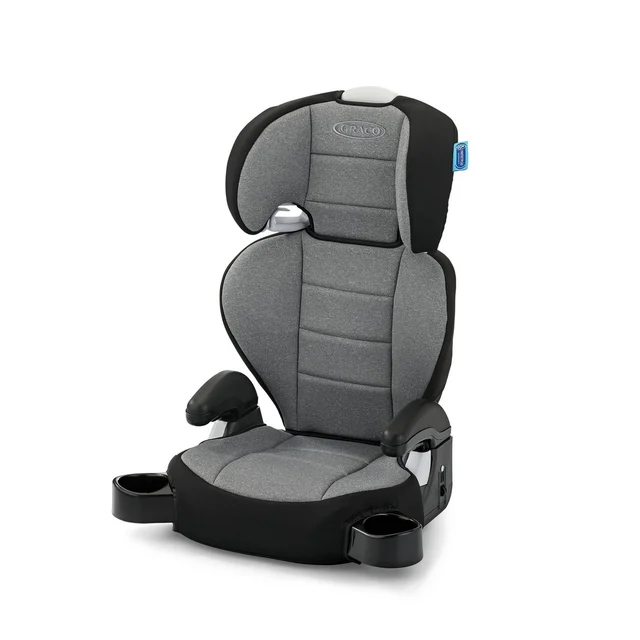
- Buy Graco TurboBooster 2.0 Highback Booster Car Seat The default first booster: correct belt fit, low cost, and it converts to backless later.
- Buy Chicco GoFit Plus Backless Booster Car Seat The backless booster to graduate to, with a LATCH anchor most rivals leave out.
- It depends Clek Oobr High Back Booster Car Seat The best-built booster here, at a price that only pays off in a 3-across row or a long commute.
- Skip mifold Comfort Grab-and-Go Booster Seat A clever packing trick and a poor daily booster: fit depends on setting three clips correctly every ride.
What actually matters
- Belt fit in your actual car - the lap belt should lie low across the hips and touch the tops of the thighs, and the shoulder belt should cross the middle of the shoulder and the center of the chest, never the neck, the face, or the stomach. A booster that achieves that in one vehicle can position the belt poorly in another, so the seating position matters as much as the seat.
- High-back versus backless - a high-back guides the shoulder belt through an adjustable headrest guide and adds head and torso support, which suits younger or sleepier children and seating positions with low seat backs. A backless booster only lifts the child, so the vehicle must supply head support behind them.
- Headrest and guide adjustment range - on a high-back, the belt guide rides with the headrest, so a wider height range keeps the shoulder belt tracking the middle of the shoulder for more years rather than creeping toward the neck.
- Height and weight range - most boosters start around 40 pounds and roughly 40 to 44 inches and run to about 100 to 110 pounds and 57 inches or so. The top of the range decides how long one purchase lasts, and manuals also state a minimum age and maturity expectation.
- How hard it is to use wrong - the best booster is the one a child can climb into and buckle correctly without an adult resetting anything. Designs that require threading or adjusting clips every ride create more chances for a wrong belt path on a rushed morning.
- Width and 3-across fit - if you need three restraints in one row, the width across the front of the seat and whether cupholders fold out are what make it possible or impossible.
- Weight, portability, and expiry - a light booster with a carry handle moves between carpools and rentals easily, and the printed expiration window decides how many years of use you are actually buying.
The specs, in plain English
Green flags vs red flags
Green flags
- An adjustable headrest with a shoulder belt guide that keeps tracking the middle of the shoulder as the child grows
- Lap belt guides that hold the belt down on the thighs instead of letting it ride up onto the belly
- A design a child can get into and buckle correctly without an adult resetting clips every ride
- A generous top of the height and weight range, so one seat covers more of the booster years
- A long stated expiry window from the date of manufacture, and a clearly printed manufacture label
- Light weight and a carry handle if the seat will move between cars, carpools, or rentals
Red flags
- A backless booster used in a seating position with a low seat back and no head restraint
- A fixed or short-range shoulder belt guide that puts the belt near the neck on a taller child
- Correct fit that depends on setting multiple clips or straps right on every single ride
- A hand-me-down or clearance seat already near or past the expiry printed on the shell, or one with an unknown crash history
- Missing manual and missing labels, since the belt path and limits live in those and vary by model
- Buying a booster for a child who still slouches, unbuckles, or leans out of the belt path, who likely needs a harnessed seat longer
Who's who: the brands
- Graco - Broad, value-focused lineup; high-back boosters whose backs detach for backless use later, usually with long usable windows.
- Chicco - Well-engineered boosters with careful belt-guide design; its backless models are known for including a LATCH attachment that many rivals leave out.
- Britax - Premium high-backs built around structure and deep side wings, aimed at families who want more comfort and support for long rides.
- Clek - Flagship-tier build with rigid-LATCH installs, recline, narrow footprints for three-across rows, and flame-retardant-free fabric options.
- Evenflo - Value-oriented boosters covering both high-back and backless formats; strong on price and light weight rather than premium materials.
- mifold / hifold - Compact folding boosters designed for travel and unexpected carpools, where packability rather than daily ease of use is the point.
How to read a listing without getting fooled
Read a booster listing for fit and range first, and treat everything else as comfort. Start with the stated height and weight range, since the bottom tells you whether your child qualifies today and the top tells you how many years you are buying. Next find the format: high-back, backless, or a high-back whose back detaches, and check it against the seating position you will actually use, because a backless booster needs the vehicle to supply a head restraint reaching at least the top of your child's ears. Look at how the belt is routed, meaning whether the shoulder guide rides with an adjustable headrest and whether there are lap guides holding the belt on the thighs, and ask yourself how many steps a child has to get right unassisted on a rushed morning. Note the width across the front if you need three across, and the weight if the seat will move between cars. Treat lower anchors as a convenience and anti-projectile feature rather than a safety upgrade. Check the stated years to expiration and remember the clock starts at manufacture, not purchase. Be skeptical of listings that lead with cupholders, fabric, and styling while burying the belt-fit details, and ignore any claim that ranks one certified seat as safer than another in the abstract.
How much should you spend?
Boosters are one of the rare categories where the budget option is not a compromise on the thing that matters. Every booster sold new is certified to the same federal standard, and correct belt fit is achievable from inexpensive seats, so the money buys padding, build quality, adjustability, a narrower footprint, and convenience features rather than a different safety outcome. The entry tier typically gets you a functional high-back with an adjustable headrest guide and often a detachable back, which is genuinely enough for most families. The mid tier tends to add better lap belt guides, lighter weight with a carry handle, a LATCH attachment on backless models, and nicer fabrics. Flagship pricing is worth considering when your situation demands something specific, such as a tight three-across bench that needs a narrow shell, a long daily commute where recline and deep side wings change how the ride feels, or a preference for particular materials. It is not worth paying up for styling alone. Because a booster is used for several years and often passed to a sibling, a modest step up you will appreciate daily usually earns its keep, while the very cheapest seat is best kept as a spare for a second car or grandparent duty.
Questions, answered
What does a booster seat actually do?
It raises and positions the child so the adult seat belt crosses the strong parts of the body. The lap belt should sit low across the hips and touch the tops of the thighs, where the pelvis can take the load, and the shoulder belt should cross the collarbone and the center of the chest. Without a booster, the lap belt tends to ride up onto a child's soft abdomen and the shoulder belt lands on the neck or face, which is why kids slide it behind their back. The booster does not hold the child. The belt does.
High-back or backless: which does my child need?
Start with a high-back. It positions the shoulder belt automatically through a headrest guide, adds side support for a child who falls asleep, and works in any seating position. Move to backless when your child sits upright for the whole trip without reminders and the seating position has a head restraint or seat back that reaches at least the top of their ears. If that position has a low seat back, stay with a high-back regardless of age or size.
When is my child ready to stop using a booster?
Use the 5-step test with the child sitting in the vehicle seat without the booster. Their back is flat against the seat back, their knees bend comfortably at the front edge of the seat, the lap belt lies low across the hips and touches the thighs, the shoulder belt crosses the middle of the shoulder and chest rather than the neck or the arm, and they can hold that position for the entire ride. If any step fails, they still need the booster. Most children pass around 4 feet 9 inches, commonly between ages 10 and 12.
What is the difference between a harnessed seat and a booster?
A harnessed seat restrains the child directly with its own five-point straps, so the seat does the work and the child's behavior matters less. A booster hands that job to the vehicle belt, which only stays in the right place if the child sits properly the whole way. That is why booster manuals list a minimum age and maturity expectation alongside the weight minimum. A child who slouches, leans out of the belt path, or unbuckles is better off staying in a harness longer, even if the scale says they qualify.
Do boosters expire, and does that matter for a hand-me-down?
Yes. Boosters carry an expiry measured in years from the date of manufacture, not from the date you bought it, and that date is stamped on a label on the shell rather than printed on the box or the receipt. Plastic ages, standards change, and labels and manuals go missing. Check the shell label before accepting a hand-me-down, and skip any seat whose crash history you do not know, since a seat involved in a crash may need to be retired.
Is this guide safety advice for my child?
No. This is general product information, not child passenger safety advice for your specific situation. Correct fit varies a great deal by vehicle, seating position, and the individual child's proportions, and a booster that positions the belt perfectly in one car can position it badly in another. Follow the booster's manual and your vehicle owner's manual, comply with your state or local child restraint law, and have the installation and belt fit checked in person by a certified Child Passenger Safety Technician. Many fire departments, hospitals, and health departments offer that check for free.
Or jump to the head-to-head: Graco TurboBooster 2.0 Highback Booster Car Seat vs Chicco GoFit Plus Backless Booster Car Seat.