Explained
Bottle Warmers, Explained
After reading this, you'll understand how bottle warmers heat milk, why the warming method matters most, and how to choose one that fits your bottles and your 3 a.m. reality.
In this guide
A bottle warmer is a small counter appliance that brings refrigerated or frozen milk up to feeding temperature without a microwave. First-time buyers usually assume they're all the same, then discover the warming method (a gentle water bath versus faster steam), speed, and whether it even fits their bottles vary a lot. The single thing that trips people up: chasing smart features when the real question is how gently and evenly the warmer heats breast milk.
The 30-second version
- The warming method is the whole game. a warm-water bath heats gently and evenly for breast milk, while steam is faster but better suited to formula and baby food.
- Overheating, not warming, is the real risk. gentle low-temperature warming preserves the proteins in breast milk and avoids scalding hot spots.
- Fit matters more than the spec sheet admits. wide, tall, or off-brand bottles and milk-storage bags don't fit every warmer, so check dimensions before you buy.
- Speed is a nighttime feature. you want a fridge-cold bottle ready in a few minutes; very slow 'spa' cycles wear thin during overnight feeds.
- Smart features are optional, not essential. an app alert is convenient, but a single dial you can work half-asleep serves most parents just as well.
The products this guide is about
Our verdict on each, with the full reasoning on the companion review.
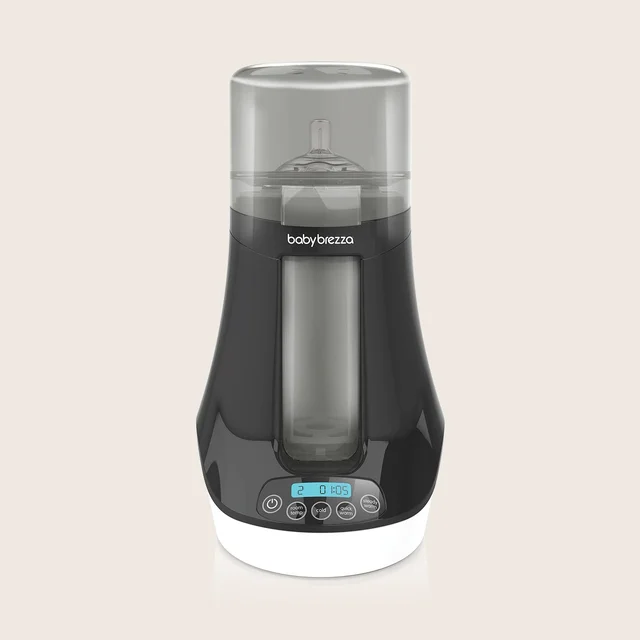
- Buy Baby Brezza Safe + Smart Bottle Warmer The most flexible warmer here, with a gentle water bath for breast milk and fast steam for formula, plus app alerts so you're not hovering. Amazon
- Buy Kiinde Kozii Bottle Warmer A refreshingly simple warm-water warmer built around breast milk, with a thermostatic bath and one dial. Amazon
- It depends Philips Avent Premium Fast Bottle Warmer A tidy, sensor-guided warmer that heats evenly and holds temperature, if you don't need modes or app control. Amazon
- Skip Dr. Brown's Deluxe Baby Bottle Warmer and Sterilizer A steam-heat warmer and sterilizer combo with a programmable panel, but the maker lists no water-bath mode for breast milk. Amazon
What actually matters
- Warming method - a warm-water bath is the gentlest, most even way to heat breast milk; steam is faster and fine for formula. Dual-mode warmers give you both, which is why they suit combo feeders.
- Even heating - circulating or bath-style warming avoids hot spots that can scald a baby and destroy nutrients. Look for owner reports of consistent results, not just marketing claims.
- Speed - how fast it takes a bottle from fridge-cold to feeding temperature. Steam and sensor-guided models are quickest; a few minutes is the realistic target.
- Bottle and bag compatibility - confirm it handles your bottle brand and size, plus storage bags or food jars if you use them. 'Universal fit' warmers are the safest bet for unusual shapes.
- Controls and ease of use - decide whether you want app alerts and presets or a simple dial. More buttons can mean more friction at 3 a.m., not less.
- Safety and upkeep - auto shut-off is a useful safety feature, and you should weigh how often you'll need to add water and descale to keep it working.
The specs, in plain English
Green flags vs red flags
Green flags
- Offers a genuine warm-water bath mode, especially if you're warming breast milk
- Owner reports describe even, consistent heating with no hot spots
- 'Universal' fit that swallows your bottles, storage bags, and food jars
- Reliable auto shut-off and a clear, simple way to start a cycle
- Warms a fridge-cold bottle in a few minutes
Red flags
- Steam-only warming marketed as ideal for breast milk
- Owner reports mention scalding, uneven heat, or hot spots
- A snug chamber that only fits the maker's own bottle shape
- A 'spa'-slow cycle with no faster option for night feeds
- Fiddly multi-preset menus you'd struggle to run half-asleep
- Frequent descaling or water top-offs that owners call tedious
Who's who: the brands
- Baby Brezza - Known for feature-rich baby appliances; its dual water-bath-and-steam warmer with app alerts is a go-to for combo feeders.
- Kiinde - Makes the Kozii, a simple warm-water warmer with a thermostatically controlled bath and a single dial.
- Philips Avent - A mainstream feeding brand whose Premium Fast warmer uses smart temperature control to adjust heating to the milk's starting temperature.
- Dr. Brown's - Best known for anti-colic bottles; its Deluxe Warmer and Sterilizer heats with steam, with no water-bath mode listed on the maker page, and adds a built-in sterilizer.
How to read a listing without getting fooled
Start by finding the warming method - 'water bath,' 'flowing warm water,' or 'steam.' If breast milk is your priority, favor a bath; if it's a steam-only unit sold as gentle, be skeptical. Next, check fit: look for 'universal' or a stated bottle-size range, and match it against your actual bottles and any storage bags, since 'fits most' can quietly exclude wide or tall shapes. Treat auto shut-off as a feature worth looking for. Read the controls honestly - a wall of presets sounds capable but can be a chore at night, while a single dial is easy to run bleary-eyed. Finally, skim owner reports for the words that marketing never uses: 'slow,' 'hot spots,' 'descaling,' and 'snug fit' tell you more than any feature list.
How much should you spend?
Bottle warmers span a wide range, and more money mostly buys features and flexibility rather than better warming. What drives cost is dual water-bath-and-steam modes, smart app connectivity, and multi-preset panels - nice conveniences, but not what keeps milk safe. The value sweet spot sits with a simple, gentle water-bath warmer: it does the one job that matters well, with little to learn or break. Spending up makes sense if you're a combo feeder who genuinely benefits from both a bath and a steam mode, or you'll use an app alert every night. Spending up does not make sense if you mainly warm breast milk and want the least fuss - a premium price on a slow or overly complicated unit is money spent on the wrong things.
Questions, answered
Do bottle warmers destroy nutrients in breast milk?
The concern is overheating, not warming itself. Gentle, low-temperature warming - ideally a warm-water bath rather than aggressive steam or a microwave - helps preserve breast-milk proteins and avoids hot spots. A bath-style warmer is the safest choice if breast milk is your priority.
Is a water bath really better than steam?
For breast milk, yes - a warm-water bath heats more evenly and is less likely to create hot spots or overheat the milk. Steam is faster and works fine for formula and baby food, which is why dual-mode warmers offer both.
Will a warmer fit my bottles?
Not always. 'Universal' warmers are designed for virtually any bottle plus milk-storage bags and food jars, while others fit best with a specific brand and can feel snug with very wide or tall bottles. Check your bottle's dimensions before buying if you use an unusual shape.
How fast should a bottle warmer be?
Most parents want a refrigerated bottle ready in a few minutes. Steam and sensor-guided models are the quickest; deliberately gentle 'spa' cycles can be noticeably slow, which is a real drawback during overnight feeds.
Do I need the app and smart features?
Only if you'll use them. An app that pings you when the bottle's done can reduce the mental load of night feeds, but plenty of parents are perfectly happy with an app-free dial or one-button warmer. This is general product information to help you compare, not a substitute for the manufacturer's instructions - always follow the guidance that comes with your warmer for safe use.
Is a bottle warmer better than a microwave?
For milk, generally yes. Microwaves heat unevenly and can create dangerous hot spots even when the bottle feels cool, and they're harsher on breast-milk nutrients. A dedicated warmer heats more gently and consistently.
Or jump to the head-to-head: Baby Brezza Safe + Smart Bottle Warmer vs Kiinde Kozii Bottle Warmer.