Explained
Baby Bottle Sterilizers, Explained
After reading, you'll know how bottle sterilizers actually work, which features matter, and how to avoid paying for one that leaves your bottles wet.
In this guide
A bottle sterilizer's job sounds simple: kill germs on bottles and pump parts so they're safe for a newborn. But the category is split between electric steam and UV-C light, and between machines that only sterilize and machines that also dry. The single thing that trips up first-time buyers is assuming every unit dries its load, when many leave you with a rack of wet bottles.
The 30-second version
- Drying is the feature that separates good from mediocre. A machine that sterilizes and then dries hands you cabinet-ready bottles, while a sterilize-only unit sends you back to a drying rack and a fresh window for bacteria to regrow.
- Steam and UV-C solve different problems. High-heat steam is foolproof for bottles because it reaches every surface it touches, while UV-C sanitizes without heat, making it gentler on silicone, electronics, and toys but limited to line-of-sight.
- Capacity should match your real day, not the box photo. Twins, heavy pumping, or just a lot of bottles per cycle push you toward a larger chamber, even if it eats more counter space.
- Upkeep is real and easy to underestimate. Steam units need periodic descaling to keep reaching sterilizing temperature, while UV-C units skip water and descaling entirely.
- All-in-ones tend to cost about the same as sterilize-only units. When the price gap is small, paying for one that also dries is usually the easy call.
The products this guide is about
Our verdict on each, with the full reasoning on the companion review.
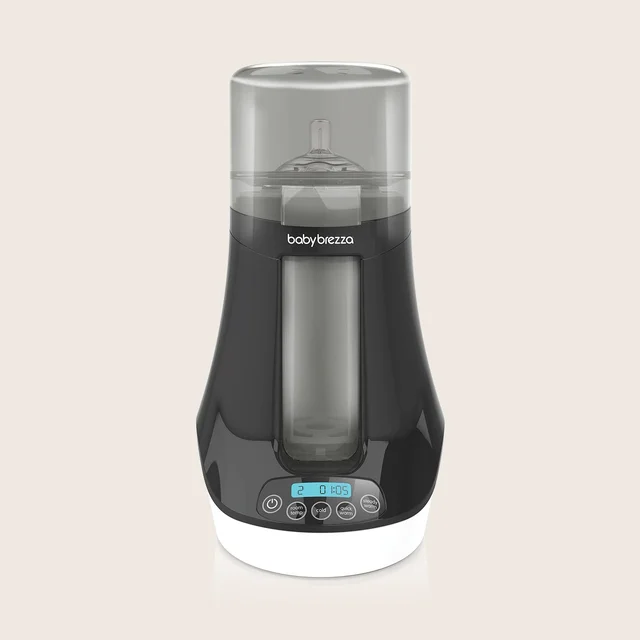
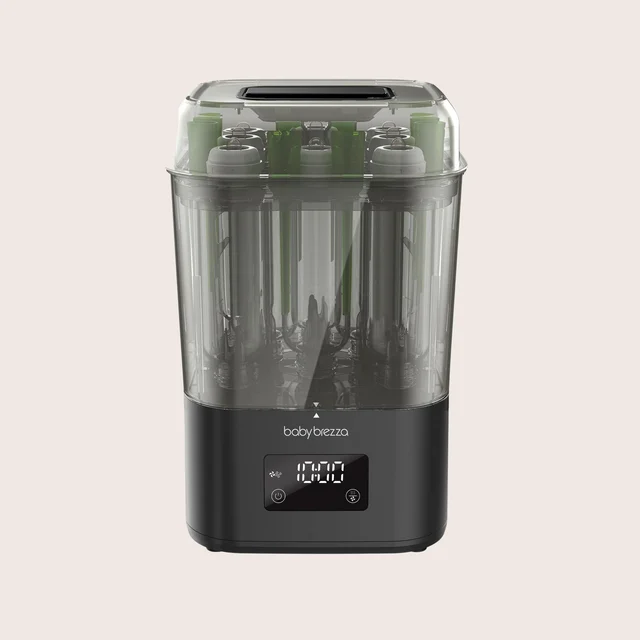
- Buy Baby Brezza SuperQuick Baby Bottle Sterilizer and Dryer A fast, hands-off way to steam-sterilize and dry a full load in one cycle, listed by the maker at about 10 minutes. Amazon
- Buy Wabi Baby Electric Steam Sterilizer and Dryer A steam sterilizer with one-button auto mode that sterilizes, dries and stores. Amazon
- It depends Grownsy 4-in-1 UV Sanitizer and Dryer A quiet, no-water UV-C cabinet that's gentle on non-boilable items, if you accept slower, softer results. Amazon
- Skip Philips Avent Advanced Electric Steam Sterilizer A fast, trusted steamer that only sterilizes, so every load comes out soaking wet.
What actually matters
- A real drying cycle is the most useful feature here. Leftover moisture is exactly where germs like to regrow, so a machine that finishes genuinely dry removes the weakest link in the process.
- Sterilizing method should match your items. Electric steam is the more foolproof choice for bottles; UV-C is the gentler choice for things you can't boil, like teethers and electronics.
- Capacity determines how many bottles and pump parts you can process in one go, which matters most for high-volume or multiples households.
- Cycle speed and hands-off operation decide how much the machine actually helps a sleep-deprived parent. The best units chain sterilize into dry automatically.
- Descaling and maintenance dictate whether the unit keeps performing. Be honest about the upkeep you'll actually do before choosing steam over UV-C.
- Footprint and clearance catch people off guard. Some units are tall and need cabinet space above them; others are wide and hog the counter.
- Hold-sterile time tells you how far ahead you can prep. Hold times vary by maker and only apply while the lid stays shut.
The specs, in plain English
Green flags vs red flags
Green flags
- Sterilizes and dries in one hands-off cycle, so bottles come out ready to store
- Drying uses filtered hot air rather than just resting and hoping bottles dry
- Chamber is roomy enough for your bottles plus pump parts in a single load
- Clear guidance on descaling schedule and a recommendation to use distilled water
- Owner reports describe long service lives
- Simple controls and a reliable auto shut-off
Red flags
- No drying function at all, so every load comes out soaking wet
- Requires very frequent descaling just to keep steaming properly
- UV-C unit with a small chamber that tempts you to overload it, leaving shadowed spots
- Owner reports of cracked lids, clips, or short lifespans
- Drying described as slow and soft when you need thorough, quick turnaround
- A footprint that won't fit your counter or the cabinet clearance above it
Who's who: the brands
- Baby Brezza - Known for fast, hands-off all-in-one steam sterilizer-dryers, including a roughly 10-minute model.
- Wabi Baby - Makes electric steam units with auto memory for drying and one-button auto mode with a storage setting.
- Grownsy - Budget-friendly UV-C cabinets aimed at low-maintenance, no-water sanitizing of mixed items.
- Philips Avent - Mainstream, widely available brand whose steam sterilizers are trusted but often sterilize-only, with no dryer.
How to read a listing without getting fooled
Start by separating what a listing claims from what it actually does. The word 'sterilizer' alone does not mean the unit dries, so look for an explicit 'drying' or 'dry cycle' line before assuming your bottles come out ready to store. Check whether the method is electric steam or UV-C, then sanity-check the capacity against your real load rather than the staged product photo, which often shows an ideal arrangement you'll rarely replicate. For UV-C units, remember the light only reaches surfaces it can see, so a big-sounding number of bottles may assume perfect, un-shadowed placement. Note the descaling requirements: 'periodic' is normal for steam, but 'frequent' is a warning that upkeep will be constant. Finally, weigh footprint and clearance, since 'compact' can mean tall, and skim owner reports for patterns of cracked parts or short lifespans, which spec sheets never mention.
How much should you spend?
In this category the all-in-one steam-and-dry machines and the sterilize-only units can sell for similar money, which is why paying up for drying is usually the smart move rather than an indulgence. The value sweet spot sits with a mid-to-premium all-in-one that both sterilizes and genuinely dries, because it eliminates the drying rack and the moisture where germs regrow. Spending more is worth it when you value speed, a truly dry finish, filtered drying air, or extra capacity for a high-volume household. Spending more is not worth it if you only need an occasional, bare-bones backup, or if your priority is quietly sanitizing non-boilable items, where a budget UV-C cabinet with near-zero upkeep can be reasonable. What you should avoid is paying mid-range money for a sterilize-only unit that leaves every load wet, since an all-in-one at a similar price does more of the job.
Questions, answered
Steam or UV-C, which sterilizes baby bottles better?
For bottles specifically, electric steam is the more foolproof choice because high-heat steam reaches every surface it touches. UV-C only sanitizes what its light can directly see, so a crowded load can leave shadowed spots. UV-C's advantage is that it works without heat, making it gentle on items you can't boil, like electronics, toys, and some silicone. Many families use steam for bottles and keep UV-C for the odd non-boilable item.
Do I really need the drying function, or can bottles just air-dry?
You can air-dry on a rack, but a machine that dries removes the wettest, most bacteria-friendly step and lets you store bottles immediately. That's the single biggest reason to favor an all-in-one steam-and-dry unit over a sterilize-only model, since leftover moisture is exactly where germs like to regrow.
How long do bottles stay sterile after a cycle?
Makers say contents stay sterile while the lid stays closed and the insides go untouched, with stated hold times varying by unit. Once you open the machine or handle the bottles, that clock effectively resets, so it's best to sterilize close to when you'll use them.
Why does descaling matter so much on steam units?
Steam sterilizers boil water, and hard-water minerals build up on the heating element over time. If you skip descaling, the unit steams weakly and can eventually stop reaching sterilizing temperature. Using distilled water and descaling on the maker's schedule keeps performance consistent. UV-C units sidestep this entirely since they use no water.
Are these sterilizers overkill once my baby is older?
Guidance generally suggests sterilizing bottles is most important in the early months and for immune-compromised infants, and many families relax to hot soapy water or a dishwasher's hot cycle later on. This is general product information, not medical advice, so check with your pediatrician about what's right for your baby before changing your routine.
Or jump to the head-to-head: Baby Brezza SuperQuick Baby Bottle Sterilizer and Dryer vs Wabi Baby Electric Steam Sterilizer and Dryer.