

Baby & Family
The Best Booster Car Seats: 4 Compared (and One to Skip)
We compared four belt-positioning boosters on belt fit, high-back versus backless suitability, 3-across width, and how hard each is to use wrong.
The short version
A booster's only job is to route the vehicle belt low across the hips and across the middle of the shoulder, so a budget seat can be exactly as correct as a flagship one. The Graco TurboBooster 2.0 Highback is our pick: it grows with the child, converts to backless, and lasts 10 years. The Chicco GoFit Plus is the backless booster to move to next, and its LATCH attachment keeps it anchored in a way most rivals skip. The Clek Oobr is beautifully built with a rigid-LATCH install and a narrow front, but it only earns its flagship price in a 3-across row or on a long daily commute. The mifold Comfort folds into a backpack and is worth owning for travel, but it depends on setting three clips correctly every ride, which makes it a poor everyday seat. Best for: families who want correct belt fit first and are willing to spend more only when their car or commute actually demands it.
Our picks at a glance
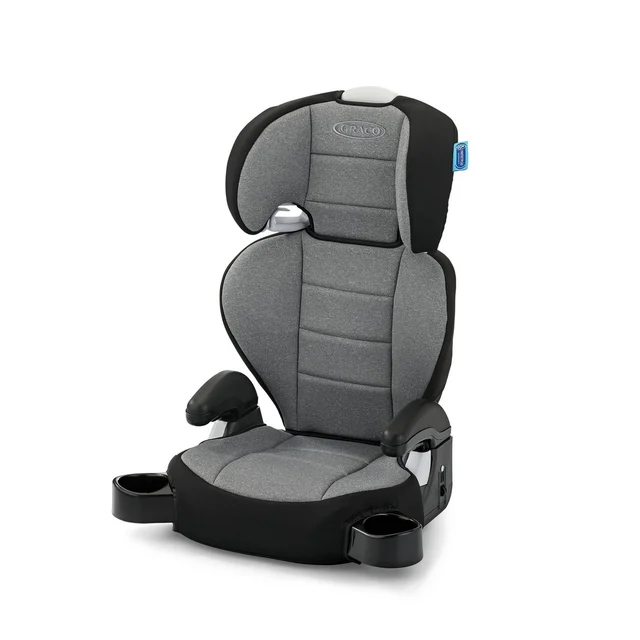
- Graco TurboBooster 2.0 Highback Booster Car Seat - Buy. The default first booster: correct belt fit, low cost, and it converts to backless later.
- Chicco GoFit Plus Backless Booster Car Seat - Buy. The backless booster to graduate to, with a LATCH anchor most rivals leave out.
- Clek Oobr High Back Booster Car Seat - It depends. The best-built booster here, at a price that only pays off in a 3-across row or a long commute.
- mifold Comfort Grab-and-Go Booster Seat - Skip. A clever packing trick and a poor daily booster: fit depends on setting three clips correctly every ride.
The verdict in 30 seconds
What mattered most
- Booster type
- Child range
- Belt positioning
- Lower anchor attachment
- 3-across friendliness
- Portability
A booster does not restrain your child, the vehicle seat belt does. The booster's only job is to route that belt low across the hips and across the middle of the shoulder, which is why an inexpensive seat can be every bit as correct as a premium one. We synthesized child passenger safety guidance, independent belt-fit ratings, and long-term owner reports across four current 2026 boosters spanning high-back, backless, narrow 3-across, and travel formats. Two are easy recommendations, one is worth it only in specific cars, and one belongs in a suitcase rather than in daily use.
The default first booster: correct belt fit, low cost, and it converts to backless later.
Best for: Most families moving a child out of a forward-facing harness for the first time.
- Height-adjustable headrest keeps the shoulder belt guide tracking the middle of the shoulder as the child grows
- Back detaches so the same seat becomes a backless booster, covering 40 to 100 pounds and 43 to 57 inches
- About 8 pounds and rated for 10 years from manufacture, the longest usable window in this group
- This trim has no lower-anchor connectors, so the empty seat must be belted in or removed
- Thin padding and shallow side wings next to premium high-backs, and too wide for a comfortable 3-across
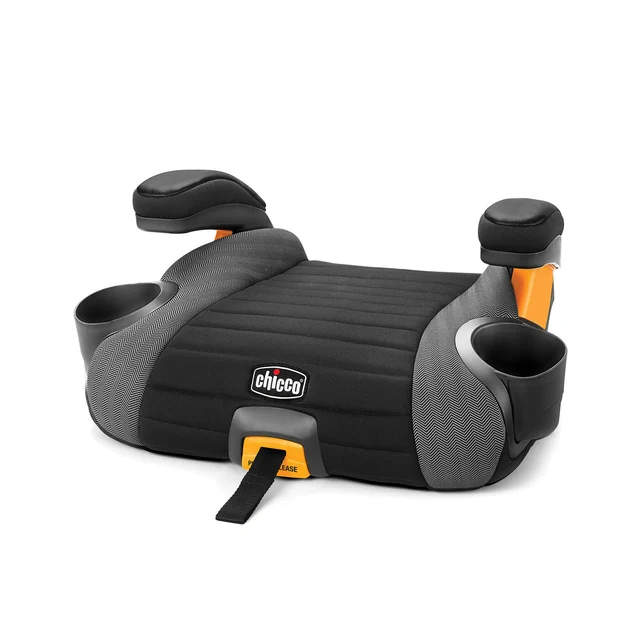
The backless booster to graduate to, with a LATCH anchor most rivals leave out.
Best for: Older kids past a high-back, plus carpools, rental cars, and grandparent duty.
- LATCH attachment with a one-hand quick release keeps the booster anchored instead of sliding around the bench
- Integrated lap belt guides plus a shoulder belt clip hold the belt on the thighs and off the neck
- About 5.5 pounds with a carry handle, and covers 40 to 110 pounds and 44 to 57 inches
- Backless only, so the seating position needs a head restraint reaching at least the top of the child's ears
- No side wings or head support for a child who falls asleep on longer drives
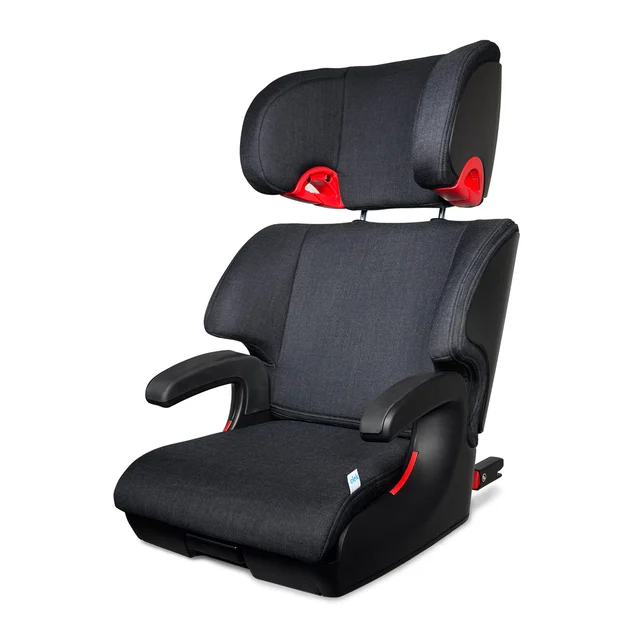
The best-built booster here, at a price that only pays off in a 3-across row or a long commute.
Best for: Tight 3-across benches, long daily drives, and parents who want a booster that installs like a fixed seat.
- Rigid-LATCH arms click into the lower anchors for a fixed install rather than a booster resting on the bench
- Reclines to follow the vehicle seat angle, with an adjustable headrest and deep side wings
- Narrow across the front at roughly 15.5 inches, and the back removes for backless use later
- Flagship price in a category where far cheaper seats already achieve correct belt fit
- Heaviest seat here and awkward to move, and Clek's 9-year expiry is a year shorter than Graco's
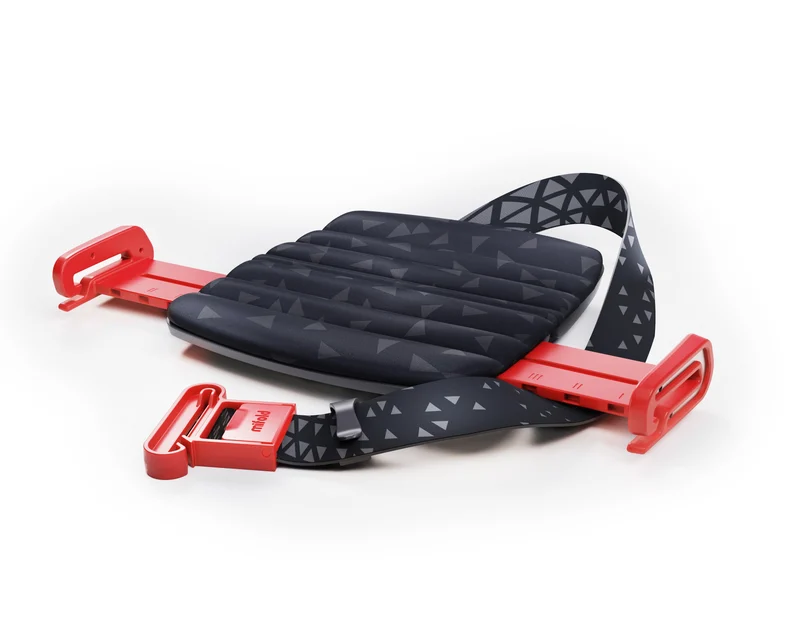
A clever packing trick and a poor daily booster: fit depends on setting three clips correctly every ride.
Best for: An emergency backup for unplanned carpools and travel, not an everyday seat.
- Folds small enough to live in a backpack, glovebox, or carry-on
- Adjustable width makes it the easiest seat here to fit three across
- Certified to the same federal child restraint standard as the full-size boosters in this comparison
- Pulls the belt down to the child via three clips, so correct fit has to be set up manually on every single ride
- Thin cushion draws complaints on longer trips, and most kids need an adult to buckle them in
- Sits outside the main independent booster belt-fit rating program, so there is less external fit evidence
| Criteria | Graco TurboBooster 2.0 Highback Booster Car Seat Top pick | Chicco GoFit Plus Backless Booster Car Seat | Clek Oobr High Back Booster Car Seat | mifold Comfort Grab-and-Go Booster Seat |
|---|---|---|---|---|
| Verdict | Buy it | Buy it | It depends | Skip it |
| Best for | Most families moving a child out of a forward-facing harness for the first time. | Older kids past a high-back, plus carpools, rental cars, and grandparent duty. | Tight 3-across benches, long daily drives, and parents who want a booster that installs like a fixed seat. | An emergency backup for unplanned carpools and travel, not an everyday seat. |
| Price tier | $ · budget | $$ · mid-range | $$$$ · flagship | $$ · mid-range |
| Booster type | High-back, back removes for backless use | Backless only | High-back, back removes for backless use | Compact folding backless |
| Child range | 40 to 100 lb, 43 to 57 in | 40 to 110 lb, 44 to 57 in | 40 to 100 lb, 40 to 57 in | 40 to 100 lb, 43.5 to 59 in |
| Belt positioning | Adjustable headrest guide plus armrest lap guides | Integrated lap belt guides plus shoulder belt clip | Adjustable headrest guide with deep side wings | Three adjustable clips pull the belt down to the child |
| Lower anchor attachment | None on this trim (the LX version adds it) | LATCH with one-hand quick release | Rigid-LATCH connectors | None |
| 3-across friendliness | Poor, about 16.5 in plus flip-out cupholders | Good, about 17 in wide | Good, narrow across the front | Excellent, adjustable width |
| Portability | Easy, about 8 lb | Very easy, about 5.5 lb with carry handle | Poor, heaviest seat here | Best here, folds into a bag |
| Years to expiration | 10 years from manufacture | 8 years from manufacture | 9 years from manufacture | 7 years from manufacture |
| Price tier | $ · budget | $$ · mid-range | $$$$ · flagship | $$ · mid-range |
Which one is right for you?
- Most families moving a child out of a forward-facing harness for the first time. Buy it Graco TurboBooster 2.0 Highback Booster Car Seat
- Older kids past a high-back, plus carpools, rental cars, and grandparent duty. Buy it Chicco GoFit Plus Backless Booster Car Seat
- Tight 3-across benches, long daily drives, and parents who want a booster that installs like a fixed seat. It depends Clek Oobr High Back Booster Car Seat
- An emergency backup for unplanned carpools and travel, not an everyday seat. Skip it mifold Comfort Grab-and-Go Booster Seat
How we judged the field
A booster has exactly one job: to put an adult seat belt where it belongs on a child’s body. The lap belt should sit low across the hips and the tops of the thighs, and the shoulder belt should cross the middle of the shoulder and the center of the chest. Everything else on a booster is comfort and convenience. So we weighted belt-guide design, how hard a seat is to use incorrectly, and whether it stays put when nobody is sitting in it, well above cupholders and fabric.
We do not run a crash lab. We synthesized published guidance from child passenger safety educators, independent belt-fit ratings, the manufacturers’ own manuals, and several years of aggregated owner reports about what actually happens day to day: boosters sliding around the bench, kids slouching out of position, shoulder belts landing on the neck. All four seats here are certified to the current US federal standard for child restraints, so the useful differences are about fit and daily usability, not about which one is “safest” in the abstract.
Two rules framed every verdict. First, a booster is for a child who has genuinely outgrown a forward-facing harness, which in practice means at least 40 pounds, at least 4 years old, and mature enough to sit upright for a whole trip. Second, a booster stays in play until the child passes the 5-step test, which for most kids happens near 4 feet 9 inches and often somewhere between ages 10 and 12.
This is the seat most families should start with when the harness runs out. It covers 40 to 100 pounds and 43 to 57 inches, the headrest raises with the child so the shoulder belt guide keeps tracking the middle of the shoulder, and the back detaches later so the same purchase becomes a backless booster. At roughly 8 pounds it moves between cars without a fight, and Graco rates its belt-positioning boosters for 10 years from the date of manufacture, which is the longest usable window in this group.
The compromises are real but minor. This trim has no lower-anchor connectors, so the empty seat needs to be belted in or taken out rather than left loose. Padding is thin and the side wings are shallow next to premium high-backs. At about 16.5 inches wide before the cupholders flip out, it is not a 3-across solution. None of that changes belt fit, which is why it still wins.
Backless boosters are where most kids spend their last few years in a car seat, and this is the one to graduate to. It runs 40 to 110 pounds and 44 to 57 inches, weighs about 5.5 pounds, and has a molded carry handle, so it travels between cars, grandparents, and rentals easily. Two details separate it from bargain backless boosters: integrated lap belt guides that hold the belt down on the thighs instead of letting it ride up onto the belly, and a LATCH attachment with a quick release that anchors the seat so it does not skate around when it is empty or while a child climbs in.
The limits are inherent to the format. A backless booster gives no head or torso support, so the seating position must have a head restraint or seat back reaching at least the top of the child’s ears. There is nothing to lean on when a kid falls asleep. Chicco rates its boosters for 8 years.
The Oobr is the best-engineered seat in this comparison and the hardest to justify. Rigid-LATCH arms click directly into the lower anchors, which produces a genuinely fixed install rather than a booster resting on the bench. The back reclines to follow the vehicle seat angle, the headrest adjusts with deep side wings, the shell is built over a metal substructure, and the back is removable so it converts to a backless booster. It is narrow where it counts, roughly 15.5 inches across the front, which is what lets it work in a 3-across row.
The catch is what you are paying for. Correct belt fit is achievable from boosters that cost a fraction of this, so the premium buys build quality, comfort on long commutes, a slim footprint, and flame-retardant-free fabric options rather than a different safety outcome. It is also the heaviest seat here and the least pleasant to move, and Clek’s 9-year expiry is a year shorter than Graco’s. Buy it for a tight three-across bench or a long daily drive. Otherwise it is more seat than the job needs.
The engineering idea is genuinely clever. Instead of raising the child up to the belt, the mifold pulls the belt down to the child using three adjustable clips, which lets the whole thing fold to something you can drop in a backpack. It is certified to the same federal standard as everything else here, covers 40 to 100 pounds and 43.5 to 59 inches, and its adjustable width makes it the easiest seat in this group to fit three across.
The problem is what happens on an average Tuesday. Correct fit depends on threading and setting three clips right on every single ride, and most children need an adult to do it, which is precisely the condition under which people start cutting corners. The cushion is thin enough that kids complain on longer trips. It also sits outside the main independent booster belt-fit rating program, so there is less external evidence about how well it positions a belt across different body shapes. Keep one in a glovebox or a suitcase for the unplanned carpool. Do not make it the seat your child rides in every day.
Graco TurboBooster 2.0 Highback vs Chicco GoFit Plus: which should you buy?
This is mostly a question about your child, not about the seats. If your child is newly out of a harness, still on the small side, or ever falls asleep in the car, buy the Graco high-back. The headrest guide keeps the shoulder belt positioned automatically as they grow, the side wings give a sleeping head somewhere to land, and it converts to a backless booster later anyway, so you are not buying twice.
If your child is comfortably past 50 pounds, sits upright without reminders, and rides in a seating position with a proper head restraint, the Chicco GoFit Plus is the better everyday seat. It is lighter, easier to move between cars, and its LATCH attachment keeps it anchored in a way most backless boosters do not bother with. The Graco is the safer default because it works across a wider slice of the booster years. The Chicco is the better seat for the second half of them.
What to look for
- Belt fit is the whole product. Lap belt low on the hips and touching the thighs, shoulder belt across the middle of the shoulder and chest, never on the neck or under the arm. If a booster cannot do that in your car, it is the wrong booster for your car.
- Match high-back or backless to the seating position. Backless boosters require a head restraint or seat back that reaches at least the top of the child’s ears. If the position has a low seat back, use a high-back.
- Check the real minimums. Most boosters start at 40 pounds and age 4, but weight is the easy part. A child who slouches, unbuckles, or leans out of the belt path is not ready, regardless of the number on the scale.
- Understand what LATCH does on a booster. Lower anchors do not restrain the child, the vehicle belt does. They keep the booster from sliding around and from becoming a loose projectile when it is empty. It is a convenience and cleanliness feature, and a nice one, not a crash-protection upgrade.
- Read the expiration date. Boosters here run 7 to 10 years from the date of manufacture. Check the label before accepting a hand-me-down, and note that manufacture date is not purchase date.
- Plan for the exit, not just the entry. Kids typically need a booster until about 4 feet 9 inches, commonly between ages 10 and 12. Buy something you are willing to keep using that long.
Our final take
Boosters are the rare category where the cheap option is not a compromise. The Graco TurboBooster 2.0 Highback gets the belt where it needs to go, converts to backless when your child is ready, and lasts 10 years, which makes it the right first booster for most families. Move to the Chicco GoFit Plus when your child has clearly outgrown a high-back and the seating position has a decent head restraint. The Clek Oobr earns its price only for a 3-across bench or a long daily commute, where its rigid install, narrow front, and recline genuinely change the experience. And the mifold Comfort is a travel accessory that happens to be certified as a booster, which is a fine thing to own and a poor thing to rely on.
Whatever you buy, the install and the belt path matter more than the badge. Read the manual, check the fit with your child actually in the seat, and get it looked at by a certified Child Passenger Safety Technician if anything looks off.
Questions, answered
High-back or backless booster: which does my child need?
Start with a high-back. It positions the shoulder belt automatically through a headrest guide, adds side support for sleeping kids, and works in any seating position. Move to backless when your child sits upright without reminders for the whole trip and the seating position has a head restraint or seat back reaching at least the top of their ears. If the position has a low seat back, stay with a high-back regardless of age.
How do I know the belt is actually fitting correctly?
Use the 5-step check with your child in the seat. The child's back is flat against the vehicle seat back, the knees bend comfortably at the front edge of the booster, the lap belt lies low across the hips and touches the tops of the thighs, the shoulder belt crosses the center of the shoulder and chest rather than the neck or the arm, and the child can stay in that position for the entire ride without slouching. If any step fails, adjust the booster or try a different seating position.
Do the lower anchors on a booster make it safer?
Not in the way people assume. On a booster the child is restrained by the vehicle seat belt, not by LATCH. Lower anchors simply keep the booster from sliding around and from becoming a loose projectile when nobody is sitting in it, which also makes it easier for a child to climb in and buckle up unassisted. Treat it as a genuinely useful convenience feature rather than a crash-protection upgrade, and always follow your seat manual and vehicle manual for whether and how the anchors may be used.
Do booster seats expire, and does it matter?
Yes. The seats here range from 7 to 10 years from the date of manufacture, which is printed on a label on the shell, not on the box or the receipt. Plastic ages, standards change, and manuals and labels wear off. Check the date before accepting a hand-me-down, and remember an expiry clock starts when the seat was made rather than when you bought it.
Is this article safety advice for my child?
No. This is general product information, not child passenger safety advice for your specific situation. Booster fit varies a lot by vehicle, seating position, and the individual child's proportions, and a seat that fits perfectly in one car can position the belt badly in another. Follow the booster's manual and your vehicle owner's manual, comply with your state or local child restraint law, and have the installation and belt fit checked in person by a certified Child Passenger Safety Technician. Many fire departments, hospitals, and health departments offer free checks.
Deciding between the top two? See our head-to-head: Graco TurboBooster 2.0 Highback Booster Car Seat vs Chicco GoFit Plus Backless Booster Car Seat.
More Baby & Family reviews
 The Best Potty Training Seats: 4 Compared (and One to Skip)
  The Best Baby Activity Centers: 4 Compared (and One to Skip)
  The Best Baby Bathtubs: 4 Compared (and One to Skip)
  The Best Anti-Colic Baby Bottles: 4 Compared (and One to Skip)
  The Best Baby Bouncers & Swings: 4 Compared (and One to Skip)
  The Best Baby Carriers: 4 Compared (and One to Skip)