Explained
Bookshelf Speakers, Explained
After reading, you will know whether you need passive or powered speakers, what the key specs actually mean, and how to match a pair to the gear you already own.
In this guide
Bookshelf speakers are the compact standmount pairs that anchor most first hi-fi and desktop systems, and the first fork in the road trips up almost everyone: some need a separate amplifier and some have amplification built in. Shoppers also assume bigger numbers and a bigger cabinet always mean better sound, when in practice the room, the placement, and the amplifier often matter more than the speaker itself.
The 30-second version
- Decide passive or powered first. Passive pairs need a separate amplifier and give you upgrade room; powered pairs build the amp and inputs into the cabinets so you just plug in a source.
- The amplifier is part of the speaker. A passive pair only sounds as good as the amp driving it, so budget for a competent amplifier rather than the cheapest box on the shelf.
- Small woofers roll off early. Most bookshelf models trade deep bass for a tidy cabinet, so expect to add stands, some distance from the wall, and often a subwoofer for full-range material.
- Match inputs to your sources. On powered pairs, confirm the connections you need (optical, phono, Bluetooth) are present before buying, because a missing input is a deal-breaker afterward.
- Spend on the whole chain, not just the speakers. Beyond a point you pay for diminishing gains, and matching, placement, and source frequently outweigh the last increment of speaker quality.
The products this guide is about
Our verdict on each, with the full reasoning on the companion review.
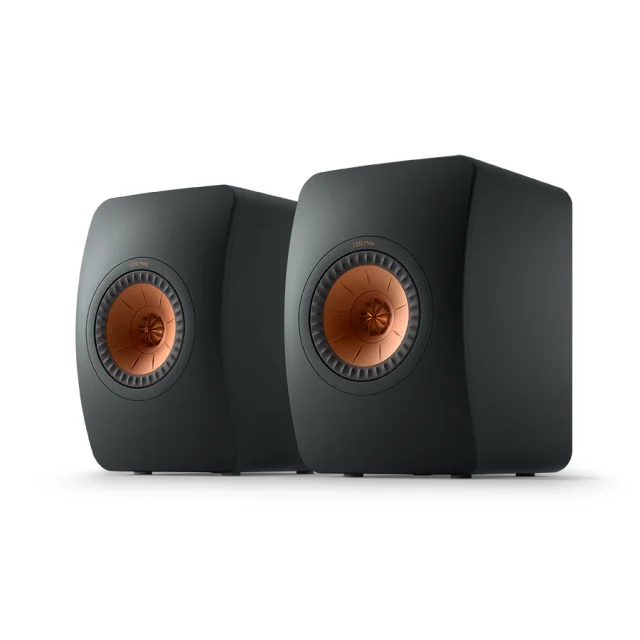
- Buy KEF LS50 Meta A compact passive standmount that images like a much larger, pricier system, provided you feed it a capable amplifier. Amazon
- Buy Kanto Tuk (2nd Gen) A powered pair that folds the amplifier, optical, USB-C and Bluetooth inputs, and a subwoofer output into the cabinets, so a TV, a computer, and a phone plug straight in. Amazon
- It depends Q Acoustics 3030c A large, bass-focused passive standmount pair that punches above its tier, as long as you have a real amplifier to drive it. Amazon
- Skip Edifier R1280T A cheap, popular powered pair that looks the part but gives up too much resolution and control to earn a place in a real listening setup. Amazon
What actually matters
- Passive vs powered decides your whole setup: passive means buying and matching an amplifier and suits tinkerers, while powered folds everything into the cabinets and suits people who want one tidy box.
- Amplifier matching governs how a passive pair actually performs, especially with lower-impedance designs that demand real current to control the bass.
- Bass capability and driver size set expectations for low-end reach; a small woofer keeps the box compact but rolls off before the lowest octaves, so plan for a subwoofer if you want them.
- Inputs and connectivity determine what you can plug in, and matter most on powered pairs where a missing optical, phono, or wireless option cannot be added later.
- Placement and room fit shape the sound as much as the speaker, since stands, distance from walls, and toe-in change imaging and bass balance.
- Tonal balance (warm and forgiving vs neutral and revealing) decides how a pair flatters or exposes your recordings, so match it to what you listen to and how critically you listen.
- Cabinet size and footprint affect both placement and scale; a chunkier cabinet often means fuller bass but demands more room to breathe.
The specs, in plain English
Green flags vs red flags
Green flags
- A clear statement of whether the pair is passive or powered, so you know upfront what else you must buy
- Independent testing and long-term owner reports that agree on clean, low-fatigue treble and a locked-in stereo image
- A well-engineered tweeter (decoupled or well-damped) and a driver design that keeps the sound consistent off-axis
- The inputs you actually need are listed and confirmed, matching your turntable, TV, or streaming setup
- A model still in production with a track record long enough to judge reliability rather than launch hype
- Honest bass claims that acknowledge small woofers roll off early and pair well with a subwoofer
Red flags
- A boomy, one-note low end that leans on and clouds the midrange, especially as volume climbs
- Soft, rolled-off treble that loses fine detail and air
- A powered pair missing an input you depend on, with no way to add it later
- Marketing that leans on impressive-sounding numbers while glossing over amplifier or placement needs
- A dead-end design with no optical, no Bluetooth, and no subwoofer output, so the system cannot grow
- A very cheap powered pair chosen on price alone, where fidelity is clearly an afterthought
Who's who: the brands
- KEF - British maker known for its Uni-Q coincident-driver designs that prize precise imaging and clean, refined treble.
- Q Acoustics - British brand with a reputation for warm, larger-sounding passive pairs that punch above their price.
- Kanto - Specialist in powered bookshelf pairs that fold amplification, Bluetooth, and digital inputs into the cabinets for plug-and-play setups.
- Edifier - Budget-focused maker of popular, inexpensive powered pairs that prioritize convenience and price over outright fidelity.
- Wharfedale - Long-established British brand offering warm, forgiving passive standmounts that are easy to live with.
- ELAC - Maker known for well-engineered, neutral passive bookshelf speakers that offer strong value at several tiers.
How to read a listing without getting fooled
Start with the one line that changes everything: is the pair passive or powered? If passive, you are buying half a system, so read the impedance and remember a nominal 6-ohm design that dips lower under music wants a real amplifier, not a mini-amp. If powered, treat the input list as a checklist and match it against your sources; a phono preamp lets a turntable connect directly, optical handles a TV, and a decent Bluetooth codec covers a phone, but confirm each one you need is actually there. Read driver sizes as a bass expectation rather than a quality score: a small woofer means a tidy cabinet and early roll-off, not a bad speaker. Treat frequency-response numbers skeptically unless they come with a tolerance window, and weight independent testing and long-term owner reports over launch-week enthusiasm. Above all, read the spec sheet as one part of a chain that also includes the amp, the room, and placement.
How much should you spend?
Think in tiers rather than figures. Entry-level powered pairs are genuinely plug-and-play and fine for casual desktop or bedroom use, but the cheapest ones give up resolution and control and cannot grow, so they are a false economy if you care about sound. The value sweet spot sits where a pair delivers most of the musical enjoyment of far dearer models with a warmer, forgiving balance; this is where many first systems should land. Spending more buys refinement, sharper imaging, and lower distortion, which a careful listener will notice, but the gains diminish and are easily squandered on a weak amplifier or poor placement. For passive pairs especially, hold back enough of your budget for a competent amplifier and stands, because a great speaker starved of power or stuck against a wall will underperform a humbler pair set up well. Spend more only when the last increment of fidelity genuinely matters to you and the rest of the chain already deserves it.
Questions, answered
What is the difference between passive and powered bookshelf speakers?
Passive speakers need a separate amplifier or receiver to work, which gives you flexibility and upgrade room. Powered (active) speakers build the amplifier, and often the inputs, into the cabinets, so they play straight from a source. Passive suits tinkerers who want to match components; powered suits people who want one tidy box.
Do I need a subwoofer with bookshelf speakers?
Often, if you want deep bass. Most bookshelf models use small woofers that roll off well above the lowest octaves, so for films, electronic music, or larger rooms a subwoofer fills the gap. For nearfield desk listening, many people are happy without one.
Can I connect a turntable to bookshelf speakers?
It depends on the pair. A powered speaker with a built-in moving-magnet phono preamp lets a turntable connect directly. Passive pairs, and powered pairs with line inputs only, need an amplifier with a phono stage or a separate phono preamp in between.
How much does the amplifier matter for passive speakers?
A great deal. A passive pair only sounds as good as the amp driving it, and lower-impedance designs need real current to control the bass. Budget for a competent integrated amplifier rather than the cheapest option, or the speakers will never show what they can do.
Are more expensive bookshelf speakers always better?
No. Higher spend buys refinement, imaging precision, and lower distortion, but the gains diminish, and a well-chosen mid-tier pair delivers most of the enjoyment for far less. Matching, placement, and source often matter more than the last increment of speaker cost.
How should I place bookshelf speakers for the best sound?
Put them on stands or a solid surface at roughly ear height, give them some breathing room from the wall behind them to control bass and improve imaging, and angle them slightly toward your listening position. Small adjustments in distance and toe-in noticeably change the balance and stereo image.
Or jump to the head-to-head: KEF LS50 Meta vs Q Acoustics 3030c.