

Audio & Headphones
The Best Bookshelf Speakers (Passive and Powered), Weighed Against the Hype
We compared four current bookshelf speakers, passive and powered, to find honest picks for real rooms, budgets, and sources, plus one popular pair to skip.
The short version
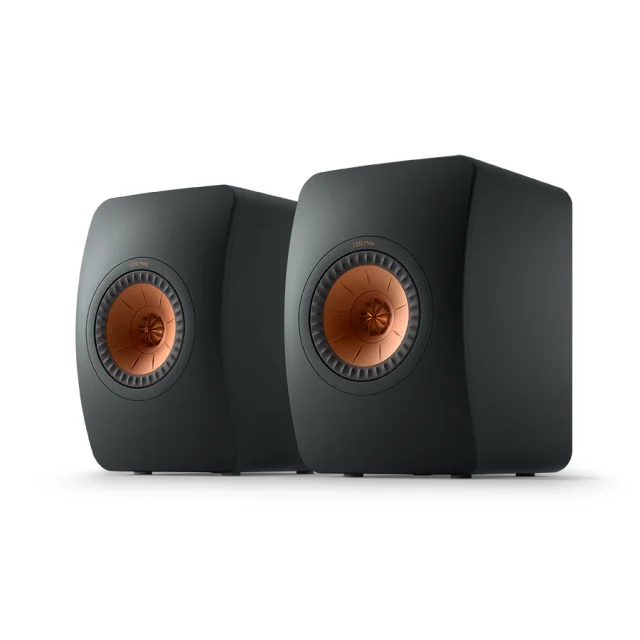
For a passive system where you supply the amp, the KEF LS50 Meta gives the most precise imaging and cleanest treble, though its bass is modest and it needs good partnering. The Q Acoustics 3030c is the value pick, with deeper listed bass and more scale for much less. If you want everything in the box, the Kanto Tuk (2nd Gen) handles TV, computer, and Bluetooth with no separate amp. Skip the Edifier R1280T: it is cheap and popular, but its small drivers sound boomy and soft, and it cannot grow.
Our picks at a glance
- KEF LS50 Meta - Buy. A compact passive standmount that images like a much larger, pricier system, provided you feed it a capable amplifier.
- Q Acoustics 3030c - It depends. A large, bass-focused passive standmount pair that punches above its tier, as long as you have a real amplifier to drive it.
- Kanto Tuk (2nd Gen) - Buy. A powered pair that folds the amplifier, optical, USB-C and Bluetooth inputs, and a subwoofer output into the cabinets, so a TV, a computer, and a phone plug straight in.
- Edifier R1280T - Skip. A cheap, popular powered pair that looks the part but gives up too much resolution and control to earn a place in a real listening setup.
The verdict in 30 seconds
What mattered most
- Type
- Amp / source built in
- Driver setup
- Wireless / digital inputs
- Bass character
- Best use
Bookshelf speakers split into two camps that rarely get judged together: passive pairs that need their own amplifier, and powered pairs with amplification and inputs built in. We kept both in the room, because the right choice depends less on which measures better and more on what you already own and how you plan to feed it. Below are three we would recommend, one we would not, and the reasoning behind each.
A compact passive standmount that images like a much larger, pricier system, provided you feed it a capable amplifier.
Best for: Careful listeners with a decent amp who value imaging and midrange honesty over sheer bass.
- 12th-generation Uni-Q coincident driver puts the tweeter at the acoustic center of the mid/bass cone, so imaging stays precise and consistent across a wide seating area
- Metamaterial Absorption Technology (MAT) behind the tweeter tames the harsh resonance most small domes add, leaving a clean, low-fatigue treble
- Passive design means the pair only performs as well as the amplifier and cables you pair with it, which is a hidden cost
- A 5.25-inch woofer in a compact bass-reflex box gives modest low-end reach, so it wants stands and often a subwoofer for full-range material
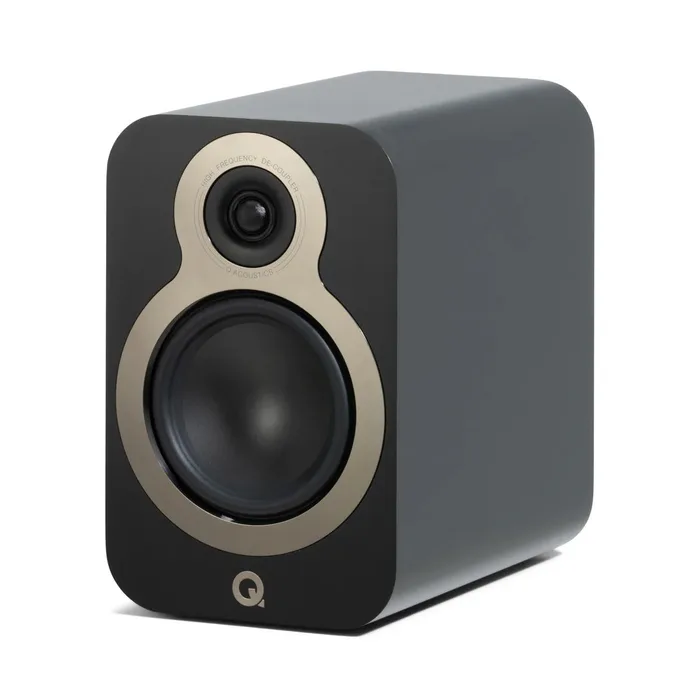
A large, bass-focused passive standmount pair that punches above its tier, as long as you have a real amplifier to drive it.
Best for: First-time hi-fi buyers who already own or will buy a proper stereo amp and want bass extension and scale for the money.
- Q Acoustics calls it the standmount with the greatest bass extension in the 3000c range, with a 5.5-inch C3 curved-cone mid/bass driver in a 12.5-liter cabinet and a listed response down to 48 Hz
- The 22 mm tweeter is hermetically sealed and mechanically isolated from the baffle, keeping cabinet and woofer vibration out of the dome
- The nominal 6-ohm load dips to a listed 3.9-ohm minimum and sensitivity is a modest 86.5 dB, so it needs a competent integrated rather than a cheap mini-amp
- At 324 x 205 x 329 mm it is a large standmount, deeper than many shelves allow
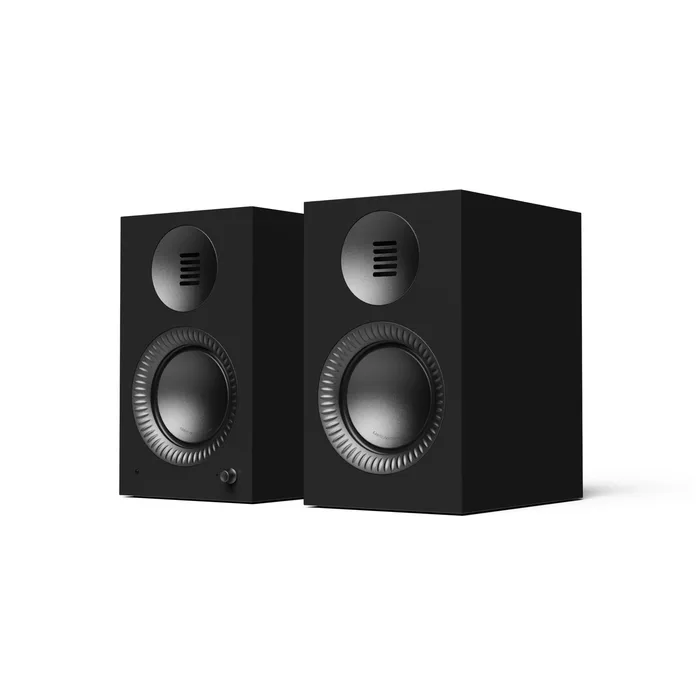
A powered pair that folds the amplifier, optical, USB-C and Bluetooth inputs, and a subwoofer output into the cabinets, so a TV, a computer, and a phone plug straight in.
Best for: Desktop and TV listeners who want one plug-and-play pair without assembling a separate amp and source chain.
- Optical (24-bit/96 kHz), USB-C (24-bit/96 kHz), two RCA line inputs, and Bluetooth 5.4 with aptX Adaptive cover TV, desktop, and phone from one tidy pair
- AMT tweeters and 5.25-inch aluminum woofers on 130 W RMS, plus a subwoofer output with a selectable 80 Hz crossover
- No phono preamp is listed, so a turntable needs its own phono stage or a separate phono box
- Wireless is Bluetooth only, and with no HDMI or ARC listed, TV use leans on the optical input
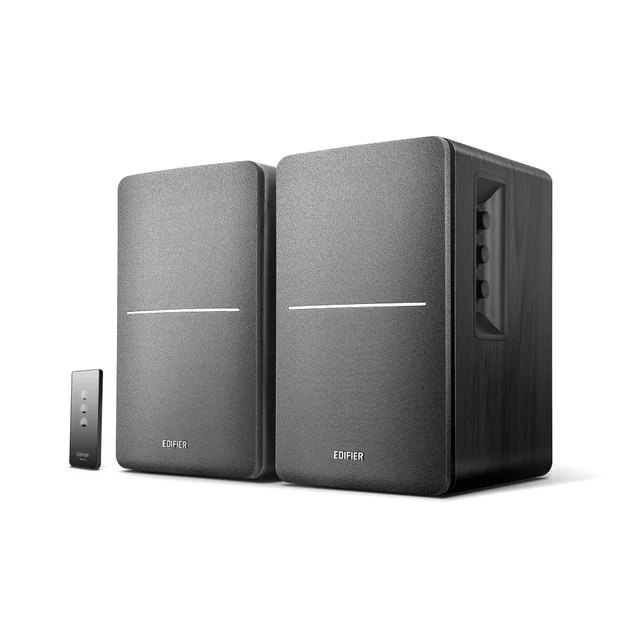
A cheap, popular powered pair that looks the part but gives up too much resolution and control to earn a place in a real listening setup.
Best for: Only the most casual desktop use where price is the single deciding factor and fidelity is an afterthought.
- Onboard amplification, dual RCA inputs, side tone controls, and a remote make it genuinely plug-and-play out of the box
- Compact retro cabinet and low outlay make it an easy, low-commitment desk or bedroom starter
- Small 4-inch bass drivers produce a boomy, one-note low end that overpowers the mids, and the sound turns muddy as volume climbs
- Treble from the half-inch dome is soft and rolled off, and there is no optical, Bluetooth, or subwoofer output to grow the system
| Criteria | KEF LS50 Meta Top pick | Q Acoustics 3030c | Kanto Tuk (2nd Gen) | Edifier R1280T |
|---|---|---|---|---|
| Verdict | Buy it | It depends | Buy it | Skip it |
| Best for | Careful listeners with a decent amp who value imaging and midrange honesty over sheer bass. | First-time hi-fi buyers who already own or will buy a proper stereo amp and want bass extension and scale for the money. | Desktop and TV listeners who want one plug-and-play pair without assembling a separate amp and source chain. | Only the most casual desktop use where price is the single deciding factor and fidelity is an afterthought. |
| Price tier | $$$$ · flagship | $$ · mid-range | $$$ · premium | $ · budget |
| Type | Passive (needs amp) | Passive (needs amp) | Powered (active) | Powered (active) |
| Amp / source built in | No - bring your own amp | No - bring your own amp | Yes - amp, optical, USB-C, Bluetooth | Yes - amp and RCA only |
| Driver setup | 5.25" Uni-Q coaxial with MAT | 5.5" C3 mid/bass, isolated 22 mm tweeter | 5.25" aluminum woofer, AMT tweeter | Dual 4" bass, 0.5" silk dome |
| Wireless / digital inputs | None (amp-dependent) | None (amp-dependent) | Bluetooth, optical, USB-C | None (analog RCA only) |
| Bass character | Tight but modest reach | Deepest here (48 Hz listed) | Full and controlled | Boomy and one-note |
| Best use | Critical near/mid-field listening | Budget hi-fi with your own amp | Desktop and TV all-in-one | Casual desktop only |
Which one is right for you?
- Careful listeners with a decent amp who value imaging and midrange honesty over sheer bass. Buy it KEF LS50 Meta
- Desktop and TV listeners who want one plug-and-play pair without assembling a separate amp and source chain. Buy it Kanto Tuk (2nd Gen)
- First-time hi-fi buyers who already own or will buy a proper stereo amp and want bass extension and scale for the money. It depends Q Acoustics 3030c
- Only the most casual desktop use where price is the single deciding factor and fidelity is an afterthought. Skip it Edifier R1280T
How we judged the field
RBE does not run a lab. We read across independent expert measurements and long-term owner reports, then weigh where they agree and, more usefully, where they disagree. Bookshelf speakers divide into two camps that rarely get compared side by side: passive pairs that need a separate amplifier, and powered pairs with amplification and inputs built in. We deliberately kept both on the table, because the right answer depends less on which sounds cleaner on paper and more on what you already own and how you plan to feed it.
We limited the field to models still in production in 2026, each with a track record long enough to judge reliability rather than launch-week enthusiasm. Then we held every pair to the same question: what do you give up to get in? Three earned a recommendation for different buyers. One familiar seller did not, and we explain that below rather than leaving it off the list.
KEF LS50 Meta - the one to beat
Buy itThe LS50 Meta is the reference point the others get measured against. Its 12th-generation Uni-Q driver places the tweeter at the acoustic center of the mid/bass cone, so both arrive at your ears in step. In practice that means a stereo image that stays locked and specific whether you sit dead center or off to one side, which is unusual at this size. Behind the tweeter, Metamaterial Absorption Technology soaks up the rear energy that normally reflects back and adds a hard edge, so the treble stays detailed without turning brittle over long sessions.
What owners and reviewers consistently like more is the honesty of the midrange and the precision of the imaging. What they like less is the price of admission beyond the speakers themselves. This is a passive pair, so it only performs as well as the amplifier feeding it, and a modest 5.25-inch woofer means the bottom octaves are tidy rather than deep. It wants proper stands, some breathing room from the wall, and often a subwoofer for full-range material. Treated as a considered purchase rather than a casual one, it repays the effort.
Q Acoustics 3030c - the value passive
It dependsThe 3030c, which replaces the long-running 3030i, is the pragmatic counterargument to spending big. Q Acoustics bills it as the standmount with the greatest bass extension in the 3000c range: a 5.5-inch C3 curved-cone mid/bass driver in a 12.5-liter cabinet, with a listed response down to 48 Hz. The 22 mm tweeter is hermetically sealed and mechanically isolated from the baffle, so neither the cabinet nor the woofer modulates it.
The verdict is conditional because the 3030c is a 6-ohm load with a listed 3.9-ohm minimum and a modest 86.5 dB sensitivity, so it will not shine on a cheap mini-amp; Q Acoustics recommends 25 to 90 W, and a competent integrated is the realistic partner. The cabinet is also large for a standmount at 324 x 205 x 329 mm, so measure your shelf or plan on stands. Accept those trade-offs and you get much of the enjoyment of far dearer speakers for a fraction of the spend.
Kanto Tuk (2nd Gen) - the powered all-rounder
Buy itIf the idea of choosing an amplifier makes your eyes glaze over, the Tuk removes the decision. Amplification lives in the cabinets (Kanto lists 130 W RMS), and so do the inputs that matter for a mixed setup. An optical input handles a television, USB-C bypasses a computer’s sound card, two RCA line inputs take anything analog, and Bluetooth 5.4 with aptX Adaptive covers a phone. AMT tweeters over 5.25-inch aluminum woofers, plus a subwoofer output with a selectable 80 Hz crossover, give it room to grow.
What we like more is how much it folds into one box. What we like less is where the convenience stops. Kanto lists no phono preamp, so a turntable needs one built in or a separate phono box. Wireless is Bluetooth only, and with no HDMI or ARC listed, a television leans on the optical input. It also costs well into premium territory. For a desk, a bedroom, or a TV corner, those omissions are easy to live with.
Edifier R1280T - popular, but we would pass
Skip itThe R1280T is one of the most recommended budget powered pairs anywhere, which is exactly why it belongs here. It is genuinely plug-and-play: onboard amplification, dual RCA inputs, side-mounted tone controls, and a remote, wrapped in a tidy retro cabinet for very little money. For a first pair on a tight budget, the appeal is obvious.
The reason we would still pass is that the compromises are audible, not theoretical. The 4-inch bass drivers produce a boomy, one-note low end that leans on the midrange and clouds it, and the sound thickens further as you raise the volume. The half-inch tweeter is soft and rolled off up top, so fine detail and air go missing. Just as limiting, there is no optical input, no Bluetooth, and no subwoofer output, so the system cannot grow with you. Step up to the Kanto for a powered box, or pair a budget passive set with a modest amp, and the step up in clarity and headroom is immediate.
KEF LS50 Meta vs Q Acoustics 3030c: which should you buy?
These two frame the core passive decision, and the answer is that they suit different priorities. The LS50 Meta is the more capable speaker: sharper imaging, a cleaner and more resolving treble, and a composure under demanding material that the 3030c cannot quite match. If you listen closely, value precise placement of voices and instruments, and are willing to partner it with a good amplifier and stands, it is the better long-term buy.
The 3030c wins on value and on ease. It is bigger, lists deeper bass (48 Hz), and Q Acoustics says its C3 driver is more forgiving of room position, and it costs far less, which frees budget for the amplifier both speakers actually need. For a first proper system, or for a listener who wants enjoyment over analysis, the gap in outright fidelity rarely justifies the gap in price. Put simply: choose the KEF if the last ten percent of performance matters to you and the budget allows, and choose the Q Acoustics if you want the most music for the money.
What to look for
Start with one question: do you want to buy and match an amplifier, or not? If assembling a system is part of the appeal, or you already own an amp, a passive pair like the LS50 Meta or the 3030c gives you the best ceiling and clear upgrade paths. If you would rather plug in a computer, a television, and a phone and be done, a powered pair like the Tuk is the sensible route.
Next, weigh your sources and your room. Powered speakers are only as flexible as their inputs, so confirm the ones you need are present before you buy; a missing optical, USB, or phono connection is a deal-breaker after the fact. For passive speakers, respect the load: a nominal 6-ohm design wants real amplifier current, not the cheapest unit on the shelf. Finally, be realistic about bass. Small woofers keep these cabinets tidy but roll off early, so plan for stands, some distance from the wall, and a subwoofer if you want the lowest octaves. Match the speaker to the whole setup, not the other way around.
Our final take
The KEF LS50 Meta is our pick for its imaging and midrange honesty, provided you feed it a capable amp and accept modest bass. The Q Acoustics 3030c is the value runner-up, bigger and deeper-reaching for much less, and the smarter choice for many first systems. The Kanto Tuk (2nd Gen) is the powered all-rounder for anyone who wants TV, computer, and Bluetooth from one box. The Edifier R1280T is cheap and popular, but its boomy, soft sound and dead-end connectivity make it the pair to skip. Buy the one that fits the system you actually intend to build.
Questions, answered
What is the difference between passive and powered bookshelf speakers?
Passive speakers need a separate amplifier or receiver to work, giving you flexibility and upgrade room. Powered (active) speakers build the amplifier and often the inputs into the cabinets, so they play straight from a source. Passive suits tinkerers; powered suits people who want one tidy box.
Do I need a subwoofer with bookshelf speakers?
Often, yes, if you want deep bass. Most bookshelf models, including the KEF LS50 Meta, use small woofers that roll off well above the lowest octaves. For films, electronic music, or larger rooms, a subwoofer fills the gap. For nearfield desk listening, many people manage without one.
Can I connect a turntable to these speakers?
Not directly. None of the four lists a built-in phono preamp. The Kanto Tuk (2nd Gen) and Edifier R1280T take a turntable through their RCA line inputs once a phono preamp sits in between, and passive pairs like the KEF and Q Acoustics need an amplifier with a phono stage.
How important is the amplifier for passive bookshelf speakers?
It matters a great deal. A passive pair only sounds as good as the amp driving it, and models with a 6-ohm or lower load, like the 3030c (listed minimum 3.9 ohms), need real current to control the bass. Budget for a competent integrated amp rather than the cheapest option you can find.
Are more expensive bookshelf speakers always better?
No. Price buys refinement, imaging precision, and lower distortion, which the KEF LS50 Meta shows. But the Q Acoustics 3030c delivers most of the musical enjoyment for a fraction of the outlay. Beyond a point you pay for diminishing gains, and matching, placement, and source often matter more than spend.
Deciding between the top two? See our head-to-head: KEF LS50 Meta vs Q Acoustics 3030c.
More Audio & Headphones reviews
 Best Budget Noise-Cancelling Headphones: Three Picks
  Best Budget Soundbars: Real-World Picks for Bigger Sound Without the Splurge
  The Best Cajons: 4 Compared (and One to Skip)
  The Best Car Speakers: 4 Compared (and One to Skip)
  The Best CD Players: 4 Compared (and One to Skip)
  The Best Closed-Back Headphones: 4 Compared (and One to Skip)