

Audio & Headphones
Best Budget Soundbars: Real-World Picks for Bigger Sound Without the Splurge
We compared four wallet-friendly soundbars for real bass and clear dialogue. See why Vizio's 2.1 Soundbar SE wins and where Samsung, Hisense and Bose land.
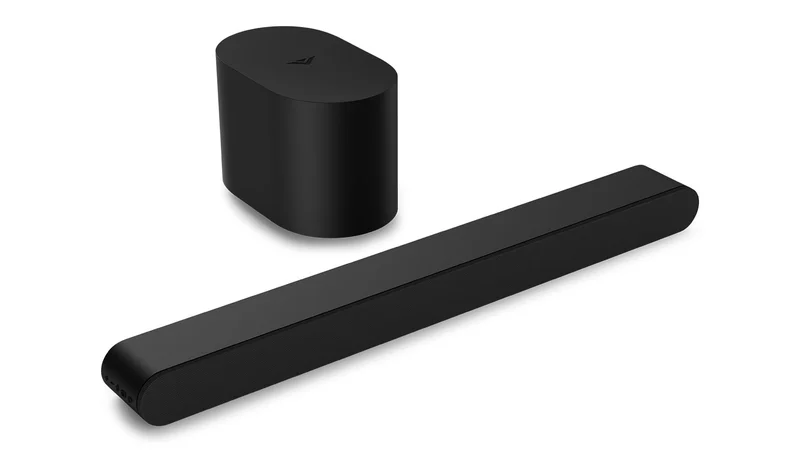
The short version
For most budget shoppers the Vizio 2.1 Soundbar SE is the pick: a genuine wireless subwoofer, Atmos and DTS:X decoding, and single-cable HDMI eARC control for the least money. Step up to the Samsung HW-B630F when dialogue clarity and a fuller, more refined presentation matter, thanks to its dedicated center channel. The Hisense HS2100 is a loud, bass-heavy value option with rougher edges, and the Bose TV Speaker is a lovely dialogue-focused bar that skips a subwoofer and cinematic low end.
Our picks at a glance
- Vizio 2.1 Soundbar SE - Buy. A compact 30-inch bar with a genuine wireless subwoofer and modern HDMI simplicity for the least money.
- Samsung HW-B630F - Buy. A 3.1 system whose dedicated center channel makes dialogue cut through busy scenes cleanly.
- Hisense HS2100 - It depends. A loud, bass-heavy 2.1 value play with rougher edges than our top picks.
- Bose TV Speaker - Skip. A premium single bar tuned for dialogue clarity, but with no subwoofer and little cinematic weight.
The verdict in 30 seconds
What mattered most
- Configuration
- Bass
- Dialogue clarity
- Immersion
- Connectivity
- Setup & extras
A cheap soundbar should fix flat TV audio without introducing a new set of compromises. We compared four budget-friendly options on the things that actually matter day to day: dialogue clarity, how much real low end you get, and how painless setup is. Our lineup now leads with Vizio's current 2.1 Soundbar SE, which replaces an older model that's no longer sold, alongside picks from Samsung, Hisense and Bose.
A compact 30-inch bar with a genuine wireless subwoofer and modern HDMI simplicity for the least money.
Best for: Someone who wants genuine subwoofer bass and modern HDMI simplicity on the smallest possible budget.
- Separate wireless subwoofer delivers punchy, room-filling bass instead of thin built-in thump
- Decodes Dolby Atmos and DTS:X with a convincing DTS Virtual:X width mode
- Single HDMI eARC cable handles audio plus volume via your TV remote, and slim QuickFit cabinet fits under small TVs
- No remote in the box, so you rely on the TV remote or the Vizio app
- No optical input, ruling out older TVs without HDMI ARC; only Movie and Music EQ presets
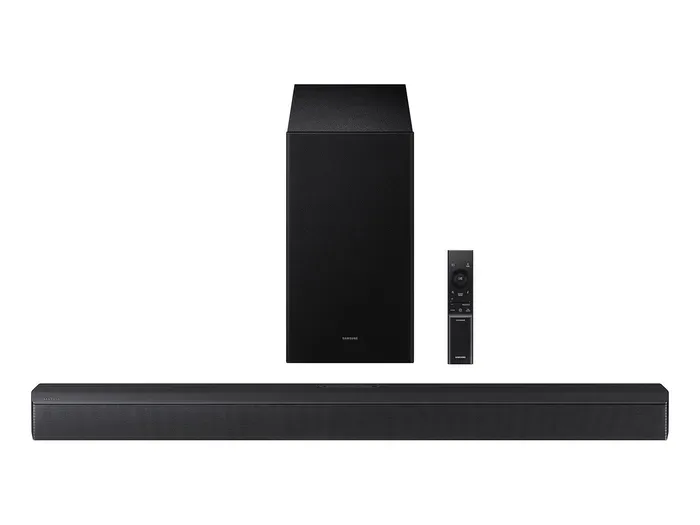
A 3.1 system whose dedicated center channel makes dialogue cut through busy scenes cleanly.
Best for: Buyers who watch a lot of dialogue-heavy TV and can stretch slightly past entry level.
- Dedicated center channel gives the clearest dialogue in the group
- Wireless subwoofer plus Adaptive Sound, Voice Enhance and Night modes
- HDMI in and out, HDMI ARC, optical and Bluetooth, and Samsung's One Remote Control works with a compatible Samsung TV remote
- Priciest of the two buy picks
- Dolby Audio and DTS Virtual:X only, with no Atmos decoding and no Wi-Fi; Bluetooth is version 4.2
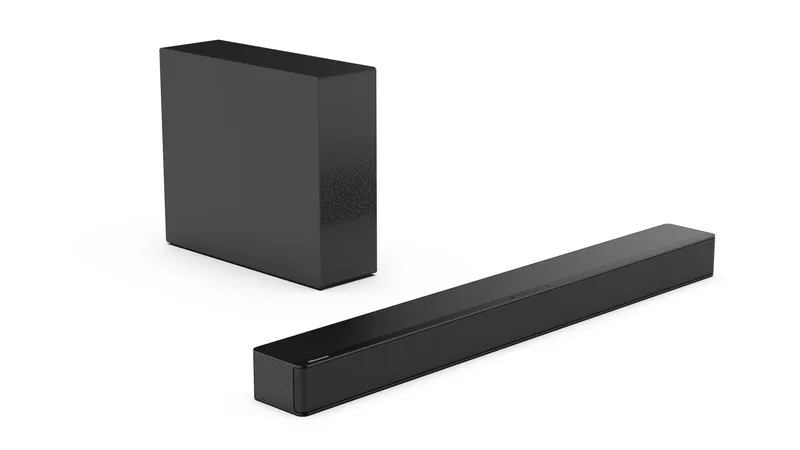
A loud, bass-heavy 2.1 value play with rougher edges than our top picks.
Best for: Bass-first viewers who prioritize loudness and value over finesse.
- Generous wireless subwoofer and high output for the money
- Includes both HDMI ARC and optical, plus DTS Virtual:X for a bit of width
- Bass leans boomy and can overwhelm dialogue at higher volumes
- Plasticky build and basic surround processing next to the Vizio and Samsung
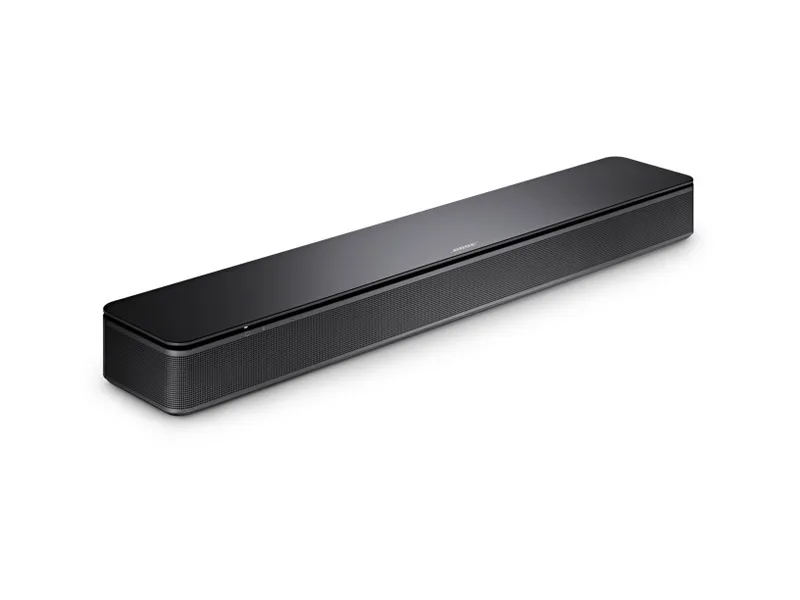
A premium single bar tuned for dialogue clarity, but with no subwoofer and little cinematic weight.
Best for: Small rooms and dialogue-focused viewers who don't care about deep bass and value Bose polish.
- Dialogue mode and clear tuning make mumbly shows genuinely easier to follow
- Beautifully finished, compact and dead simple, with HDMI-ARC, optical and Bluetooth
- No subwoofer in the box (Bose sells an optional bass module), so it can't match the bass or scale of the 2.1 and 3.1 systems
- Sits at a premium tier while offering less on paper than the budget rivals
| Criteria | Vizio 2.1 Soundbar SE Top pick | Samsung HW-B630F | Hisense HS2100 | Bose TV Speaker |
|---|---|---|---|---|
| Verdict | Buy it | Buy it | It depends | Skip it |
| Best for | Someone who wants genuine subwoofer bass and modern HDMI simplicity on the smallest possible budget. | Buyers who watch a lot of dialogue-heavy TV and can stretch slightly past entry level. | Bass-first viewers who prioritize loudness and value over finesse. | Small rooms and dialogue-focused viewers who don't care about deep bass and value Bose polish. |
| Price tier | $ · budget | $$ · mid-range | $ · budget | $$$ · premium |
| Configuration | 2.1 · bar + wireless sub | 3.1 · bar + center + wireless sub | 2.1 · bar + wireless sub | 2.0 · single bar, no sub |
| Bass | Punchy, room-filling from compact sub | Deepest and best-controlled | Loud but boomy | Limited, no dedicated sub |
| Dialogue clarity | Good | Excellent (dedicated center) | Average, buried at volume | Excellent (dialogue mode) |
| Immersion | Dolby Atmos + DTS:X, DTS Virtual:X | DTS Virtual:X | DTS Virtual:X | No surround processing |
| Connectivity | HDMI eARC + BT 5.2, no optical | HDMI in/out + ARC + optical + BT 4.2 | HDMI ARC + optical + Bluetooth | HDMI-ARC + optical + Bluetooth |
| Setup & extras | QuickFit, app control, no remote in box | One Remote Control, Adaptive Sound, remote | Basic, remote included | Simple, dialogue mode, remote |
Which one is right for you?
- Someone who wants genuine subwoofer bass and modern HDMI simplicity on the smallest possible budget. Buy it Vizio 2.1 Soundbar SE
- Buyers who watch a lot of dialogue-heavy TV and can stretch slightly past entry level. Buy it Samsung HW-B630F
- Bass-first viewers who prioritize loudness and value over finesse. It depends Hisense HS2100
- Small rooms and dialogue-focused viewers who don't care about deep bass and value Bose polish. Skip it Bose TV Speaker
How we judged the field
We focus on soundbars that upgrade flat TV audio without draining your wallet. Every bar here ships ready to plug into a modern TV, and we weighed each on the things budget buyers actually notice: dialogue clarity, how much low end you get, how simple setup is, and whether the extras (virtual surround, app control, a dedicated center) earn their keep. We treated the single-unit option fairly even though it skips a subwoofer, because some rooms and some listeners genuinely prefer that trade-off. What follows is the current lineup after we swapped in Vizio’s latest 2.1 pick to replace a model that is no longer sold.
Vizio 2.1 Soundbar SE
Buy itThe SE is our new top pick because it nails the budget brief: a compact 30-inch bar paired with a separate wireless subwoofer, so you get real, room-filling low end instead of the thin thump built-in woofers manage. It decodes Dolby Atmos and DTS:X and runs a DTS Virtual:X mode that widens the soundstage convincingly for movies, though a 2.1 bar without up-firing drivers can only simulate height rather than truly throw it overhead. A single HDMI eARC cable handles both audio and volume control through your TV remote, and Bluetooth 5.2 covers casual music.
What we liked more: the wireless sub delivers noticeably punchier, more generous bass than anything self-contained at this tier, and the slim cabinet tucks under small TVs via QuickFit. What we liked less: there is no remote in the box, so you lean on the TV remote or the Vizio app, and Vizio dropped the optical input, leaving older TVs without HDMI ARC out of luck. Movie and Music modes are the only EQ presets, which keeps things simple but limits fine-tuning.
Best for: someone who wants genuine subwoofer bass and modern HDMI simplicity on the smallest possible budget.
Samsung HW-B630F
Buy itOur runner-up steps up to a 3.1 layout, adding a dedicated center channel that the 2.1 bars lack. That center is why dialogue cuts through busy action scenes so cleanly, and it is the single biggest reason to spend a little more here. It also brings its own wireless subwoofer, Dolby Audio and DTS Virtual:X, Adaptive Sound, and Voice Enhance and Night modes. Connectivity is more forgiving too, with an HDMI input and output, HDMI ARC, optical and Bluetooth 4.2, and a compatible Samsung TV remote can run it through One Remote Control.
What we liked more: the center-channel dialogue clarity and the fuller, better-controlled bass make it the most complete-sounding system in the group. What we liked less: it is the priciest of the two buy picks, and unlike the Vizio it does not decode Dolby Atmos.
Best for: buyers who watch a lot of dialogue-heavy TV and can stretch slightly past entry level.
Hisense HS2100
It dependsThe HS2100 is another 2.1 bar with a wireless sub, and on paper it looks a lot like our top pick. It gets loud, the subwoofer is generous, and DTS Virtual:X adds a bit of width for the money. The catch is refinement: the bass leans boomy and can overwhelm dialogue at higher volumes, the cabinet feels plasticky, and the surround processing is basic next to the Vizio and Samsung.
What we liked more: for sheer output and low-end quantity for the money, it is hard to beat, and it includes both HDMI ARC and optical. What we liked less: the sound is less controlled and the build feels cheaper, which is why it lands as a depends rather than an outright yes. If you mostly watch action and want maximum volume and rumble, it delivers; if you care about clean dialogue and tight bass, look at the Vizio.
Best for: bass-first viewers who prioritize loudness and value over finesse.
Bose TV Speaker
Skip itThis is the odd one out, and we want to be fair to it, because in its lane it is very good. It is a single, premium-built bar with no separate subwoofer, tuned around one job: making dialogue crisp and intelligible, with a dedicated dialogue mode that genuinely helps mumbly shows. It is compact, beautifully finished, dead simple to set up, and includes HDMI-ARC, optical and Bluetooth.
What we liked more: dialogue clarity and build quality are a clear step above everything else here. What we liked less: with no subwoofer it simply cannot produce the bass or cinematic weight the 2.1 and 3.1 systems do, and it sits at a premium tier while offering less on paper. That combination is why it is a skip for a budget bass-and-movies shortlist, not a knock on what it does well.
Best for: small rooms and dialogue-focused viewers who do not care about deep bass and value Bose polish.
Vizio 2.1 Soundbar SE vs Samsung HW-B630F: which should you buy?
This is the real decision for most people. The Vizio wins on value and simplicity: you get a true wireless subwoofer, Atmos/DTS:X decoding and clean HDMI eARC control for the least money, and for movies and music in a small-to-medium room it sounds great. Step up to the Samsung and you are paying for a dedicated center channel and a more refined, fuller presentation. If your viewing is dialogue-heavy television and you notice when speech gets buried, the HW-B630F’s center channel is worth the premium, and One Remote Control sweetens the deal for Samsung TV owners. If you want the most sound for the money and would rather not fuss, the SE is the smarter buy; if you want the best-rounded audio in this group and can spend a bit more, the Samsung earns it.
What to look for
Start with connections: nearly all of these assume your TV has HDMI ARC or eARC, and the Vizio in particular drops optical, so if you are pairing an older set, confirm your ports first. Next, decide how much bass matters. A separate wireless subwoofer, as on the Vizio, Samsung and Hisense, is the single biggest upgrade over TV speakers; if you genuinely do not want a second box or a lot of low end, the sub-less Bose makes sense. Then weigh dialogue: a dedicated center channel or a dialogue-first tuning beats virtual processing if speech clarity is your priority. Finally, factor in extras you will actually use, such as app control, single-remote control with a matching TV, or the number of EQ presets, and do not overpay for features your room or TV cannot take advantage of.
Our final take
For most budget shoppers, the Vizio 2.1 Soundbar SE is the pick: a genuine wireless sub, modern HDMI simplicity and Atmos/DTS:X for the lowest outlay. The Samsung HW-B630F is the upgrade worth considering when dialogue clarity and overall polish matter more than the lowest possible price. The Hisense is a loud, bass-heavy value play with rougher edges, and the Bose is a lovely dialogue-focused bar that simply is not built for buyers who want cinematic low end.
Questions, answered
Does the Vizio 2.1 Soundbar SE come with a wireless subwoofer?
Yes. The SE ships with a compact wireless subwoofer alongside the 30-inch bar, giving you real, room-filling low end down to around 50Hz rather than the thin bass built-in woofers manage in single-unit bars at this tier.
Why replace the older Vizio pick with the 2.1 Soundbar SE?
The previous 2.1 model was discontinued. The SE is Vizio's current budget 2.1 successor, keeping the separate wireless subwoofer while adding Dolby Atmos and DTS:X decoding, Bluetooth 5.2 and single-cable HDMI eARC control for the same entry-level footprint.
Is the Samsung HW-B630F worth paying more than the Vizio?
If dialogue clarity matters, yes. Its 3.1 layout adds a dedicated center channel that keeps speech clear in busy scenes, plus a fuller, better-controlled sound. For pure value and simplicity, the Vizio still wins.
Why is the Bose TV Speaker a skip for a budget list?
It is well built and excellent for dialogue, but it has no subwoofer, so it can't deliver the bass or cinematic scale the 2.1 and 3.1 systems do, and it sits at a premium tier while offering less on paper.
Do these soundbars need HDMI, or will optical work?
Most assume a modern TV with HDMI ARC or eARC. The Samsung, Hisense and Bose also include optical, but the Vizio SE drops it, so confirm your TV's ports before buying if you have an older set.
Deciding between the top two? See our head-to-head: Vizio 2.1 Soundbar SE vs Samsung HW-B630F.
More Audio & Headphones reviews
 The Best Cajons: 4 Compared (and One to Skip)
  The Best Car Speakers: 4 Compared (and One to Skip)
  The Best CD Players: 4 Compared (and One to Skip)
  The Best Closed-Back Headphones: 4 Compared (and One to Skip)
  The Best Computer Speakers: 4 Compared (and One to Skip)
  The Best Desktop DAC/Amps: 4 Compared (and One to Skip)