Explained
Closed-Back Headphones, Explained
After reading this you will know exactly what closed-back headphones are for, which specs actually matter, and how to spot a good pair from a listing alone.
In this guide
Closed-back headphones seal your ears off so noise stays out and your audio stays in, which makes them the default for commutes, shared rooms, studios, and gaming near a mic. Shopping for them gets confusing fast because listings pile on numbers, sizes, and words like 'studio' and 'professional' that sound meaningful but often are not. This guide translates all of it into plain English so you can match a pair to how you actually listen.
The 30-second version
- Closed-back is about isolation, not sound quality by itself. The sealed cup keeps outside noise down and your audio from leaking out, at the cost of the wide, airy soundstage that open-back designs are prized for.
- Isolation here means passive blocking, not active noise cancellation. A good seal muffles steady noise like a train or fan hum, but it is nothing like the electronic silence of an ANC headphone, and no wired pair will erase a nearby voice.
- Comfort is mostly clamp force plus pad material. A tight clamp and firm pleather pads run hot and press on your temples, which matters most over long sessions and doubly so if you wear glasses.
- The word 'studio' on the box is marketing, not a spec. Some of the most famous 'studio' headphones are deliberately bass-boosted and fun rather than flat and neutral, so judge the actual tuning, not the label.
- Most pairs run fine off a phone or laptop. Only certain high-impedance versions genuinely need an amp, so you rarely have to buy extra gear if you match the model to your source.
The products this guide is about
Our verdict on each, with the full reasoning on the companion review.
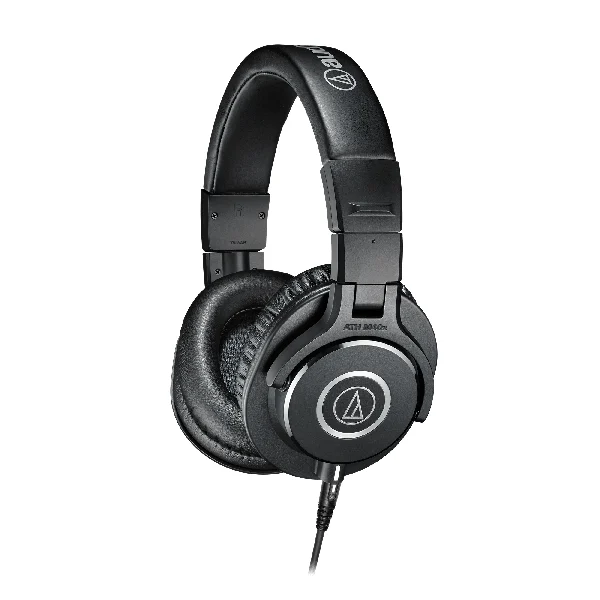
- Buy Audio-Technica ATH-M40x The flatter, cheaper sibling of the famous M50x, and the better pick if you actually want neutral.
- Buy Beyerdynamic DT 770 Pro The long-session comfort champion, with plush velour pads and isolation that shrugs off a noisy room.
- It depends Audio-Technica ATH-M50x The internet-famous one, but its boosted bass and treble make it more fun than the neutral tool its branding implies.
- Skip Sony MDR-7506 A studio legend that still sells at a modern price while showing every one of its decades.
What actually matters
- Isolation and leakage are the whole reason to choose closed-back. Prioritize a snug, well-sealing fit if you buy these for a commute, an office, tracking near a microphone, or gaming on a mic.
- Clamp force and comfort decide whether you can wear them for hours. A firmer clamp seals and stays put but presses harder; a gentler clamp is kinder over long sessions but can loosen the seal.
- Pad material trades comfort against heat and isolation. Soft velour breathes and is friendly to glasses; pleather seals and isolates a touch better but traps heat and can flake with age.
- Tuning is the pair's built-in sound character, and it is a taste decision. Flat and neutral suits editing, mixing, and honest listening; a bass-forward 'fun' tuning suits casual listening and games.
- Impedance and sensitivity tell you whether you need an amp. Most sealed cans are easy to drive, but high-ohm versions want a dedicated amp or audio interface to reach full volume and control.
- Cable and pad replaceability decide how long the pair lasts. Detachable cables and swappable pads let you refresh a worn headphone cheaply; fixed cables and glued pads shorten its usable life.
- Build and portability matter if you travel. Look at whether it folds, how rugged the frame is, and whether spare parts are easy to find.
The specs, in plain English
Green flags vs red flags
Green flags
- Replaceable ear pads and a detachable cable, so a worn part is a cheap fix rather than a dead headphone
- A clearly stated tuning described honestly as neutral or as fun and bass-forward, rather than vague hype
- Low impedance or a stated 'easy to drive' spec if you plan to run them straight from a phone or laptop
- Widely available spare pads and parts, a sign the model is supported and repairable
- A comfort story that matches long use, such as soft pads and a moderate clamp, if you plan multi-hour sessions
Red flags
- A fixed, non-detachable cable paired with pads known to flake or shed, which caps the pair's lifespan
- 'Studio' or 'professional' framing used as the main selling point with no honest description of the actual tuning
- A high-impedance rating with no mention that you may need an amp, if you only have a phone to drive it
- Marketing that leans on large driver size as proof of quality
- No information on pad replacement or spare parts, which suggests you cannot maintain it
- Vague or missing comfort details, such as no word on clamp or pad material, on a pair you intend to wear for hours
Who's who: the brands
- Audio-Technica - Popular for sealed studio-style over-ears that span neutral, honest tuning and more bass-forward crowd-pleasers.
- Beyerdynamic - German maker known for plush velour pads, rugged repairable builds, and models sold in several impedance versions.
- Sony - Makes long-serving broadcast and studio closed-backs with a familiar, serviceable design and a bright, revealing sound.
- Sennheiser - Well-regarded audio brand offering closed-back monitors and consumer models with generally balanced tuning.
- AKG - Studio-heritage brand whose sealed headphones aim at neutral monitoring and detailed, controlled sound.
How to read a listing without getting fooled
Start by confirming it is genuinely closed-back if isolation is why you are buying, since 'over-ear' alone does not tell you. Read the tuning description skeptically: treat words like studio, professional, and reference as heritage and marketing, not a promise of flat sound, and look for a plain statement of whether it is neutral or bass-forward. Check impedance against how you will listen, because a high-ohm figure is a quiet flag that you may need an amp. Ignore boasts about big drivers; they say little about sound. Then look for the practical things that decide how long the pair survives and how it feels: pad material, whether pads and cable are replaceable, whether it folds, and whether the clamp and pads suit long wear. A listing that is upfront about all of these is usually more trustworthy than one that leads with slogans.
How much should you spend?
You do not need to spend much to get a well-sealed, honest-sounding closed-back that drives off a phone; the budget end of the reputable brands is where a lot of the value sits, and a modest pair often isolates and measures nearly as well as pricier ones. Paying more mostly buys comfort and longevity rather than dramatically better sound: plusher pads, a gentler clamp for all-day wear, sturdier and more repairable frames, and sometimes a more refined or spacious presentation. Spending up is worth it if you will wear them for hours, want glasses-friendly comfort, or value a build you can keep alive with spare parts. It is not worth it if you are paying a premium mainly for a famous name or a 'studio' label, since a cheaper sibling is often flatter and nearly as capable. Be wary of very cheap no-name pairs, where flimsy builds, glued-on pads, and fixed cables tend to fail early.
Questions, answered
What is the real difference between closed-back and open-back headphones?
Closed-back cups are sealed, so they block a lot of outside noise, leak very little, and tend to give punchier, more contained bass. Open-back cups are vented, which gives a wider, more natural sound and less pressure, but almost no isolation and heavy leakage both ways. Choose closed-back for commuting, shared spaces, recording near a mic, and gaming; open-back suits quiet, private rooms where you are alone.
Do closed-back headphones cancel noise like ANC headphones?
No. Their isolation is passive, meaning the seal physically muffles some outside sound, but there are no electronics actively canceling noise. A good seal reduces steady hums like an engine or fan, yet it will not produce the near-silence of active noise cancellation and cannot fully block a nearby conversation. If total quiet is the goal, that is a different category of headphone.
Do I need a headphone amplifier?
Usually not. Most closed-back headphones are easy to drive straight from a phone, laptop, or audio interface. The exception is high-impedance versions of certain models, which can sound quiet or underpowered without a dedicated amp or a capable interface. If you only have a phone, choose a low-impedance version or a pair described as easy to drive, and you can skip the extra gear.
Are closed-back headphones good for wearing glasses?
They can be, and it comes down to clamp force and pad material. A gentler clamp with soft velour pads seals more forgivingly around the arms of your glasses and is comfortable for longer, while a firm clamp with stiff pleather pads can create a hot pressure spot on the temples. If you wear glasses for long sessions, favor softer pads and a moderate clamp, and remember that many pairs let you swap in more comfortable replacement pads.
Does a bigger driver mean better sound?
No. Driver size is one of the most oversold specs in headphone listings. How a pair is tuned and how the cup is designed matter far more to what you actually hear than the raw diameter of the driver. Two headphones with the same driver size can sound completely different, so judge by the described tuning and by independent testing and owner reports, not by the millimeter figure.
Or jump to the head-to-head: Audio-Technica ATH-M40x vs Beyerdynamic DT 770 Pro.