Explained
Digital Pianos, Explained
After reading, you'll understand how key actions, polyphony, pedals and connectivity differ between digital pianos and which ones matter for how you play.
In this guide
Digital pianos share a shape, which hides how differently they play. First-time buyers often see 88 keys and assume the feel is similar, when non-weighted, semi-weighted and hammer actions are very different. Spec sheets add brand names for actions and sound engines that are hard to compare. Connectivity is confusing too, because Bluetooth audio and Bluetooth MIDI do different jobs.
The 30-second version
- The action matters most, so look for weighted, graded hammer keys before anything else.
- 88 keys does not mean piano feel, since some 88-key models use non-weighted keys.
- Bluetooth audio and Bluetooth MIDI are different, and lesson apps need MIDI.
- The included pedal is usually basic, and a half-pedal capable sustain pedal is a worthwhile upgrade.
- Stands and three-pedal units are often extras, so check what the box actually contains.
The products this guide is about
Our verdict on each, with the full reasoning on the companion review.
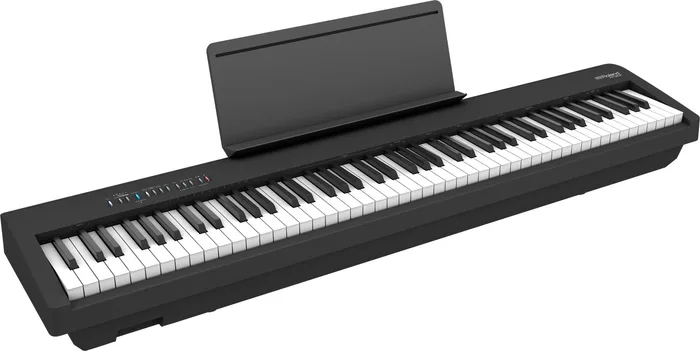
- Buy Roland FP-30X A portable digital piano with an escapement-equipped hammer action, strong speakers and full Bluetooth and USB connectivity, and the best all-rounder here.
- Buy Yamaha P-225 A slim, light weighted-key piano with Yamaha's CFX concert grand sound and a built-in USB audio interface, and the pick when portability matters.
- It depends Kawai ES120 A compact weighted piano with strong Bluetooth MIDI and lesson features for students, held back by its basic pedal and MIDI-only USB.
- Skip Alesis Recital Play A low-cost 88-key bundle marketed as a beginner piano, but its keys are non-weighted, which defeats the point of learning on a piano.
What actually matters
- Key action - A graded hammer action makes bass keys heavier than treble keys like an acoustic piano. It is the single biggest factor in whether practice carries over.
- Key surface - Matte or ivory-feel keytops give a less slick surface than glossy plastic. That helps control in long sessions.
- Piano sound source - Makers name the grand piano they sampled or modeled, such as Yamaha's CFX or Kawai's SK-EX. Resonance modeling adds the way strings ring together.
- Polyphony - This is how many notes can sound at once. Pedalling and layering use it up, so higher numbers give more headroom.
- Speakers - Speaker size and rated power decide how full the piano sounds in a room. Headphone players can care less.
- Connectivity - Bluetooth MIDI, Bluetooth audio, USB MIDI and USB audio each do a different job. Match them to how you plan to learn or record.
- Weight and size - Portable pianos range from about 11 kg to 15 kg in this group. A lighter piano is easier to store and move but often has smaller speakers.
The specs, in plain English
Green flags vs red flags
Green flags
- 88 weighted keys with a named graded hammer action.
- Polyphony of 192 or more.
- Bluetooth MIDI built in, not via a separate adaptor.
- Two headphone jacks and separate line outputs.
- A sustain input that supports half-pedaling.
Red flags
- Keys described as non-weighted or semi-weighted on a model sold as a piano.
- No polyphony or speaker power listed.
- A single headphone jack that also serves as the only output.
- Bundle descriptions that list more accessories than the contents list.
- Hundreds of sounds and styles promoted ahead of the key action.
Who's who: the brands
- Roland - Known for its PHA keyboard actions and SuperNATURAL piano sound across the FP-X portable line.
- Yamaha - Builds acoustic grands such as the CFX and uses its sound in the slim P series portable pianos.
- Kawai - An acoustic piano maker whose ES portable line draws on its SK-EX and EX concert grand recordings.
- Alesis - An inMusic brand that makes keyboards, digital pianos, electronic drums and recording gear.
How to read a listing without getting fooled
Start with the keyboard line: it should name the action and say weighted, hammer and graded, and any mention of non-weighted or semi-weighted keys settles the question for piano learners. Next, check polyphony and the speaker line for driver size and rated watts. Then read connectivity carefully, separating Bluetooth audio from Bluetooth MIDI and USB MIDI from USB audio, and note whether any of it needs an adaptor. Finally, compare the included accessories with the sold-separately list, because stands, pedal units and better sustain pedals are usually extras.
How much should you spend?
The $ budget tier is dominated by 88-key keyboards with non-weighted or semi-weighted keys, which suit casual play but not piano lessons. The $$ mid-range is where portable pianos with graded hammer actions, sampled concert grands and Bluetooth start, and it is the sweet spot for most learners. The $$$ premium tier adds better actions, more powerful speakers and cabinet or furniture-style designs. Within a tier, put the money into the action first and features second.
Questions, answered
What is the difference between a digital piano and a keyboard?
The terms overlap, but a digital piano usually means 88 weighted hammer-action keys focused on piano sound. A keyboard often has lighter, non-weighted keys and many sounds and rhythms. Some products called pianos, like the Alesis Recital Play, use non-weighted keys, so check the key description rather than the name.
Do digital pianos need tuning?
No. The sound is generated electronically, so there are no strings to drift out of tune. Yamaha notes this directly for the P-225. You can still change the overall pitch and, on some models, the temperament.
Can I play silently with headphones?
Yes, all four pianos in our review have headphone output, and the Roland, Yamaha and Kawai each have two jacks so a teacher and student can listen together. Plugging in headphones typically mutes the speakers. Closed-back headphones help keep the sound from leaking into the room.
Will a portable piano fit on any table?
It will sit on a sturdy table, but the playing height is often wrong for good posture and the piano can shift as you play. A dedicated stand or a solid X or Z stand keeps it steady and at the right height. Check the depth too: these models are about 27 to 29 cm deep without the music rest.
Or jump to the head-to-head: Roland FP-30X vs Yamaha P-225.