Explained
Bird Cages, Explained
After reading, you'll understand which cage specs are safety issues, which are convenience, and how to spot a listing whose headline size is mostly stand.
In this guide
First-time buyers usually shop bird cages the way they shop furniture, by overall height and how it looks in the corner. That is exactly backwards. The two specs that decide whether a cage is safe are bar spacing and what the metal is, and neither is visible in a product photo. The third, usable interior width, is often buried under a headline number that includes the stand.
The 30-second version
- Bar spacing is a safety spec, not a style choice, and the right figure depends entirely on the size of your bird's head.
- Metal matters more than for any other pet, because a parrot spends hours a day chewing the bars it lives on.
- Width beats height for most birds, so compare interior length and depth before you look at the overall figure.
- The headline size often includes the stand, so find the separate cage-body dimensions before you compare two listings.
- Latches are a real category of failure, and feeder doors with simple hooks are the ones parrots open first.
The products this guide is about
Our verdict on each, with the full reasoning on the companion review.
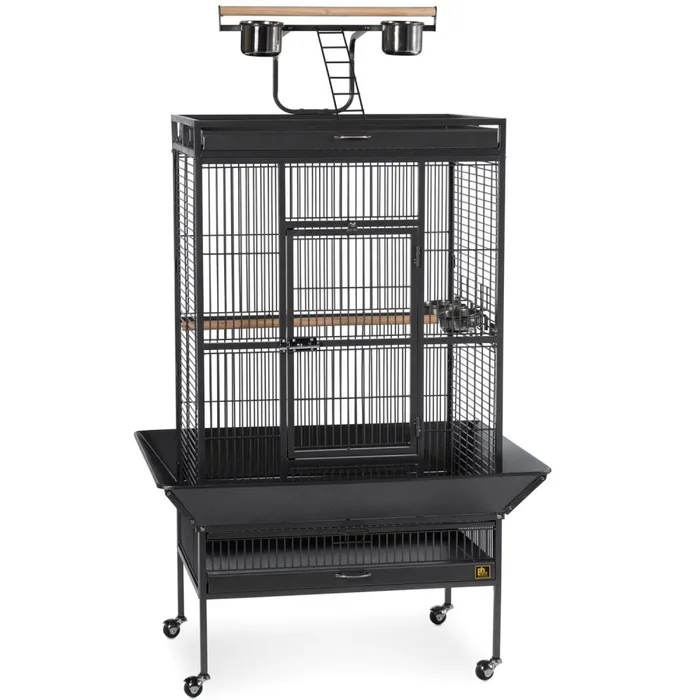
- Buy Prevue Pet Products Playtop Bird Home 3153 A wide, well-latched medium-parrot cage with 3/4 inch spacing, a metal tray and seed guards included. Amazon
- Buy Prevue Pet Products Large Flight Bird Cage F050 The most usable width per dollar for small birds, on 1/2 inch spacing, with the corners cut in the tray and latches. Amazon
- It depends Kings Cages SLUX 1816 Bird Cage Heavier bar stock, four access points and a roof playpen, wrapped around a footprint of only 18 by 16 inches.
- Skip Yaheetech 61 Inch Parrot Cage with Play Top The headline height is mostly stand and playtop, leaving a cage body under 18 inches square for birds as large as conures. Amazon
What actually matters
- Bar spacing - the gap between adjacent vertical bars, and the spec most likely to hurt a bird. A gap that lets a head through but not a body is a strangulation risk, so match spacing to your species and go narrower rather than wider when in doubt.
- Cage metal and coating - the surface your bird chews all day. Powder-coated steel is the mainstream standard and stainless steel is the gold standard, while galvanised wire is a known zinc source in pet birds according to the Merck Veterinary Manual.
- Interior width and depth - the floor a bird actually uses. Birds move laterally far more than vertically, so 36 inches of interior length does more for welfare than 12 extra inches of height.
- Wire gauge - how thick the bars are, where a lower number means thicker wire. A cage rated for large birds should pair its wider spacing with heavier gauge, and thin bars on a wide-spaced cage are a warning sign.
- Door and latch design - both the main door and every feeder door. Double locks, bolts and captive fittings resist a determined beak; hooks and simple slides usually do not for long.
- Tray and grille - what you handle daily. A slide-out tray under a wire grille lets you clean without opening the cage, and metal trays hold up better than plastic under repeated scrubbing.
- Seed guard and casters - the difference between a cage you maintain and one you avoid. Rounded-corner guards contain most of the throw from a seed eater, and casters let you move a 60 inch cage to clean behind it.
The specs, in plain English
Green flags vs red flags
Green flags
- The listing states bar spacing as a specific measurement and names the bird sizes it suits.
- The finish is described explicitly, for example non-toxic powder-coated steel mesh, rather than just painted or hammer finish.
- Interior dimensions are published separately from overall dimensions.
- The main door is described as double-locking, or the panels are bolted with fittings a bird cannot unscrew.
- A slide-out grille and tray are listed, ideally with a metal tray and a seed guard set included.
Red flags
- The only size given is a tall overall figure with no cage-body dimensions.
- One cage is marketed for a species range spanning finches to conures, which no single bar spacing and footprint serves well.
- The metal is described vaguely, or the listing mentions galvanised wire.
- Feeder doors close with simple hooks and there is no mention of locks on the main door.
- Ornamental shapes such as domes, pagodas and tapered tops that reduce usable interior width and create wedge-shaped gaps.
Who's who: the brands
- Prevue Pet Products - The mainstream US brand behind the Prevue Hendryx cages you see in most pet shops, with published spacing, gauge and interior dimensions on nearly every model.
- Kings Cages - A long-running parrot cage name known for heavier bar stock and multi-door designs, now sold through the Bonka Bird Toys storefront.
- A&E Cage Company - A widely stocked cage maker whose range turns up under both its own name and retailer labels. Its own website is a brochure rather than a catalogue, so per-model spacing and interior dimensions usually have to come from a retailer's listing.
- Custom Cages - A company that sells stainless steel bird enclosures, typically made to order.
- Yaheetech - A budget flat-pack brand whose cages are widely bought online and whose listings tend to lead with total assembly height rather than cage-body size.
How to read a listing without getting fooled
Work through a cage listing in a fixed order and most of the marketing falls away. Find the bar spacing first and confirm it matches your species; if it is missing, treat that as disqualifying. Then find the interior or cage-body dimensions, which are often a separate line from the overall figure, and note the length and depth rather than the height. Read the construction line next and see whether the maker commits to a coating, because non-toxic powder-coated steel and painted iron are different claims. Then check the door list: how many openings, what closes them, and whether the feeder doors have anything better than a hook. Finish with the housekeeping items, tray material, whether the grille and tray slide out, whether a seed guard is included or extra, and whether the stand has casters. If a spec you care about is absent rather than unflattering, assume it is absent from the product too.
How much should you spend?
Budget tier buys you a functional cage body and little else: expect a plastic tray, simple latches, thinner wire and a seed guard sold separately, and expect the headline dimensions to include the stand. Mid-range is where the mainstream cages sit, and the money goes into things you touch daily rather than raw size, so a metal tray, double-locking doors, included seed guards, stainless cups and a caster stand. Premium covers two different things: small cages built with heavier bar stock and better hardware, and genuinely large or stainless steel enclosures that are often semi-custom orders. If your budget is tight, spend it on interior width and correct bar spacing before you spend it on a playtop or a decorative roof, because those are the two specs you cannot retrofit.
Questions, answered
Can I use one cage as my bird grows or if I get a different species later?
Rarely, because bar spacing does not scale. A cage bought at 1/2 inch spacing for a budgie will still be at 1/2 inch when you want to house a conure, and a 3/4 inch cage stays unsafe for a small bird no matter how the bird matures. Most pet birds are also full size when you get them, so growth is not the usual reason people upgrade. Plan on buying for the species you have, and treat a second cage as a second purchase.
Are round or ornamental cages a problem?
Shape costs you usable width, which is the thing birds need most. Domed, pagoda and tapered tops narrow toward the roof, so the widest measurement on the box is not the width the bird has at perch height. Tapered designs can also create wedge-shaped gaps where the spacing changes along a bar. If you like the look, check the interior dimensions at the perch line rather than at the base.
How do I check a second-hand cage is safe?
Measure the bar spacing yourself rather than trusting the seller's description, and look closely at the finish for chips, flaking and rust, since damage exposes whatever is under the coating. Be cautious about any cage with galvanised-looking mesh, which the Merck Veterinary Manual identifies as a routine zinc exposure for pet birds. Check that every door latch still holds when you push on it from inside, and that the tray and grille still slide. If the make and model are known, look up the original spec sheet to confirm the spacing and finish claims.
How much time out of the cage does a bird need?
More than most cages imply, because welfare bodies size housing well beyond what retail cages offer. The World Parrot Trust gives a minimum housing length of 76 cm, about 30 inches, for a budgerigar, and its figures for larger parrots such as the green-cheeked conure run to enclosures of 2 m or more. The RSPCA's benchmark for an indoor cage a bird mostly lives in is at least twice its wingspan. Treat the cage as a secure base and give supervised time outside it daily, rather than assuming a large cage removes the need.
Or jump to the head-to-head: Prevue Pet Products Playtop Bird Home 3153 vs Prevue Pet Products Large Flight Bird Cage F050.