Explained
Cat Litter Mats, Explained
After reading this you will know which mat format matches your litter, your floor and your tolerance for cleaning, and why size beats trapping technology.
In this guide
Litter mats all make the same promise and go about it in completely different ways. Some drop granules through a perforated top into a sealed base, some hold litter in channels on the surface, and some trap it in vinyl coils and then refuse to give it back. The listings rarely explain the difference, so buyers pick on price and size and then wonder why the mess is still following the cat down the hall.
The 30-second version
- Size beats technology. A basic mat that extends a full cat body length from the box exit outperforms a clever mat that is too small, because litter that lands past the edge was never going to be trapped.
- Two layers trap, one layer relocates. A perforated top over a sealed base takes granules out of circulation until you empty it, while a single surface parks them where the next cat can kick them off again.
- Cleaning method is a buying criterion, not an afterthought. Ask before you buy whether the mat can be shaken, vacuumed, hosed or poured out, because a mat you cannot empty quickly turns into a litter storage device.
- Your litter decides the mat. Fine clumping clay rides between the toes and needs a surface that pulls it out, while pellets and crystals bounce and mainly need a wide, sealed landing zone.
- The softest mat is rarely the best trapper. Cats accept soft foam and coils more readily than firm ridges, but the textures that grip paws hardest are also the ones some cats walk around, so acceptance and capture pull against each other.
The products this guide is about
Our verdict on each, with the full reasoning on the companion review.
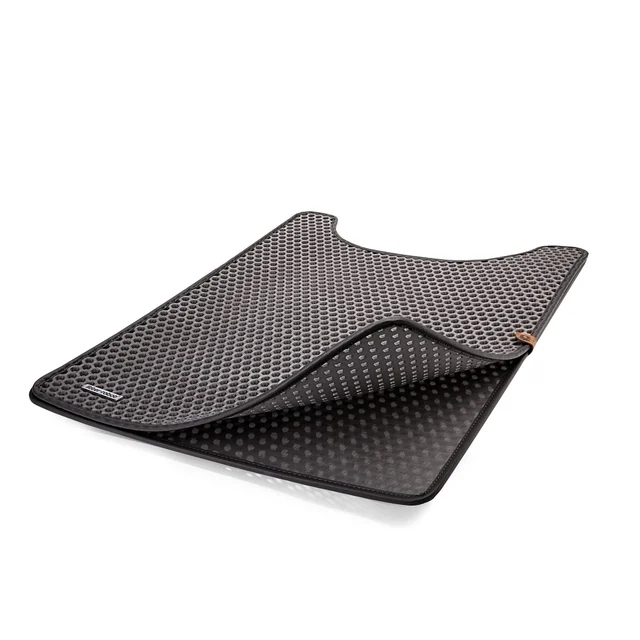
- Buy Whisker Litter-Robot LitterTrap Mat A two layer foam mat that swallows litter like a sieve and opens like a book when it is time to dump it.
- Buy Gorilla Grip Silicone Cat Litter Mat A sealed silicone mat that catches less than a two layer mat and cleans faster than anything else here.
- It depends ExquisiCat Pocketed 2-Layer Cat Litter Trapping Mat Budget two layer trapping that genuinely works, if you can live with thinner foam and store exclusive supply.
- Skip Amazon Basics Less-Mess Litter Trapping Cat Litter Box Mat A big cheap coiled vinyl mat that grabs litter and then refuses to give it back. Amazon
What actually matters
- Coverage at the exit. The mat needs to catch a cat mid stride, so measure outward from the box opening rather than buying by total area. A long runner shape beats a square of the same size for a covered box with a straight front door, because nearly all the scatter lands on one axis.
- Trapping format. Double layer mats (a perforated or pocketed top over a sealed lower layer) capture the most fine litter. Single layer silicone and rubber mats capture less but hand it back instantly. Coiled vinyl grabs granules and holds them in the loops where nothing short of a fight gets them out.
- How you empty it. Layers that separate mean lifting the top and pouring. Sealed silicone means shake, vacuum, wipe or rinse. If the only route is a vacuum nozzle in a crevice, expect the litter to stay put permanently.
- Liquid handling. Boxes leak and cats miss. A sealed base or urine repellent film is the difference between wiping a mat and mopping a floor, and a raised outer lip is what stops a puddle running off the edge.
- Grip and weight on your floor. Heavy silicone tends to stay where you put it on tile. Thin vinyl curls at the corners and slides. On carpet most mats stay put, so this matters more on hard floors.
- Texture your cat will actually use. Owner reports are full of mats that trap beautifully and then get stepped over. Stiff coils and hard ridges are the usual offenders, and soft foam is the safer bet with a fussy cat.
- Litter match. Fine clay is the case for a double layer honeycomb mat. Pellets, crystals and walnut track less to begin with and mostly need coverage and containment, which is where a sealed single layer mat earns its place.
The specs, in plain English
Green flags vs red flags
Green flags
- Stated dimensions in the listing, with a long or runner option available, so you can size the coverage to your box exit instead of guessing
- An explicit way to empty it: layers that separate, a zip, or a pour spout described in the product copy
- A sealed or urine repellent lower layer, described as waterproof rather than water resistant
- Cleaning instructions that name the method (rinse, hose, vacuum, wipe) rather than vaguely promising easy cleaning
- Foam thickness or mat weight given as a number, which usually signals a mat built to keep its shape
- A raised outer lip, especially if your box has leaked before
Red flags
- Coiled vinyl or noodle surfaces with no stated way to get the trapped litter back out
- Marketing that promises to eliminate or stop tracking rather than reduce it
- A double layer mat sold on price with no thickness figure, which usually means foam thin enough to flatten within months
- Machine washable claimed for a foam or silicone mat, which suggests the maker has not thought about how the layers hold together
- Only water resistant, or nothing said about the base at all, on a mat that will sit under a box that can leak
- A cutout or notch shaped for one specific automatic litter box, which looks wrong next to a standard box
Who's who: the brands
- Whisker (Litter-Robot) - Makes the automatic Litter-Robot boxes and sells matching accessories, including a well built two layer EVA foam mat with a urine repellent film. Premium pricing, and it is designed to fit their own Litter-Robot base.
- Gorilla Grip - Sells litter mats in several constructions, including mesh, honeycomb, felt and the single slab silicone mat in our review, which is the format to pick when cleaning speed and liquid containment matter more than raw capture. Read which construction you are actually buying.
- Pieviev - A brand selling honeycomb double layer mats. Foam thickness is the spec worth checking before ordering.
- iPrimio - Sells trapping mats and litter box accessories.
- Amazon Basics - Sells the standard coiled vinyl trapping mat at commodity pricing. Large and cheap, but it is the design we would avoid if trapping is the point.
How to read a listing without getting fooled
Start with the dimensions and ignore the marketing photo, because a mat styled next to a small open pan can look far more generous than it is. Work out how far litter travels from your own box exit, then check the listed length covers it. Next, find the construction. Words like honeycomb, pocketed, dual layer or trapping layer point to a two layer design, while silicone, TPE and rubber describe a sealed single layer, and phrases like loops, coils or noodle describe the vinyl style. If the listing never says what the mat is made of, treat that as the answer. Then look for the two specs that quietly decide long term performance: thickness on foam mats, because thin foam compresses where the cat lands, and the exact wording around waterproofing, because water resistant and waterproof are different promises. Finally, read the cleaning instructions before the review scores. If they describe pouring, rinsing or hosing, cleaning day will be short. If they only suggest vacuuming, you now know what you are signing up for. Reviews that mention how the mat behaved after several months are worth more than the ones written in the first week, since compression, curling edges and seam wicking are all problems that show up late.
How much should you spend?
This is a category where the cheapest option and the most expensive option are often solving different problems, so decide on format first and let that set the budget. Entry level pricing buys you either a huge coiled vinyl mat or a thin double layer foam mat, and of those two the thin double layer is the better use of the money, because it at least takes litter out of circulation. Stepping up to mid range buys thicker foam that keeps trapping after a year of paw traffic, or a heavy sealed silicone slab that stays put on tile and rinses clean in seconds. That middle tier is where most households land, and it is the point where the mat stops being a consumable. Premium pricing buys better materials, cleaner layer separation and genuine liquid protection, which is worth it in a multi cat home where the mat gets emptied weekly and replacing a flattened budget mat every year would cost more anyway. What is not worth paying for is coverage alone. A very large cheap mat that you cannot empty gives you a bigger problem, not a smaller one. If your budget is tight, spend it on the right format in a size that actually reaches past the box exit, and pair it with a lower tracking litter, which is often the cheaper half of the fix.
Questions, answered
Do litter mats actually stop tracking, or just reduce it?
They reduce it. A well sized two layer mat pulls most of the granules off a cat's paws on the way out, but litter that clings to fur, gets flicked over the box wall, or rides out on a cat that leaps clean past the mat still reaches your floor. Owners who see the biggest change usually make two changes at once: they add a proper mat and they switch to a lower tracking litter or a higher sided box.
Honeycomb double layer or silicone: which should I buy?
Pick honeycomb if tracking down the hallway is your actual complaint, especially with fine clumping clay, because granules drop through the top layer and stay out of reach until you empty the mat. Pick silicone if cleaning frequency, a leaky box or liquid containment is the complaint, because a sealed slab with a raised lip wipes or rinses clean in seconds and holds a spill. It captures less, but it recovers faster, and a mat you actually clean beats a mat you dread cleaning.
What size litter mat do I need?
Aim for a mat that extends at least one full cat body length from the box exit, plus a few inches past the box on the other sides. Cats that jump out need more length than cats that step out. For a covered box with a straight front opening, a long runner shape beats a small square, because almost all the scatter lands on one axis. Getting the size right does more for tracking than upgrading the trapping technology.
How do I clean a litter mat, and can it go in the washing machine?
Two layer foam mats are emptied by lifting the top layer and pouring the collected litter into the bin, then wiping or rinsing and drying flat. Silicone mats can be shaken out, vacuumed, wiped with soapy water or rinsed in a tub. Only fabric and microfiber mats are usually machine washable, and even then the manufacturer instructions matter, because heat can ruin a waterproof backing. Check the maker's instructions before using a dryer.
Does the type of litter I use change which mat I should buy?
Yes, more than most buyers expect. Fine clumping clay is the hardest to catch because the small grains wedge between the toes, and a perforated top over a sealed base is the format most likely to remove them. Pellets, crystals and walnut litters are larger and heavier, so they fall off paws on their own but bounce and scatter further when kicked. With those, a wide sealed mat with a raised lip does more good than a honeycomb top, which large granules simply sit on top of anyway.
My cat refuses to walk on the new mat. What now?
Texture is usually the reason, and stiff coils or hard ridges are the common offenders, so a softer foam surface is worth trying. Give a new mat a week and keep it flat, since a single curled corner is enough to put some cats off. This is general product information and not veterinary advice. If your cat starts avoiding the litter box itself rather than just the mat, remove the mat, restore the old setup and speak to your veterinarian, because box avoidance can point to a medical or stress problem.
Or jump to the head-to-head: Whisker Litter-Robot LitterTrap Mat vs Gorilla Grip Silicone Cat Litter Mat.