Explained
Cat Toys, Explained
After reading, you'll understand which of the four cat toy types your cat actually needs, what the terms on the packaging mean, and which materials and attachments make a toy unsafe to leave out.
In this guide
Most people buy cat toys the way they buy party bags: a big handful of small cheap things, most of which get batted once and then ignored. The problem is not that cats are fussy, it is that a pile of identical fuzzy mice covers exactly one of the four jobs a cat toy can do, and often not the important one. The other trap is safety, because the toys cats love most are frequently the ones built from the exact materials that send cats to surgery. Learning the four types and the two or three real hazards makes the whole shelf legible.
The 30-second version
- Movement beats features, because a toy that darts, stops and hides reads as prey while a toy with six flashing modes usually reads as furniture.
- The hunt has to finish, so the best toys are ones the cat can pin down, bite and carry off rather than chase indefinitely.
- Long and thin means supervised, since string, ribbon, tinsel, yarn and elastic are linear foreign bodies that can pleat and cut a cat's intestine if swallowed.
- One toy per job, meaning one wand, one food puzzle and a couple of solo toys rather than four variations on the same fuzzy mouse.
- Rotation is free, so keep most of the toys in a cupboard and swap a few in each week to make old ones feel new again.
The products this guide is about
Our verdict on each, with the full reasoning on the companion review.
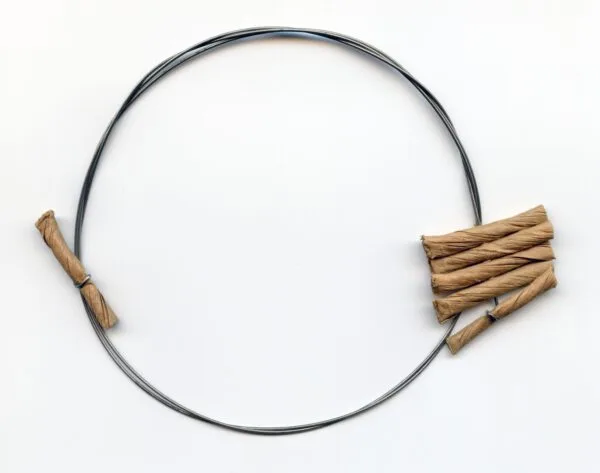
- Buy Cat Dancer Products Cat Dancer A springy steel wire with rolled cardboard on the ends that moves more like real prey than most feather wands. Amazon
- Buy Catit Senses Food Tree A tiered plastic tower that makes a cat paw dry food out of openings one piece at a time, with three difficulty settings as the cat gets better at it. Amazon
- It depends KONG Kickeroo Swirl A long plush kicker with a fur tail, filled with KONG's premium North American catnip, for cats that grab prey and rake it with their back feet. Amazon
- Skip PetSafe Dancing Dot Laser Cat Toy A battery-powered automatic laser that runs timed sessions on its own, and that never once lets the cat catch anything.
What actually matters
- Play type - a wand, a food puzzle, a solo kicker and an automatic toy do genuinely different jobs, and owning four of one type leaves three jobs uncovered. Work out which type your shelf is missing before you buy anything else.
- Catchability - the cat needs to end the sequence by getting its paws and teeth on something solid. Toys that can never be caught keep the cat aroused without ever letting it wind down.
- Attachment security - bells, plastic eyes, pom-poms and stitched labels are the parts that come off and get swallowed. Anything that shifts under a firm tug should either be removed or the toy should become supervised-only.
- Linear hazard - wire, string, ribbon, elastic and cord toys are all supervised-play items regardless of build quality, because the danger comes from the shape of the material rather than from a defect.
- Stated materials - manufacturers that publish fibre percentages, plastic type and any laser class give you something checkable. A product page that lists nothing is a product page that has told you nothing.
- Cleanability - food puzzles hold greasy kibble dust and need regular washing, so check whether the maker actually claims dishwasher safety rather than assuming it because the thing is plastic.
- Household fit - floor space, other cats, wet versus dry feeding and whether anyone is home during the day all change which toy is correct, and a great toy in the wrong household still gets ignored.
The specs, in plain English
Green flags vs red flags
Green flags
- The maker's own page lists specific materials, such as fibre percentages, plastic type or wire type, rather than vague words like durable.
- The toy can be caught, held and carried, so the cat can finish what it started.
- No bells, plastic eyes or glued parts that move when you tug them firmly.
- A food puzzle with adjustable difficulty, so it can grow with a cat that gets good at it.
- Packaging or the product page that clearly states supervised play for anything with a wire, cord or ribbon.
Red flags
- Loose ribbon, tinsel, elastic or long cord on a toy sold as safe to leave out unattended.
- Small hard parts, especially bells and plastic eyes, that shift under a tug test on a plush toy.
- A product page with no materials list, no dimensions and no country of origin.
- Marketing that promises to replace your involvement entirely rather than supplement it.
- Feather wands where the feathers are glued rather than bound, since glued quills detach quickly and get eaten.
Who's who: the brands
- Cat Dancer Products - A small Wisconsin manufacturer known for extremely simple wire-and-cardboard teasers made in the United States.
- Catit - Best known for the Senses line of plastic puzzle feeders, ball circuits and motion toys aimed at unattended enrichment.
- KONG - A rubber-toy brand on the dog side whose cat range leans on plush kickers, catnip-filled toys and the treat-stuffable Kitty KONG.
- PetSafe - A pet-tech brand whose cat toy line is mostly battery-powered automatic devices, including several laser toys and treat-dispensing balls.
- Petstages - Focused on inexpensive track toys, dental chews and solo play items for cats.
How to read a listing without getting fooled
Start at the materials line, because it is the shortest part of a listing and the most informative. A page that says 95 percent polyester and 5 percent catnip, or spring steel wire and rolled cardboard, is a page you can hold to a standard. Next, find the dimensions and convert them into your own floor: a food puzzle listed at nearly fifteen inches square is furniture, not an accessory. Then look for what is not there. Manufacturers state dishwasher safety, laser class and country of origin when those facts help them, so silence on any of those is worth noticing. Ignore the mode count on electronic toys and read the timer behaviour instead, since a fifteen minute session every two hours tells you something real about battery life and how often the toy will actually be running. Finally, scan the images for a scale drawing, because makers often publish dimensions in a graphic that contradicts or clarifies the spec table.
How much should you spend?
This is one of the few categories where budget genuinely means best rather than compromised. The most effective interactive toys, simple wands and teasers, sit squarely in the budget tier, and paying more mostly buys you a fancier handle or interchangeable lures rather than better play. Solo toys such as plush kickers and catnip items are also budget items, and since they are consumables that get shredded and lost, there is little sense in trading up. The mid-range tier is where food puzzles and battery-powered automatic toys live, and this is where the money is genuinely spent well or genuinely wasted: a good adjustable food puzzle earns its keep every single day, while an automatic toy tends to be an expensive novelty that stops being interesting in a fortnight. Premium spending in this category usually means large furniture-scale play structures, which are a space and lifestyle decision rather than a play-quality one. A sensible budget is one wand, one food puzzle, and a small rotating handful of cheap solo toys.
Questions, answered
Are feather wands safe if I supervise?
Supervised is the right frame, and it means actively watching rather than being in the same room. Feathers are usually attached with glue or thread and detach with enough enthusiasm, and a swallowed quill is a real problem. Check the attachment before each session, trim or discard the toy once feathers start shedding, and put the whole thing in a closed drawer when you stop. A wand left draped over a chair arm is functionally an unsupervised string toy.
How many toys does one cat actually need?
Fewer than most people own, arranged better. One wand for interactive sessions, one food puzzle for the hours alone, and three or four solo items covers everything, provided you rotate the solo items rather than leaving them all out. Cats habituate to toys that are permanently present, so a small collection in rotation stays more interesting than a large collection in a heap. Buy the missing job, not another version of a job you already cover.
Do cats grow out of playing?
Play changes with age rather than stopping. Older cats often lose interest in long sprints but stay interested in short, low-effort stalking, so shorter sessions with a toy moving slowly at ground level frequently work better than fast overhead flutter. Weight gain, arthritis and dental pain all reduce play, so a cat that suddenly stops playing is worth a vet conversation rather than a new toy. Food puzzles usually keep working for life since the motivation is food rather than novelty.
Is catnip safe, and what if my cat ignores it?
Catnip is widely used in commercial cat toys and the typical reaction is short-lived, lasting minutes rather than hours, after which cats generally become temporarily unresponsive to it. Not every cat reacts, and a cat that ignores catnip is entirely normal rather than defective. If yours does not respond, silvervine is the usual alternative to try, and plenty of cats that ignore one will react to the other. Either way, scent is a bonus and not a substitute for a toy that moves well.
Or jump to the head-to-head: Cat Dancer Products Cat Dancer vs Catit Senses Food Tree.