Explained
Tubeless Sealant, Explained
After reading, you'll understand what a sealant is made of, how long it will really last in your tires, how big a hole it can honestly fix, and why CO2 and cold weather change the answer.
In this guide
First-time tubeless riders usually think of sealant as a one-time purchase, then discover a year later that the tire is dry and the puncture protection has quietly gone. The category makes this easy to miss, because bottle copy talks about speed of sealing and says much less about how long the liquid stays liquid. It is also full of quietly incompatible claims: two makers will tell you opposite things about CO2 cartridges, and only some will print a freezing point. Knowing which numbers exist, and which ones the maker has chosen not to print, is most of the skill.
The 30-second version
- Sealant is a consumable, and the maker's stated service life is the number that sets your real ongoing cost.
- Most sealant is natural latex, which coagulates at the hole to seal it and dries out over months as the water evaporates.
- Synthetic latex formulas exist, and they are the answer for anyone with a latex allergy as well as a claim to longer liquid life.
- Published seal sizes cluster near 6mm to 7mm, and no maker here claims to fix a sidewall cut, which is why plug kits still exist.
- CO2 guidance varies by brand, so read your own bottle rather than assuming a cartridge is harmless.
The products this guide is about
Our verdict on each, with the full reasoning on the companion review.
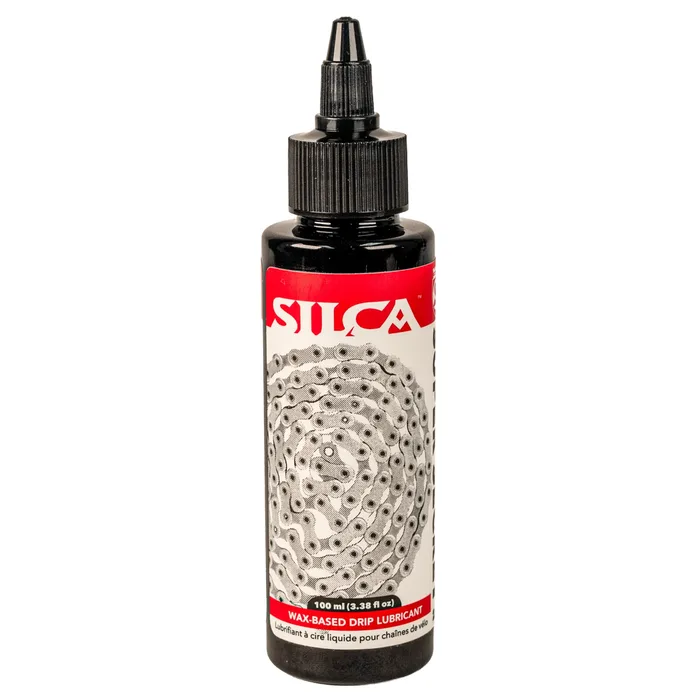
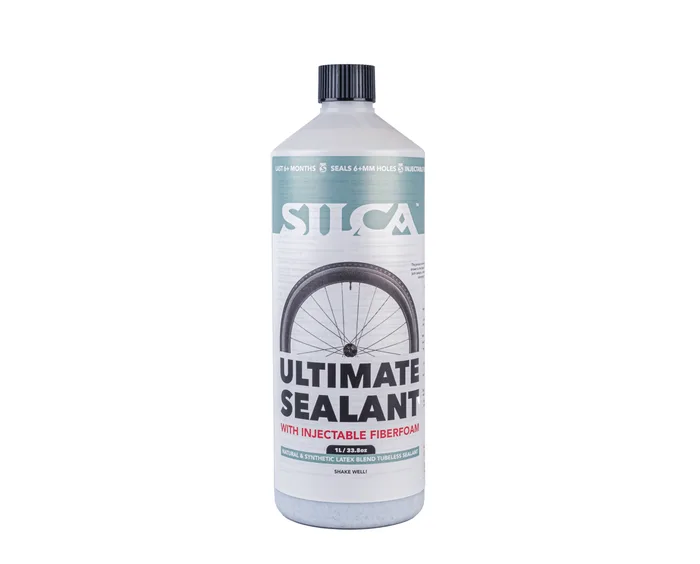
- Buy Silca Ultimate Tubeless Sealant A natural and synthetic latex blend with carbon fiber strands, and the most complete spec sheet in the group. Amazon
- Buy Stan's Original Tubeless Sealant The formula the whole category is measured against, still rated to 6.5mm and still the cheapest per fill. Amazon
- It depends Muc-Off No Puncture Hassle Road & Gravel Tubeless Sealant Synthetic latex with zero natural latex and zero ammonia, rated to 7mm and up to 110 psi. Amazon
- Skip Finish Line FiberLink Tubeless Sealant Kevlar-reinforced natural latex with almost none of the numbers you would use to compare it.
What actually matters
- Base chemistry - whether the sealant is natural latex, synthetic latex or a blend changes how it seals, how fast it dries and whether it is safe for a latex allergy. Natural latex is the traditional choice and seals quickly, while synthetic formulas are marketed on staying liquid longer.
- Stated service life - this is the interval the maker says the liquid stays usable inside the tire, and it varies from about a month to more than six across the category. Multiply it out and it becomes the biggest running cost of a tubeless setup.
- Claimed maximum seal size - makers publish a hole diameter their sealant is expected to close, generally between 6mm and 7.8mm. Anything larger, and especially any cut in the sidewall, needs a plug or a tube.
- Ammonia content - ammonia stabilises some latex products and is the ingredient behind the corrosion worry, which is why several brands now advertise ammonia-free formulas. Where a maker states it, it is a genuine differentiator; where they do not, you are guessing.
- Cold rating - latex behaves badly near freezing, and only some makers publish a temperature at which their sealant still seals or still flows. If you ride in winter, this is the spec that should decide the purchase.
- Sealing particles - the fibres, flakes, crystals and platelets suspended in the liquid are what bridge a hole too big for latex alone to span. Their size and type are why two sealants with the same base chemistry seal very differently.
- Pressure range - some sealants publish a working pressure window, and a formula tuned for 15 to 80 psi on a mountain bike is not the same product as one rated to 110 psi for road tires. Match the bottle to the tire, not to the brand.
The specs, in plain English
Green flags vs red flags
Green flags
- The maker prints a maximum hole size in millimetres or inches rather than describing sealing power in adjectives.
- There is a stated service life or refresh interval, ideally with a note about how heat and dry climates shorten it.
- A temperature figure is published, either a freezing point or a temperature the sealant has been tested to seal at.
- The brand takes a clear position on CO2 inflators instead of leaving the question unanswered.
- A safety data sheet or ingredient statement is available, so you can check the base chemistry and pH yourself.
Red flags
- No published hole size, no temperature figure and no refresh interval anywhere on the product page.
- Sealing performance described only in comparative words like faster and stronger with nothing to compare against.
- A claim that the sealant will fix a sidewall cut, which no maker we checked is willing to put in writing.
- No indication of whether the product contains natural latex, which matters for anyone with an allergy.
- Guidance that the sealant is fit and forget with no suggestion that you ever need to check the level.
Who's who: the brands
- Stan's - The originator of the category and still the default natural latex sealant, with three formulas covering all-round, high-pressure road and race-day use.
- Orange Seal - Known for splitting its range by priority and publishing an unusually blunt comparison sheet of sealing power, average sealant life in days and temperature rating.
- Muc-Off - Sells separate MTB and road-gravel sealants, both advertised as ammonia free, with the road version carrying zero natural latex.
- Silca - A tools-and-tech brand whose Ultimate sealant blends natural and synthetic latex with carbon fiber strands and publishes a full set of figures.
- Peaty's - A British brand built around biodegradable fibres and cellulose platelets, and one of the few that explains on its own site what CO2 does to sealant.
How to read a listing without getting fooled
Start with the features list rather than the headline, because that is where the checkable numbers live. Look for four in particular: a base chemistry description, a maximum hole size, a stated life in months or miles, and a temperature figure. If all four are present you can compare the bottle against any other bottle in the category. Then look for what is missing. A page that lists sizes, dosage per tire and a dozen adjectives but no seal size is telling you something by omission. Check the dosage chart too, because it is the only spec that determines how many tires a bottle actually fills, and the recommended volume varies from around 50ml for a narrow road tire to well over 200ml for a fat bike. Finally, look for a safety data sheet link, which shops and importers usually have to publish, and which will tell you the real ingredient list and pH.
How much should you spend?
Sealant is cheap relative to everything else on a tubeless wheel, and the price gap between the budget and premium ends of this category is much smaller than the marketing implies. Budget bottles get you a proven natural latex formula with published specs and universal shop availability, and for many riders that is the correct purchase. Mid-range pricing buys either a longer stated service life or a different chemistry, such as a synthetic latex formula with no natural rubber in it, and the value of that depends entirely on whether you would rather top up twice a year or five times. Buying a large bottle rather than a small one lowers the cost per fill substantially, but only if you will use it before it separates or thickens, so match the bottle to how many wheels you actually run. Where the money genuinely matters is in the consumables around the sealant: good rim tape, valves with removable cores and a plug kit will save you more grief than upgrading the sealant itself.
Questions, answered
Can I mix two brands of sealant in the same tire?
Makers publish dosing charts but generally do not publish cross-brand compatibility, so there is no manufacturer guidance to lean on. Orange Seal states its own three formulas are intermixable with each other, which is about as far as any brand goes. Different products use different base chemistries and different particle types, so mixing a natural latex sealant with a synthetic one is untested territory. The safe approach at a tire change is to wipe out the old sealant and start clean with one product.
How much sealant does each tire actually need?
Follow the maker's chart, because the numbers are specific and they vary. Stan's suggests around 50ml for a 700c by 28mm road tire and up to 230ml for a 26 by 5 inch fat tire. Muc-Off's road and gravel guidance is roughly 50 to 60ml for a 28c tire and 70 to 80ml for a 30 to 45c gravel tire, while Orange Seal lists 1 to 2oz for road and 4oz for a 29 inch mountain tire. Under-dosing is the most common mistake, and it shows up as a puncture that will not seal on the first attempt.
Can I put tubeless sealant inside an inner tube?
Some sealants are rated for it and some are not, so check the specific product. Orange Seal's product sheet marks its sealants as suitable for tubeless tires, tubes and tubulars alike. Muc-Off takes the opposite line and says No Puncture Hassle should not be used in non-tubeless setups, pointing riders at a separate inner tube sealant instead. You also need a removable valve core in the tube to get the sealant in without cutting it open.
Do I have to clean the old dried sealant out?
At a tire change, yes, it is worth the ten minutes. Dried latex builds up as skins and lumps that add rotating weight, can block a valve core, and make it harder to judge how much fresh sealant is actually in there. Muc-Off's own instructions tell you to remove any previous sealant thoroughly before adding its own, which is the same principle. Between tire changes you can simply top up through the valve rather than stripping everything down.
Or jump to the head-to-head: Silca Ultimate Tubeless Sealant vs Stan's Original Tubeless Sealant.