Explained
Bike Seat Packs, Explained
After reading, you'll know which type you need, how to stop a bag swaying, and what to check if you run a dropper post.
In this guide
Seat pack describes both a small case holding a tube and a multi-tool, and a bag carrying several litres off the back of the saddle. They are bought for different reasons and fail in different ways. The small one fails by letting your tools chew through your spare. The large one fails by swinging, because a loaded bag on saddle rails is a weight on the end of a lever. Knowing which you are shopping for settles most of the decision.
The 30-second version
- The category holds two products, a permanent tool case and a bikepacking load carrier, with different specs and different failures.
- Sway is the defining problem for loaded bags, and the makers worth buying from say explicitly how they deal with it.
- Hangers beat straps for big loads, because a rigid bracket carries the weight instead of webbing tension.
- Compressibility is an anti-sway feature, since a half-empty bag swings and one rolled tight does not.
- Droppers rule out most strap-on bags, so check for stated compatibility rather than assuming it.
The products this guide is about
Our verdict on each, with the full reasoning on the companion review.
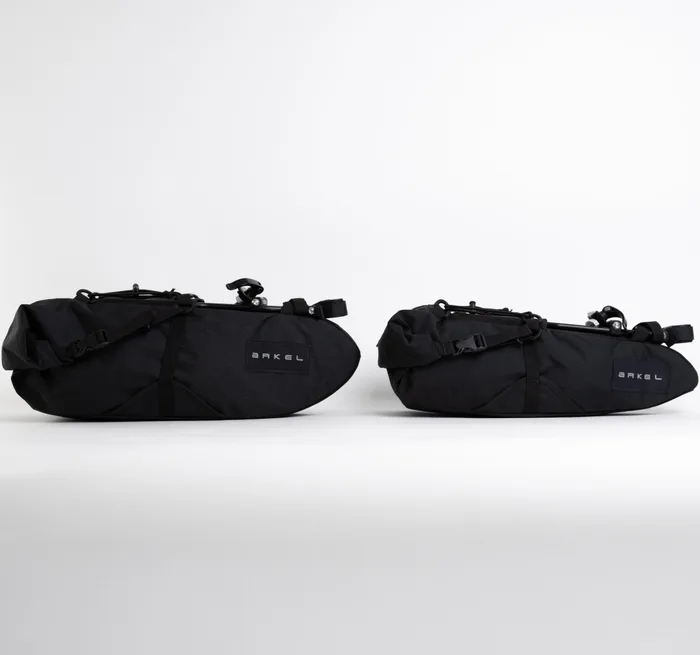
- Buy Arkel Seatpacker A bikepacking seat bag hung from a solid aluminium bracket rather than strapped to the saddle, which is what stops the tail wagging.
- Buy Swift Industries Olliepack Seat Bag Six litres at a stated 11 ounces, with sway solved by deliberately not building a bigger bag.
- It depends SILCA Mattone Seat Pack Not a bikepacking bag at all, but the tool case that fixes the one thing every under-saddle bag gets wrong.
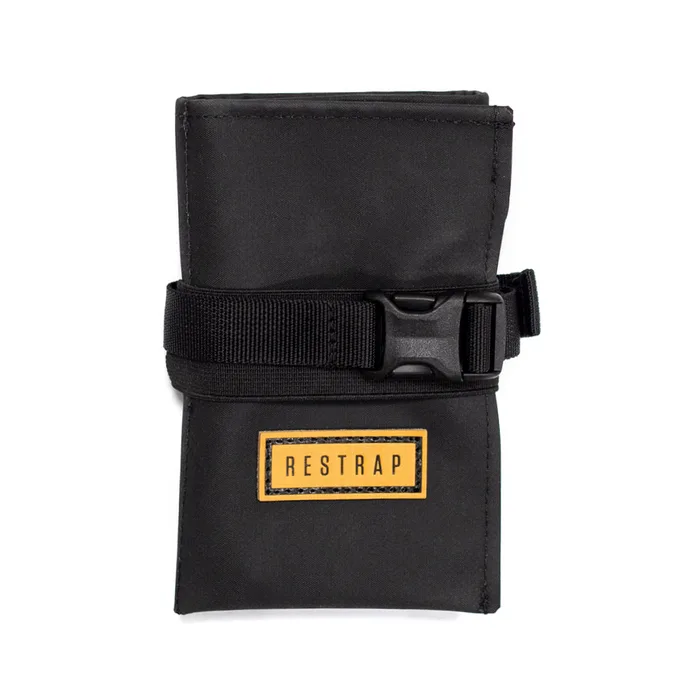
- Skip Restrap Saddle Pack, 4.5 Litres A well-made strap-on bag that publishes its capacity and its fabric and says nothing at all about the problem the category is built around.
What actually matters
- Capacity - in litres, from about 2.5 up to 15 and beyond. The single biggest determinant of whether sway will be a problem at all.
- Sway control - a rigid hanger, a compressible roll-top, or a design deliberately kept small. If the page does not mention it, assume it is not addressed.
- Mounting system - saddle rail straps alone, or a bracket that also engages the seat post. Brackets are heavier, steadier and fussier to fit.
- Dropper post compatibility - whether the bag allows the post to travel. Rarely stated, and a hard requirement if you have one.
- Weight - meaningful only alongside capacity. Weight per litre is the comparison, and many makers publish neither number.
- Waterproofing - fully waterproof construction, a coated fabric, or a weather-resistant zip. A seat pack sits directly in the spray off the rear wheel.
- Internal organisation - on a tool case, whether tools are isolated from the tube. On a load carrier, whether there is any structure at all.
The specs, in plain English
Green flags vs red flags
Green flags
- An explicit statement about how sway or tail wag is controlled.
- Capacity in litres and a weight, so you can judge weight per litre.
- Dropper post compatibility stated one way or the other.
- Packed dimensions published, which tell you about thigh clearance.
- On a tool case, a described internal divider isolating tools from the tube.
Red flags
- No mention of sway on a bag above about 4 litres.
- No weight published.
- No capacity published on a bag sold as luggage.
- Nothing said about mounting beyond the word straps.
- Waterproof claimed with no fabric or closure detail behind it.
Who's who: the brands
- Arkel - Builds seat bags around a rigid aluminium hanger, publishing capacity ranges, waterproofing and dropper compatibility.
- Swift Industries - Fully specified smaller bags in named laminate fabrics, addressing sway by keeping capacity modest and compressible.
- SILCA - Tool cases designed around internal separation, built to stop a multi-tool wearing through the spare tube stored beside it.
- Restrap - Hand-made strap-mounted bikepacking luggage in heavy nylon, sold by stated litre capacity across a colour-matched range.
How to read a listing without getting fooled
Decide first whether you want a case or a load carrier, because the useful specifications are different. For a load carrier, search the page for any sentence about sway, wag or stability; if there is none, treat that as the most important absence rather than an oversight, because it is the defining failure. Then find the capacity and the weight, and if only one is present you cannot compare the bag with anything. Check the mounting description for whether it engages the seat post as well as the rails, and look specifically for dropper compatibility if you need it. For a tool case, ignore capacity entirely and look at the internal layout, because the only thing that matters is whether the tube is kept away from the metal.
How much should you spend?
Budget gets you a simple strap-on bag or a basic tool case, and for everyday riding with a tube and a multi-tool that is genuinely all you need, provided the tube is protected. The mid-range is where named fabrics, published capacities and proper weatherproofing appear, and where most riders should buy. Premium splits by purpose: either a very light bag in laminated sailcloth with the dimensions published, or a hanger-based system that adds hardware to defeat sway and support a dropper post. Since sway gets worse with capacity, spending up makes more sense the more litres you intend to carry, and very little sense on a tool case.
Questions, answered
How much can I carry in a seat pack before it becomes a problem?
Roughly the point where you can no longer pack it tight. Strap-mounted bags stay well behaved up to around 6 to 8 litres if the heavy items sit forward and the closure is rolled down properly. Above that, or with a load that shifts, a hanger system earns its weight. The practical test is riding out of the saddle: if the bag brushes your legs alternately, it is swinging.
Will a seat pack damage a carbon saddle rail?
It can, and it is worth taking seriously. Straps cinched hard onto carbon rails create point loads the rails were not designed for, and abrasion over time does the rest. Check your saddle maker's guidance, use straps with a protective sleeve or a rubberised backing, and avoid over-tightening. A hanger that clamps over a wider area is generally kinder than narrow webbing.
Do I need a waterproof bag or is water resistant enough?
A seat pack sits directly in the rooster tail off the rear wheel, so it gets a harder time than most luggage. Water resistant fabric with a roll-top keeps out rain fine but struggles with sustained spray from below. If you ride wet roads regularly, either buy a fully waterproof bag or line a water-resistant one with a dry bag, which is cheap and works.
Can I leave a tool case on the bike permanently?
That is what it is for, and it is why the internal layout matters more than anything else. A case left on all year sees vibration for thousands of kilometres, which is exactly what wears a tube against a tool. Check the contents twice a year, replace the tube if it shows shiny rub marks, and keep the zip clean so it still opens when you are cold and wet.
Or jump to the head-to-head: Arkel Seatpacker vs Swift Industries Olliepack Seat Bag.