

Outdoors & Fitness
The Best Bike Seat Packs: 4 Compared (and One to Skip)
Seat pack covers a tool case and a 15 litre bikepacking bag. For anything carrying a real load, the whole engineering problem is stopping the tail wagging.
The short version
The Arkel Seatpacker is the pick for carrying a load, because it solves sway with a solid aluminium hanger bolted to the saddle rails and seat post instead of relying on straps, in 9 and 15 litre sizes, fully waterproof and compatible with dropper posts. The Swift Olliepack is the lighter answer at a stated 6 litres and 11 ounces, measuring 17 by 5.5 by 6 inches with three rolls, and Swift's approach to sway is to keep the bag small enough that it does not start. The SILCA Mattone is a different product entirely: a tool case with a separate pocket so your spare tube stops being sanded by a multi-tool, which is the failure every rider has had. Skip the Restrap Saddle Pack for load carrying, because it publishes a capacity and a fabric but no weight and no answer to sway, in a category where sway is the defining problem. Best for: working out whether you are carrying tools or luggage.
Our picks at a glance
- Arkel Seatpacker - Buy. A bikepacking seat bag hung from a solid aluminium bracket rather than strapped to the saddle, which is what stops the tail wagging.
- Swift Industries Olliepack Seat Bag - Buy. Six litres at a stated 11 ounces, with sway solved by deliberately not building a bigger bag.
- SILCA Mattone Seat Pack - It depends. Not a bikepacking bag at all, but the tool case that fixes the one thing every under-saddle bag gets wrong.
- Restrap Saddle Pack, 4.5 Litres - Skip. A well-made strap-on bag that publishes its capacity and its fabric and says nothing at all about the problem the category is built around.
The verdict in 30 seconds
What mattered most
- Stated capacity
- Stated weight
- How sway is addressed
- Stated dimensions
- Waterproof
- Dropper post compatible
A seat pack is either a small case that lives under your saddle permanently or a bag carrying several litres of kit on a long ride, and the two have almost nothing in common. For the small one the question is whether your tube survives being stored next to a multi-tool. For the large one it is sway: a loaded bag cantilevered off saddle rails wants to swing side to side, which wastes energy, rubs your thighs and eventually wears through the bag. Makers solve it with hardware, with restraint, or not at all.
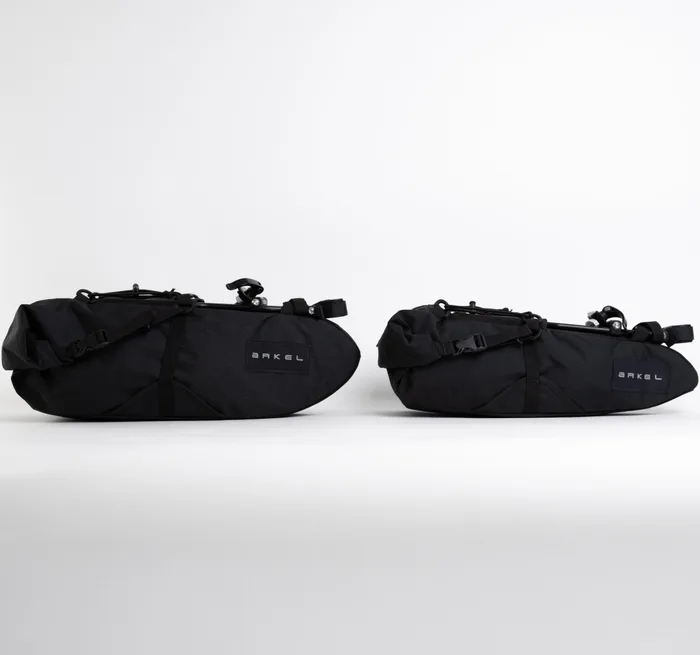
A bikepacking seat bag hung from a solid aluminium bracket rather than strapped to the saddle, which is what stops the tail wagging.
Best for: Bikepacking and long loaded rides, especially on a dropper post where strap-on bags struggle.
- A solid aluminium hanger attaches to the saddle rails and the seat post, so the bag is carried by structure rather than by strap tension.
- Arkel states the design handles bikepacking without tail wag, naming the failure the category exists around.
- Offered in 9 and 15 litre sizes, the widest capacity range here.
- The flexible seat post mount adjusts to standard and aero posts without damaging them, and is compatible with dropper posts.
- Fully waterproof, with a lean aerodynamic shape Arkel says prevents thigh rubbing, plus external netting for extra gear.
- The hanger is extra hardware, so it is the heaviest system here and the most to fit.
- No bag weight published on the product page.
- Most expensive option in this comparison by a wide margin.
- A rigid hanger needs enough exposed seat post, which is the one thing small frames lack.
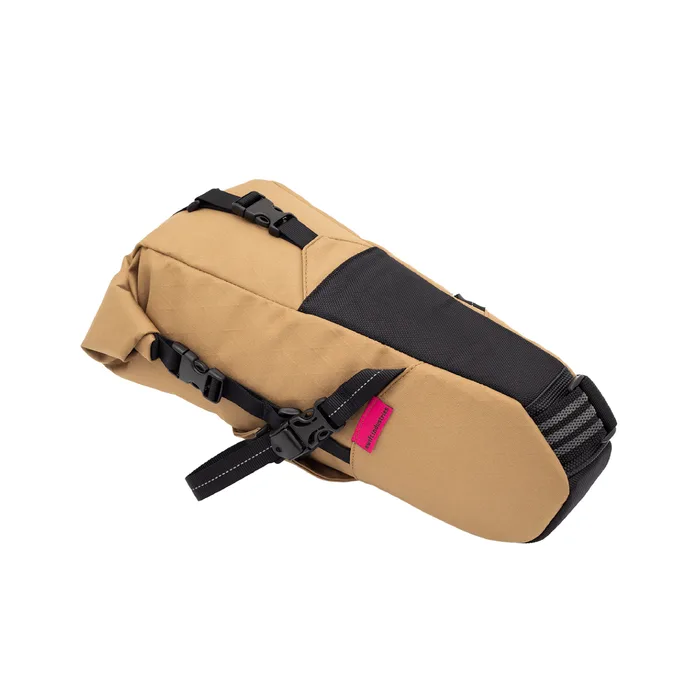
Six litres at a stated 11 ounces, with sway solved by deliberately not building a bigger bag.
Best for: Fast, light overnight trips and anyone who would rather carry less than fight a swinging bag.
- Fully specified: 6 litres, 11 ounces, 17 inches high by 5.5 deep by 6 wide with three rolls, and 23 inches unrolled.
- Swift states no wag or sway across pavement, washboard and technical trail riding.
- Made from SI600X recycled polyester and Challenge Sailcloth, both named rather than described.
- Roll-top closure lets you compress the bag down as it empties, which is itself an anti-sway measure.
- Intentionally smaller than many seat bags, which Swift presents as a design decision instead of a limitation.
- Six litres is half what the Arkel carries at its largest.
- Strap mounting means sway control depends on keeping the load small and packed tight.
- Premium price for the capacity.
- No dropper post compatibility stated.
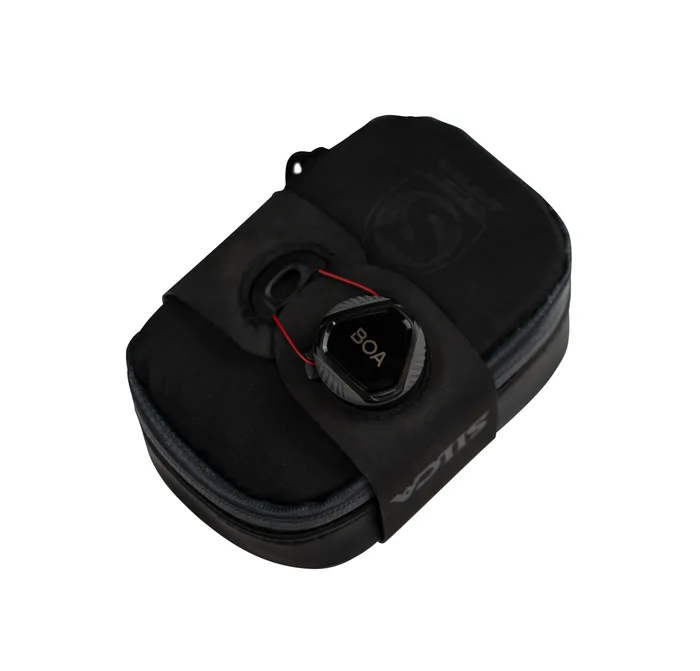
Not a bikepacking bag at all, but the tool case that fixes the one thing every under-saddle bag gets wrong.
Best for: Everyday riding, where the bag carries a tube, a multi-tool and a lever and never comes off.
- A dedicated internal pocket separates the multi-tool from the spare tube, which is the cause of the classic punctured-spare problem.
- SILCA describes exactly that failure: a tube pulled out with more holes than the one it was replacing, worn by a house key or multi-tool.
- An off-centre Aquaguard zipper lets the case open completely and lie flat off the bike.
- Small and permanent, so it lives under the saddle and you stop thinking about it.
- It is a tool case, so comparing its capacity to a 15 litre bikepacking bag is meaningless.
- No capacity published in litres.
- No weight published on the product page.
- Solves nothing about sway, because at this size sway does not arise.
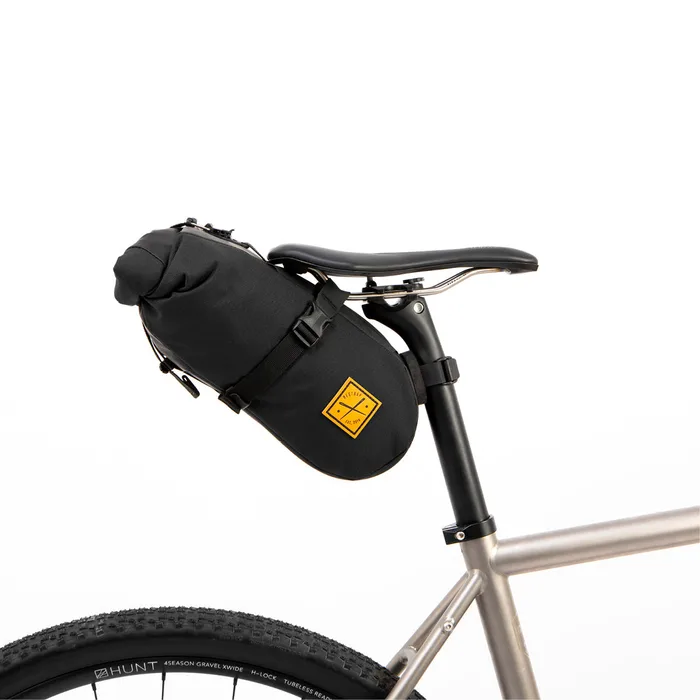
A well-made strap-on bag that publishes its capacity and its fabric and says nothing at all about the problem the category is built around.
Best for: Riders already running Restrap luggage who want a matching bag and are happy on straps.
- Capacity stated clearly at 4.5 litres, with a 2.5 litre version in the same range.
- Built from a combination of three fabrics, including the 1000 denier textured nylon used across Restrap's bikepacking range.
- Colour-matched to the rest of the range, so a full setup looks deliberate.
- Hand made in Restrap's Yorkshire workshop.
- No weight published, so it cannot be compared against the Olliepack's stated 11 ounces.
- No anti-sway hardware or design measure described, in a category where sway is the defining failure.
- 4.5 litres sits between the Swift and the Arkel without a clear advantage over either.
- Premium price for a strap-mounted bag with less published specification than the cheaper options here.
| Criteria | Seatpacker | Olliepack Seat Bag | Mattone Seat Pack | Saddle Pack, 4.5 Litres |
|---|---|---|---|---|
| Verdict | Buy it | Buy it | It depends | Skip it |
| Best for | Bikepacking and long loaded rides, especially on a dropper post where strap-on bags struggle. | Fast, light overnight trips and anyone who would rather carry less than fight a swinging bag. | Everyday riding, where the bag carries a tube, a multi-tool and a lever and never comes off. | Riders already running Restrap luggage who want a matching bag and are happy on straps. |
| Price tier | $$$$ · flagship | $$$ · premium | $$ · mid-range | $$$ · premium |
| Stated capacity | 9 L and 15 L | 6 L | Not published, a tool case | 4.5 L, also 2.5 L |
| Stated weight | Not published | 11 oz | Not published | Not published |
| How sway is addressed | Solid aluminium hanger on rails and seat post | Kept small, compressible roll-top | Not applicable at this size | Not described |
| Stated dimensions | Not published | 17 x 5.5 x 6 in with three rolls; 23 in unrolled | Not published | Not published |
| Waterproof | 100 percent waterproof, stated | Not stated | Aquaguard zipper | Not stated |
| Dropper post compatible | Yes, stated | Not stated | Not applicable | Not stated |
| Material named | XPac | SI600X recycled polyester, Challenge Sailcloth | Not published | 1000D textured nylon among three fabrics |
| Internal organisation | External netting for extra gear | Roll-top main compartment | Separate pocket isolating tool from tube | Not described |
Which one is right for you?
- Bikepacking and long loaded rides, especially on a dropper post where strap-on bags struggle. Buy it Arkel Seatpacker
- Fast, light overnight trips and anyone who would rather carry less than fight a swinging bag. Buy it Swift Industries Olliepack Seat Bag
- Everyday riding, where the bag carries a tube, a multi-tool and a lever and never comes off. It depends SILCA Mattone Seat Pack
- Riders already running Restrap luggage who want a matching bag and are happy on straps. Skip it Restrap Saddle Pack, 4.5 Litres
How we judged the field
Five things decide a seat pack, and the first is working out which of two products you are shopping for. A tool case lives under the saddle permanently and carries a tube, a multi-tool and a lever; its problems are organisation and weatherproofing. A bikepacking seat bag carries litres of kit and its problem is sway. Grouping them under one name is why this category is confusing. The second thing is capacity, which ranges here from a small case with no litre figure up to 15 litres. The third is how sway is handled: with hardware, by keeping the bag small, or not at all. The fourth is mounting, and specifically whether the bag works with a dropper post. The fifth is what the maker publishes, which varies more than it should.
On that last point the field is uneven. Swift publishes a capacity, a weight, packed dimensions and the fabrics by name. Arkel publishes the capacity range, the hanger design, waterproofing and dropper compatibility, but no weight. SILCA describes the internal layout and the specific failure it is designed to prevent, and gives no numbers at all, which is more defensible for a tool case than it would be for a load carrier. Restrap publishes a capacity and a fabric and stops there. We took one from each position, and where a maker names the problem its product solves, we have said so, because in this category that sentence is doing more work than any measurement.
Arkel Seatpacker - buy
The Seatpacker is the bag to buy if you are carrying a real load, and it is the only one here that treats sway as an engineering problem rather than a packing tip. Instead of cinching a bag to the saddle rails with webbing, Arkel hangs it from a solid aluminium bracket that attaches to both the rails and the seat post, so the load is carried by structure and cannot swing. Arkel says so directly, describing a system designed to handle bikepacking without tail wag. It comes in 9 and 15 litre sizes, is fully waterproof, and its lean shape is drawn to avoid rubbing the backs of your thighs, with external netting for the layer you keep taking off. The seat post mount flexes to fit standard and aero posts without marking them and is compatible with dropper posts, which is unusual and genuinely useful. The costs are weight, complexity and money: the hanger is extra hardware, no bag weight is published, and this is the most expensive option here. It also needs exposed seat post, which small frames do not have.
Swift Industries Olliepack Seat Bag - buy
The Olliepack is the best documented bag in this comparison and the right answer if 6 litres is enough. Swift publishes the lot: 6 litres, 11 ounces, 17 inches tall by 5.5 deep by 6 wide with three rolls of the closure, 23 inches unrolled, built from SI600X recycled polyester and Challenge Sailcloth. Its answer to sway is philosophical rather than mechanical. Swift describes it as intentionally smaller than many seat bags and claims no wag or sway across pavement, washboard and technical trail, which is a reasonable claim precisely because the bag is small and the roll-top lets you compress it as it empties. That last detail matters more than it sounds: a half-empty bag swings, and one you can roll down does not. What you give up is capacity, at less than half the Arkel’s largest size, and any stated dropper compatibility. It is also expensive for 6 litres. As a fast overnight bag it is hard to fault.
SILCA Mattone Seat Pack - it depends
The Mattone is in this comparison because it is what most people actually mean when they say seat pack, and because it solves a problem the big bags ignore. It is a tool case, not luggage. The feature is a dedicated internal pocket that keeps the multi-tool away from the spare tube, and SILCA explains why in unusually plain terms: the traditional single-compartment seat bag produces a spare tube with more holes in it than the one you are replacing, worn through by months of rubbing against a tool or a house key. Anyone who has found that at the roadside will recognise it. The off-centre Aquaguard zipper lets the case open flat when it is off the bike, which makes it easy to actually see what is in there. What it does not have is any published capacity or weight, and comparing it to a 15 litre bikepacking bag is a category error. Buy it for a bike you ride every day.
Restrap Saddle Pack, 4.5 Litres - skip
The Saddle Pack is nicely made and we would buy something else, because of what the page does not say. Restrap states the capacity clearly at 4.5 litres, with a 2.5 litre sibling, and describes a combination of three fabrics including the 1000 denier textured nylon that runs through its bikepacking range. It is hand made in Yorkshire and it colour-matches the rest of the line, which is a real reason to buy if you already run Restrap luggage. But there is no published weight, so it cannot be compared against the Olliepack’s stated 11 ounces, and more importantly there is no description of how the bag resists sway. In a 4.5 litre strap-mounted bag that is the question, and both of the bags we recommend answer it explicitly, one with a hanger and one by staying small and compressible. Sitting between the Swift and the Arkel on capacity without a clear advantage over either, at a premium price, it is the one to pass over.
Arkel Seatpacker vs Swift Industries Olliepack Seat Bag: which should you buy?
The Seatpacker and the Olliepack are the two worth choosing between, and the decision is made by how much you are carrying and what your seat post is doing. If the load is genuinely bikepacking scale, or if you run a dropper, the Arkel is the answer: a rigid aluminium hanger is the only approach here that stops sway rather than managing it, and 15 litres is capacity the others cannot reach. That structure is also what makes dropper compatibility possible.
If 6 litres covers the trip, the Olliepack is the better bag to live with. It is far lighter, it is the only one in this comparison that tells you what it weighs and how big it is, and its compressible roll-top means a part-empty bag still rides quietly. The honest way to frame it is that Swift has solved sway by declining to build the bag that causes it, which works right up until you need to carry more. Buy the Arkel when the load or the dropper decides it. Buy the Swift when it does not, and enjoy carrying a third of the hardware.
What to look for
- Work out which product you want first: a tool case and a bikepacking bag share a name and nothing else.
- Look for a stated answer to sway: a hanger, a compressible closure, or an explicit claim. Silence on this is the gap that matters.
- Check dropper post compatibility before anything else if you run one: most strap-mounted bags are incompatible and few say so.
- Compare weight per litre, not weight: and note how many makers publish neither figure.
- Pack heavy at the front: weight near the seat post rather than at the tail is the free fix for swing.
- For a tool case, insist on a separated pocket: a tube stored loose against a multi-tool is a spare that will fail when you need it.
Our final take
Seat pack is a label covering a tool wallet and a piece of luggage, and most of the confusion in this category comes from pretending otherwise. If you are carrying tools, the SILCA Mattone’s separated pocket fixes the failure that actually happens, which is a spare tube quietly sanded through over a winter. If you are carrying kit, the question is sway, and the useful makers say how they deal with it. Arkel bolts the bag to a rigid hanger and reaches 15 litres. Swift builds a 6 litre bag and tells you exactly what it weighs. A bag that publishes neither a weight nor an answer to sway is asking for a lot of trust at a premium price.
Questions, answered
What is tail wag and why does it matter?
It is the side-to-side swing of a loaded seat pack hanging off the saddle rails. The bag is a weight on the end of a lever, so every pedal stroke and every bump sets it moving, and once it starts it keeps going. The costs are real: energy wasted fighting the movement, the bag rubbing the backs of your thighs, and abrasion where the straps work against the saddle rails and the bag. It gets worse as the bag gets bigger and as the load settles. Arkel addresses it with a rigid hanger, Swift by keeping the bag to 6 litres and compressible.
How do I stop my seat pack swaying without buying a new one?
Pack it properly first. Put the heaviest items at the front, closest to the seat post, and the light bulky things at the tail, because weight at the far end is what drives the swing. Then compress it: roll the closure down until the bag is genuinely full rather than half empty and loose. Finally, tension the saddle rail straps harder than feels necessary and re-check them after the first few kilometres, since webbing settles. If it still wags, the bag is too big for a strap mount and you want a hanger system.
Can I use a seat pack with a dropper post?
Only if the bag says so. A dropper post moves, and a bag strapped around a fixed post either prevents the drop or gets crushed when the post descends. Arkel states the Seatpacker's flexible seat post mount is compatible with droppers, which is the sort of thing worth confirming before buying rather than after. The alternative on a dropper bike is a hanger that clamps only to the saddle rails, or moving the load to the frame and bars instead.
Why do spare tubes get punctured inside seat packs?
Because they are stored loose against metal. A tube bouncing around in a single-compartment bag for months spends that time being rubbed by a multi-tool, tyre levers or a house key, and the result is the one thing you cannot afford: a spare with holes in it, discovered at the roadside. SILCA designed the Mattone around separating those items into their own pocket for exactly this reason. If your bag has one compartment, wrap the tube or put it in a small bag of its own.
Seat pack or frame bag for a bikepacking load?
Frame bag first if your frame has room, because weight inside the main triangle sits low and central and does not swing. Seat packs are the answer when the frame is full, when you need to keep the triangle clear for bottles, or on a small frame with little usable space. Most loaded setups end up using both, with the heavy, dense items in the frame bag and bulky light things like a sleeping bag in the seat pack, which also happens to be the arrangement that minimises sway.
Deciding between the top two? See our head-to-head: Arkel Seatpacker vs Swift Industries Olliepack Seat Bag.
More Outdoors & Fitness reviews
 The Best Bike Tire Sealants: 4 Compared (and One to Skip)
  The Best Bike Tool Rolls: 4 Compared (and One to Skip)
  The Best Binoculars: 4 Compared (and One to Skip)
  The Best Camp Cooksets: 4 Compared (and One to Skip)
  The Best Camp Mugs: 4 Compared (and One to Skip)
  The Best Camp Pillows: 4 Compared (and One to Skip)