

Outdoors & Fitness
The Best Bike Tool Rolls: 4 Compared (and One to Skip)
Tool roll covers a 90 gram pouch that goes in a jersey pocket and a 60 by 40 centimetre workshop mat. The two are bought for opposite reasons.
The short version
The Restrap Tool Roll is the pick for riding: a stated 90 grams of Hypalon with four tool slots, an internal strap sized for any tube and a separate pouch for chain links, and it either straps to the saddle rails or slips into a jersey pocket. The Pedro's Burrito Tool Roll II is the pick for the workshop and the car, giving a 23 by 16 inch working surface that converts into a rigid tool pallet using the included x-frame, behind a waterproof exterior. The SILCA Seat Roll Asymmetrico suits gravel riders specifically, because its asymmetric shape packs more into less volume and SILCA states it takes tubes up to 700x45. Skip the Wolf Tooth Travel Tool Wrap unless the features sell you on their own, because it is the most feature-listed wrap here and publishes neither a dimension nor a weight, in a category where the size of the unrolled surface is the specification. Best for: deciding whether the roll rides with you or lives in the car.
Our picks at a glance
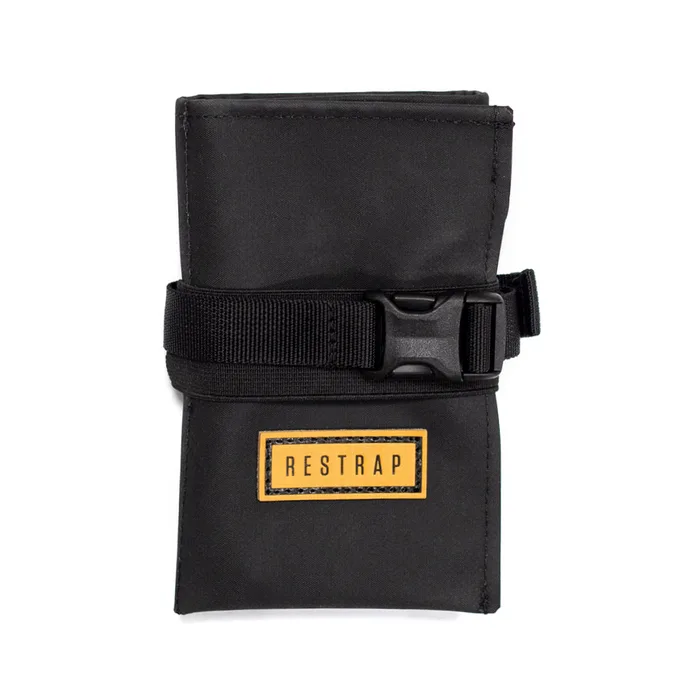
- Restrap Tool Roll - Buy. Ninety grams of Hypalon with four tool slots and a tube strap, that will ride on the saddle rails or in a jersey pocket.
- Pedro's Burrito Tool Roll II - Buy. A 23 by 16 inch working surface that becomes a rigid tool pallet, for the car boot and the minimalist home shop.
- SILCA Seat Roll Asymmetrico - It depends. An asymmetric shape that packs more into less, and the only roll here that tells you which tube will fit.
- Wolf Tooth Travel Tool Wrap - Skip. The longest feature list in the category attached to the shortest specification, with no size and no weight published.
The verdict in 30 seconds
What mattered most
- Ride roll or workshop roll
- Stated weight
- Unrolled dimensions
- Tube capacity stated
- Material named
- Tool slots or pockets
A tool roll is a strip of fabric with pockets, which makes it sound like there is nothing to choose between them. There is, because the category holds two products. A ride roll carries a tube, a multi-tool and levers, straps under the saddle or goes in a jersey pocket, and is judged on weight and whether your tube fits. A workshop roll unrolls into a working surface, holds a full set of spanners, and is judged on the size of that surface and how it hangs. Buying one when you wanted the other is the usual mistake.
Ninety grams of Hypalon with four tool slots and a tube strap, that will ride on the saddle rails or in a jersey pocket.
Best for: Road and gravel riders who want tools secured and quiet, carried on the bike or in a pocket.
- Restrap states 90 grams without tools, which is the only weight published in this comparison.
- Made from Hypalon, a tough synthetic rubber that resists the abrasion a roll gets from the tools inside it.
- Four tool slots plus an internal strap that takes any size tube, so the tube is held rather than rattling.
- A separate spare pouch for chain links and small parts, which is where quick links get lost otherwise.
- Attaches to saddle rails with a strap or slips into a jersey pocket, so it works with or without a bag.
- Four slots is a ride kit, not a workshop set.
- No unrolled dimensions published.
- Hypalon is heavier per unit area than a coated nylon, which is the cost of the abrasion resistance.
- Hand made in small numbers, so colour and stock availability move around.
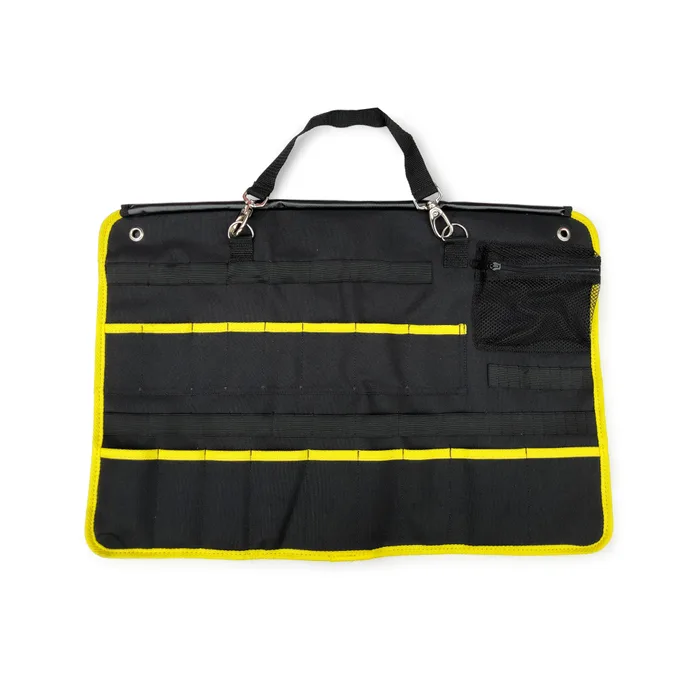
A 23 by 16 inch working surface that becomes a rigid tool pallet, for the car boot and the minimalist home shop.
Best for: Travelling to events, working out of a car, or running a minimalist home workshop without a tool chest.
- A stated 23 by 16 inch, or 60 by 40 centimetre, surface when unrolled, the only working dimension published here.
- Converts into a rigid tool pallet using the included x-frame system, so tools stay presented rather than lying flat.
- Reinforced pockets in assorted sizes plus elastic strap pockets, sized for a real spanner and hex set.
- Waterproof exterior, which matters for a roll that gets put down on wet ground at a race or a trailhead.
- Added hanging options, so it can work vertically in a van or a shed.
- Far too large and heavy to carry on a bike.
- The x-frame is another component to lose or forget.
- No weight published.
- Premium price for what is, when rolled, a bag for spanners.
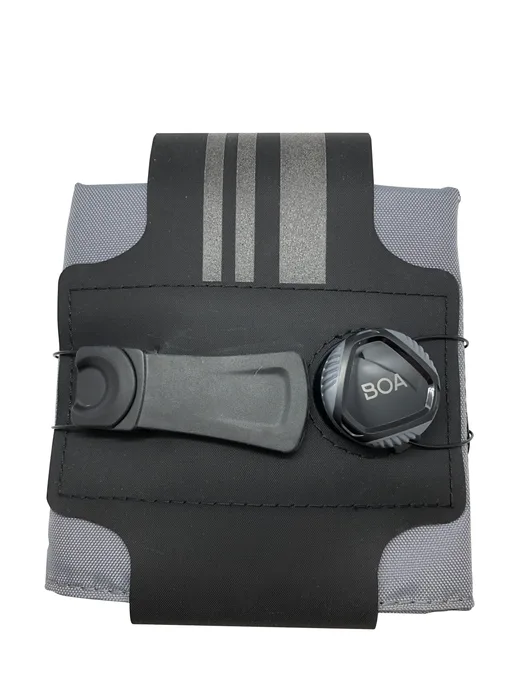
An asymmetric shape that packs more into less, and the only roll here that tells you which tube will fit.
Best for: Gravel riders carrying a fat tube, who want the smallest finished package for it.
- SILCA states room for tubes up to 700x45, or 29 by 1.75 inches, which is the spec gravel riders actually need.
- The asymmetric design is there to pack more into a smaller finished volume, rather than as styling.
- Lighter materials and reduced bulk against the earlier Seat Roll Premio, with improved abrasion resistance.
- An extra pocket over the previous version, for the small parts that otherwise migrate.
- No weight published, so it cannot be set against the Restrap's stated 90 grams.
- No unrolled dimensions published.
- Premium price for a ride roll.
- The asymmetric shape is optimised around SILCA's own packing method, which takes a little learning.
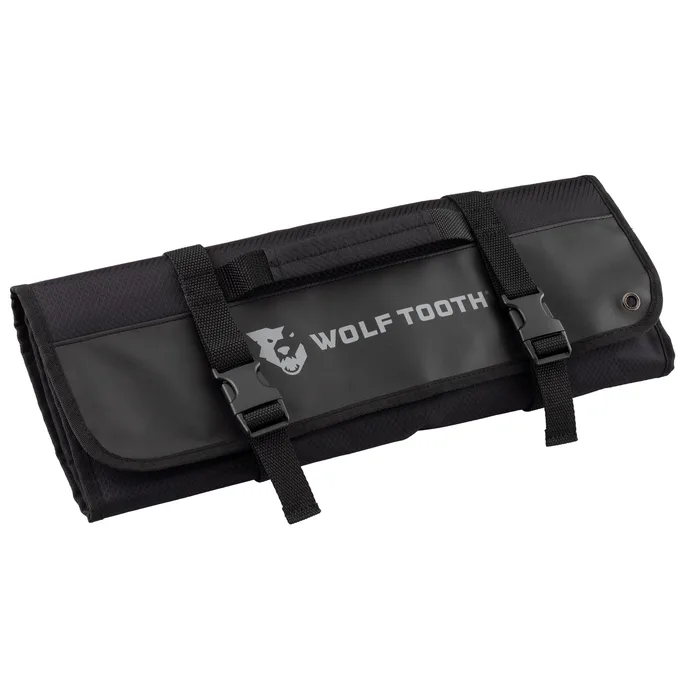
The longest feature list in the category attached to the shortest specification, with no size and no weight published.
Best for: Riders already invested in Wolf Tooth tools who want a wrap designed around them.
- A top flap designed to be shut in a car door, turning the vehicle into a temporary workstand-side bench.
- A bottom flap that gives you a workspace and keeps parts and tools out of the dirt when working on the ground.
- Pocket layout designed around a full trailside tool selection rather than a minimal ride kit.
- Wolf Tooth's own tools and multi-tools are designed to sit in it, so the system is coherent.
- No unrolled dimensions published, which is the defining specification for a workshop-style wrap.
- No weight published either.
- Overlaps directly with the Pedro's at a similar position in the market while telling you less.
- Too large for a jersey pocket and less specified than the roll it competes with.
| Criteria | Tool Roll | Burrito Tool Roll II | Seat Roll Asymmetrico | Travel Tool Wrap |
|---|---|---|---|---|
| Verdict | Buy it | Buy it | It depends | Skip it |
| Best for | Road and gravel riders who want tools secured and quiet, carried on the bike or in a pocket. | Travelling to events, working out of a car, or running a minimalist home workshop without a tool chest. | Gravel riders carrying a fat tube, who want the smallest finished package for it. | Riders already invested in Wolf Tooth tools who want a wrap designed around them. |
| Price tier | $$ · mid-range | $$$ · premium | $$$ · premium | $$$ · premium |
| Ride roll or workshop roll | Ride roll | Workshop and travel roll | Ride roll | Workshop and travel wrap |
| Stated weight | 90 g without tools | Not published | Not published | Not published |
| Unrolled dimensions | Not published | 23 x 16 in (60 x 40 cm) | Not published | Not published |
| Tube capacity stated | Internal strap, any size tube | Not applicable | Up to 700x45 (29 x 1.75 in) | Not applicable |
| Material named | Hypalon | Waterproof exterior, fabric not named | Not named beyond lighter materials | Not named |
| Tool slots or pockets | Four tool slots plus a spare pouch | Reinforced pockets in assorted sizes plus elastic strap pockets | An extra pocket over the previous model | Layout for a full trailside selection |
| Carrying method | Saddle rail strap or jersey pocket | Hanging options, x-frame pallet | Under the saddle | Top flap shuts in a car door |
| Rigid working surface | No | Yes, via the included x-frame | No | Bottom flap workspace |
Which one is right for you?
- Road and gravel riders who want tools secured and quiet, carried on the bike or in a pocket. Buy it Restrap Tool Roll
- Travelling to events, working out of a car, or running a minimalist home workshop without a tool chest. Buy it Pedro's Burrito Tool Roll II
- Gravel riders carrying a fat tube, who want the smallest finished package for it. It depends SILCA Seat Roll Asymmetrico
- Riders already invested in Wolf Tooth tools who want a wrap designed around them. Skip it Wolf Tooth Travel Tool Wrap
How we judged the field
Five things decide a tool roll and the first is which of two products you are buying. A ride roll goes on the bike or in a pocket, holds a tube, a multi-tool and levers, and is judged on weight and on whether your tube fits. A workshop roll unrolls into a work surface, holds a spanner set, and is judged on the size of that surface and how it presents the tools. The second thing is the material, because tool rolls fail from the inside as the tools abrade the fabric. The third is separation: whether the tube is held away from anything metal, which is what decides if your spare survives the year. The fourth is the closure and how the roll attaches. The fifth is what the maker publishes.
That last point sorts the field unusually sharply. Restrap publishes a weight, 90 grams without tools, and names its material as Hypalon. Pedro’s publishes the working dimension, 23 by 16 inches, which is the specification a workshop roll lives or dies on. SILCA publishes the tube capacity, up to 700x45, which is the specification a ride roll lives or dies on. Wolf Tooth publishes an extensive feature list and neither a dimension nor a weight. Each of the first three has given you the one number that matters for the kind of roll it is, which makes the comparison straightforward and makes the fourth conspicuous.
Restrap Tool Roll - buy
The Restrap Tool Roll is the one we would carry, and the case for it is short because the page is specific. Restrap states 90 grams without tools, the only weight in this comparison, and names the material as Hypalon, which is the right choice for a product that gets chewed from the inside by its own contents. The layout is four tool slots, an internal strap that takes any size tube, and a separate spare pouch for chain links and other small parts. That third element is the one people appreciate later: quick links and valve cores are exactly what vanishes from a single-compartment bag. It attaches to the saddle rails with a strap or goes in a jersey pocket, so it works whether or not you run a saddle bag, and it is hand made in Restrap’s Yorkshire workshop. The limits are honest ones: four slots is a ride kit rather than a tool set, no unrolled dimensions are published, and Hypalon is heavier per unit area than a coated nylon would be.
Pedro’s Burrito Tool Roll II - buy
The Burrito Tool Roll II is the workshop answer, and Pedro’s has published exactly the number that matters. Unrolled it gives a 23 by 16 inch surface, or 60 by 40 centimetres, which is enough to lay out a genuine spanner and hex set with the parts you have just removed. The x-frame system included in the box converts it into a rigid tool pallet, so instead of tools lying flat on a mat they stand presented where you can see them, which is the difference between a roll and a toolbox in daily use. The pockets are reinforced and come in assorted sizes with elastic strap pockets alongside, and the exterior is waterproof, which matters because this is a roll that gets put down on wet grass at a race. There are hanging options for working vertically in a van. What it is not is portable on a bike, the x-frame is another thing to lose, and no weight is published.
SILCA Seat Roll Asymmetrico - it depends
The Seat Roll Asymmetrico is the specialist, and it earns a place by answering the question most seat rolls dodge. SILCA states room for tubes up to 700x45, or 29 by 1.75 inches, and that single figure is what a gravel or light mountain rider needs, because a fat tube is several times the packed volume of a road one and simply will not fit a road-sized roll. The asymmetric shape is functional rather than decorative: it lets the contents nest so the finished package is smaller than a symmetrical roll holding the same things. SILCA positions it as an evolution of the Seat Roll Premio with lighter materials, reduced bulk, better abrasion resistance and an extra pocket. The gaps are the mirror image of its strength. There is no published weight, so it cannot be compared against the Restrap’s 90 grams, and no unrolled dimensions. It also rewards packing it SILCA’s way, which takes a couple of attempts.
Wolf Tooth Travel Tool Wrap - skip
The Travel Tool Wrap has the best ideas in this comparison and the thinnest specification, which is why we would leave it. The features are genuinely clever: a top flap designed to be shut in a car door so the vehicle becomes a temporary bench, and a bottom flap that unrolls into a workspace keeping parts and tools out of the dirt when you are working on the ground. Anyone who has knelt beside a bike in a car park will see the point of both. The pocket layout is built around a full trailside selection, and since Wolf Tooth makes the tools, the system is coherent. But this is a workshop-class wrap competing directly with the Pedro’s, and it publishes neither an unrolled dimension nor a weight. For a ride roll you could argue the size is obvious; for a wrap whose entire proposition is the working surface it creates, the size of that surface is the specification, and it is absent.
Restrap Tool Roll vs Pedro’s Burrito Tool Roll II: which should you buy?
The Restrap and the Pedro’s are the two to buy, and they are not alternatives. The question is where the roll lives. If it rides with you, the Restrap is the answer: 90 grams, Hypalon where the abrasion happens, a tube held by a dedicated strap and small parts in their own pouch, in a package that fits a jersey pocket. Nothing else here is designed to be carried on a bicycle in the same way.
If the roll lives in the car or replaces a tool chest, the Pedro’s is the one, and the reason is the 23 by 16 inch surface plus the x-frame that makes it rigid. A workshop roll that only lies flat is a bag you have to dig through; one that stands its tools up is something you can actually work from. The two together cost less than a decent floor pump and cover both jobs properly. If you can only have one, buy the one matching where you do your maintenance, and note that almost everybody needs the small one and only some people need the large one.
What to look for
- Decide ride roll or workshop roll first: one is measured in grams, the other in inches of working surface.
- Check the stated tube capacity: a gravel tube will not fit a road-sized roll, and SILCA’s 700x45 figure is the kind of number to look for.
- Look for a named material: Hypalon and coated nylons behave differently, and tool rolls wear out from the inside.
- Insist on separation: a dedicated tube strap and a small-parts pocket are what stop your spare being sanded through.
- For a workshop roll, find the unrolled dimensions: that surface is the entire product, and not every maker publishes it.
- Check how it attaches: saddle rails, a jersey pocket, a hanging loop or a car door each suit a different use.
Our final take
Tool roll is one name for two things, and most disappointment in this category comes from buying the wrong one. On the bike, the job is holding a tube, a multi-tool and levers quietly and keeping them apart, and Restrap does it at a published 90 grams in a material chosen for the abrasion that actually kills these things. In the car or the shed, the job is turning a strip of fabric into somewhere to work, and Pedro’s publishes the 23 by 16 inch surface and includes the frame that makes it rigid. SILCA is worth the money if you carry a fat tube, because it is the only one that tells you the tube will fit. And a wrap sold on the workspace it creates should tell you how big that workspace is.
Questions, answered
What size tube will fit in a seat roll?
That depends on the tube more than the roll, and it is the specification most makers skip. A 700x25 road tube packs down to something like a fist; a 700x45 gravel tube or a 29 by 2.4 mountain tube is several times the volume and will simply not go into a road-sized roll. SILCA is the useful exception here, stating that the Asymmetrico takes tubes up to 700x45 or 29 by 1.75 inches. If you ride gravel or mountain and the page does not give a tube size, assume it was designed around a road tube and check before buying.
Why use a roll instead of a saddle bag?
Three reasons, and one of them is the tube. A roll wraps the tools against the tube rather than letting them rattle loose beside it, which is what saves the spare from being worn through over a winter. A roll is also quieter, because nothing can move. And it is lighter than a structured bag of the same capacity, and packs to the shape of its contents rather than holding a fixed shape. The trade is access: a bag opens with one hand, a roll has to be unrolled and then rolled back up, which is slower at the roadside.
Do I need a separate workshop roll if I have a ride roll?
Only if you work on the bike away from a bench. The two are genuinely different tools: a ride roll carries four or five items and is measured in grams, while a workshop roll like the Pedro's opens to 23 by 16 inches and holds a spanner set. If all your maintenance happens at home with a toolbox, a workshop roll adds nothing. If you travel to events, work out of a car, or have no space for a tool chest, it replaces one.
What makes a roll last?
The material where the tools touch it. Tool rolls fail from the inside out, worn through by the hex keys and levers they carry, which is why Restrap uses Hypalon, a tough synthetic rubber that resists exactly that abrasion. Waterproofing is the other half, and it matters more than it sounds because a roll spends its life under a saddle taking spray or being put down on wet ground. Look for a named material rather than the word durable, and check the stitching where the closure strap attaches.
Can I just use a sock or a plastic bag?
You can, and plenty of riders do, and it mostly works. What you give up is the separation: the whole point of a roll is that the tube, the tools and the small parts each have a place and cannot rub against one another. A sock holds everything in one space, which is the arrangement that produces a punctured spare six months later. If you improvise, wrap the tube separately from anything metal, which is the single habit that matters.
Deciding between the top two? See our head-to-head: Restrap Tool Roll vs Pedro's Burrito Tool Roll II.
More Outdoors & Fitness reviews
 The Best Binoculars: 4 Compared (and One to Skip)
  The Best Camp Cooksets: 4 Compared (and One to Skip)
  The Best Camp Mugs: 4 Compared (and One to Skip)
  The Best Camp Pillows: 4 Compared (and One to Skip)
  The Best Camp Showers: 4 Compared (and One to Skip)
  The Best Camp Towels: 4 Compared (and One to Skip)