

Cycling
The Best Chain Lubes: 4 Compared (and One to Skip)
We compared four bicycle chain lubricants on the two things that actually matter and are actually measured: how much drivetrain wear they let happen, and how much friction they cost in watts. Those are different outcomes, and a lube can be good at one and bad at the other.
The short version
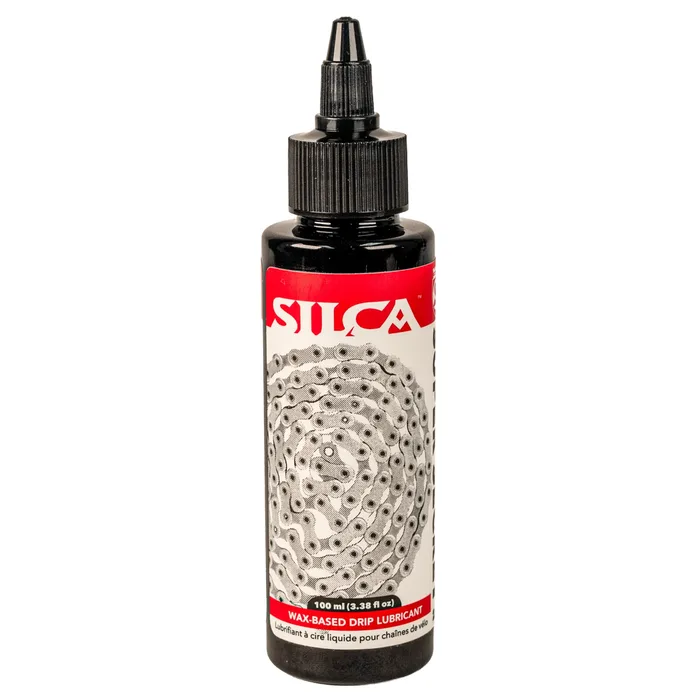
SILCA Super Secret 2.0 is the pick for most riders, because it puts a real wax coating on the chain out of a drip bottle, so you get most of the cleanliness and low wear of hot waxing without owning a slow cooker. Squirt Long Lasting Chain Lube is the value pick, a wax and water emulsion that costs a fraction as much, stays clean, and clearly outperforms the oil-based dry and wet lubes most shops still sell. MSPEEDWAX is the one to choose if you want some of the lowest wear numbers anyone has measured, but it means stripping a chain in solvent, running a wax pot and re-waxing on a schedule. Skip Muc-Off C3 Dry Weather Ceramic Lube: it is priced and marketed as a premium product, and in the longest-running independent wear test available it finishes near the bottom of the table. The single most useful thing here is not the brand at all. Every one of these makers, including Muc-Off, tells you to fully degrease the chain before applying their product, and a top lube over a factory-greasy chain will do less for you than a mediocre lube over a properly stripped one. Best for: riders who want a clean drivetrain and a chain that lasts, without turning maintenance into a second hobby.
Our picks at a glance
- SILCA Super Secret 2.0 Chain Lube - Buy. A drip-on wax coating with tungsten disulfide that behaves like hot melt wax without the pot, provided you strip the chain first and give it time to cure.
- Squirt Cycling Products Long Lasting Chain Lube - Buy. The original wax and water emulsion: cheap, clean, biodegradable, and a genuine step up from the oil-based dry lubes it sits next to on the shelf.
- Molten Speed Wax MSPEEDWAX 1.15 lb (520 g) - It depends. Immersive hot melt paraffin with tungsten disulfide and molybdenum disulfide, which produces wear results well ahead of the drip lubes here, at the cost of a genuine process.
- Muc-Off C3 Dry Weather Ceramic Lube - Skip. A very widely stocked premium-priced dry lube with UV dye in the formula, which the independent long-duration wear data does not support.
The verdict in 30 seconds
What mattered most
- Lubricant family
- Does it have to dry or set?
- Maker's stated reapplication interval
- Conditions the maker claims
- Chain prep the maker requires
- Equipment beyond the bottle
Chain lube is one of the few cycling categories where genuine independent testing exists. Zero Friction Cycling in Australia runs a 6,000 km controlled wear protocol that never cleans the chain, so the wear rate is entirely down to the lubricant, and separate labs going back to Friction Facts have measured drivetrain efficiency in watts on purpose-built rigs. We used both, kept them separate, and checked every product claim against the maker's own page. The field splits into wet oils, dry oils, wax emulsions, drip waxes and immersive hot melt wax, and those five families behave nothing like each other.
A drip-on wax coating with tungsten disulfide that behaves like hot melt wax without the pot, provided you strip the chain first and give it time to cure.
Best for: The rider who wants wax-level cleanliness and wear protection but is never going to own a dedicated slow cooker.
- Dries to a wax coating you can handle without getting a black stripe on your leg.
- SILCA states 350 to 400 km per application, which is a long interval for a drip product.
- Compatible with hot melt wax, so it works as a top-up between immersion re-waxes if you later go that way.
- Needs a fully stripped chain to bond, so applying it over factory grease wastes the bottle.
- SILCA asks for at least four hours of cure time, with overnight preferred, so you cannot lube just before a ride.
- The long-duration independent wear data that built this product's reputation was run on the previous formula, not on 2.0.
- Costs more per bottle than a shelf-standard dry lube.
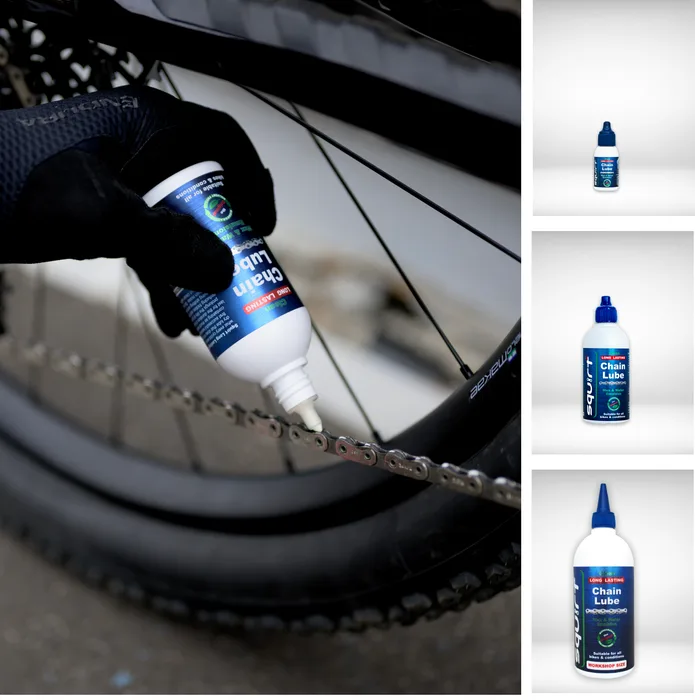
The original wax and water emulsion: cheap, clean, biodegradable, and a genuine step up from the oil-based dry lubes it sits next to on the shelf.
Best for: Commuters, gravel riders and anyone who wants a clean drivetrain on a budget and does not mind lubing the night before.
- Cheapest realistic route into wax lubrication, and widely stocked.
- Squirt states you never need to degrease again once you are running it, only occasional cleaning after a gritty ride.
- Independently certified as readily biodegradable, at 88.5 percent biodegradation after 28 days under OECD 301B.
- The water carrier has to evaporate fully before you ride, which is slow in cold or humid weather.
- The stated interval is very wide, 30 to 300 miles depending on conditions, so you are judging by chain noise rather than a number.
- Wax emulsions are known to struggle to get back inside a freshly solvent-cleaned chain, which is why Squirt asks for a second coat ten minutes after the first.
- Mid-table in the long independent wear test, well behind the coating-type drip waxes and far behind immersion.
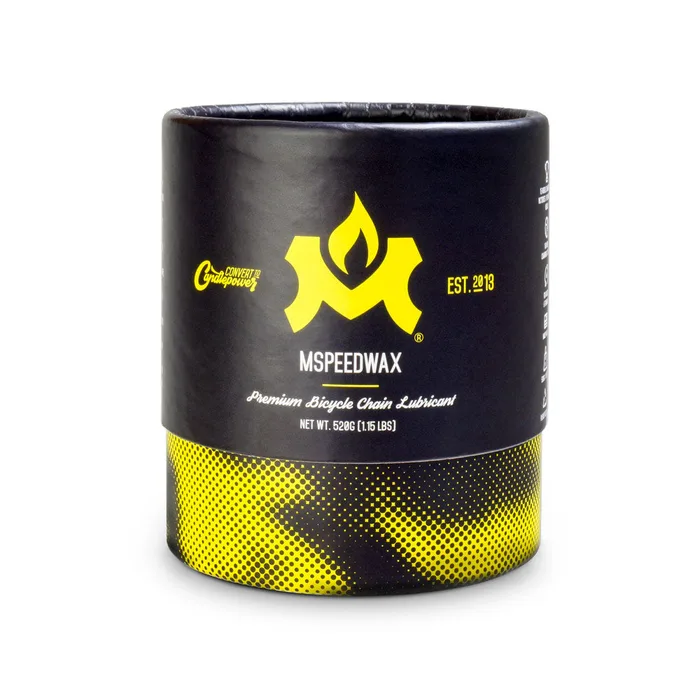
Immersive hot melt paraffin with tungsten disulfide and molybdenum disulfide, which produces wear results well ahead of the drip lubes here, at the cost of a genuine process.
Best for: Riders with expensive drivetrains, or anyone who quite likes a workshop ritual and wants some of the lowest wear numbers that have been measured.
- In the independent 6,000 km mixed-conditions wear test, the current formula modelled out to roughly 19,000 km of chain life, about four times the SILCA drip figure.
- Re-waxing cleans the chain as it re-coats it, so contamination gets reset rather than accumulated.
- One 520 g container holds two pucks and will wax around twenty chains, so the cost per treatment is very low.
- First-time prep is a real job: three mineral spirits baths including an overnight soak, then two denatured alcohol baths.
- SRAM's own chains manual carries a crash-hazard warning against soaking a chain in a bath of any cleaning product, which is exactly what this prep involves.
- You need a small slow cooker and a thermometer, the chain comes off the bike every time, and each cycle runs about 65 minutes of heating plus 20 to 25 minutes cooling.
- Molten Speed Wax suggests a training chain lasts around 300 miles between waxes, and re-waxing after wet or muddy rides.
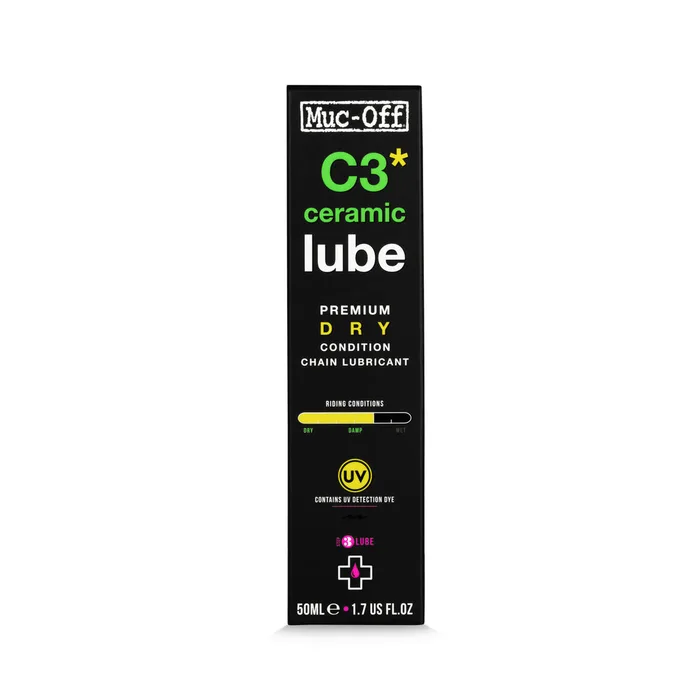
A very widely stocked premium-priced dry lube with UV dye in the formula, which the independent long-duration wear data does not support.
Best for: Nobody in particular. If a bottle is already in your toolbox, use it up on a chain you do not care about.
- Contains UV dye, which Muc-Off says lets you check for full coverage.
- Petroleum-free formula, which Muc-Off states is biodegradable.
- Application instructions are sound: fully degrease first, apply three to four hours before riding, wipe the excess.
- In Zero Friction Cycling's 6,000 km mixed-conditions wear test it sits near the bottom of a table of more than fifty lubricants.
- The modelled chain life from that test is roughly a third of what the drip waxes here returned, and a small fraction of hot melt wax.
- Muc-Off publishes no reapplication interval in miles or kilometres, so there is nothing to hold the product to.
- The friction figures Muc-Off publishes come from its own in-house rig, and long-duration full-tension testing of that kind is contested by the lab that developed the method.
| Criteria | Super Secret 2.0 Chain Lube Top pick | Long Lasting Chain Lube | MSPEEDWAX 1.15 lb (520 g) | C3 Dry Weather Ceramic Lube |
|---|---|---|---|---|
| Verdict | Buy it | Buy it | It depends | Skip it |
| Best for | The rider who wants wax-level cleanliness and wear protection but is never going to own a dedicated slow cooker. | Commuters, gravel riders and anyone who wants a clean drivetrain on a budget and does not mind lubing the night before. | Riders with expensive drivetrains, or anyone who quite likes a workshop ritual and wants some of the lowest wear numbers that have been measured. | Nobody in particular. If a bottle is already in your toolbox, use it up on a chain you do not care about. |
| Price tier | $$$ · premium | $ · budget | $$ · mid-range | $$ · mid-range |
| Lubricant family | Drip wax coating, emulsified wax with tungsten disulfide | Wax emulsion in a water carrier | Immersive hot melt paraffin with WS2 and MoS2 | Drip dry lube with ceramic particles and synthetic polymers |
| Does it have to dry or set? | Yes, at least 4 hours, overnight preferred | Yes, water must evaporate fully before riding | No carrier; wax solidifies as the chain cools, about 20 to 25 minutes | Yes, maker says apply 3 to 4 hours before riding |
| Maker's stated reapplication interval | 350 to 400 km (220 to 250 miles) or when noisy | 30 to 300 miles depending on conditions | About 300 miles on a training chain; re-wax after wet or muddy rides | None published |
| Conditions the maker claims | Better wet-weather performance than version 1.0 | All conditions above freezing; a separate Low Temperature version covers 0 to 32 F | Dry and wet, dirt, sand, mud and snow | Dry, dusty and damp |
| Chain prep the maker requires | Chain must be very clean and dry; SILCA sells a stripper for factory grease | Fully degrease factory grease, then two coats ten minutes apart | Three mineral spirits baths plus two alcohol baths on a new chain | Fully degrease the drivetrain before applying |
| Equipment beyond the bottle | None | None | Slow cooker, thermometer, agitation tool, chain removed from bike | None |
| Modelled chain life, independent 6,000 km wear test | About 4,500 km (previous formula tested) | About 3,150 km | About 19,000 km (current formula) | About 1,500 km |
| Measured drivetrain loss at 250 W, clean chain | 3.82 W (previous formula, independent lab) | 4.04 W (independent lab) | 4.16 W (independent lab) | 2.9 W, from Muc-Off's own lab; protocol disputed |
Which one is right for you?
- The rider who wants wax-level cleanliness and wear protection but is never going to own a dedicated slow cooker. Buy it SILCA Super Secret 2.0 Chain Lube
- Commuters, gravel riders and anyone who wants a clean drivetrain on a budget and does not mind lubing the night before. Buy it Squirt Cycling Products Long Lasting Chain Lube
- Riders with expensive drivetrains, or anyone who quite likes a workshop ritual and wants some of the lowest wear numbers that have been measured. It depends Molten Speed Wax MSPEEDWAX 1.15 lb (520 g)
- Nobody in particular. If a bottle is already in your toolbox, use it up on a chain you do not care about. Skip it Muc-Off C3 Dry Weather Ceramic Lube
How we judged the field
Five things decide whether a chain lubricant is doing its job. First, wear: how well it resists absorbing abrasive grit and turning into grinding paste, because that is what eats chains, cassettes and chainrings. Second, drivetrain efficiency, measured in watts of loss on a test rig, which is a genuinely different outcome from wear and worth keeping separate in your head. Third, treatment lifespan, meaning how far one application actually lasts in the conditions you ride. Fourth, what the chain has to look like before you apply it, because most products only work on bare, stripped metal. Fifth, the faff: cure times, equipment, whether the chain has to come off the bike. A product can win on efficiency and lose badly on wear, and the lubricants that market hardest on watts are not the ones that keep drivetrains alive.
The field splits into five families that behave nothing like each other. Wet oils survive rain but actively collect and hold grit, which is why they are the wrong tool for anything dusty. Dry oils and ceramic dry lubes are cleaner but short-lived. Wax emulsions suspend hard wax in water and leave a dry film once the water evaporates. Chain coating drip waxes set to a much more solid film and behave closest to hot wax. Immersive hot melt wax is its own thing, and it wins the wear numbers by a distance because every re-wax resets contamination rather than adding to it. We picked one strong representative of the coating drip category, the best-value wax emulsion, the immersion option with the most published data behind it, and one very widely bought premium dry lube that the data says you should walk past.
SILCA Super Secret 2.0 Chain Lube
Buy itSuper Secret 2.0 is what happens when hot melt wax gets put in a drip bottle. The base is an emulsified wax carrying tungsten disulfide, and it behaves like wax rather than oil, drying to a coating you can touch without collecting a black stripe on your calf. SILCA states 350 to 400 km per application, or sooner if the chain gets noisy, and asks for at least four hours of cure time with overnight preferred. That cure time is the real cost of using it. You cannot lube ten minutes before a ride, and you cannot drip it over a greasy chain and expect anything good, because wax will not bond through oil. The independent long-duration wear testing that built this product’s reputation was run on the previous formula, which finished among the strongest drip lubricants tested and measured 3.82 watts of loss at 250 watts on a clean chain. SILCA says 2.0 lasts longer and copes better in the wet; that part is the maker’s claim, not an independent result yet. For someone who wants wax behaviour without owning a slow cooker, this is the one.
Squirt Cycling Products Long Lasting Chain Lube
Buy itSquirt is the original wax emulsion: hard waxes suspended in water that evaporates and leaves a dry film behind. It is the cheapest realistic way into wax lubrication and the least fussy in daily use, because Squirt says once you are running it you should not degrease again, only clean occasionally after a genuinely gritty ride. The catch is at the start. Squirt is explicit that the first application has to go onto a properly degreased chain and that you should lay down a second coat about ten minutes after the first, which matters because wax emulsions are known to struggle to get back inside a chain that has just been solvent-cleaned. The stated interval is a very wide 30 to 300 miles, because conditions swing it that much. In the long independent wear test it lands mid-table: clearly ahead of the oil-based dry and wet lubes most shops still push, clearly behind the coating drip waxes, and a long way behind immersion. It also has to dry, so plan around that.
Molten Speed Wax MSPEEDWAX 1.15 lb (520 g)
It dependsThis is the one with the dramatic numbers and the real commitment. MSPEEDWAX is fully refined paraffin carrying tungsten disulfide and molybdenum disulfide, two pucks in a 520 g container that will wax around twenty chains. Getting started means stripping a new chain: three mineral spirits baths, one an overnight soak, then two denatured alcohol baths. After that you need a small slow cooker and a thermometer, roughly 65 minutes to bring the pot to 200 degrees Fahrenheit, 45 seconds of agitation, and 20 to 25 minutes hanging to cool. Re-waxing is far simpler, because the hot bath cleans the chain as it re-coats it; Molten Speed Wax suggests around 300 miles between waxes on a training chain and a re-wax after wet or muddy rides. In the independent 6,000 km wear test the current formula modelled out to roughly 19,000 km of chain life, about four times the SILCA drip figure. One caveat before you commit: SRAM’s chains manual warns against soaking a chain in a bath of any cleaning product, which puts the standard prep at odds with what that manufacturer publishes. Right if you like the ritual, wrong if you do not.
Muc-Off C3 Dry Weather Ceramic Lube
Skip itC3 Dry is stocked nearly everywhere, priced as a premium product, and contains UV dye so you can check coverage. The independent wear data does not support the positioning. In Zero Friction Cycling’s 6,000 km mixed-conditions test, which never cleans the chain so the result is entirely down to the lubricant, C3 Dry sits near the bottom of a table of more than fifty products, with a modelled chain life around 1,500 km against roughly 4,500 km for a top drip wax and roughly 19,000 km for hot melt. Muc-Off also publishes no reapplication interval in miles or kilometres, which leaves you with nothing to judge it against. Its low friction figures come from its own in-house rig, and long continuous full-tension testing of that kind is exactly what CeramicSpeed and Friction Facts have argued produces misleading endurance results. The instructions themselves are fine. The product underneath them is not worth premium money.
Sources
Specs in this review come from these pages.
- Zero Friction Cycling - Lubricant Testing protocol and data (zerofrictioncycling.com.au)
- SRAM - Chains user manual, Chain Maintenance (docs.sram.com)
- SILCA - Super Secret 2.0 Chain Lube (silca.cc)
- Squirt Cycling Products - Long Lasting Chain Lube (squirtcyclingproducts.com)
- Molten Speed Wax - Cleaning and waxing your chain (moltenspeedwax.com)
- KMC - GO WAX frequently asked questions (kmcchain.com)
SILCA Super Secret 2.0 Chain Lube vs Squirt Cycling Products Long Lasting Chain Lube: which should you buy?
The way to choose between Super Secret 2.0 and Squirt is to decide what your drivetrain is worth and how much you care about the last watt. Squirt does the important part of the job: it is a wax, it dries, it does not build the black abrasive paste that oils do, and it costs very little per application. In the long wear test it lands mid-table, which sounds unimpressive until you notice that most of the products below it are the oil-based dry and wet lubes that dominate shop shelves. If you are running a mid-tier groupset on a commuter or a gravel bike, Squirt is genuinely enough, and the money you save is real.
Super Secret 2.0 earns its price on two axes. It sets to a much more solid coating, which is why the coating drip waxes resist contamination better than emulsions do, and it does not have the penetration problem emulsions have after a solvent clean. It also gives you a defined interval, 350 to 400 km, instead of a range you have to guess within. And because it is wax-compatible with hot melt, it is the natural product to keep in the toolbox if you might move to immersion later, since you can top up between re-waxes without contaminating the pot. Choose Squirt if the drivetrain is replaceable and you want clean and cheap. Choose SILCA if the drivetrain is expensive, or if you would rather follow a number than a hunch.
What to look for
- Preparation beats brand: a new chain ships coated in factory grease that most lubricants will not penetrate, and every lubricant maker here tells you in their own instructions to strip it off first.
- Check your chain maker’s own manual before you soak anything: SRAM warns against alkaline or acidic solvents and against soaking a chain in a bath of any cleaning product, which sits awkwardly with how immersion waxing is normally prepped.
- Wear and watts are different things: a lubricant can measure fast on a clean-chain efficiency rig and still chew through a cassette, so check which number a claim is actually about.
- Wet lubes belong in the wet, and nowhere else: they survive rain by staying put, but they also hold on to every bit of grit they collect, which is exactly what grinds a drivetrain.
- Drip wax is not immersion wax: dripping adds a small amount of fresh lubricant on top of whatever contamination is already inside, while a hot bath floats the contamination out and resets the chain.
- Budget the cure time, not just the money: most wax-family products need anywhere from four hours to overnight to dry or set, so lubing after the ride rather than before it is the habit that makes them workable.
Our final take
Pick a family first, then a bottle. If you ride anywhere dusty, get off wet oil, because that single change does more than any brand switch. From there, Squirt is the cheap, clean, sensible default, and Super Secret 2.0 is the one to buy if the drivetrain is expensive enough that a few hundred extra kilometres per chain pays for itself. MSPEEDWAX is a different proposition: the wear numbers are not close, but you are signing up for a solvent strip, a wax pot and a schedule. Whichever you choose, get the factory grease off a new chain before the first application, and check your chain maker’s manual first, because SRAM warns against cleaning baths. That step is worth more than the difference between any two products on this page.
Questions, answered
Do I really have to strip the factory grease off a new chain?
If you want the lube you bought to do anything, yes. Every lubricant maker here says so in their own instructions: SILCA wants the chain very clean and dry, Squirt says factory grease should be removed with an organic solvent, Molten Speed Wax publishes a five-bath solvent process, and even Muc-Off tells you to fully degrease before applying C3. Wax will not bond through oil, so a wax product applied over factory grease turns into a gunky mixture that does neither job. Zero Friction Cycling's testing found Shimano factory grease wearing a chain at roughly five times the rate of the top drip lubricants in the clean opening block of its test. Stripping a new chain is also far easier than stripping a ridden one, because factory grease that has picked up road grit takes litres of solvent to shift. One caveat worth knowing: SRAM's own chains manual carries a crash-hazard warning against using alkaline or acidic solvents and against soaking or storing a chain in a bath of any cleaning product, on the grounds that it can make the chain brittle. That is a real conflict with how immersion waxing is normally prepped, and it is covered in the buying guide.
What is the actual difference between drip wax and hot melt wax?
Immersive hot melt wax means taking the chain off, dropping it into a pot of molten paraffin at around 200 degrees Fahrenheit, agitating it, and hanging it to cool so the wax solidifies inside every pin and roller. Drip wax means applying a liquid, either a wax emulsion in water or a wax coating in a fast-drying carrier, and letting it dry in place. The key thing immersion does that dripping cannot is reset contamination: the hot bath floats out whatever grit got in, so every re-wax puts you back near new. A drip application only adds a small amount of fresh lubricant on top of whatever is already in there. That is why the wear gap between the two is large rather than marginal, and it grows as the kilometres pile up.
How often should I actually re-lube?
Go by the maker's number first and by chain noise second. SILCA states 350 to 400 km for Super Secret 2.0, Squirt states a wide 30 to 300 miles because conditions swing it that much, and Molten Speed Wax suggests around 300 miles on a training chain. KMC, which now sells factory-waxed chains, publishes 150 to 200 km on dry roads and 100 to 150 km off road for its liquid wax. Wet and gritty riding shortens all of these dramatically, and a chain that has started to sound dry is already overdue. The one habit worth building is wiping surface dust off the chain with a cloth before you re-lube, so you are not dragging grit inward with the fresh lubricant.
Is wax a bad idea if I ride in the rain a lot?
Wet riding is hard on every lubricant, because water carries abrasive grit deep into the chain where pedalling pressure presses it into whatever is in there. Wet oils hold on longer than wax does, which is real, but they also hold on to the grit, so friction and wear start climbing from the first kilometre and keep climbing. Wax gets abraded off faster in the wet and needs reapplying sooner, but resetting it is trivial: with immersion you drop the chain back in the pot, and the bath lifts the contamination out. With any drip lubricant, wet or wax, the only way to reset is a proper off-the-bike solvent flush through several baths. The practical answer is that wet weather does not make wax wrong, it makes reapplication frequency the thing you have to get right.
Do the watt savings claims on the bottle mean anything?
Treat them as marketing until someone independent measured them. Real drivetrain efficiency numbers come from purpose-built rigs, and the differences between good lubricants on a clean chain are typically two or three watts at 250 watts of rider input, not the double-digit gaps some packaging implies. Test conditions also change the answer: a rig running at high load and low chain speed will flatter a thick, sticky lubricant that would test badly at 250 watts and 90 rpm. There is also an ongoing dispute about long continuous full-tension test runs, which CeramicSpeed and Friction Facts have argued produce misleading endurance results because the chain never slacks the way it does around a real rear derailleur. And none of it tells you anything about wear, which is the number that costs you money.
Deciding between the top two? See our head-to-head: SILCA Super Secret 2.0 Chain Lube vs Squirt Cycling Products Long Lasting Chain Lube.
More Cycling reviews
 The Best Chain Whips: 4 Compared (and One to Skip)
  The Best Clipless Pedals: 4 Compared (and One to Skip)
  The Best CO2 Inflators: 4 Compared (and One to Skip)
  The Best Commuter Bike Helmets: Real Safety You'll Actually Wear (and One to Skip)
  The Best Cycling Gloves: 4 Compared (and One to Skip)
  The Best Electric Bikes: 4 Compared (and One to Skip)