

Outdoors & Fitness
The Best CO2 Inflators: 4 Compared (and One to Skip)
We compared four bike CO2 inflators on how flow is controlled, what they are made of, which cartridges they take and whether anything stops an accidental discharge.
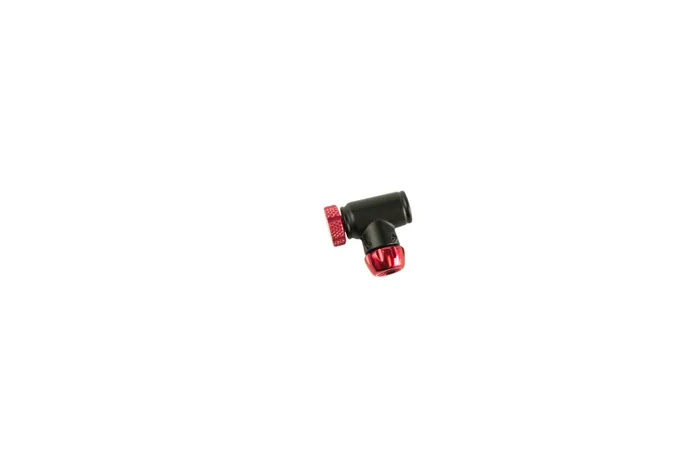
The short version
The SILCA EOLO IV is the one to buy if you want an inflator that outlives the bike: entirely 6063 aluminium and stainless steel with no plastic parts, a dial that meters the flow properly, and a hardened tool steel puncture pin SILCA states is more than twice the hardness of a traditional pin. The Genuine Innovations Ultraflate is the value pick and the one with the best safety feature in the group, a built-in trigger lock that stops an accidental discharge, plus reinforced glass nylon over brass internals and compatibility with both threaded and non-threaded cartridges. The Prestacycle Prestaflator Micro is the answer if you would rather carry one thing: it is a CO2 head, a pump and an air compressor adapter in one kit, and its flow knob is the cartridge itself. Portland Design Works' Cloud Cap is a lovely all-metal inflator with a leather sleeve, and it is the one to skip for most riders because it is CO2 only, while PDW's own Airforge Mini puts a pump and a CO2 head in the same tool. Best for: anyone who has walked home because one cartridge went wrong.
Our picks at a glance
- SILCA EOLO IV CO2 Regulator - Buy. All metal, properly regulated, and built by the company that invented the regulated inflator.
- Genuine Innovations Ultraflate - Buy. Trigger-controlled, cartridge-agnostic, and the only one here with a lock against accidental discharge.
- Prestacycle Prestaflator Micro - It depends. A CO2 head, a pump and a compressor adapter in one kit, with the cartridge itself as the flow knob.
- Portland Design Works Cloud Cap CO2 Inflator - Skip. A genuinely nice all-metal inflator, and CO2 only when the same maker sells a pump and CO2 in one tool.
The verdict in 30 seconds
What mattered most
- Flow control
- Body material
- Cartridge threads accepted
- Lock against accidental discharge
- Head type
- Manual backup included
A CO2 inflator turns a roadside flat into a two minute job, and the thing that separates a good one from a bad one is control. A cartridge dumps its entire contents in a couple of seconds if nothing regulates the flow, which is how people end up with a frozen thumb, a blown tube and no second cartridge. SILCA makes the point in its own history: before it built the first regulated inflator in 1982, you turned the cartridge and prayed. The specifications worth reading are how the flow is metered, what the body is made of, which cartridge threads it accepts, and whether there is anything preventing it from going off in your pocket.
All metal, properly regulated, and built by the company that invented the regulated inflator.
Best for: Riders who carry an inflator for years and want the one that will not seize or crack.
- Manufactured entirely from 6063 series aluminium and stainless steel, with no plastic parts anywhere in the body.
- A dial meters the gas into the tyre rather than releasing it in one burst, which is the whole point of a regulated inflator.
- SILCA states the hardened tool steel puncture pin is more than twice the hardness of a traditional pin, for smooth operation over many years.
- It is sold as the regulator only, so cartridges are a separate purchase.
- SILCA does not publish a weight for it.
- There is no trigger lock, so it relies on the dial being closed when stowed.
- It costs several times what a perfectly good plastic-bodied inflator costs.
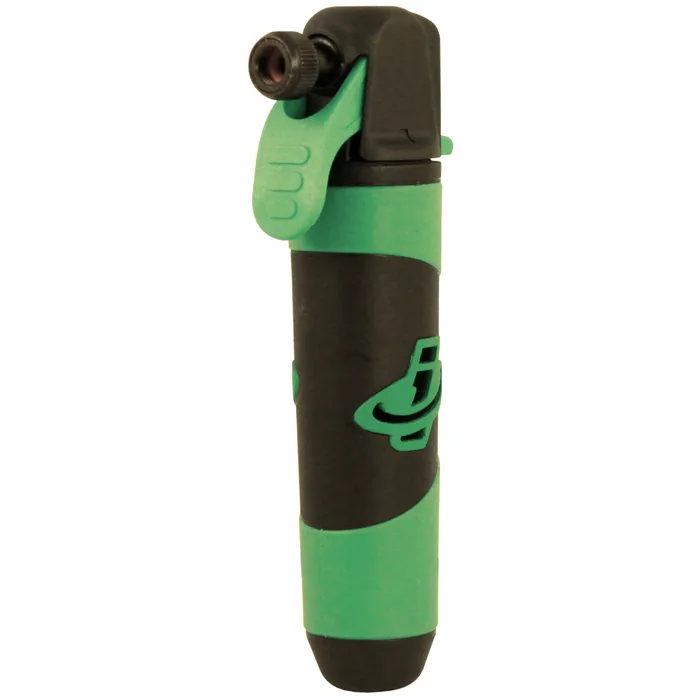
Trigger-controlled, cartridge-agnostic, and the only one here with a lock against accidental discharge.
Best for: Most riders, and anyone who has ever set a cartridge off by accident in a saddle bag.
- A built-in trigger lock prevents accidental discharge, which no other inflator in this comparison offers.
- Takes non-threaded 20 gram cartridges as well as threaded 16, 20 and 25 gram ones, so you are not tied to one cartridge type.
- Reinforced glass nylon construction over brass internals, which Genuine Innovations positions for the strain of everyday use.
- The body is reinforced nylon rather than metal, so it will not take the abuse the SILCA will.
- Genuine Innovations publishes no weight for it.
- The cupped head design is slower to seat on a valve than a threaded head.
- Every product on Genuine Innovations' own store currently shows out of stock, so buy it through a retailer.
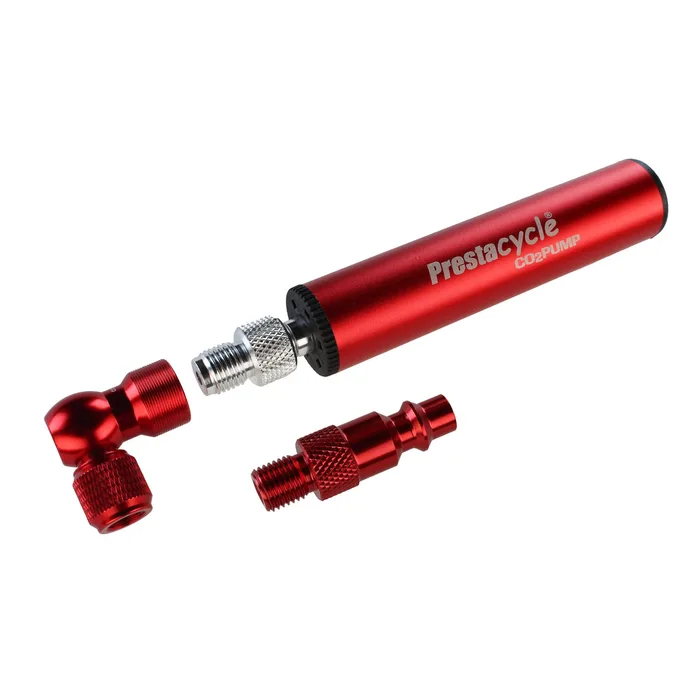
A CO2 head, a pump and a compressor adapter in one kit, with the cartridge itself as the flow knob.
Best for: Riders who want one tool covering roadside CO2, a manual backup and home compressor use.
- CO2, pump and air compressor adapter in a single kit, so running out of cartridges does not strand you.
- The cartridge is the flow control knob, which Prestacycle uses to give a large-diameter control without adding a separate part.
- A threaded Presta and Schrader head makes a sealed connection, so Prestacycle states you use 100 percent of the cartridge contents.
- Buying a kit means carrying more than an inflator when all you want is an inflator.
- Using the cartridge as the knob means your hand is on the cold part while you meter the flow.
- Prestacycle publishes no weight or dimensions for the kit.
- A threaded head is slower to attach than a push-on chuck when you are standing in the rain.
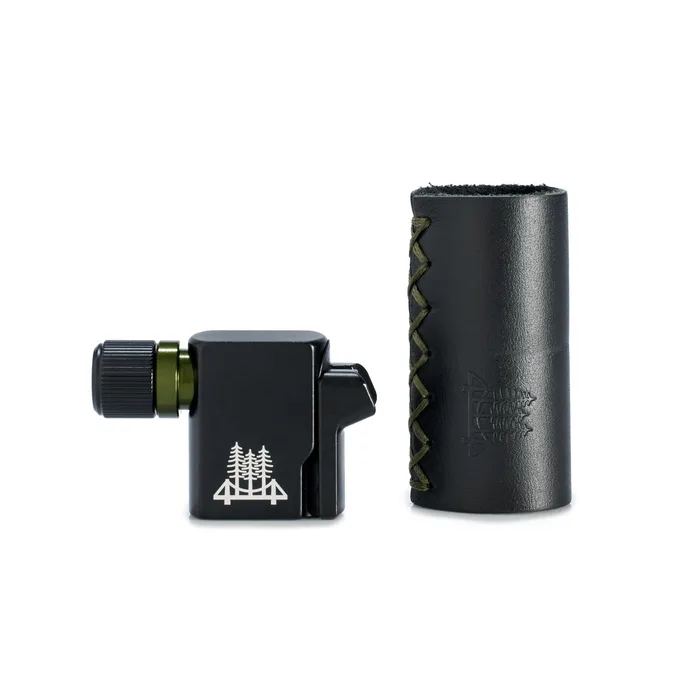
A genuinely nice all-metal inflator, and CO2 only when the same maker sells a pump and CO2 in one tool.
Best for: Riders who already carry a pump and want a beautiful CO2 head alongside it.
- Compact all-metal construction with a control lever that finely meters flow and flips closed into a locked low-profile position for storage.
- Ships with a protective bag and a stitched leather CO2 sleeve, which stops a cold cartridge sitting against your frame or your hand.
- The flip-closed lever is a neater storage solution than a dial that can be knocked open.
- It is CO2 only, so when the cartridges are gone the ride is over.
- PDW's own Airforge Mini combines a mini pump and a CO2 inflator in one tool for riders who want a fallback.
- PDW publishes no weight, no cartridge size compatibility and no material detail beyond all-metal.
- Part of the price is the leather sleeve and the bag rather than the inflator.
| Criteria | EOLO IV CO2 Regulator Top pick | Ultraflate | Prestaflator Micro | Cloud Cap CO2 Inflator |
|---|---|---|---|---|
| Verdict | Buy it | Buy it | It depends | Skip it |
| Best for | Riders who carry an inflator for years and want the one that will not seize or crack. | Most riders, and anyone who has ever set a cartridge off by accident in a saddle bag. | Riders who want one tool covering roadside CO2, a manual backup and home compressor use. | Riders who already carry a pump and want a beautiful CO2 head alongside it. |
| Price tier | $$$ · premium | $ · budget | $$ · mid-range | $$ · mid-range |
| Flow control | Metering dial | Trigger with lock | Cartridge acts as the knob | Flip-closed control lever |
| Body material | 6063 aluminium and stainless, no plastic | Reinforced glass nylon, brass internals | Not published | All metal, not specified further |
| Cartridge threads accepted | Not published | Threaded 16, 20, 25g and non-threaded 20g | Not published | Not published |
| Lock against accidental discharge | No | Yes, built-in trigger lock | Not published | Lever flips to a locked position |
| Head type | Not published | Cupped | Threaded Presta and Schrader | Not published |
| Manual backup included | No | No | Yes, pump and compressor adapter | No |
| Cartridges included | No, regulator only | Not published | Not published | No, sleeve and bag included |
| Published weight | Not published | Not published | Not published | Not published |
Which one is right for you?
- Riders who carry an inflator for years and want the one that will not seize or crack. Buy it SILCA EOLO IV CO2 Regulator
- Most riders, and anyone who has ever set a cartridge off by accident in a saddle bag. Buy it Genuine Innovations Ultraflate
- Riders who want one tool covering roadside CO2, a manual backup and home compressor use. It depends Prestacycle Prestaflator Micro
- Riders who already carry a pump and want a beautiful CO2 head alongside it. Skip it Portland Design Works Cloud Cap CO2 Inflator
How we judged the field
Five things decide whether a CO2 inflator is the right one. Flow control comes first and is close to the whole product: a cartridge holds enough pressure to empty itself in about two seconds, so the mechanism that meters it is what separates a usable tool from a small explosion. Second is the material, because an inflator lives in a saddle bag getting knocked about and cooled to freezing every time it is used, and plastic bodies crack where metal does not. Third is cartridge compatibility, since threaded and non-threaded cartridges are not interchangeable and the sizes run 16, 20 and 25 grams for different tyre volumes. Fourth is whether anything stops the thing discharging in your pocket, which is a real failure and an expensive one. Fifth is what you do when the cartridges run out, which is the question that decides whether you want a CO2 head or a combination tool.
The field splits by philosophy. The premium metal inflators, which SILCA effectively created, treat this as a precision tool to be bought once. The mainstream plastic-bodied inflators, Genuine Innovations’ territory, are cheap, light and add safety features. Combination tools put a pump and a CO2 head in one body so a spent cartridge is not the end of the ride. And a small group sells CO2 heads as objects, with leather and finishing to match a particular kind of bike. We took one from each, because the difference between them is mostly about what happens after the second cartridge.
The EOLO IV is SILCA’s fourth generation of the product it invented, and the specification reads like a tool rather than an accessory. It is manufactured entirely from 6063 series aluminium and stainless steel, and SILCA is explicit that it contains no plastic parts, which in a device that gets to freezing temperature in normal use is a meaningful choice. The flow is metered with a dial, which SILCA describes as giving perfect control of the flow into the tyre, and the puncture pin is hardened tool steel that SILCA states is more than twice the hardness of a traditional pin, specifically so it keeps piercing cartridges cleanly over many years rather than deforming. The company’s own framing of why regulation matters is the best line in the category: before EOLO, you had to turn the cartridge and pray. The costs are straightforward. It is sold as the regulator only, so cartridges are separate, SILCA publishes no weight, and there is no trigger lock, so stowing it means making sure the dial is closed.
The Ultraflate is the sensible one, and it has the single best feature in this group. Genuine Innovations builds in a trigger lock specifically to prevent accidental discharge, and nothing else here has one. If you have ever found a spent cartridge and a cold, wet saddle bag, that feature is worth more than any material upgrade. Flow is trigger controlled, which is fast and intuitive, and the construction is reinforced glass nylon over brass internals, a combination the company positions for the strain of everyday use. The compatibility list is the broadest here too: threaded 16, 20 and 25 gram cartridges plus non-threaded 20 gram, so you can buy cartridges outside a bike shop. The limits are real but modest. A nylon body will not survive what the SILCA will, no weight is published, and the cupped head is fiddlier to seat on a valve than a threaded one. One practical note: every product on Genuine Innovations’ own store currently reads out of stock, so buy it through a retailer.
The Prestaflator Micro answers a different question: what do you carry so that a flat is never a walk home. It is a CO2 head, a pump and an air compressor adapter in one kit, which means the same tool handles a roadside puncture, a slow leak with no cartridges left, and topping tyres up from a compressor in the garage. The flow control idea is genuinely clever. Rather than adding a knob, Prestacycle makes the cartridge itself the knob, on the reasoning that a bigger diameter gives finer control, and the cartridge is the biggest thing already in your hand. The head is threaded for Presta and Schrader, which makes a sealed connection, and Prestacycle states that means you use 100 percent of the cartridge contents rather than losing some to a leaky push-on fit. The trade-offs follow from the same decisions. Your hand is on the cold cartridge while you meter, a threaded head is slower to attach in the rain, and a kit is more to carry than a head.
The Cloud Cap is the nicest object in this comparison and that is most of the problem. It is compact and all metal, and the control lever is genuinely well thought out: it meters flow finely in use, then flips closed into a locked low-profile position for storage, which is a better answer to accidental discharge than a dial you have to remember to close. It ships with a protective bag and a stitched leather CO2 sleeve, and the sleeve is more useful than it sounds because a cartridge in use gets cold enough to be unpleasant to hold. What keeps it off the buy list is what it does not do. It is CO2 only, so when your cartridges are spent the ride is over, and PDW’s own range contains the answer in the Airforge Mini, which puts a mini pump and a CO2 inflator in one tool. PDW also publishes no weight, no cartridge compatibility and no material detail beyond all metal. Buy it if you already carry a pump.
SILCA EOLO IV CO2 Regulator vs Genuine Innovations Ultraflate: which should you buy?
The SILCA and the Ultraflate bracket the category and the choice is unusually clear. The EOLO IV is a buy-once tool: 6063 aluminium and stainless with no plastic anywhere, a dial that meters properly, and a hardened tool steel pin built to keep piercing cartridges cleanly for years. If your inflator lives in a saddle bag through winters and you intend to still have it in a decade, that construction is what you are paying for.
The Ultraflate costs a fraction as much and beats it on two specific things. The trigger lock is the only guard against accidental discharge in this group, and accidental discharge is the failure that actually costs people a ride. And it takes non-threaded cartridges as well as threaded, which means you can restock at a hardware store rather than a bike shop. The nylon body is the compromise, and for most riders it is not one they will ever reach the limits of. Buy the SILCA if you value the object and the longevity. Buy the Ultraflate if you want the safer, more flexible tool and would rather spend the difference on cartridges. Whichever you choose, carry two cartridges, and remember that a floor pump at home is still where the tyre gets its real pressure back.
What to look for
- How the flow is metered: a dial, a trigger or a lever all work, and an inflator with no stated control mechanism will empty a cartridge in about two seconds.
- A lock against accidental discharge: Genuine Innovations builds a trigger lock into the Ultraflate, and PDW’s lever flips into a locked position, which are the two answers to a cartridge going off in a bag.
- Which cartridges it takes: threaded is standard in 16, 20 and 25 gram, non-threaded is cheaper and needs a compatible head, and only one inflator here states it accepts both.
- Body material: metal survives being cold, wet and knocked about in a way plastic does not, and SILCA stating no plastic parts is a real differentiator.
- Head type: a threaded head seals fully so no gas is lost, and a push-on cupped head is faster to fit but can leak on a bad seat.
- Whether there is a manual backup: a combined pump and CO2 tool means a spent cartridge is an inconvenience rather than the end of the ride.
Our final take
A CO2 inflator is a small tool with one job, and how it meters the gas is nearly all of it. The SILCA EOLO IV is the one to buy if you want it to be the last inflator you buy: all 6063 aluminium and stainless, no plastic, a proper dial and a hardened pin built for years of cartridges. The Genuine Innovations Ultraflate is the smarter buy for most riders, because the trigger lock guards against the failure that actually happens and it takes non-threaded cartridges as well as threaded ones. The Prestacycle Prestaflator Micro is the right call if you want one tool that also pumps. And a CO2-only head with a leather sleeve is a lovely thing to own alongside a pump rather than instead of one.
Questions, answered
Why does the tyre go soft again a day later?
Because CO2 molecules pass through a butyl or latex tube and a tyre casing far faster than the nitrogen and oxygen in air. A tyre inflated with CO2 will be noticeably down within a day or two and close to flat within a few days, and that is normal rather than a puncture. The correct routine is to use CO2 to get home, then let the tyre down and reinflate it with a floor pump. If you skip that step you will find the tyre soft the next time you go to ride it.
What does a regulated inflator actually do?
It meters how fast the gas leaves the cartridge instead of releasing all of it at once. Without regulation a 16 gram cartridge empties in a second or two, which makes it very easy to overshoot the pressure, waste half the gas on a partial seal, or freeze your fingers on the cartridge. SILCA built the first regulated inflator in 1982 and describes the situation before it as turning the cartridge and praying. Every inflator here meters the flow somehow, whether by dial, trigger, lever or by using the cartridge itself as the knob.
Threaded or non-threaded cartridges?
Threaded is the common standard and most inflators take them, in 16, 20 and 25 gram sizes. Non-threaded cartridges are cheaper and are found in outdoor and automotive shops, but they need an inflator designed to pierce and seal them. The Genuine Innovations Ultraflate is the only inflator in this comparison stated to take both, which matters if you buy cartridges wherever you happen to be rather than from a bike shop. Check the sizes too: 16 grams is enough for a road tyre, and a wide gravel or mountain tyre wants 20 or 25.
Can I use CO2 with tubeless sealant?
It depends on the sealant, and it is worth checking before you rely on it. The concern is that a blast of very cold CO2 can shock latex out of suspension, thickening or clumping the sealant. Some makers state CO2 compatibility explicitly as a feature, and where a sealant page says nothing you should assume nothing. If you run tubeless and carry CO2, either choose a sealant that names CO2 compatibility or carry a small pump as the primary and treat CO2 as the backup.
How many cartridges should I carry?
Two, if you are relying on CO2 alone. One is enough only if nothing goes wrong, and the common failure is losing most of a cartridge to a bad seal on the valve or an incomplete bead seat, which leaves you with a half-inflated tyre and nothing left. Carrying two adds very little weight. The alternative, and the reason a combined pump and CO2 tool appeals, is that a pump has no consumables and will always get you home slowly.
Deciding between the top two? See our head-to-head: SILCA EOLO IV CO2 Regulator vs Genuine Innovations Ultraflate.
More Outdoors & Fitness reviews
 The Best Commuter Bike Helmets: Real Safety You'll Actually Wear (and One to Skip)
  The Best Composters: 4 Compared (and One to Skip)
  The Best Hard Coolers of 2026: Tested Value vs. Premium, and One to Skip
  The Best Dry Bags: 4 Compared (and One to Skip)
  The Best Electric Bikes: 4 Compared (and One to Skip)
  The Best Electric Scooters: 4 Compared (and One to Skip)