Explained
CO2 Inflators, Explained
After reading, you'll understand cartridge sizes and threads, what a regulated head buys you, and why you still need a floor pump at home.
In this guide
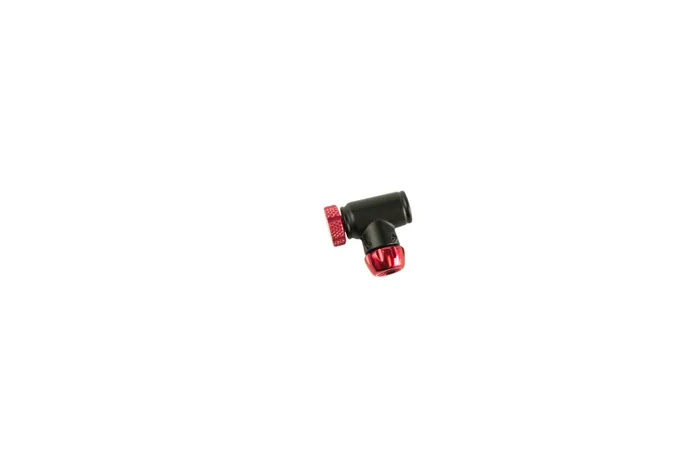
A CO2 inflator is the fastest way to reinflate a tyre by the roadside and the easiest small tool to buy badly. The vocabulary is short: threaded and non-threaded cartridges, gram sizes, regulated and unregulated heads, and one property of the gas itself that surprises people the first time. Learn those and the shortlist takes a minute.
The 30-second version
- Regulation is the product, because an unmetered cartridge empties in about two seconds.
- CO2 leaks out of tyres fast, so reinflate with a floor pump at home within a day or two.
- Cartridge size follows tyre volume, 16 grams for road, 20 or 25 for gravel and mountain.
- Threaded and non-threaded are different, and only some heads accept both.
- Carry two cartridges, because one bad valve seal loses most of the first.
The products this guide is about
Our verdict on each, with the full reasoning on the companion review.
- Buy SILCA EOLO IV CO2 Regulator All metal, properly regulated, and built by the company that invented the regulated inflator.
- Buy Genuine Innovations Ultraflate Trigger-controlled, cartridge-agnostic, and the only one here with a lock against accidental discharge.
- It depends Prestacycle Prestaflator Micro A CO2 head, a pump and a compressor adapter in one kit, with the cartridge itself as the flow knob.
- Skip Portland Design Works Cloud Cap CO2 Inflator A genuinely nice all-metal inflator, and CO2 only when the same maker sells a pump and CO2 in one tool.
What actually matters
- Flow control - the mechanism that meters gas out of the cartridge, whether a dial, a trigger, a lever or the cartridge itself. Without it the whole cartridge discharges at once and overshooting or wasting it is almost guaranteed.
- Cartridge thread - threaded cartridges screw into the head and are the bike-shop standard; non-threaded ones are pierced and sealed by the head and are cheaper and more widely stocked. Heads are usually built for one or the other.
- Cartridge size - 16, 20 and 25 grams. A 16 gram cartridge fills a road tyre to riding pressure; a wide gravel or mountain tyre needs 20 or 25.
- Body material - metal bodies handle the cold and the knocks; reinforced nylon is lighter and cheaper and is the common alternative, usually with brass internals where the sealing happens.
- Discharge lock - anything that prevents the head firing accidentally in a bag. A trigger lock or a lever that flips into a locked position are the two implementations here.
- Head type - a threaded head screws onto the valve for a sealed connection with no loss; a cupped or push-on head is faster to fit and can leak if it is not square.
- Backup - whether the tool also pumps. A combined pump and CO2 head means running out of cartridges slows you down instead of stopping you.
The specs, in plain English
Green flags vs red flags
Green flags
- The flow control mechanism is named, not just implied.
- Cartridge sizes and thread types are listed explicitly.
- A lock or locked storage position is described.
- The body material is named rather than called durable.
- An insulating sleeve is included or mentioned.
Red flags
- No mention of how flow is controlled.
- Cartridge compatibility given only as CO2 cartridges with no sizes.
- A head sold with no reference to Presta or Schrader fitment.
- Plastic body marketed as lightweight with no material named.
- No warning anywhere about the cartridge getting cold in use.
Who's who: the brands
- SILCA - Built the first regulated CO2 inflator in 1982 and still makes the EOLO line entirely from aluminium and stainless steel.
- Genuine Innovations - The mainstream CO2 specialist, with the Ultraflate, AirChuck, Microflate Nano and HammerHead heads and its own cartridges.
- Prestacycle - Known for the Prestaflator line, which combines CO2 heads with pumps and compressor adapters in one kit.
- Portland Design Works - City and classic bike accessories, including the all-metal Cloud Cap CO2 head and the Airforge Mini pump and CO2 combination.
- Topeak - Long-running tool and pump brand whose compact aluminium CO2 heads are widely stocked alongside its mini pumps.
How to read a listing without getting fooled
Look for the control mechanism in the first line of the description, because an inflator that does not say how it meters flow probably does not. Then check the cartridge list, and read both the thread type and the gram sizes: a head that only takes threaded 16 gram cartridges is fine for a road bike and not enough for a 2.4 inch mountain tyre. Look for a lock or a locked storage position, which is the difference between finding a full cartridge and an empty one. Check the body material, and treat all metal as a claim worth having on a tool that gets to freezing in use. Finally, decide whether you want a head or a kit, because that is really a question about what you do when the second cartridge is gone, and the honest answer for most people is that a small pump somewhere in the bag is what turns CO2 from a lifeline into a convenience.
How much should you spend?
CO2 inflators run from budget to premium and the useful range is narrow. The budget tier buys a reinforced nylon head with a trigger, a lock and broad cartridge compatibility, which is genuinely all most riders need and is the sensible default. The mid-range buys either an all-metal body with nicer detailing or a combination kit that adds a pump and a compressor adapter, and the kit is the better value of the two if you ride far from home. The premium tier buys precision machining, an all-metal construction with no plastic and a hardened pin, which is a durability purchase rather than a performance one: it inflates the same tyre to the same pressure. Budget for cartridges as a recurring cost, and buy them in multiples, because carrying one is the most common mistake in this category.
Questions, answered
Is CO2 bad for inner tubes?
Not harmful, but it leaves quickly. CO2 permeates through butyl and especially latex far faster than air, so a tube inflated with CO2 will be noticeably soft within a day. There is no damage to the tube itself. The routine is to ride home on the CO2, then deflate and refill with a floor pump. Latex tubes lose it fastest of all, so if you run latex, treat CO2 strictly as a get-home measure.
How much pressure does one cartridge give?
It depends entirely on tyre volume. A 16 gram cartridge will take a 700x25 road tyre to something in the region of riding pressure, the same cartridge in a 29 by 2.4 mountain tyre will produce a fraction of that. This is why 20 and 25 gram cartridges exist. If you ride wide tyres, size up, and if you ride tubeless and might need to seat a bead, carry more gas than you think.
Why did my inflator freeze to my hand?
Expanding gas cools sharply, and a discharging cartridge drops well below freezing within seconds. It is normal physics rather than a fault, and it is the reason inflators are sold with neoprene or leather sleeves and why you should never hold the bare cartridge through a full discharge. Metering the flow more slowly reduces it, which is another practical argument for a regulated head over one that dumps the whole cartridge.
Should I carry a pump as well?
If you ride far from home, yes. CO2 is faster and lighter, but it is a consumable with no margin: two cartridges is two attempts. A mini pump has no consumables and will always get you moving, slowly. The compromise several makers offer is a combined tool with a pump and a CO2 head in one body, which is the reasoning behind Prestacycle's Prestaflator Micro kit and PDW's Airforge Mini.
Or jump to the head-to-head: SILCA EOLO IV CO2 Regulator vs Genuine Innovations Ultraflate.