Explained
Commuter Bike Helmets, Explained
After reading, you will understand what rotational protection, safety ratings, and e-bike certification mean, and how to choose a commuter helmet that protects you and that you will actually wear.
In this guide
A commuter helmet is judged on one thing above all: how well it protects your head in a real-world traffic fall. Yet most listings sell you on looks, lights, and vent counts, which makes it hard to tell a genuinely safe lid from a stylish one that cuts corners. This guide decodes the terms so you can see past the marketing and buy protection first.
The 30-second version
- Protection comes first. Rotational-impact management (a MIPS liner or equivalent) matters more than looks, weight, or vent count, and it is the one thing you should never trade away.
- A helmet you leave at home protects nobody. Comfort, fit, and a look you like are safety features too, because they decide whether you actually wear it every ride.
- "E-bike rated" is a specific claim. The NTA-8776 standard tests for higher-speed impacts, so it matters if you ride a fast e-bike but is optional on a slow pedal commute.
- Lights and extras are convenience, not protection. A built-in rear light is handy, but many are be-seen brightness only, and some helmets sell the light separately.
- Helmets expire. Replace after any impact and roughly every five years, because the protective foam and straps degrade whether or not you have crashed.
The products this guide is about
Our verdict on each, with the full reasoning on the companion review.
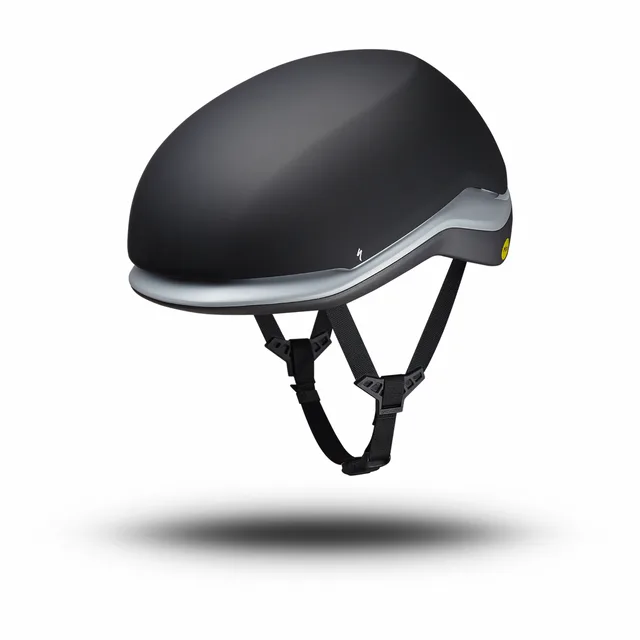
- Buy Specialized Mode MIPS The rare urban helmet that scores like a race lid in independent safety testing - without the race-lid price.
- Buy Bern Hudson MIPS A do-everything commuter helmet with a built-in rear light and an e-bike-grade safety rating to match.
- It depends Thousand Chapter MIPS The famously good-looking commuter helmet - genuinely comfy and MIPS-equipped, but you pay a premium for the style.
- Skip Thousand Heritage 2.0 Beautiful vintage looks, but it leaves out the rotational (MIPS) protection that its own sibling includes.
What actually matters
- Rotational-impact protection (a MIPS liner or equivalent) manages the twisting forces of an angled fall, the kind most common in traffic, and is the single most important feature.
- Independent safety rating tells you how a helmet performed in impact testing done by someone other than the maker, cutting through marketing claims.
- Fit and retention determine whether the helmet stays in place and does its job; a dial adjuster and, for unusual head shapes, multiple headform options widen the range of who it fits well.
- Ventilation versus coverage is a trade-off: more vents ride cooler but expose more shell, while a smoother, closed-in shell runs warmer with deeper protection.
- Lighting for visibility can be built in or mounted separately; decide whether you want it in the box and whether you need to be seen or to see the road ahead.
- Weight and commuter extras such as visors, lock-through features, and low weight affect all-day comfort and everyday practicality.
- E-bike certification (NTA-8776) matters only if you ride a faster e-bike, where crashes happen at speeds ordinary helmet tests do not cover.
The specs, in plain English
Green flags vs red flags
Green flags
- Rotational-impact protection (MIPS or equivalent) is clearly listed as standard, not an upsell trim.
- A strong independent safety rating backs up the maker's claims.
- A dial retention system and multiple size or headform options are offered for a secure fit.
- The helmet states which standards it meets (CPSC, and NTA-8776 if you need e-bike protection).
- Any built-in light has a stated brightness and is included, not a separate purchase.
Red flags
- No rotational-impact protection, or MIPS only on a pricier trim while the one you are viewing omits it.
- The listing sells hard on looks and vintage styling but is vague about safety features.
- "E-bike rated" or "safety tested" claims with no named standard or independent verification.
- A light is advertised prominently but turns out to be dim or an optional add-on.
- A single one-size shell with only a basic strap, offering little real fit adjustment.
Who's who: the brands
- Specialized - A major cycling brand whose urban helmets pair top independent safety scores with clean, low-profile shapes.
- Bern - Known for skate-inspired commuter lids that bundle lights, visors, and higher-speed e-bike ratings in one package.
- Thousand - A style-led brand famous for retro good looks and clever lock-through features, offered with and without MIPS depending on the model.
- Giro - A long-established helmet maker with a broad range spanning road, commuter, and everyday urban designs.
- Lazer - A heritage helmet brand offering well-ventilated commuter and urban models with a range of retention systems.
How to read a listing without getting fooled
Start at the safety section of the listing, not the photos. Confirm the exact model in front of you includes rotational-impact protection, because near-identical-looking siblings often differ: one carries MIPS and the other quietly drops it while keeping the same looks and a similar price. Next, look for a named safety standard (CPSC as a baseline, NTA-8776 if you ride a fast e-bike) and, ideally, an independent test score rather than the brand's own adjectives. Treat "integrated light" with skepticism until you find its brightness and confirm it is included rather than sold separately. Finally, match the stated size range and head-shape options to your own measured head, since a helmet that does not fit securely cannot protect you no matter how well it scores.
How much should you spend?
Spend enough to guarantee genuine rotational-impact protection and a solid safety rating, because that is where your money does real work. Entry-level lids that meet only the basic certification will keep you legal, but the step up to a MIPS-equipped, well-rated helmet is the most worthwhile upgrade you can make. Beyond that point, extra cost tends to buy styling, lighter weight, integrated lights, and lock-through cleverness rather than more protection, so paying a premium is reasonable only if those conveniences will make you wear the helmet more often. The poorest value is a helmet priced like a safe one that has skipped rotational protection to fund its looks; you are paying for style and getting less safety.
Questions, answered
Do I really need MIPS for commuting?
For most riders, yes. City falls are usually angled rather than straight-on, and rotational-impact protection like MIPS is designed for exactly that. If you ride daily or on an e-bike, treat it as non-negotiable rather than an optional upgrade.
What does "e-bike rated" actually mean?
It refers to the NTA-8776 standard, which tests impacts at higher speeds than an ordinary bike helmet certification. It matters if you ride a faster e-bike; for a slow pedal commute, a well-rated standard bike helmet is enough.
Does a built-in light make a helmet safer?
It helps you be seen, which is valuable in traffic, but it is a visibility convenience, not impact protection. Check the brightness, because many built-in lights are be-seen only, and confirm the light is actually included rather than a separate purchase.
How often should I replace a commuter helmet?
Replace it immediately after any crash or hard impact, even without visible cracks, because the protective foam compresses only once. Absent a crash, most makers suggest replacement roughly every five years as the materials and straps age, and you should never buy a used helmet whose history you cannot see.
Is this guide enough to guarantee a safe helmet?
This is general educational information, not a safety certification for any specific product or rider. Always confirm the helmet fits your head correctly and sits level, and check that it carries a current, valid safety certification before you rely on it. When in doubt, have fit checked in person at a bike shop.
Or jump to the head-to-head: Specialized Mode MIPS vs Bern Hudson MIPS.