Explained
Bike Shoe Covers, Explained
After reading, you'll understand how shoe cover materials and ratings differ, and which type suits the weather you ride in.
In this guide
Most first-time buyers pick shoe covers by looks or price and find out on the first frosty ride that thin covers do little below about 5°C. The labels do not help: waterproof, water resistant and windproof mean different things, and makers rarely publish temperature ranges. Sizing is another trap, because covers fit over the cycling shoe, not your foot. This guide explains the materials, the ratings and the fit questions that matter.
The 30-second version
- Wind is the main enemy, because road shoes are built to vent and air pours in at speed.
- Insulation matters near freezing, so look for fleece, PrimaLoft or lined neoprene, not just a windproof shell.
- Water resistant is not waterproof, and the cleat and heel openings let some water in on any cover.
- Check the maker's temperature range, which some brands publish and which says more than marketing words.
- Size to your cycling shoe, and check the sole type if you ride lugged MTB shoes.
The products this guide is about
Our verdict on each, with the full reasoning on the companion review.
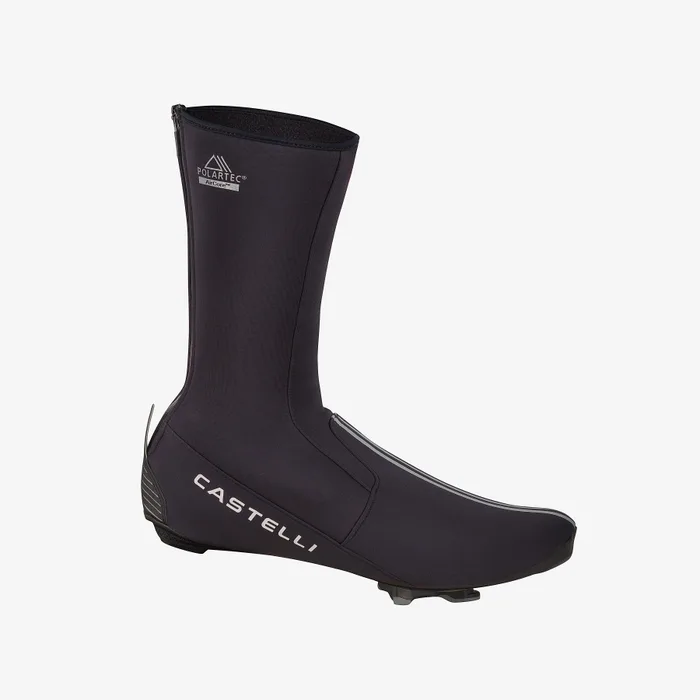
- Buy Castelli Estremo 2 Shoecover Castelli's warmest shoe cover, with a windproof AirCore shell, a second fleece layer and a tall zipped cuff.
- Buy Pearl Izumi AmFIB Shoe Covers An insulated softshell cover with 100 g PrimaLoft Gold, an easy hook-and-loop closure and a listed fit for road, gravel and MTB.
- It depends Rapha Winter Overshoes A fleece-lined neoprene overshoe built for wet, near-freezing road rides, with a published -1 to 7°C (30 to 44°F) range.
- Skip VeloToze Tall Shoe Covers Road 2.0 A thin latex aero and rain cover that is often bought for winter but has no insulation and a published range of 5 to 19°C.
What actually matters
- Wind protection - Road shoes have mesh panels and vents, so cold air reaches your toes quickly at speed. A windproof outer stops most of that heat loss.
- Insulation - Below about 5°C, a windproof layer alone is not enough. Fleece linings, synthetic insulation like PrimaLoft, or lined neoprene hold warmth.
- Water handling - Most covers resist light rain and spray rather than keeping out a downpour. Neoprene and latex shed water best; softshells breathe better.
- Breathability - Feet sweat inside a sealed cover, and damp feet get cold. Softshells and fleece-backed fabrics let more moisture escape than rubber.
- Closure - Zippers seal well but can be fiddly with gloves. Hook-and-loop is quick; pull-on covers usually go on before the shoe.
- Underfoot durability - Walking to the cafe grinds the sole of a cover. Reinforced or abrasion-resistant undersides last longer.
- Fit and sizing - A loose cover flaps and lets air in; a tight one can tear. Size to your cycling shoe using the maker's chart.
The specs, in plain English
Green flags vs red flags
Green flags
- A published temperature range for the cover
- An insulating layer named on the spec sheet, such as fleece or PrimaLoft
- A reinforced or abrasion-resistant panel underfoot
- Reflective details for winter's short days
- A size chart tied to shoe size, not just S, M, L
Red flags
- Winter marketing on a cover with no insulation listed
- Waterproof claims with no detail about seams or materials
- Warnings that the cover tears if fitted the wrong way
- Only one or two sizes for a wide range of shoe sizes
- No information on care or materials
Who's who: the brands
- Castelli - Italian road clothing maker known for winter and rain kit, including its AirCore and Estremo lines.
- Pearl Izumi - Long-running cycling apparel brand whose AmFIB range covers cold-weather gloves, tights and shoe covers.
- Rapha - Premium road clothing brand that publishes temperature ranges and performance scores on its product pages.
- VeloToze - Specialist in thin latex and silicone shoe covers aimed at rain protection and aero gains.
How to read a listing without getting fooled
Start with the material list and look for two things: a windproof outer and a named insulating layer. If the listing only mentions a windproof or water-resistant shell, treat it as an autumn or rain cover. Next, look for a temperature range; when a maker publishes one, it is the most useful number on the page. Then read the water claim carefully and check whether the brand says light rain, water resistant or waterproof. Finally, check the size chart against your cycling shoe size, the listed riding type for your sole, and the care instructions, since neoprene usually needs hand washing.
How much should you spend?
Budget covers are mostly thin Lycra or latex and are best for rain or mild weather. Mid-range covers add real insulation, such as PrimaLoft or fleece, and are the sweet spot for most winter riders. Premium covers add layered insulation, better zippers, reinforced soles and taller cuffs, and they make the most sense if you ride through the coldest months every year. Spending more buys warmth and durability, not total waterproofing.
Questions, answered
Should shoe covers go on before or after my shoes?
It depends on the design. Zipped and hook-and-loop covers usually go on after the shoe. Latex and many neoprene covers go on first, then the shoe; VeloToze warns its covers may tear otherwise and Rapha gives the same order for its Winter Overshoes. Check the maker's instructions.
Do shoe covers make your feet sweat?
They can, especially rubber and neoprene covers that breathe less. Softshell and fleece-backed fabrics let more moisture escape. A thin wool sock helps manage sweat in any cover.
Are toe covers enough for winter?
Usually not. Toe covers protect the front of the shoe from wind, which helps on cool mornings. Once temperatures drop toward freezing, a full insulated cover keeps much more heat in.
How do I wash shoe covers?
Follow the label, because materials differ. Rapha says to rinse its neoprene overshoes after each use and hand wash only. Pearl Izumi recommends simple detergents with no softeners or additives. Close hook-and-loop tabs before washing and air dry away from heat.
Or jump to the head-to-head: Castelli Estremo 2 Shoecover vs Pearl Izumi AmFIB Shoe Covers.