Explained
Bike Chain Cleaners, Explained
After reading, you'll know which design features matter, how much degreaser you should need, and how to clean a chain without leaving it dry.
In this guide
A clip-on chain cleaner is a reservoir of degreaser with brush wheels in it. You close it around the chain, turn the pedals backwards, and the chain is dragged through the fluid and past the brushes. Everything that separates a good one from a poor one happens in the few centimetres between the reservoir and the point where the chain leaves the box.
The 30-second version
- Dirty fluid handling is the real differentiator, since a machine with no answer recirculates its own waste.
- Contact points and angles matter more than brush count, because dirt hides in the rollers and inner plates.
- Check the stated speed compatibility, as chains have narrowed with every added gear.
- The brush wheels are the consumable, so a published spare part number decides whether the tool lasts.
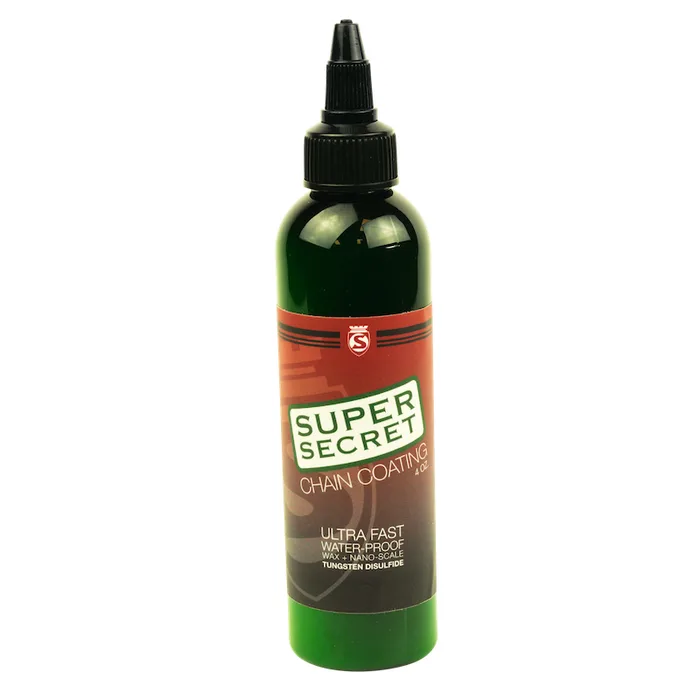
- Always relubricate immediately afterwards, because a degreased chain has nothing left in the rollers.
The products this guide is about
Our verdict on each, with the full reasoning on the companion review.
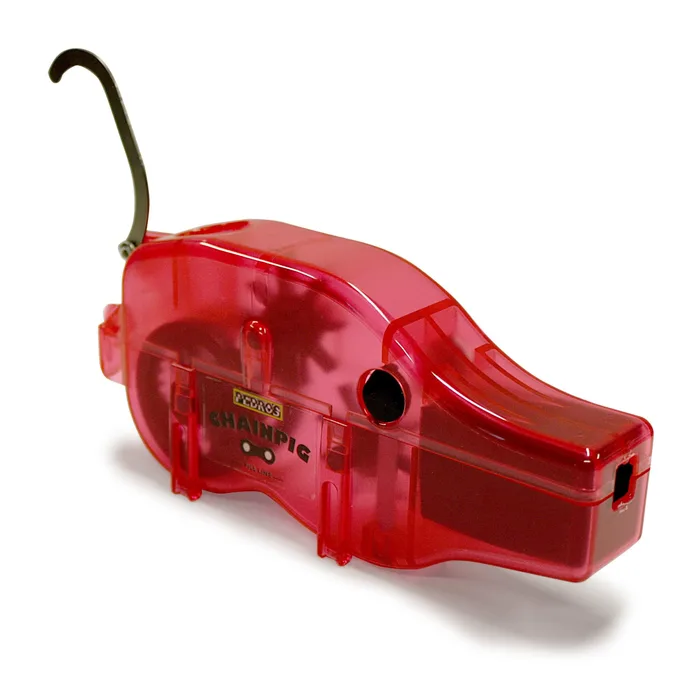
- Buy Pedro's Chain Pig II The only one that filters the degreaser as it goes, and the only one you can rebuild.
- Buy Park Tool CM-5.3 Cyclone Chain Scrubber The broadest compatibility, a magnet in the body, and replacement brushes on the shelf.
- It depends Muc-Off X-3 Dirty Chain Machine 120 contact points, a dirty-fluid reservoir kept separate, and degreaser in the box.
- Skip Weldtite Chain Cleaning Machine The original design, hand-made in the UK, and described in three sentences.
What actually matters
- Brush arrangement - how many wheels, at what angles, and whether abrasive teeth or scrubber pads supplement them. The aim is contacting the rollers, the inner plates and both outer faces in one pass.
- Dirty fluid separation - a filtering sponge, a second reservoir or a magnet. Without one, the last half of the cycle reapplies suspended grit and metal.
- Degreaser volume - how much fluid a cycle needs. A design that works on one fluid ounce is markedly cheaper to run than one that wants a full reservoir.
- Derailleur hook - a hook that rests against the derailleur cage so the machine holds itself in place, which is what makes hands-free operation possible.
- Speed compatibility - the range of drivetrain speeds the machine fits, which matters because chains are narrower at 12 and 13 speed than at 8.
- Build materials - chemical and impact-resistant plastics for the body, and stainless steel for any hardware exposed to degreaser.
- Spare parts - whether replacement brush wheels or a rebuild kit exists, since the brushes wear long before the body does.
The specs, in plain English
Green flags vs red flags
Green flags
- A published contact point figure or a described cleaning sequence.
- An explicit answer to what happens to the dirty degreaser.
- A stated drivetrain speed compatibility range.
- A stated degreaser volume per cycle.
- Replacement brush wheels or a rebuild kit on sale.
Red flags
- Brushes mentioned with no count, angle or arrangement.
- Nothing on the page about used fluid.
- No compatibility statement of any kind.
- A lifetime-style claim with no warranty terms.
- No spare parts offered for a tool with wearing parts.
Who's who: the brands
- Pedro's - American bike tool maker whose Chain Pig line pairs a filtering sponge stage with stainless hardware and a published rebuild kit.
- Park Tool - The workshop standard for bike tools, whose CM-5.3 Cyclone carries a magnet in the body and replacement brushes and sponge sold as part RBS-5.
- Muc-Off - UK bike care brand whose X-3 Dirty Chain Machine publishes a 120 contact point figure and uses separate clean and dirty reservoirs.
- Weldtite - Long-established UK bike care company that describes its Chain Cleaning Machine as the original patented design, hand-made in the UK.
- Finish Line - American lubricant brand whose Pro Chain Cleaner is a long-standing budget option, sold alongside its own citrus and bio degreasers.
How to read a listing without getting fooled
Look for the answer to the dirty fluid question first, because it is the design problem specific to this product and the makers who have solved it say so. A filtering sponge, a separate lower reservoir or a magnet all count; silence does not. Then look for a contact point figure or a described sequence of stages rather than the word brushes, since that is the difference between a specification and an adjective. Check the stated speed compatibility against your drivetrain and treat an absent range as a warning on an older design. Find out how much degreaser a cycle needs, because that is the running cost. Then check whether the maker sells replacement brush wheels, which tells you whether they expect the tool to outlast its bristles. Finally note whether degreaser is included, which changes the real price of the cheaper options considerably.
How much should you spend?
Chain cleaners are inexpensive and the spread between them is small in absolute terms, which makes this a category where buying the better one is easy to justify. The budget end buys a working machine, sometimes with a small bottle of degreaser included, and on an older drivetrain that is genuinely enough. The mid-range buys the designs that manage the dirty fluid properly, publish their compatibility and, in one case, sell the parts to rebuild them, and over several years that is both cheaper and less wasteful than replacing a cheap one twice. Whichever you buy, budget for degreaser separately and prefer a concentrate or a large bottle, because the machine is the one-off and the fluid is the ongoing cost. A 75ml sachet in the box is a sample, not a supply.
Questions, answered
Do I need to take the chain off?
No, and not needing to is the point of these tools. A clip-on cleaner closes around the chain in situ and you turn the pedals backwards to run the chain through it. Removing a chain to soak it is more thorough and is what some workshops do before fitting a new one, but on a modern drivetrain it means breaking a quick link repeatedly, and quick links are generally not rated for unlimited reuse. For routine cleaning, leave the chain on.
How do I dry the chain afterwards?
Rinse it, then run it through a clean dry rag while backpedalling, then leave it a few minutes before lubricating. Water sitting in the rollers of a freshly degreased chain causes surface rust very quickly, and a chain that has been degreased has no protective film left at all. Some people use compressed air; a rag and a short wait is enough. Do not leave the bike overnight between degreasing and lubricating.
What do I do with the used degreaser?
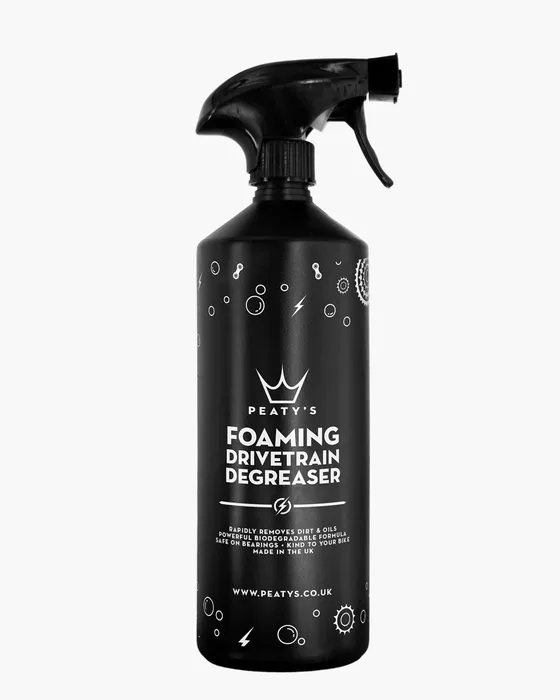
Not down a storm drain. Even where the degreaser itself is biodegradable, what you pour out is carrying dissolved chain lube, road grit and metal particles, and that is the part that should not reach a watercourse. Muc-Off says its Drivetrain Cleaner can go down the drain if you have been using one of its bio chain lubes, which is a specific condition rather than a general permission. Otherwise, let the solids settle, decant, and dispose of it as you would waste oil, or check your local rules.
How often should I use one?
Less often than you might think. A full degrease strips the lubricant from inside the rollers as well as the grime from outside, and a chain relubricated from completely dry wears faster than one that is simply wiped and topped up. For most riders, wiping after each ride and running the machine when the chain is visibly black or feels gritty is right. Wet winter riding pushes that to every few weeks; dry summer riding considerably less.
Or jump to the head-to-head: Pedro's Chain Pig II vs Park Tool CM-5.3 Cyclone Chain Scrubber.