

Outdoors & Fitness
The Best Bike Chain Cleaners: 4 Compared (and One to Skip)
We compared four clip-on chain cleaning machines on brush design and contact points, how they handle dirty fluid, drivetrain speed compatibility, how much degreaser they need and whether spare parts exist.
The short version
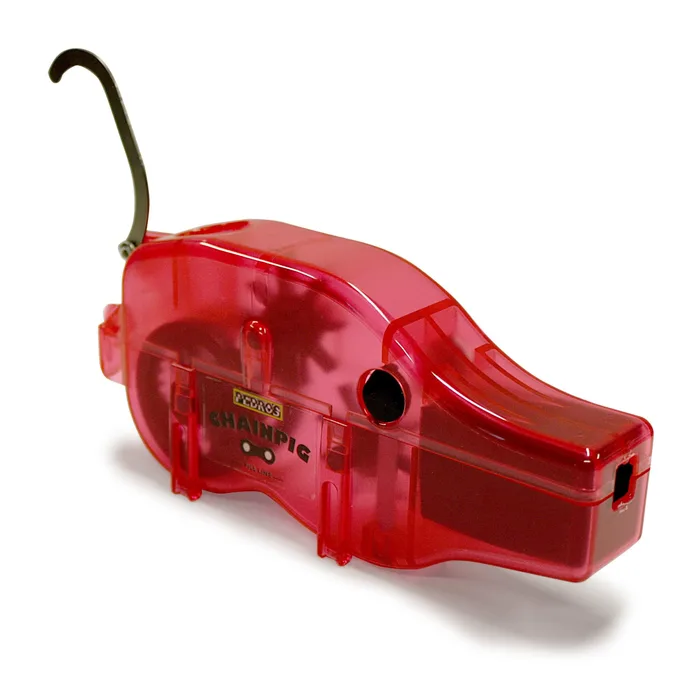
The Pedro's Chain Pig II is the one to buy: brush wheels with larger-diameter bristles chosen for stiffness, stainless steel button arms, a quick-lock closure and a drag-free derailleur hook for genuine hands-free use, and a large sponge that wicks contaminated fluid off the chain, filters the larger contaminants and returns usable degreaser to the reservoir. It works on 1 to 13 speed chains, needs only 1 fluid ounce of degreaser, and Pedro's publishes a tool diagram, a user manual and a Pig Guts rebuild kit so it is repairable. The Park Tool CM-5.3 Cyclone is the value pick, with a magnet in the body to pull out metal particles, replacement brushes and sponge sold as part RBS-5, a 59ml capacity and the only stated compatibility with single-speed chains and with centre and rear drive e-bikes. The Muc-Off X-3 Dirty Chain Machine claims 120 contact points and separates dirty fluid into a second lower reservoir, with 75ml of biodegradable Drivetrain Cleaner in the box, but sells no spare parts. The Weldtite Chain Cleaning Machine is the one to skip, not because it is bad but because Weldtite publishes no brush count, no compatibility and no spare parts while calling it the last chain cleaning machine you will ever need. Best for: anyone whose chain is black and who does not want to spend twenty minutes with a brush.
Our picks at a glance
- Pedro's Chain Pig II - Buy. The only one that filters the degreaser as it goes, and the only one you can rebuild.
- Park Tool CM-5.3 Cyclone Chain Scrubber - Buy. The broadest compatibility, a magnet in the body, and replacement brushes on the shelf.
- Muc-Off X-3 Dirty Chain Machine - It depends. 120 contact points, a dirty-fluid reservoir kept separate, and degreaser in the box.
- Weldtite Chain Cleaning Machine - Skip. The original design, hand-made in the UK, and described in three sentences.
The verdict in 30 seconds
What mattered most
- Cleaning mechanism
- Contact points published
- Dirty fluid handling
- Speed compatibility
- Degreaser included
- Solvent capacity
A chain cleaner is a plastic box with brushes in it, which makes it sound like a product where nothing can differ. In fact the designs diverge on three things that decide whether the chain comes out clean: how many surfaces contact each link and from what angles, what happens to the filthy degreaser once it has done its work, and how much fluid the thing needs in the first place. Get the second one wrong and the machine spends the last half of the job painting recycled grime back onto a chain you just cleaned. Three of these four have an answer. One of them will not tell you what is inside it.
The only one that filters the degreaser as it goes, and the only one you can rebuild.
Best for: Regular drivetrain maintenance where you want the tool to last and the degreaser to go further.
- A staged system: the first brushes pull degreaser up from the reservoir onto the chain, the chain is then scrubbed from all angles, and a large sponge wicks contaminated fluid off it, filters the larger contaminants and returns usable degreaser for more cleaning.
- Stainless steel button arms, chemical and impact-resistant plastic bodies, larger-diameter brush bristles chosen for stiffness, a quick-lock closure and a drag-free derailleur hook for true hands-free operation at high run speeds.
- Stated compatibility with 1 to 13 speed chains, a requirement of only 1 fluid ounce of degreaser, and a published tool diagram, user manual and Pig Guts rebuild kit so worn parts can be replaced.
- No degreaser is included, unlike two of the others here.
- Pedro's notes that single-speed use may require modified setup and technique because of the missing derailleur.
- No dimensions or weight are published.
- It is the most expensive of the four.
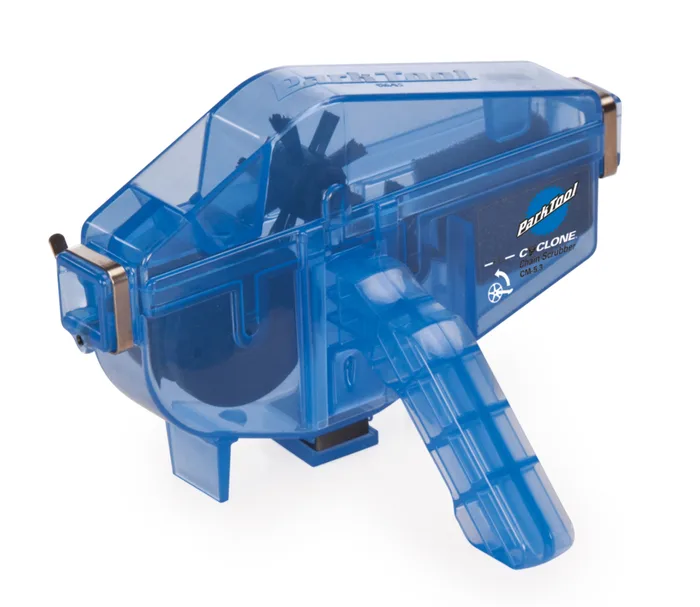
The broadest compatibility, a magnet in the body, and replacement brushes on the shelf.
Best for: Single-speed bikes and e-bikes, and anyone who wants a tool they can buy spare brushes for locally.
- Compatible with all multi and single-speed chains, and with both centre-drive and rear-drive e-bikes, which is the widest stated compatibility here.
- A magnet built into the body pulls the metal particles a worn chain sheds out of the solvent, and Park Tool notes it does not normally need removing.
- Replaceable brushes and sponge sold as part number RBS-5, a stated 59ml capacity, and published handling instructions covering which solvents not to use and not to store fluid in the body.
- It holds 59ml of solvent against the Chain Pig II's single fluid ounce, so it costs more per clean to run.
- No solvent is included, and Park Tool recommends its own CB-4 ChainBrite for best results.
- Nothing on the page describes a filtering or separating stage for used fluid beyond the magnet.
- Park Tool warns you must hold the body straight with the chain while pedalling or the chain can come off the sprockets, so it is not fully hands-free.
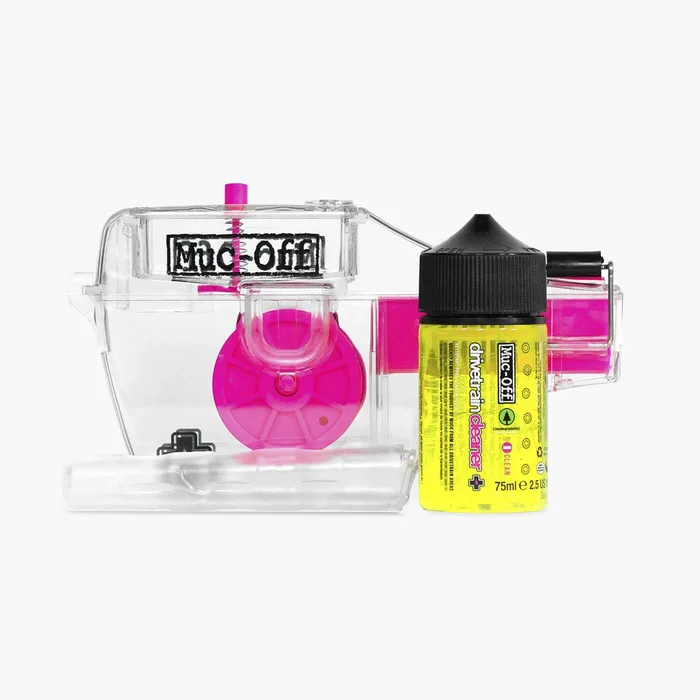
120 contact points, a dirty-fluid reservoir kept separate, and degreaser in the box.
Best for: Someone who wants a complete out-of-the-box setup and the most contact points per link.
- Abrasive cleaning teeth combined with rotating brush wheels giving 120 contact points, covering all surfaces of each individual chain link.
- A two-reservoir design: degreaser is released from the top reservoir by a control button, and excess dirty fluid drops into a second lower reservoir so it stays away from the clean chain.
- Includes a 75ml refillable measure of Muc-Off Drivetrain Cleaner, which is fully biodegradable and which Muc-Off says can be disposed of down the drain if you have been using one of its bio chain lubes.
- Not compatible with BMX or track chains, which Muc-Off states outright.
- No drivetrain speed compatibility range is published, unlike the Pedro's.
- No replacement brush wheels or rebuild kit is offered, so a worn machine is waste.
- Patent pending is still the claim, and no dimensions, weight or materials are published.
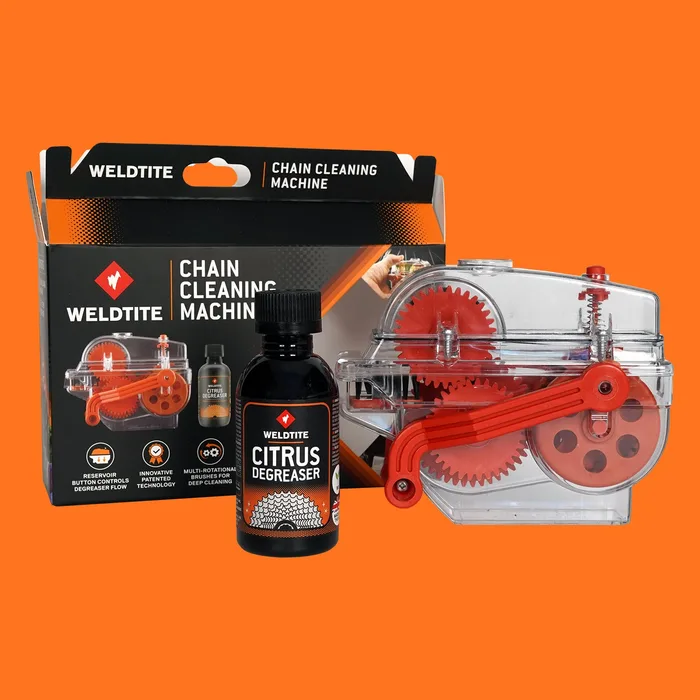
The original design, hand-made in the UK, and described in three sentences.
Best for: A basic setup at the lowest price with degreaser included, on an older drivetrain.
- Weldtite describes it as the original patented chain cleaning machine, and the design has been on sale a very long time.
- Hand-made in the UK, which none of the other three claims for their own product.
- Includes 75ml of Weldtite Citrus Degreaser, which is biodegradable, so it works from the moment you open it.
- Weldtite publishes no brush count, no contact points, no materials, no dimensions and no weight.
- No drivetrain speed compatibility is stated, which matters as cog spacing narrows on 12 and 13 speed chains.
- Nothing on the page describes what happens to the dirty fluid, which is the design problem the other three explicitly solve.
- It is called the last chain cleaning machine you will ever need, with no warranty terms and no spare parts published.
| Criteria | Chain Pig II Top pick | CM-5.3 Cyclone Chain Scrubber | X-3 Dirty Chain Machine | Chain Cleaning Machine |
|---|---|---|---|---|
| Verdict | Buy it | Buy it | It depends | Skip it |
| Best for | Regular drivetrain maintenance where you want the tool to last and the degreaser to go further. | Single-speed bikes and e-bikes, and anyone who wants a tool they can buy spare brushes for locally. | Someone who wants a complete out-of-the-box setup and the most contact points per link. | A basic setup at the lowest price with degreaser included, on an older drivetrain. |
| Price tier | $$ · mid-range | $ · budget | $$ · mid-range | $ · budget |
| Cleaning mechanism | Staged brushes plus filtering sponge | Brushes with a magnet in the body | Abrasive teeth and rotating brush wheels | Brushes at varying angles |
| Contact points published | Not as a number | Not as a number | 120 | Not published |
| Dirty fluid handling | Sponge filters and returns usable fluid | Built-in magnet for metal particles | Separate lower reservoir | Not published |
| Speed compatibility | 1 to 13 speed | All multi and single-speed, plus e-bikes | Not published, no BMX or track | Not published |
| Degreaser included | No | No | 75 ml Drivetrain Cleaner | 75 ml Citrus Degreaser |
| Solvent capacity | 1 fl oz required | 59 ml / 2 fl oz | Not published | Not published |
| Hands-free | Yes, drag-free derailleur hook | No, body must be held straight | Not stated | Yes, stated |
| Spare parts | Pig Guts rebuild kit | Brushes and sponge, part RBS-5 | None offered | None published |
| Documentation | Tool diagram and user manual | Use, solvent and disposal cautions | Description only | Description only |
Which one is right for you?
- Regular drivetrain maintenance where you want the tool to last and the degreaser to go further. Buy it Pedro's Chain Pig II
- Single-speed bikes and e-bikes, and anyone who wants a tool they can buy spare brushes for locally. Buy it Park Tool CM-5.3 Cyclone Chain Scrubber
- Someone who wants a complete out-of-the-box setup and the most contact points per link. It depends Muc-Off X-3 Dirty Chain Machine
- A basic setup at the lowest price with degreaser included, on an older drivetrain. Skip it Weldtite Chain Cleaning Machine
How we judged the field
The first question is how the machine contacts the chain. A chain link has inner plates, outer plates, rollers and pins, and dirt collects in all of them, so a cleaner that presents brushes from one or two angles leaves half the job undone. Muc-Off is the only maker here that quantifies this, claiming 120 contact points from abrasive teeth combined with rotating brush wheels, and Pedro’s describes a staged sequence rather than a count. That is the useful information, and it is the part most makers leave out.
The second question, and the one that separates a good cleaner from a mediocre one, is what happens to the degreaser once it is dirty. The fluid in the reservoir becomes a slurry of dissolved lube, grit and metal within seconds, and without some way of separating that out the machine is applying its own waste back onto the chain. Each of the three better designs answers it differently and each answer is visible on the product page. The third question is running cost: how much degreaser a cycle needs, whether any is included, and whether the brush wheels can be replaced when they wear, because these are consumable parts in an otherwise durable tool. Only one maker sells spares.
The Pedro’s Chain Pig II is the best-engineered cleaner here and it is the only one that treats the degreaser as something to be managed rather than used up. The sequence is described properly: stage one brushes pull degreaser up from the reservoir and onto the chain, the chain is then scrubbed from all angles by brush wheels with larger-diameter bristles chosen specifically for stiffness, and finally the chain is pulled through a large durable sponge that wicks off excess and contaminated fluid, wipes the chain, filters the larger contaminants and returns usable degreaser to the reservoir for another pass. That is why the whole job runs on a single fluid ounce. Around it, the build is serious: chemical and impact-resistant plastic upper and lower bodies, stainless steel button arms, a quick-lock closure and a drag-free derailleur hook that allows genuinely hands-free operation at high run speeds. Pedro’s states compatibility from 1 to 13 speed chains, publishes a tool diagram and a user manual, and sells a Pig Guts rebuild kit so worn brushes do not mean a new machine. The trade-offs are the price, no degreaser in the box, and Pedro’s own note that single-speed setups need modified technique.
The Park Tool CM-5.3 Cyclone is the workshop default and it earns that by being the least fussy about what you bolt it around. Park Tool states compatibility with all multi and single-speed chains and with both centre-drive and rear-drive e-bikes, which is the only unambiguous coverage statement in this group and the only one that addresses e-bikes at all. It holds 59ml, or 2 fluid ounces, of solvent, and Park Tool recommends its own CB-4 ChainBrite for best results. The feature that separates it is a magnet built into the body, which pulls the steel particles a worn chain sheds out of the solvent rather than letting them circulate as an abrasive paste, and Park Tool notes it does not normally need removing. Just as important, the brushes and sponge are a stock item, part number RBS-5, so a tired Cyclone is a two-minute rebuild rather than landfill. The published handling notes are genuinely useful too, covering which solvents not to use, not to store fluid in the body, and disposing of spent fluid responsibly. Two caveats: it needs twice the solvent per clean that the Chain Pig II does, and Park Tool tells you to hold the body straight with the chain while pedalling or the chain can come off the sprockets, which makes it less hands-free than it looks.
The Muc-Off X-3 Dirty Chain Machine is the most specific about its cleaning action and the most complete purchase. It combines abrasive cleaning teeth with rotating brush wheels to give what Muc-Off states as 120 contact points across each individual chain link, which is the only such figure published in this category and the kind of number that makes a comparison possible. The fluid handling is good too, and solved differently from the Pedro’s: degreaser sits in a top reservoir and is released by a control button so application is measured rather than poured, and the excess dirty fluid drops into a second lower reservoir, keeping it away from the clean chain instead of recirculating it. In the box is a 75ml refillable measure of Muc-Off Drivetrain Cleaner, fully biodegradable, which Muc-Off says can go down the drain if you have previously used one of its bio chain lubes. What is missing is durability information. There is no speed compatibility range, no materials, no dimensions, no weight, and critically no replacement brush wheels, so a worn X-3 becomes waste. Muc-Off also states it is not compatible with BMX or track chains.
The Weldtite Chain Cleaning Machine is the original of the type and the least described. Weldtite calls it the original patented chain cleaning machine and the last chain cleaning machine you will ever need, says it is hand-made in the UK, and explains that the placement and directions of travel of the cleaning brushes create the varying rotational forces required to remove dirt and grime, hands free. It includes 75ml of Weldtite Citrus Degreaser, which is biodegradable, so it works out of the box. That is the entire specification. There is no brush count, no contact point figure, no materials, no dimensions, no weight and no drivetrain compatibility, which matters because chain width has narrowed several times since this design first appeared. Nothing on the page addresses what happens to the dirty fluid, which is the central problem the other three each explicitly solve. And a product sold as the last one you will ever need carries no published warranty and no spare parts, where the Park Tool at similar money publishes a replacement part number. At the price it is a serviceable basic tool, and it is a skip because the alternatives tell you so much more for the same outlay.
Pedro’s Chain Pig II vs Park Tool CM-5.3 Cyclone Chain Scrubber: which should you buy?
Pedro’s against Park Tool is the real decision here, and it splits on running cost against compatibility. The Chain Pig II is the more sophisticated machine: its sponge stage wicks contaminated fluid off the chain, filters out the larger contaminants and returns the usable degreaser, which is why the whole job runs on a single fluid ounce rather than two. It has stainless hardware, a quick-lock closure, and a drag-free derailleur hook that makes hands-free operation genuinely hands-free at high run speeds, and Pedro’s publishes a tool diagram, a manual and a Pig Guts rebuild kit.
The Cyclone answers with the broadest compatibility in the category, all multi and single-speed chains plus centre and rear drive e-bikes, a magnet in the body that pulls shed steel out of the solvent, and replacement brushes and sponge stocked as part RBS-5 in every shop that carries Park Tool. It costs less, and Park Tool’s published cautions about solvents, storage and disposal are the most responsible documentation of the four. Buy the Chain Pig II if you clean a geared bike regularly and want the degreaser to go twice as far. Buy the Cyclone if you have a single-speed or an e-bike, if the drivetrain is worn enough to be shedding metal, or if you want spares you can pick up locally.
What to look for
- How the dirty fluid is handled: a filtering sponge, a separate reservoir or a magnet. Without one of these the machine recirculates its own waste.
- Contact points or a described sequence: a number or a staged explanation, rather than the word brushes.
- A stated speed compatibility range: chain width has narrowed repeatedly, and single-speed and e-bike support should be stated rather than assumed.
- How much solvent a cycle needs: one fluid ounce against two is a real running cost difference over a season.
- Whether spare brush wheels exist: the brushes are the consumable, and only two makers here sell replacements.
- A derailleur hook or hands-free claim: and read the cautions, because one maker here tells you to hold the body straight or the chain comes off.
Our final take
Chain cleaners look identical and are not, and the difference is in the half of the job nobody photographs: what the machine does with the degreaser once it is filthy. The Pedro’s Chain Pig II is the one to buy, because its sponge stage filters and returns the fluid rather than recirculating it, it runs on a single fluid ounce, it states compatibility from 1 to 13 speeds, and Pedro’s will sell you the parts to rebuild it. The Park Tool CM-5.3 Cyclone is the better value and the safer choice for a single-speed or an e-bike, with a magnet to catch shed steel and replacement brushes stocked as a part number. The Muc-Off X-3 claims the most contact points and separates its dirty fluid properly, and sells you nothing to repair it with. And a machine sold as the last one you will ever need, with no brush count, no compatibility and no spare parts, is asking to be taken on reputation alone.
Questions, answered
Is a chain cleaner better than just using a brush?
For the chain itself, considerably. A clip-on machine runs the chain through a bath of degreaser between brushes that reach the inner plates, the rollers and both sides at once, which a hand brush cannot do without a great deal of scrubbing. It also catches the runoff in the reservoir rather than on your driveway, and uses a fraction of the degreaser. What it does nothing for is the cassette, the chainrings, the derailleur cage and the jockey wheels, so most people use a machine for the chain and a shaped drivetrain brush for everything behind it.
Why does it matter what happens to the dirty degreaser?
Because a chain cleaner runs the same fluid past the chain over and over, and after the first few rotations that fluid is a suspension of dissolved lube, road grit and metal particles. If nothing separates it, the machine is polishing the chain with its own waste for the second half of the job. Each of the better designs solves this differently: Pedro's uses a sponge that wicks and filters and returns only the usable fluid, Muc-Off drops the dirty fluid into a separate lower reservoir, and Park Tool builds a magnet into the body to pull the metal out of it.
Will it work with my 12 speed drivetrain?
Probably, but check, because the answers differ. Pedro's states compatibility from 1 to 13 speed, which covers everything currently sold. Park Tool states all multi and single-speed chains plus centre-drive and rear-drive e-bikes, which is the broadest claim here. Muc-Off says the X-3 is not compatible with BMX or track chains but gives no speed range. Weldtite says nothing at all. Since chain width has narrowed steadily as speeds increased, a stated range is worth looking for, especially on an older design.
Can I use water instead of degreaser?
It will not do much. Chain grime is dissolved lubricant holding grit, and water does not dissolve lubricant, so all you achieve is wetting a dirty chain and then having to dry it before it flash-rusts. Use a bike-specific degreaser, ideally one the machine's maker recommends, and use it sparingly: the Chain Pig II is designed around a single fluid ounce. Rinse afterwards, dry the chain thoroughly, and relubricate immediately, because a degreased chain has nothing left in the rollers.
How do I clean the machine itself?
Empty it, rinse it out with water and let it dry open, and do that every time rather than leaving used solvent sitting in the reservoir. Park Tool says outright not to store cleaning fluid in the body. Dried grime in the brush wheels is what actually kills these things, because the bristles mat together and stop turning freely, so check they still spin by hand before each use. Pedro's and Park Tool both sell replacement parts, the Pig Guts kit and part RBS-5 respectively, which means a worn machine from either is repairable while the other two are not.
Deciding between the top two? See our head-to-head: Pedro's Chain Pig II vs Park Tool CM-5.3 Cyclone Chain Scrubber.
More Outdoors & Fitness reviews
 The Best Bike Chain Lubes: 4 Compared (and One to Skip)
  The Best Bike Cleaning Brushes: 4 Compared (and One to Skip)
  The Best GPS Bike Computers: 4 Compared (and One to Skip)
  The Best Bike Degreasers: 4 Compared (and One to Skip)
  The Best Bike Fenders: 4 Compared (and One to Skip)
  The Best Bike Floor Pumps: 4 Compared (and One to Skip)