Explained
Electric Bass Guitars, Explained
After reading, you will understand scale length, nut width, pickup layouts and active versus passive electronics well enough to compare any 4-string bass.
In this guide
Bass guitar listings are full of short labels, such as PJ, 34 inch scale, bolt-on and active EQ, and few explain what they change when you play. First-time buyers often focus on the finish and the brand name, and only find out later that the neck is wider or narrower than they expected. The good news is that a handful of specs decide most of the feel and sound. This guide explains each of them so you can read a maker's page and know what to ask.
The 30-second version
- Scale length sets the reach, and 34 inches is the standard that lessons and tabs assume.
- Nut width sets the string spacing at the top of the neck, so it changes how comfortable the first few frets feel.
- Pickups set the character of the sound, and a P, J or humbucker layout each gives a different voice.
- Active electronics add a battery-powered preamp, while passive basses keep things simple with no battery.
- A bass needs its own amp, so budget for one alongside the instrument.
The products this guide is about
Our verdict on each, with the full reasoning on the companion review.
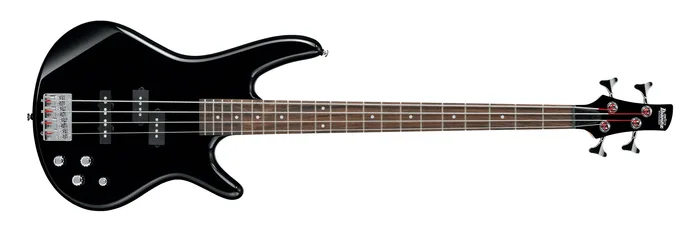
- Buy Ibanez GSR200 A full-size 4-string with P and J pickups, a B10 bridge and an active bass boost, documented in detail by Ibanez. Amazon
- Buy Yamaha TRBX174 A 24-fret mahogany bass with a P and J style pickup pair that Yamaha describes as a price breakthrough for the TRBX range. Amazon
- Buy Squier Affinity Series Precision Bass PJ The classic Precision Bass shape with a P pickup at the neck and a J pickup at the bridge, from Fender's Squier line.
- Buy Cort Action Bass Plus A PJ-style bass with 24 frets and a 2-band active EQ, aimed by Cort at the aspiring bass player. Amazon
- It depends Epiphone Thunderbird '64 Bass A neck-through Thunderbird with two ProBucker 760 Bass humbuckers and a premium gig bag in the box.
- Skip Harley Benton PB-20 SBK Standard Series A Precision-style bass whose own listing gives two different body woods and offers the thinnest feature set in this group.
What actually matters
- Scale length - the distance from the nut to the bridge saddle. Longer scales have wider fret spacing and a firmer string feel, while shorter scales shorten the reach.
- Nut width - the width of the neck at the nut, measured in millimetres or inches. It sets string spacing at the top and affects comfort in the first position.
- Fingerboard radius - how curved the fingerboard is across its width. A smaller number means a rounder board and a larger number means a flatter one.
- Pickups - the magnetic sensors that turn string vibration into signal. Their type and position shape the tone more than almost any other part of the bass.
- Passive or active - passive basses send the pickup signal straight to the output. Active basses add a preamp with a battery that can boost or cut frequencies.
- Body wood - the wood the body is made from. It affects weight and is often described in marketing terms, so rely on the maker's stated wood and not on adjectives.
- Bolt-on or neck-through - how the neck joins the body. Bolt-on necks are held with screws and are common at entry level, while neck-through basses run the neck the full length of the body.
The specs, in plain English
Green flags vs red flags
Green flags
- The maker lists scale length, nut width and wood types.
- The pickup types and electronics layout are stated.
- The neck radius and fret count are listed.
- A warranty is stated on the product page.
- The feature list and the spec table agree with each other.
Red flags
- The page lists no scale length or nut width.
- Wood is described only with adjectives like premium or tonewood.
- The listing gives two different woods for the body.
- The photos show a different model from the title.
- No warranty or return policy is stated.
Who's who: the brands
- Ibanez - Known for a wide range of basses, including the GSR line aimed at newer players.
- Yamaha - Known for the TRBX range, which covers budget to upper-mid models with published specs.
- Squier - Fender's entry-level line, known for Precision and Jazz bass shapes.
- Cort - Known for the Action Series, which the maker pitches at aspiring bass players.
- Epiphone - Gibson's sister brand, known for the Thunderbird bass among other vintage-style designs.
How to read a listing without getting fooled
Start with scale length, nut width and fret count, because they define the neck. Next read the pickup list and the controls, which tell you the layout and whether there is a battery. Then look at the body and neck woods and the bridge type. Finally check what is in the box, because many entry basses do not include a bag, and note any warranty. If a maker leaves out a spec, treat it as unknown and ask before buying, and if the page gives two answers, ask which is right.
How much should you spend?
Budget basses at the lowest tier cover the basics, such as a bolt-on neck, passive pickups and simple hardware, and several of them are good first instruments. Mid-range basses add active EQ, upgraded hardware or different woods. Premium basses move into neck-through construction, humbuckers and specialist designs. For a first bass, the budget tier is usually enough, and any money saved is better spent on an amp, a tuner and a gig bag.
Questions, answered
Can a beginner start on a short-scale bass?
Yes, and some players with smaller hands find it more comfortable. A short scale brings the frets closer together and shortens the reach, but it changes string tension and the feel of the neck. Most lessons and tabs assume a 34 inch scale, so try one before you commit. All six basses in our review list 34 inches.
How many frets does a bass need?
Most beginner music does not need more than 20 or so frets. Extra frets give more range on the upper strings, so the 24 frets on the Yamaha TRBX174 and Cort Action Bass Plus are a bonus rather than a requirement. The Squier Affinity PJ, Epiphone Thunderbird '64 and Harley Benton PB-20 each list 20 frets.
What does neck-through mean?
In a neck-through bass the neck wood runs the full length of the body, with side pieces glued on as wings. Bolt-on basses attach a separate neck with screws. The Epiphone Thunderbird '64 lists nine-ply mahogany and walnut neck-through-body construction, while the Yamaha and Cort list bolt-on construction. Neck-through is common at higher price tiers.
Should I buy a bass online without trying it?
It is possible, but check the maker's spec page and the seller's return policy first. Fender lists a 30-day return window on its page, and Thomann lists a 30-day money-back guarantee on the Harley Benton. If neck width matters to you, compare nut width and radius against a bass you have played before ordering.
Or jump to the head-to-head: Ibanez GSR200 vs Yamaha TRBX174.