

Audio & Headphones
Electric Bass Guitars: Which to Buy and Which to Skip
We compared six 4-string electric basses from six makers on scale length, pickups, electronics, neck dimensions and what each maker actually publishes.
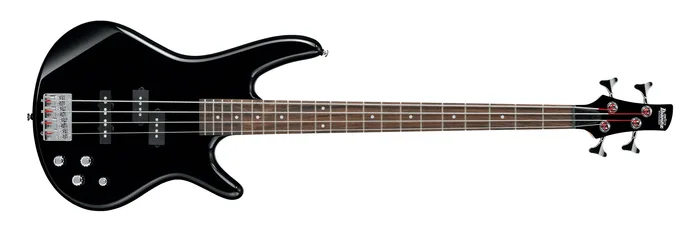
The short version
The Ibanez GSR200 is the best overall pick: a 34 inch scale, a 41 mm nut, a passive P and J pickup pair and an optional active bass boost, all listed by Ibanez. The Yamaha TRBX174 is the value pick, with 24 frets, a mahogany body and a complete spec sheet. The Squier Affinity Precision Bass PJ is the classic Precision layout with a 41.3 mm nut, and the Cort Action Bass Plus adds a 2-band active EQ and 24 frets. The Epiphone Thunderbird '64 suits a player who wants a neck-through vintage design with humbuckers and a gig bag included, and who will pay premium for it. The Harley Benton PB-20 SBK is the one to skip, because its own listing contradicts itself on the body wood and offers the least of any bass here. Best for: a first bass that will still make sense in a year, the Ibanez GSR200.
Our picks at a glance
- Ibanez GSR200 - Buy. A full-size 4-string with P and J pickups, a B10 bridge and an active bass boost, documented in detail by Ibanez.
- Yamaha TRBX174 - Buy. A 24-fret mahogany bass with a P and J style pickup pair that Yamaha describes as a price breakthrough for the TRBX range.
- Squier Affinity Series Precision Bass PJ - Buy. The classic Precision Bass shape with a P pickup at the neck and a J pickup at the bridge, from Fender's Squier line.
- Cort Action Bass Plus - Buy. A PJ-style bass with 24 frets and a 2-band active EQ, aimed by Cort at the aspiring bass player.
- Epiphone Thunderbird '64 Bass - It depends. A neck-through Thunderbird with two ProBucker 760 Bass humbuckers and a premium gig bag in the box.
- Harley Benton PB-20 SBK Standard Series - Skip. A Precision-style bass whose own listing gives two different body woods and offers the thinnest feature set in this group.
The verdict in 30 seconds
What mattered most
- Scale length
- Body
- Neck and fingerboard
- Frets
- Nut width
- Pickups
A first bass has to be easy to hold, stay in tune and sound solid through a small amp, or it ends up in a corner. We compared six 4-string electric basses from Ibanez, Yamaha, Squier, Cort, Epiphone and Harley Benton, using each maker's own spec page and leaving out anything a maker does not state. All six list a 34 inch scale, so the real differences are pickups, electronics, neck width and how well the listing tells you what you are buying. A bass needs its own amplifier, which our best bass amps review covers, and a clip-on tuner from our best guitar tuners guide makes practice easier. Guitarists adding a second instrument can start with our best beginner electric guitars and best ukuleles reviews.
A full-size 4-string with P and J pickups, a B10 bridge and an active bass boost, documented in detail by Ibanez.
Best for: Almost any new player, or a returning one, who wants one well-documented full-size bass.
- Ibanez lists a 34 inch (864 mm) scale, a 41 mm nut, a 305 mm radius and a 19 mm string spacing, so you know the neck before you buy.
- Dynamix P neck and Dynamix J bridge pickups are both listed as passive, with a Phat II EQ knob that Ibanez describes as an active bass boost.
- The B10 bridge is described as fully adjustable for intonation, which helps keep the bass in tune as strings age.
- Ibanez lists a poplar body and a jatoba fingerboard, which are practical woods but not premium ones.
- The page publishes neck width at the 22nd fret but no fret count, weight or in-the-box list, and it names an MB300C case as a recommended extra.
- Ibanez does not say whether the Phat II circuit needs a battery, so check the manual before you buy a spare.
Own the Ibanez GSR200? Tell us how it held up.
Thanks. Counted, and shown once enough owners have weighed in.
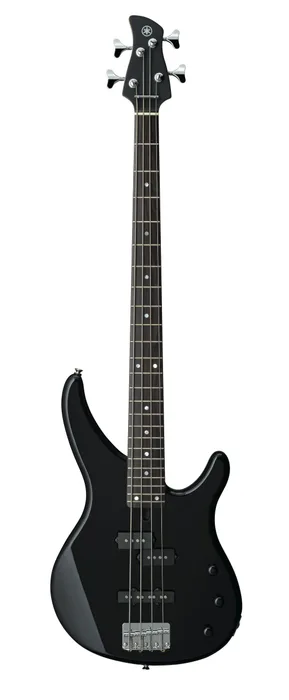
A 24-fret mahogany bass with a P and J style pickup pair that Yamaha describes as a price breakthrough for the TRBX range.
Best for: A first bass from a large maker at the lowest tier that still gets you 24 frets.
- Yamaha lists a mahogany body, a maple neck, a rosewood fingerboard and 24 medium frets, which gives you range up the neck.
- The neck is 40.0 mm at the nut and 56.4 mm at the 12th fret, with a 10 inch radius and a 34 inch scale.
- Controls are a separate volume for each pickup plus a master tone, a layout that is simple to learn.
- The pickups are a split single-coil at the neck and a single-coil at the bridge, both ceramic, and Yamaha lists no EQ controls.
- The spec table lists no case or gig bag, and weight is not published.
- Yamaha lists a vintage style bridge and covered tuners, which are fine for a first bass but are not an upgrade tier.
Own the Yamaha TRBX174? Tell us how it held up.
Thanks. Counted, and shown once enough owners have weighed in.
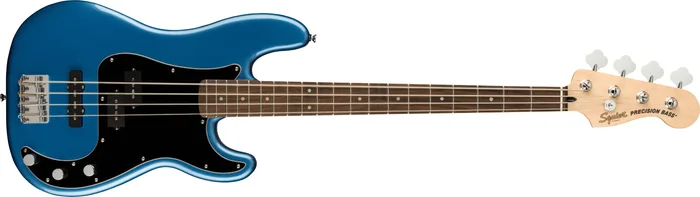
The classic Precision Bass shape with a P pickup at the neck and a J pickup at the bridge, from Fender's Squier line.
Best for: A player who wants the classic Precision layout with a documented neck and a familiar brand.
- Fender lists a poplar body, a maple neck with a slim C shape, a 34 inch (864 mm) scale and a 41.3 mm synthetic bone nut.
- The pickups are a ceramic split single-coil at the neck and a ceramic single-coil Jazz Bass style pickup at the bridge, with a volume for each and a master tone.
- Open-gear tuning machines, a 4-saddle bridge and installed nickel plated .045-.105 strings are all listed.
- The neck has 20 medium jumbo frets, fewer than the 24 on the Yamaha and Cort.
- Fender lists a hardshell case as a recommended extra that is not included, and lists no gig bag.
- It is passive only, with no EQ and no switching.
Own the Squier Affinity Series Precision Bass PJ? Tell us how it held up.
Thanks. Counted, and shown once enough owners have weighed in.
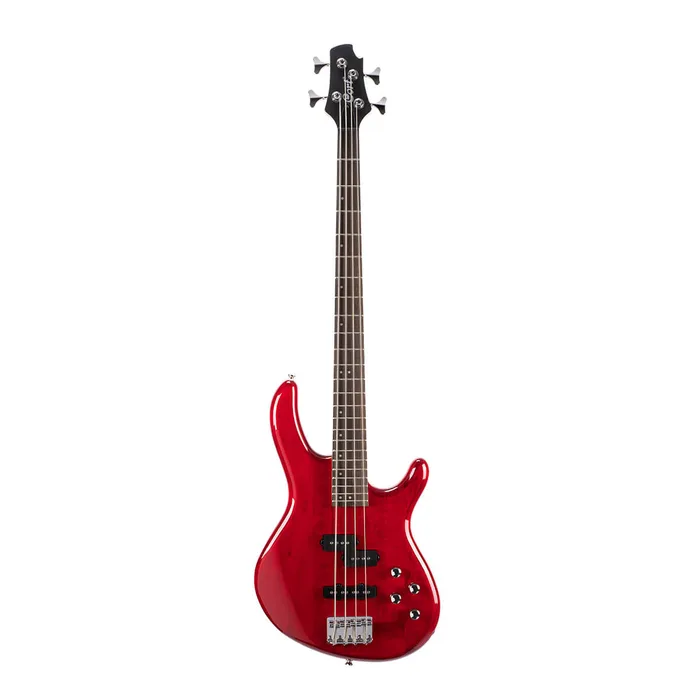
A PJ-style bass with 24 frets and a 2-band active EQ, aimed by Cort at the aspiring bass player.
Best for: A player who wants onboard tone shaping and a long fingerboard in a first bass.
- Cort lists a Powersound PJ style pickup set with one volume, one balance and a 2-band active EQ for bass and treble.
- The body is poplar on a hard maple neck with a jatoba fingerboard, 24 frets and a 15.75 inch radius.
- Cort describes an ergonomic body shape meant to reduce fatigue on long sessions, and lists die-cast tuners.
- Cort does not publish a nut width, weight or case on the spec table.
- The active EQ is listed without a battery detail or a passive mode, so check the manual for what happens when the battery runs low.
- Its 15.75 inch radius is a flatter fingerboard than the 10 inch radius on the Yamaha, so try one if you can.
Own the Cort Action Bass Plus? Tell us how it held up.
Thanks. Counted, and shown once enough owners have weighed in.
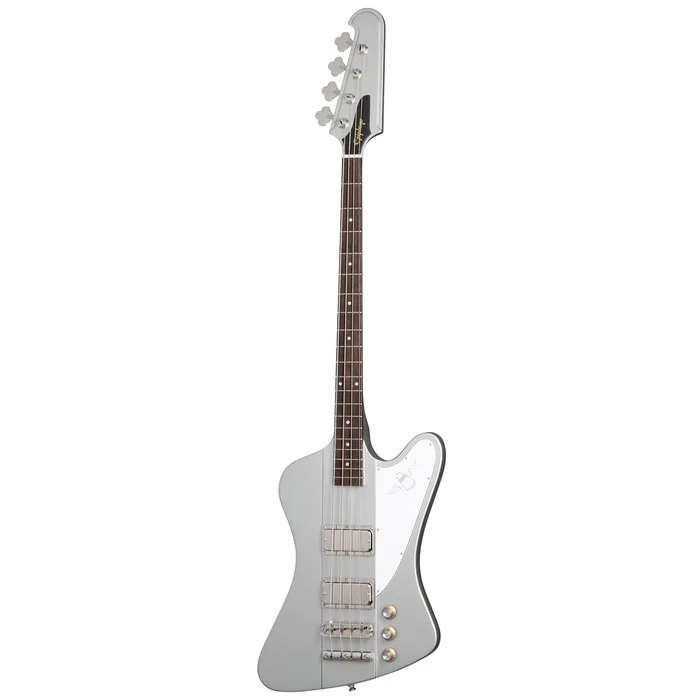
A neck-through Thunderbird with two ProBucker 760 Bass humbuckers and a premium gig bag in the box.
Best for: A player who already wants a vintage Thunderbird look and sound and has the budget.
- Epiphone lists nine-ply mahogany and walnut neck-through-body construction, with okoume or sapelli wings, a 34 inch scale and a 38.0 mm nut.
- Two ProBucker 760 Bass humbuckers feed two volumes and a master tone through CTS potentiometers.
- A premium gig bag is listed as included, along with a Tune-O-Matic bridge, a claw tailpiece and open-gear tuners with a 19:1 ratio.
- It sits at the premium tier, which is a lot to spend before you know bass is for you.
- The neck has 20 frets, and the electronics are passive with no EQ.
- The Thunderbird shape, Tune-O-Matic bridge and claw tailpiece are less common than a bolt-on Precision, so check how it sits on a strap.
Own the Epiphone Thunderbird '64 Bass? Tell us how it held up.
Thanks. Counted, and shown once enough owners have weighed in.
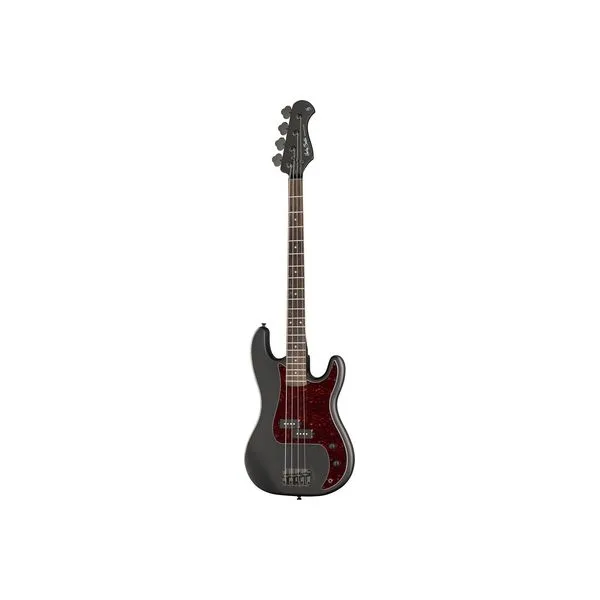
A Precision-style bass whose own listing gives two different body woods and offers the thinnest feature set in this group.
Best for: Nobody in particular, since the Squier, Yamaha and Ibanez above document more and offer more at a similar tier.
- Thomann lists a bolt-on Canadian maple neck, a laurel fingerboard, a modern C profile and a 34 inch (864 mm) scale.
- The listing states a 30-day money-back guarantee and a 3-year Thomann warranty.
- Strings are listed as .040 to .100 and the nut is 42 mm wide.
- The listing says the body is poplar in the feature list and linden in the spec table, so the page does not tell you what the body is made of.
- It has one PB-style split-coil pickup with a volume and a tone, so there is no second pickup, no balance and no EQ.
- The neck has 20 frets, and the listing says no case and no gig bag are included.
- It is sold through one retailer, so shipping, returns and set-up depend on where you live.
Own the Harley Benton PB-20 SBK Standard Series? Tell us how it held up.
Thanks. Counted, and shown once enough owners have weighed in.
| Criteria | Ibanez GSR200 Top pick Buy it Buy | Yamaha TRBX174 Buy it Buy | Squier Affinity Series Precision Bass PJ Buy it Buy | Cort Action Bass Plus Buy it Buy | Epiphone Thunderbird '64 Bass It depends Buy | Harley Benton PB-20 SBK Standard Series Skip it Buy |
|---|---|---|---|---|---|---|
| Best for | Almost any new player, or a returning one, who wants one well-documented full-size bass. | A first bass from a large maker at the lowest tier that still gets you 24 frets. | A player who wants the classic Precision layout with a documented neck and a familiar brand. | A player who wants onboard tone shaping and a long fingerboard in a first bass. | A player who already wants a vintage Thunderbird look and sound and has the budget. | Nobody in particular, since the Squier, Yamaha and Ibanez above document more and offer more at a similar tier. |
| Price tier | $ · budget | $ · budget | $ · budget | $ · budget | $$$ · premium | $ · budget |
| Scale length | 34 in (864 mm) | 34 in (863.6 mm) | 34 in (864 mm) | 34 in (864 mm) | 34 in (863.6 mm) | 34 in (864 mm) |
| Body | Poplar | Mahogany | Poplar | Poplar | Nine-ply mahogany and walnut neck-through, okoume or sapelli wings | Poplar in the feature list, linden in the table |
| Neck and fingerboard | Maple, jatoba | Maple, rosewood | Maple, Indian laurel or maple | Hard maple, jatoba | Neck-through, Indian laurel | Maple, laurel |
| Frets | Medium, count not listed (neck width given at the 22nd fret) | 24 | 20 | 24 | 20 | 20 |
| Nut width | 41 mm | 40.0 mm | 41.3 mm | Not published | 38.0 mm | 42 mm |
| Pickups | Dynamix P and J, passive | Split single-coil and single-coil, ceramic | Ceramic split single-coil P and single-coil J | Powersound PJ style | Two ProBucker 760 Bass humbuckers | One PB-style split coil |
| Controls | Two volumes, tone, Phat II bass boost | Neck volume, bridge volume, master tone | Neck volume, bridge volume, master tone | Volume, balance, 2-band active EQ | Two volumes, master tone | Volume and tone |
| Case or gig bag | Not listed, MB300C recommended | Not listed | Not included, hardshell recommended | Not listed | Premium gig bag included | None included |
Which one is right for you?
- Almost any new player, or a returning one, who wants one well-documented full-size bass. Buy it Ibanez GSR200
- A first bass from a large maker at the lowest tier that still gets you 24 frets. Buy it Yamaha TRBX174
- A player who wants the classic Precision layout with a documented neck and a familiar brand. Buy it Squier Affinity Series Precision Bass PJ
- A player who wants onboard tone shaping and a long fingerboard in a first bass. Buy it Cort Action Bass Plus
- A player who already wants a vintage Thunderbird look and sound and has the budget. It depends Epiphone Thunderbird '64 Bass
- Nobody in particular, since the Squier, Yamaha and Ibanez above document more and offer more at a similar tier. Skip it Harley Benton PB-20 SBK Standard Series
How we judged the field
Five things matter on a first bass. Scale length decides how far your hand has to reach, and 34 inches is the length most lessons and tabs assume. Nut width and neck thickness decide comfort during long practice. Pickups and electronics decide the sound, from a passive P or J layout to an active EQ. Build and hardware, meaning body wood, bridge and tuners, decide whether it stays in tune. Finally, what the maker actually publishes tells you whether you are buying a documented instrument or a photo.
All six basses list a 34 inch scale, so the field splits on pickups, fret count and price tier. We picked four budget basses from Ibanez, Yamaha, Squier and Cort because they cover the usual first-bass tier, added the Epiphone Thunderbird ‘64 as the premium option for a player who knows what they want, and chose the Harley Benton PB-20 as the one to skip. Squier is part of Fender and Epiphone is part of Gibson, and each appears once. For Squier and Epiphone we used 2026 archived snapshots of the maker pages.
Ibanez GSR200
Buy itThe Ibanez GSR200 earns the top spot because Ibanez documents it so completely. The page lists a 34 inch (864 mm) scale, a 41 mm nut, 62 mm width at the 22nd fret, a 305 mm radius and a 19 mm string spacing, so you can compare the neck against other basses before ordering. The Dynamix P neck pickup and Dynamix J bridge pickup are both listed as passive, and the Phat II knob is described as an active bass boost, which gives you the simplicity of passive pickups with an extra low-end option. The B10 bridge is described as fully adjustable for intonation. The body is poplar and the fingerboard jatoba, both sensible woods at this tier. The trade-offs are minor: no fret count, weight or in-the-box list on the page, and the MB300C case is a recommended extra. It is the bass to buy if you want one dependable, well-documented 4-string and do not want to think about it again.
Yamaha TRBX174
Buy itThe Yamaha TRBX174 is the value pick because the spec sheet is complete and the neck is generous. Yamaha lists a mahogany body, a maple neck, a rosewood fingerboard, 24 medium frets, a 34 inch scale and a 10 inch radius. The nut is 40.0 mm wide and the neck is 56.4 mm wide at the 12th fret, so it is a little narrower than the Ibanez at the nut. The pickups are a split single-coil at the neck and a single-coil at the bridge, both ceramic, with a volume for each pickup and a master tone. Yamaha lists no EQ controls, so it is the simpler of the two buys. It lists a vintage style bridge and covered tuners and does not list a case. It is a good fit for someone who wants a major maker’s first bass at the lowest tier and likes having 24 frets to grow into.
Squier Affinity Series Precision Bass PJ
Buy itThe Squier Affinity Precision Bass PJ is the bass most beginners picture when they think of a bass. Fender’s page lists a poplar body in a Precision shape, a maple neck with a satin finish and a slim C shape, a 34 inch (864 mm) scale, a 9.5 inch radius and a 41.3 mm synthetic bone nut. A ceramic split single-coil sits at the neck and a ceramic single-coil Jazz Bass style pickup at the bridge, with a volume for each and a master tone. The fingerboard is Indian laurel or maple depending on the version, and the strings are installed nickel plated steel in .045 to .105 gauges. There are 20 medium jumbo frets, fewer than the Yamaha or Cort, and no case is included. It is a strong buy for a player who values the classic layout and a familiar brand and does not need more than 20 frets.
Cort Action Bass Plus
Buy itThe Cort Action Bass Plus is the pick for someone who wants more control over the sound without paying for a premium bass. Cort lists a Powersound PJ style pickup set with one volume, one balance and a 2-band active EQ with bass and treble. The construction is bolt-on, with a poplar body, a hard maple neck, a jatoba fingerboard with white dots, 24 frets and a 15.75 inch radius, and the scale is 34 inches. Cort describes an ergonomic body shape that it says reduces fatigue, and it lists die-cast tuners and chrome hardware. The spec table does not list a nut width, weight or case, so try one in a shop if neck width matters to you. The active EQ is a real plus for a player who plays in different rooms and wants to adjust, and the battery is the cost of that flexibility. It is a strong buy for the tone-curious beginner.
Epiphone Thunderbird ‘64 Bass
It dependsThe Epiphone Thunderbird ‘64 is the premium option, and it only makes sense for a certain buyer. Epiphone lists nine-ply mahogany and walnut neck-through-body construction, okoume or sapelli wings, an Indian laurel fingerboard on a 12 inch radius, 20 medium jumbo frets and a 38.0 mm Graph Tech nut on a 34 inch scale. Two ProBucker 760 Bass humbuckers run to two volumes and a master tone with CTS potentiometers, and the hardware includes a Tune-O-Matic bridge, a claw tailpiece and open-gear tuners with a 19:1 ratio. A premium gig bag is listed as included, which saves one purchase. The cost is the premium tier, the 20-fret neck and passive electronics with no EQ. If you already love the Thunderbird look and sound, it is a keeper. If you are still deciding whether bass is for you, start with one of the budget basses above.
Harley Benton PB-20 SBK Standard Series
Skip itThe Harley Benton PB-20 SBK is the one to skip, mainly because its own listing does not agree with itself. The feature list on the Thomann page says the body is poplar, while the spec table says linden, so you cannot tell what you are buying. The rest of the spec is thin: one PB-style split-coil pickup with a volume and a tone, no second pickup and no EQ, 20 frets, a 42 mm nut, .040 to .100 strings and no case or gig bag. Thomann lists a 30-day money-back guarantee and a 3-year warranty, which is reassuring, and the 34 inch scale and maple neck are standard. But the Squier, Ibanez and Yamaha above all document more and give you a second pickup or more frets at a similar tier. It is a fair second bass for a tinkerer, and a poor first choice.
Sources
Specs in this review come from these pages.
- Ibanez, GSR200 product page (ibanez.com)
- Yamaha, TRBX series specifications (usa.yamaha.com)
- Fender, Squier Affinity Series Precision Bass PJ (2026 archived snapshot) (web.archive.org)
- Cort Guitars, Action Bass Plus (cortguitars.com)
- Epiphone, Thunderbird '64 Bass (2026 archived snapshot) (web.archive.org)
- Thomann, Harley Benton PB-20 SBK Standard Series (thomannmusic.com)
Ibanez GSR200 vs Yamaha TRBX174: which should you buy?
The Ibanez GSR200 and Yamaha TRBX174 are the two safe buys, and both sit at the budget tier with a 34 inch scale. The Ibanez has the wider 41 mm nut, a P and J pickup pair, an active bass boost and a B10 bridge that Ibanez says is fully adjustable. The Yamaha lists 24 frets where Ibanez gives no fret count, a mahogany body in place of poplar, and a simpler control layout with a volume for each pickup.
Choose the Ibanez if you want the most documented bass with a built-in boost for the low end. Choose the Yamaha if you want the extra frets and a plain passive layout from a major maker. If you can try both in a shop, nut width and neck feel are the deciding factors, since 41 mm and 40.0 mm are close but not the same. If you want the classic Precision look, the Squier is the third option, and the Cort Action Bass Plus adds active EQ in the same tier.
Who should buy which
- Best all-round first bass: the Ibanez GSR200. A full-size 34 inch bass with a 41 mm nut, P and J pickups and an active bass boost, all documented by the maker.
- Lowest tier from a major maker: the Yamaha TRBX174. A mahogany 24-fret bass with a complete spec sheet at the budget tier.
- Classic Precision Bass layout: the Squier Affinity Series Precision Bass PJ. A P and J pickup pair, a 41.3 mm nut and a slim C neck on the best-known beginner shape.
- Player who wants onboard tone shaping: the Cort Action Bass Plus. A PJ-style set with 2-band active EQ and 24 frets.
- Buyer who wants a vintage neck-through bass with a bag included: the Epiphone Thunderbird ‘64 Bass. Two ProBucker 760 Bass humbuckers and a premium gig bag, at the premium tier.
What to look for
- Scale length: 34 inches is the standard on all six basses here, and shorter scales shorten the reach but change string feel.
- Nut width: a wider nut, such as 41.3 mm on the Squier, gives more room between strings, and a narrower one, such as 38.0 mm on the Epiphone, can suit smaller hands.
- Pickup layout: a P and J pairing, a single P pickup or a pair of humbuckers each give a different range, so match the layout to the music you want to play.
- Passive or active: passive means no battery and fewer knobs, while active adds EQ that needs a battery.
- Fret count: 24 frets give more range on the upper strings, while 20 to 22 are enough for most beginner music.
- What the maker publishes: a spec sheet with scale, nut width and wood types is a good sign, and a listing that contradicts itself is a reason to look elsewhere.
Our final take
For most new bassists the Ibanez GSR200 is the safest buy, because the maker documents the neck, pickups, bridge and EQ and the layout is easy to live with. The Yamaha TRBX174 is the better pick if you want 24 frets and a plain passive layout at the same tier, the Squier Affinity PJ is the classic Precision choice, and the Cort Action Bass Plus adds active EQ. The Epiphone Thunderbird ‘64 is for a player who knows they want a neck-through vintage design and has the budget. Skip the Harley Benton PB-20 SBK, whose listing cannot say what the body is made of and which offers the least of the group.
Questions, answered
What is the difference between a P-style and a J-style bass?
The names come from the Precision and Jazz bass layouts. A P-style bass usually has one split-coil pickup near the middle of the body, and a J-style bass has two single-coil pickups, one near the neck and one near the bridge. The Squier Affinity PJ, Ibanez GSR200 and Cort Action Bass Plus mix a P and a J pickup, which lets you move between a rounder and a brighter sound. For a first bass any of these layouts works.
Do I need a special amplifier for a bass guitar?
A bass produces much lower notes than a guitar, and bass amps are built to handle that range. The makers here do not publish guidance on using a bass through a guitar amp, so we do not recommend it. Our best bass amps review compares amps for this job, and a small practice amp made for bass is the usual route for a first setup.
Is a 34 inch scale the standard for bass?
All six basses here list a 34 inch scale, which is the length most tutorials, tabs and band bassists assume. Shorter scales exist for smaller hands, and they bring the frets closer together and shorten the reach. A short scale can be comfortable but changes how the strings feel and which strings you buy, so try one first. A 34 inch bass is the safer first choice for most adults.
Is active or passive electronics better for a beginner?
Passive electronics have no battery and few knobs, which keeps things simple. Active electronics add a battery-powered preamp that can boost or cut bass and treble. The Cort Action Bass Plus lists a 2-band active EQ and the Ibanez GSR200 lists an active Phat II bass boost on top of two passive pickups. The Yamaha, Squier and Epiphone list no active EQ. Choose active if you want tone shaping, and passive if you want the fewest things to go wrong.
Should I add a gig bag or case when I buy a bass?
Most of the spec sheets here do not list a bag or case. Epiphone lists a premium gig bag as included with the Thunderbird '64, Thomann states that the Harley Benton does not include one, and Fender lists a hardshell case for the Squier as a recommended extra that is not included. A padded gig bag is a sensible first add-on if you carry the bass to lessons or rehearsals, and a hard case matters more for travel.
Deciding between the top two? See our head-to-head: Ibanez GSR200 vs Yamaha TRBX174.
More in Audio & Headphones
Electric Bass Guitars, Explained Plain-English guide → Ibanez GSR200 vs Yamaha TRBX174 Head-to-head →  The Best Beginner Electric Guitars: 6 Compared (and One to Skip)
 Which Bluetooth Audio Transmitter Should You Buy? 7 Compared
 The Best Bone-Conduction Headphones: 4 Compared (and One to Skip)
 The Best Bookshelf Speakers (Passive and Powered), Weighed Against the Hype