

Audio & Headphones · Head-to-head
Ibanez GSR200 vs Yamaha TRBX174
Which should you buy? Our verdict on both, pulled from our full Electric Bass Guitars: Which to Buy and Which to Skip comparison.
The GSR200 lists its scale, nut width, radius, bridge and EQ in full, and it adds an active bass boost on top of two passive pickups. The TRBX174 gets you a 24-fret mahogany bass from a major maker at the budget tier.
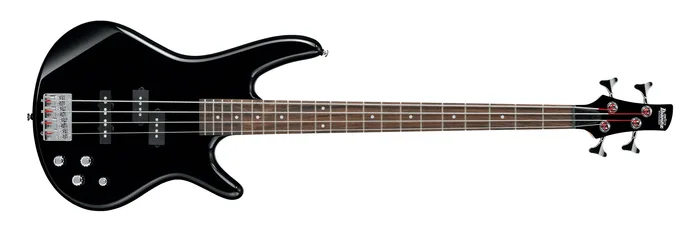
Ibanez GSR200
Buy itA full-size 4-string with P and J pickups, a B10 bridge and an active bass boost, documented in detail by Ibanez.
- Ibanez lists a 34 inch (864 mm) scale, a 41 mm nut, a 305 mm radius and a 19 mm string spacing, so you know the neck before you buy.
- Dynamix P neck and Dynamix J bridge pickups are both listed as passive, with a Phat II EQ knob that Ibanez describes as an active bass boost.
- The B10 bridge is described as fully adjustable for intonation, which helps keep the bass in tune as strings age.
- Ibanez lists a poplar body and a jatoba fingerboard, which are practical woods but not premium ones.
- The page publishes neck width at the 22nd fret but no fret count, weight or in-the-box list, and it names an MB300C case as a recommended extra.
- Ibanez does not say whether the Phat II circuit needs a battery, so check the manual before you buy a spare.
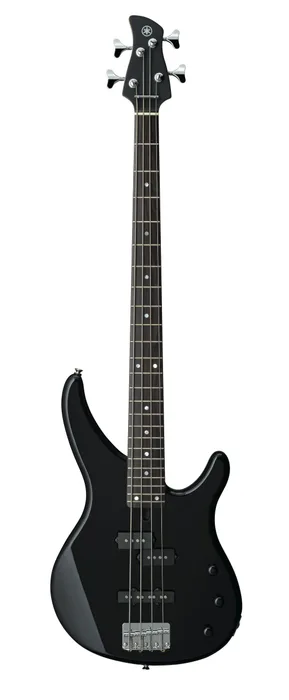
Yamaha TRBX174
Buy itA 24-fret mahogany bass with a P and J style pickup pair that Yamaha describes as a price breakthrough for the TRBX range.
- Yamaha lists a mahogany body, a maple neck, a rosewood fingerboard and 24 medium frets, which gives you range up the neck.
- The neck is 40.0 mm at the nut and 56.4 mm at the 12th fret, with a 10 inch radius and a 34 inch scale.
- Controls are a separate volume for each pickup plus a master tone, a layout that is simple to learn.
- The pickups are a split single-coil at the neck and a single-coil at the bridge, both ceramic, and Yamaha lists no EQ controls.
- The spec table lists no case or gig bag, and weight is not published.
- Yamaha lists a vintage style bridge and covered tuners, which are fine for a first bass but are not an upgrade tier.
Side by side
The 8 criteria below are the ones our full comparison judged every product on, narrowed to these two.
| Ibanez GSR200 Our pick | Yamaha TRBX174 | |
|---|---|---|
| Our verdict | Buy | Buy |
| Best for | Almost any new player, or a returning one, who wants one well-documented full-size bass. | A first bass from a large maker at the lowest tier that still gets you 24 frets. |
| Price tier | $ · budget | $ · budget |
| Scale length | 34 in (864 mm) | 34 in (863.6 mm) |
| Body | Poplar | Mahogany |
| Neck and fingerboard | Maple, jatoba | Maple, rosewood |
| Frets | Medium, count not listed (neck width given at the 22nd fret) | 24 |
| Nut width | 41 mm | 40.0 mm |
| Pickups | Dynamix P and J, passive | Split single-coil and single-coil, ceramic |
| Controls | Two volumes, tone, Phat II bass boost | Neck volume, bridge volume, master tone |
| Case or gig bag | Not listed, MB300C recommended | Not listed |
Which one is right for you?
Pick the Ibanez GSR200 if
almost any new player, or a returning one, who wants one well-documented full-size bass.
Know before buying: ibanez lists a poplar body and a jatoba fingerboard, which are practical woods but not premium ones.
Pick the Yamaha TRBX174 if
a first bass from a large maker at the lowest tier that still gets you 24 frets.
Know before buying: the pickups are a split single-coil at the neck and a single-coil at the bridge, both ceramic, and Yamaha lists no EQ controls.
The bottom line
Our overall pick is the Ibanez GSR200 - A full-size 4-string with P and J pickups, a B10 bridge and an active bass boost, documented in detail by Ibanez. Choose the Yamaha TRBX174 instead if a first bass from a large maker at the lowest tier that still gets you 24 frets.
Want the full picture, including the other options we compared and the popular one we'd skip? Read the complete Electric Bass Guitars: Which to Buy and Which to Skip.