Explained
Baby Proofing Kits, Explained
After reading this, you'll know which pieces of a baby proofing kit actually reduce risk, which mounting method suits your surfaces, and how to spot a bundle padded with filler.
In this guide
Baby proofing is sold as a box of forty small plastic parts, which quietly implies that all forty do a similar amount of good. They do not. A furniture anchor screwed into a stud and a plug-in outlet cap sit in the same box at the same price, but one prevents the worst outcome in the category and the other is arguably a hazard of its own. This guide decodes the mounting jargon, the latch types and the piece counts so you buy for your actual house and your actual child rather than for the photo on the carton.
The 30-second version
- Anchoring heavy furniture is the highest-consequence job, and it is the piece bundled kits treat as an afterthought, so check whether a kit contains any anchors at all before you count its cabinet locks.
- Mounting method predicts failure better than brand does: adhesive bonds only to smooth, clean, dry surfaces, while screws work on most surfaces, which is why anti-tip hardware should be screwed.
- Buy for your surfaces, not for the listing photo, because textured, embossed, oiled or melamine cabinet interiors defeat adhesive pads that look perfect on the glossy doors in the product images.
- Piece count is a marketing number, since large bundles pad the total with plug caps and corner bumpers and go light on the locks and anchors you would actually have paid for.
- Proof to your child's behaviour rather than to a generic checklist: a climber needs anchors first, a cupboard opener needs latches first, and buying the same bundle as everyone else ignores that difference.
The products this guide is about
Our verdict on each, with the full reasoning on the companion review.
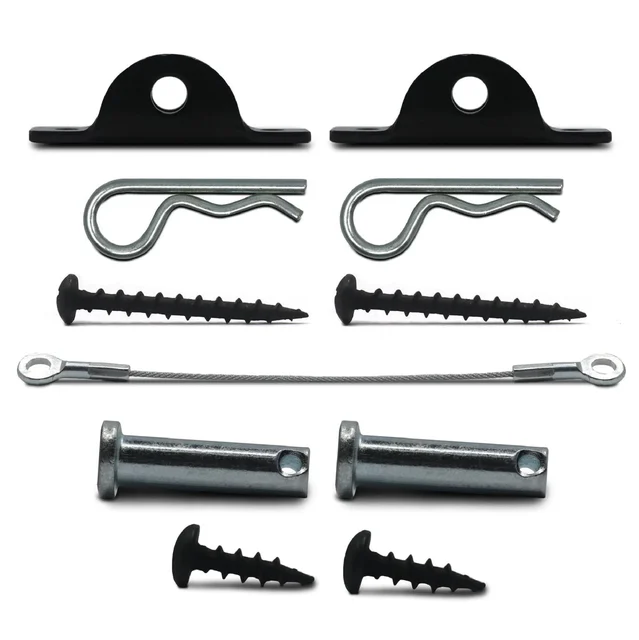
- Buy Picture Hang Solutions Furniture Anti-Tip Kit Metal brackets, a galvanized steel cable and screws that go into a stud: the boring design that makes the strongest case here. Amazon
- Buy Dreambaby Ezy-Check Multi-Use Latch (3 Pack) An adjustable strap latch with a lock indicator, long enough to reach the handles, appliances and odd shapes rigid locks cannot fit.
- It depends Safety 1st Secure-to-Explore Adhesive Magnetic Locks (20 Locks, 2 Keys) Invisible from the outside and pleasant to live with, as long as your cabinet interiors are smooth, dry and thick enough to take them. Amazon
- Skip Qdos Safety Zero-Screw Furniture Anti-Tip Kit A clever answer to the renter problem, but the maker rates it to 200 lbs against 400 lbs for the metal kit.
What actually matters
- Mounting method (adhesive versus screw) is the single best predictor of whether a piece of hardware is still doing its job in six months. Adhesive depends on a chemical bond to a smooth, clean, dry, room-temperature surface. Screws depend mainly on the material holding the thread. Convenience runs one way, reliability runs the other, and the best products offer both so you can upgrade the mounting where the surface is marginal.
- Anti-tip anchoring matters more than every other item in the category combined, because tip-overs are the hazard with the worst outcomes. What you want is metal brackets, a metal strap or cable, and screws driven into wall framing rather than drywall alone. Plastic buckles, adhesive pads and drywall-only hooks all put a weak link in the middle of the one load path you cannot afford to have fail.
- Surface compatibility decides whether adhesive locks are a good buy or a waste. Painted MDF and glossy laminate bond well. Textured or embossed interiors reduce the actual contact area to a fraction of the pad. Oiled or waxed wood, melamine with a release-agent finish, and anything wiped with a spray degreaser leave a film the adhesive cannot grip. Heat and humidity under a sink or beside a stove then work the bond loose over months.
- Adult ergonomics is the quiet determinant of whether proofing survives. A latch that takes two hands, real force or a knack is a latch adults stop re-engaging, and an unlatched lock is not a lock. One-handed operation while carrying a child is the realistic test.
- Failure mode separates the annoying from the dangerous. Some hardware fails loudly by coming away in your hand, which you notice immediately. Other hardware fails quietly by holding just well enough to feel installed. Quiet failure is why no-screw anchoring deserves suspicion.
- What is actually in the box rather than the headline count. Read the breakdown: how many cabinet latches, how many drawer locks, how many corner guards, and crucially how many furniture anchors. Many large kits contain no anchors, which means the most important purchase is still ahead of you.
- Coverage for awkward shapes is worth planning for. Rigid latches assume a particular door thickness, gap and handle. Fridges, oven doors, toilet lids, trash cans, double doors with knobs and corner cabinets need flexible strap latches, and a kit that ignores them leaves you shopping twice.
The specs, in plain English
Green flags vs red flags
Green flags
- Anti-tip hardware that is all metal through the load path (brackets, strap or cable, wood screws) with no plastic buckle and no adhesive wall pad
- Cabinet locks that offer screw holes as well as adhesive, so you can upgrade the mounting on marginal surfaces
- An itemised contents list that names the count of each piece type, including whether any furniture anchors are included
- Clear stated compatibility limits: supported door thickness range, framed versus frameless cabinets, surface types the adhesive is rated for
- Owner reports describing the latch as still easy to re-engage after months, not just easy on day one
- Self-closing sliding outlet covers rather than a bag of loose plug caps
Red flags
- A large headline piece count where most of the total is plug caps and corner bumpers
- Anti-tip kits marketed as no-screw or drywall-only, where the wall side relies on drywall alone and the stated load rating is lower than stud-mounted metal kits
- Holding-power figures quoted from a slow static pull, which is nothing like a child climbing an open drawer
- No mention anywhere of what surfaces the adhesive requires, or stock photos showing only flawless glossy cabinets
- One anchor per kit paired with language implying one anchor per piece of furniture is sufficient
- Recurring owner reports of pads letting go under sinks, beside stoves, or on textured and oiled wood
Who's who: the brands
- Dreambaby - Baby safety brand with a wide range of locks, latches and gates, including adjustable strap latches with a lock indicator that fit appliances and awkward door shapes rigid locks cannot span.
- Safety 1st - The volume brand in the aisle, with the broadest range of bundled kits and the most common magnetic and mechanical cabinet lock systems.
- Qdos Safety - Design-led specialist focused on no-screw and low-damage solutions aimed at renters, an appealing idea whose anti-tip kit is rated lower than stud-mounted metal hardware.
- Picture Hang Solutions - Hardware company rather than a baby brand, which is why its anti-tip kits are plain metal brackets, steel cable and screws with no plastic in the load path.
- Jool Baby / Cardinal Gates and similar specialists - Smaller focused makers covering the pieces the big bundles skip: magnetic lock sets in bulk, stove guards, hardware-mounted barriers and outdoor installations.
How to read a listing without getting fooled
Start with the contents breakdown rather than the headline number, because a kit advertising fifty pieces is usually forty plug caps, eight corner bumpers and two locks. Count the items you would have bought deliberately, and check specifically whether any furniture anchor is included, since many bundles have none. Next find the mounting method for every piece: if the words are adhesive, peel-and-stick or no-tools, the product's reliability is now a question about your surfaces, so go and look at the actual cabinet interiors you plan to use before you buy. For anything anti-tip, look for metal construction and wood screws, and treat no-screw and drywall-only designs as a partial measure regardless of the holding figure printed on the box, because those figures come from a slow steady pull rather than from a child hanging off an open drawer. Check compatibility limits that listings bury in the fine print: supported door thickness, framed versus frameless cabinets, whether magnets are affected by nearby metal. Then read owner reports for two things specifically, whether the adhesive held over months and in humid spots, and whether adults still bother to re-latch it. Adjectives like heavy-duty and ultra-secure test nothing; a stated thickness range and a screw-hole option are real information.
How much should you spend?
This category is cheap enough that budget should almost never decide what you buy, which is exactly why the common mistake is spending on breadth instead of depth. The big bundle looks generous because it is padded with the cheapest possible items, and the two things that genuinely change outcomes, solid anchoring and locks that stay attached to your particular cabinets, are the parts it skimps on. Spend deliberately instead. Metal anti-tip hardware is among the least expensive items in the whole category and delivers by far the largest risk reduction, so buy it first and buy more than one for large pieces, since extra-large furniture may need two kits. Cabinet locks are where paying a little more can be worth it, mainly for a screw-mount option or a bulk count that covers a whole kitchen in one afternoon; magnetic systems sit at the higher end and you are paying for the clean door front and the pleasant daily experience, which is a real benefit but not a safety upgrade. Self-closing outlet covers cost more than a bag of plug caps and are worth it for the rooms in daily use. Where extra money is genuinely wasted is on decorative finishes, oversized piece counts, and no-screw anti-tip kits that charge a premium for the convenience of being the weaker option in their category. The value sweet spot for most families is a handful of strong anchors, a modest number of good latches on the doors you actually open, sliding covers in the play rooms, and nothing else until your child shows you what they are getting into.
Questions, answered
What should I buy first?
Anchors for the heavy furniture, before any cabinet lock. Anchor every dresser, bookcase and TV stand a child can climb, use more than one anchor on large pieces, and get the wall-side screws into a stud rather than drywall. Tip-overs are the hazard in this category with the worst outcomes, and metal hardware screwed into framing is the approach whose holding power does not depend on glue, surface finish or a child failing to work out a button. After that, lock away medicines and cleaning products (ideally by moving them up high rather than relying on a latch), then handle stairs, then the everyday cabinets.
Why do my adhesive cabinet locks keep falling off?
Because adhesive needs a smooth, clean, dry, non-porous surface and most cabinet interiors are not one. Textured or embossed panels cut the real contact area to a fraction of the pad. Oiled or waxed wood, melamine with a slick factory finish, and anything cleaned with a spray degreaser leave a film the adhesive cannot grip. Heat and humidity under a sink or beside a stove then cycle the bond loose over weeks. Wipe with isopropyl alcohol, press hard for the full time stated, and let it cure completely before testing. If the surface is textured or oily, stop arguing with the glue and use a screw-mounted mechanical latch instead.
Magnetic or mechanical cabinet locks: which is better?
They optimise for different things. Magnetic locks hide entirely inside the cabinet, so the door front stays clean, nothing catches your hip, and a child has nothing to see or study. The costs are a key you have to keep track of (lose it and the kitchen is shut to you too), a required door thickness range, poor compatibility with frameless or fully inset cabinets, interference from nearby metal, and usually an adhesive mount. Mechanical spring-arm latches have no key, cost less, and screw-mounted versions are close to failure-proof, but the door opens a small gap when latched, which lets a child peek in and can pinch fingers. If your cabinets are smooth, framed and painted or laminate, and your household will not lose a key, magnetic is nicer to live with. Otherwise mechanical with screws is the more dependable choice.
Are plug-in outlet caps good enough?
They are the weakest item in a typical bundle and the one that inflates the piece count most. A cap a child can pry out is itself a choking hazard, older toddlers defeat many designs quickly, and an adult who pulls one out and forgets to replace it has simply left the outlet open. Self-closing sliding outlet covers replace the whole faceplate and spring shut on their own when a plug is removed, which removes both failure modes and takes one screwdriver to fit. If your home was built or rewired recently it may already have tamper-resistant receptacles, marked TR on the faceplate, with internal shutters that only open for a proper two-prong plug. Prioritise the rooms your child actually plays in rather than covering every socket in the house.
My new dresser meets the federal stability standard. Do I still need to anchor it?
Yes. The mandatory rule for clothing storage units, in force for units made after September 2023 under the STURDY Act, raised the bar for how a dresser behaves standing on its own and requires an anchor kit in the box. It does not cover a child hanging off an open drawer, it does not apply to bookcases or TV stands, and it does nothing for the furniture you already own. Anchoring is what turns a stable design into a stable installation, and it costs very little.
Does this hardware mean I can leave my toddler alone in a room?
No. Every product in this category supplements supervision rather than replacing it. Locks buy you the seconds it takes to cross the room, and anchors reduce the consequences when something goes wrong. Children defeat hardware faster than parents expect, adhesive fails silently, and any lock an adult left unlatched is not there at all. Install it, then keep watching, and walk the house every few months to re-check pads, straps and screws. It is also worth proofing to your specific child: watch what they actually climb, open and reach for, and buy for that rather than for a generic bundle.
Or jump to the head-to-head: Picture Hang Solutions Furniture Anti-Tip Kit vs Dreambaby Ezy-Check Multi-Use Latch (3 Pack).