

Baby & Family
The Best Baby Proofing Kits: 4 Compared (and One to Skip)
We compared cabinet locks, magnetic lock sets and furniture anchors on holding power, surface tolerance and how they fail.
The short version
Buy the Picture Hang Solutions Furniture Anti-Tip Kit first, and buy more than one for large pieces: metal hardware screwed into a stud is the strongest anti-tip approach here. For cabinets, drawers, appliances and toilet lids, the Dreambaby Ezy-Check Multi-Use Latch is the most adaptable choice, provided you mount them on smooth, clean, dry surfaces. The Safety 1st Secure-to-Explore Adhesive Magnetic Locks are excellent to live with and invisible from the outside, but they depend entirely on cabinet interiors that suit adhesive, so treat them as conditional. Skip the Qdos Zero-Screw Furniture Anti-Tip Kit: its drywall-hook anchoring is rated to 200 lbs against 400 for the metal kit, and this is the one job where you do not want the weaker option. None of this hardware supervises your child, it only buys you seconds. Best for: parents who want one strong anchor per heavy item, one adaptable latch for everything else, and no illusions about adhesive.
Our picks at a glance
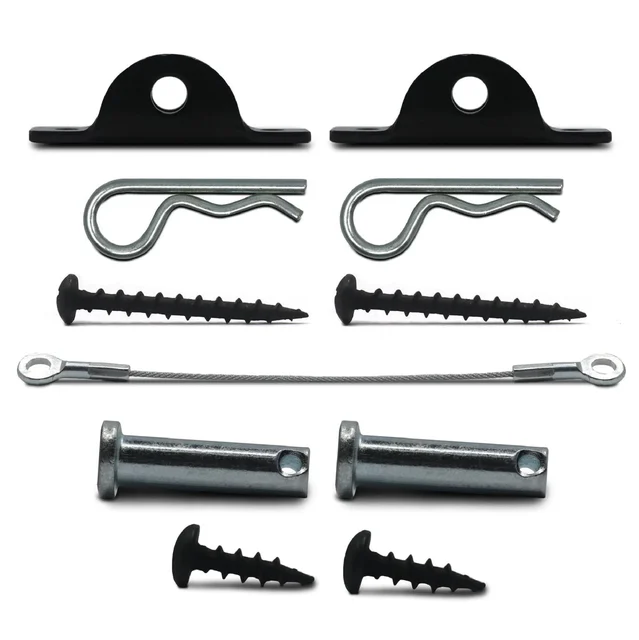
- Picture Hang Solutions Furniture Anti-Tip Kit - Buy. Metal brackets, a galvanized steel cable and screws that go into a stud: the boring design that makes the strongest case here.
- Dreambaby Ezy-Check Multi-Use Latch (3 Pack) - Buy. An adjustable strap latch with a lock indicator, long enough to reach the handles, appliances and odd shapes rigid locks cannot fit.
- Safety 1st Secure-to-Explore Adhesive Magnetic Locks (20 Locks, 2 Keys) - It depends. Invisible from the outside and pleasant to live with, as long as your cabinet interiors are smooth, dry and thick enough to take them.
- Qdos Safety Zero-Screw Furniture Anti-Tip Kit - Skip. A clever answer to the renter problem, but the maker rates it to 200 lbs against 400 lbs for the metal kit.
The verdict in 30 seconds
What mattered most
- What it secures
- Mounting
- Tolerates textured or oiled surfaces
- Holding power
- Adult convenience
- Install effort
Most baby proofing gear is sold as a big bundle of small plastic parts, which hides the fact that the pieces are wildly unequal in how much risk they actually reduce. Cabinet locks and outlet covers are the pieces people buy first, but the item that prevents the worst outcomes is a furniture anchor, and it is the piece bundles treat as an afterthought. Across owner reports the same two failure patterns show up again and again: adhesive that will not hold on textured, oiled or humid surfaces, and no-screw wall anchors that give way under a load a toddler can generate. Below: two we would buy, one that depends entirely on your cabinets, and one to skip.
Metal brackets, a galvanized steel cable and screws that go into a stud: the boring design that makes the strongest case here.
Best for: Anyone with a dresser, bookcase or TV stand a toddler can climb, and who is willing to drill.
- All-metal load path (steel brackets, aircraft-grade galvanized cable, clevis and locking pins) with no plastic buckle to be the weak link
- Screws into the furniture and into wall framing, so its holding power does not depend on paint, texture or humidity
- Maker states it supports up to 400 lbs, and the brackets keep the furniture close to the wall
- Cable joins two brackets with clevis and locking pins, so it can be unpinned if you move the dresser
- Requires a drill, a stud finder and a hole in the wall, which is a hard sell for renters
- One kit anchors one point, and for extra-large furniture the maker recommends two kits, so plan on buying more than one
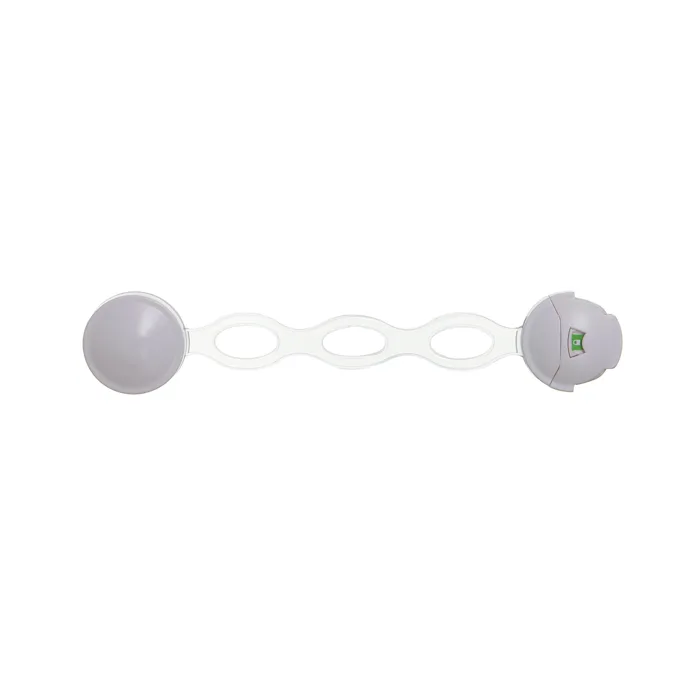
An adjustable strap latch with a lock indicator, long enough to reach the handles, appliances and odd shapes rigid locks cannot fit.
Best for: Renters and anyone who needs to secure awkward shapes: appliances, double doors, cabinets and pull handles.
- Adjustable, flexible 8.25 in (21 cm) strap that Dreambaby lists for cabinets, furniture and appliances, so one product covers the odd jobs
- The Ezy-Check indicator shows at a glance whether each latch is locked or disengaged, which catches the latch an adult forgot to re-engage
- Dreambaby's strap latches install on adhesive backing with no tools or drilling, so they suit rentals and can be moved as your child ages
- It lives or dies on its adhesive, and textured, oiled or freshly painted surfaces are where strap latches lose their bond
- The strap is visible on the cabinet front, which some people find ugly
- Dreambaby does not describe the release action or a load rating on its product page, and older toddlers eventually copy any outside latch
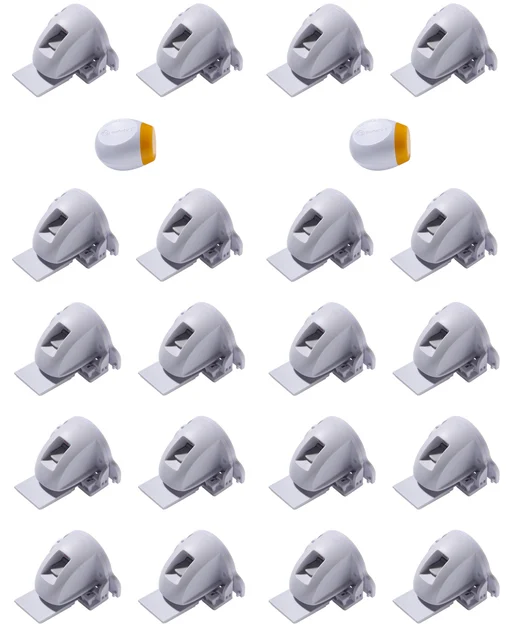
Invisible from the outside and pleasant to live with, as long as your cabinet interiors are smooth, dry and thick enough to take them.
Best for: Kitchens with smooth, painted or laminate cabinet interiors where you want the locks to disappear.
- Mounts inside the cabinet, so nothing shows on the door and nothing snags your hip
- Red and green indicators show whether each lock is engaged
- Bulk count of 20 locks covers a whole kitchen in one purchase
- Magnetic release is quick once the key lives on the fridge
- Adhesive is the failure point: owners report it letting go on textured or oiled cabinet interiors and in humid spots under sinks and near stoves
- May not suit frameless or fully inset cabinets or unusual door thicknesses, so check the user guide first
- The whole system stops working the moment the key is misplaced, and every guest needs to be shown how it works
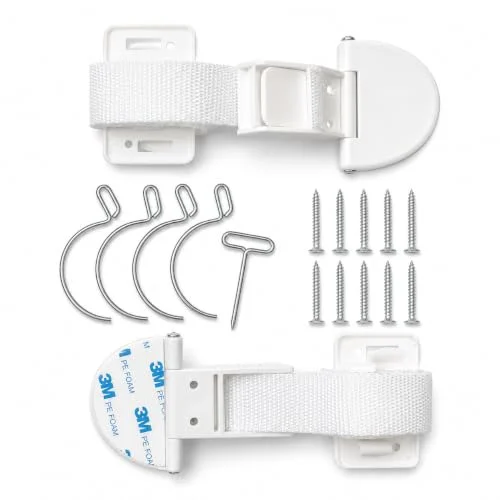
A clever answer to the renter problem, but the maker rates it to 200 lbs against 400 lbs for the metal kit.
Best for: Almost nobody, unless your lease genuinely forbids screws and you treat it as a partial measure.
- Wall side needs only a picture-hook sized hole, so it is close to damage free
- Optional adhesive mount on the furniture side means no holes in the dresser either
- Straps are easy to tension and quick to release when you vacuum behind the unit
- The maker rates it to 200 lbs, half the 400 lb rating of the stud-mounted metal kit
- The wall hooks are designed for drywall, so the wall side relies on drywall rather than a stud
- Adhesive furniture-side mounting inherits the adhesive problems the rest of this category has
- The 200 lb figure comes from a static hanging test, not a child climbing an open drawer
| Criteria | Picture Hang Solutions Furniture Anti-Tip Kit Top pick | Dreambaby Ezy-Check Multi-Use Latch (3 Pack) | Safety 1st Secure-to-Explore Adhesive Magnetic Locks (20 Locks, 2 Keys) | Qdos Safety Zero-Screw Furniture Anti-Tip Kit |
|---|---|---|---|---|
| Verdict | Buy it | Buy it | It depends | Skip it |
| Best for | Anyone with a dresser, bookcase or TV stand a toddler can climb, and who is willing to drill. | Renters and anyone who needs to secure awkward shapes: appliances, double doors, cabinets and pull handles. | Kitchens with smooth, painted or laminate cabinet interiors where you want the locks to disappear. | Almost nobody, unless your lease genuinely forbids screws and you treat it as a partial measure. |
| Price tier | $ · budget | $ · budget | $ · mid-range | $ · mid-range |
| What it secures | Dressers, bookcases, TV stands | Cabinets, drawers, appliances, toilets | Cabinets and drawers | Dressers, bookcases, TVs |
| Mounting | Screws into furniture and wall framing | Adhesive pads on both faces | Adhesive inside the cabinet | Drywall hooks plus straps or adhesive |
| Tolerates textured or oiled surfaces | Yes, mechanical fastening | Poorly, adhesive dependent | Poorly, adhesive dependent | Poorly, adhesive dependent |
| Holding power | Maker states up to 400 lbs | Adhesive dependent, not rated as an anti-tip device | Adhesive dependent | Maker states up to 200 lbs |
| Adult convenience | Set and forget | Lock indicator shows engaged or not | Fast with the key, useless without it | Cam lock release |
| Install effort | Drill and stud finder | Clean, peel, stick, then cure | Peel, stick, then cure | Push-in hooks, no tools |
| Damage to the home | Screw holes in wall and furniture | Adhesive residue on doors | Adhesive residue inside cabinets | Pinhole in drywall |
| Price tier | $ · budget | $ · budget | $ · mid-range | $ · mid-range |
Which one is right for you?
- Anyone with a dresser, bookcase or TV stand a toddler can climb, and who is willing to drill. Buy it Picture Hang Solutions Furniture Anti-Tip Kit
- Renters and anyone who needs to secure awkward shapes: appliances, double doors, cabinets and pull handles. Buy it Dreambaby Ezy-Check Multi-Use Latch (3 Pack)
- Kitchens with smooth, painted or laminate cabinet interiors where you want the locks to disappear. It depends Safety 1st Secure-to-Explore Adhesive Magnetic Locks (20 Locks, 2 Keys)
- Almost nobody, unless your lease genuinely forbids screws and you treat it as a partial measure. Skip it Qdos Safety Zero-Screw Furniture Anti-Tip Kit
How we judged the field
We do not run a test lab, and we are not going to pretend otherwise. What we do is read manufacturer specifications and large pools of owner reports, then look for the places where they disagree. In this category they disagree a lot, and the disagreements are informative.
Four criteria decided the ranking.
Holding power under a realistic load. A toddler does not pull straight and steady. They hang, they climb an open drawer, they use the whole weight of their body against one corner. Maker ratings reflect this: the metal kit with brackets and screws into wall framing states up to 400 lbs, while the drywall-hook kit states up to 200 lbs.
Surface tolerance. Almost every failure story in cabinet locks traces back to adhesive. Owner reports describe pads that hold beautifully on glossy laminate and painted MDF, then release within weeks on embossed or textured interiors, oiled wood, and anything installed under a sink or beside a stove where heat and moisture cycle. A lock that works on the cabinet in the showroom photo tells you nothing about the cabinet in your kitchen.
Adult ergonomics. Baby proofing that is annoying gets defeated by the adults in the house. A latch nobody wants to re-engage is a latch that spends the day unlatched, so we weighted one-handed operation and quick release heavily.
Failure mode. Some products fail loudly, by falling off in your hand. Others fail quietly, by holding just well enough to feel installed. Quiet failure is the dangerous kind, and it is the reason we are hard on no-screw anchoring.
One thing worth stating plainly before the picks: none of this hardware supervises a child. It buys seconds and it lowers consequences. It does not replace an adult in the room.
This is the least exciting product in the roundup and the one we would buy first. It is two metal brackets, an aircraft-grade galvanized steel cable, clevis and locking pins, and screws. One bracket goes on the top rear of the dresser or bookcase, the other goes on the wall, and the cable joins them with a few inches of slack.
Everything good about it follows from the fact that there is no plastic and no adhesive anywhere in the load path. Metal straps or cables with brackets and screws into a wooden stud are the strongest design in this group, and plastic components and stick-on mounts are where kits tend to fall apart. This kit is squarely the first type, and the maker states it supports up to 400 lbs. It also sits flat enough that the furniture goes back close to the wall, which sounds trivial until you try to reinstall a dresser that now stands two inches proud.
The cost is obvious and unavoidable. You need a drill, you need to find a stud, and you are putting a hole in a wall and in a piece of furniture. If your lease makes that impossible, read the Qdos entry below and then read it again, because the alternative is genuinely weaker. Also note that one kit anchors one point, and for extra-large furniture the maker recommends two kits, so plan the install accordingly.
There is a broader point here. Since the mandatory federal stability standard for clothing storage units took effect, new dressers behave better on their own. That standard does not cover a child climbing an open drawer, does not retroactively fix the furniture already in your house, and does not apply to bookcases or TV stands. Anchoring remains the cheapest large risk reduction available to a parent.
The Ezy-Check is an adjustable, flexible strap with a latch housing at each end. Its whole argument is adaptability. Rigid cabinet latches assume a specific door thickness, a specific gap and a specific handle. A strap latch assumes far less: Dreambaby lists it for cabinets, furniture, appliances and other compatible spots, and the 8.25 in (21 cm) strap is long enough to span a pair of double doors with knobs or a corner cabinet that no rigid lock will reach. If you only want to learn one product in this category, this is the type that covers the most ground.
The indicator is the other reason it earns a recommendation. Each latch shows at a glance whether it is locked or disengaged. That sounds minor until you remember that the most common way a latch fails is an adult leaving it undone, and a visible status is the cheapest fix for that. The three-pack is enough to try it on the doors you open daily before buying more.
The weakness is the one this whole category shares. Dreambaby’s strap latches install on adhesive backing with no tools or drilling, and adhesive lets go in predictable places: textured lids and doors, oiled or waxed wood, cabinet faces cleaned with a spray degreaser, and humid installations. On smooth, painted cabinets the bond is the easy part, and Dreambaby suggests working dental floss behind the pads to remove its latches later. On textured surfaces, expect trouble, and either sand and prime a small landing patch or move to a mechanical lock. Clean the surface with isopropyl alcohol, press for the full time the instructions state, and leave it to cure before you test it. Skipping the cure is the single most common self-inflicted failure.
One more caveat: this is a delay, not a lock. Dreambaby does not describe the release action or publish a holding figure on its product page, and older toddlers watch you operate any outside latch and eventually reproduce the motion. Nothing that stays on the outside of a cabinet survives observation forever, which is exactly why medicines and cleaning products belong up high rather than behind a latch.
Safety 1st Secure-to-Explore Adhesive Magnetic Locks (20 Locks, 2 Keys)
It dependsCheck price on AmazonMagnetic locks are the nicest childproofing to live with. The lock and its catch hide inside the cabinet, the door front stays clean, and there is nothing to catch your clothing. You hold a magnetic key to the outside of the door, the latch drops, and the door opens. Red and green indicators on each lock show whether it is engaged, and the 20-lock count is enough for a whole kitchen.
So why is this a conditional recommendation rather than a straight buy? Because more of its outcome depends on your kitchen than on the product. Three conditions have to hold. Your cabinet interiors need to be smooth and clean enough for the adhesive to bond, and owners report exactly the failures you would expect on textured interiors and in humid spots under a sink. Check the user guide for supported door thickness, since frameless or fully inset cabinetry may not work at all. And your household has to keep track of a key, because a magnetic lock system with a lost key means every cabinet in the kitchen is shut to you as well.
Some owners report that the tape released on the first hard pull, which is why the surface matters so much. The bulk count makes it a practical way to do a whole kitchen in one afternoon.
Buy it if your cabinets are smooth, painted or laminate, framed rather than frameless, and you value a clean door front. Look elsewhere if your kitchen is textured oak, if you rent and cannot make holes, or if you know your household will lose the key.
The idea behind this kit is good and the execution is thoughtful. Renters cannot drill, so Qdos supplies wall hooks that need only a hole the size of a picture hook in the drywall, plus the option of adhesive mounting on the furniture side, and states a holding capacity of up to 200 lbs. On paper it solves the anchoring problem for anyone who cannot make holes.
The numbers tell the story. The maker states up to 200 lbs, which it demonstrated with a static hang from an open drawer, against 400 lbs for the stud-mounted metal kit. A child climbing an open drawer is not a static load, and a drywall-only hook is the wrong place to cut corners for the one product in your house whose job is to stop a dresser from landing on a toddler.
There is also a design trap. The wall hooks are made for drywall between studs, so the wall side is the weak link by design. The adhesive furniture-side option is single use and inherits the adhesive problems discussed above, on the item where silent failure matters most. The maker does note that screws can go into studs or furniture backs if you prefer.
We would rather a renter drill two small holes and patch them at move-out than install an anchor that feels done and is not. If your lease truly forbids any hole, use this and be clear with yourself about what you have bought: a partial measure that should be paired with moving the heaviest items low, removing the climbing route (no toys or remotes on top of the dresser), and never letting a television sit on furniture that was not built for it.
Picture Hang Solutions Furniture Anti-Tip Kit vs Dreambaby Ezy-Check Multi-Use Latch: which should you buy?
These two do different jobs, so the real question is which one you buy first, and the answer is not close. Buy the anchor kit first. A cabinet full of pans is an inconvenience. A dresser landing on a child is the scenario the whole category exists to prevent, and the anchor is the only product in this roundup whose performance does not depend on glue, surface finish or the child failing to work out a release.
Buy the Ezy-Check second, and buy several. It is the piece you will use in the most places, it is the only lock here that fits appliances and awkward handles, and it moves with you when you rearrange the kitchen or the child outgrows a room. It is also the more forgiving purchase, because if a pad fails you find out immediately when the strap comes away in your hand.
If your budget for this project is small, the shape of a good spend is one or two anchors per heavy item, a handful of Ezy-Check latches for the doors you open daily, and self-closing outlet covers in the rooms your child plays in. That combination beats any bundled kit of the same total cost, because you are paying for the pieces that carry the risk rather than for forty plug caps.
What to look for
- Anchors before locks. Anchor every dresser, bookcase and TV stand a child can climb, and use one kit per piece at minimum, and two for extra-large furniture.
- Metal and screws over plastic and adhesive on anything anti-tip. Compare the maker’s stated load rating, and prefer stud-mounted metal hardware.
- Match the lock to the surface, not to the photo. Smooth painted or laminate faces suit adhesive. Textured, embossed, oiled or waxed surfaces do not, and neither do humid cabinets under a sink or beside a stove.
- Prefer locks with a screw option. Adhesive is convenient, screws are permanent. A lock that offers both lets you upgrade the mounting where the surface is marginal.
- Count the pieces that matter, not the pieces in the box. A large bundle is usually padded with plug caps and corner bumpers. Read the count of cabinet locks and check whether it includes any furniture anchors at all, because most do not.
- Choose self-closing sliding outlet covers over loose plug caps. A cap a child can remove is a choking hazard, and a cap an adult forgets to replace is nothing at all.
- Test the adult experience before you commit. Install one lock, live with it for a week, then buy the rest. The best lock in the world is worthless if nobody in the house wants to re-engage it.
- Re-check everything on a schedule. Adhesive creeps, straps loosen, and children get taller and stronger. A five minute walk-through every few months catches the failures you would otherwise discover the hard way.
Our final take
The shape of this category is that it sells breadth and delivers depth unevenly. Bundled kits are optimised to look generous, which is why they arrive heavy with plug caps and corner bumpers and light on the two things that actually change outcomes: solid anchoring and a lock that stays attached to your particular cabinets.
Spend accordingly. The Picture Hang Solutions Furniture Anti-Tip Kit is our top pick because it does the highest-consequence job with metal and screws instead of glue and optimism, and because buying more than one for a big piece is still an inexpensive afternoon. The Dreambaby Ezy-Check Multi-Use Latch is the runner-up and the item you will own the most of, as long as you respect the surface requirements and let the adhesive cure. The Safety 1st Secure-to-Explore Adhesive Magnetic Locks are a genuinely pleasant system that we can only recommend conditionally, because whether they work is decided by your cabinet interiors rather than by the product. And the Qdos Zero-Screw Furniture Anti-Tip Kit is the one to skip, not because the idea is bad but because it is rated to half the load of the metal kit in the one category where that matters most.
Install all of it, then keep watching. This hardware buys you seconds and softens consequences. Supervision is still the safety system.
Questions, answered
What should I baby proof first?
Anchor the heavy furniture and televisions, then lock away medicines, cleaning products and knives, then gate the stairs. Cabinet locks and outlet covers matter, but tip-overs and poisonings are the hazards that cause the worst outcomes, so they earn your first hour and your first purchase.
Why do adhesive cabinet locks keep falling off?
Adhesive pads need a smooth, clean, dry surface to bond. Textured or embossed cabinet interiors, oiled or waxed wood, laminate edges, and anything cleaned with a degreaser all cut the contact area or leave a film. Heat and humidity under a sink or beside a stove then work the bond loose over months. Wipe with isopropyl alcohol, press hard, and let the adhesive cure for the full time the instructions state before you test it. If the surface is textured, use a mechanical lock instead of arguing with the glue.
Are plug-in outlet caps good enough?
They are the weakest common item in a bundled kit. A cap that a toddler can pry out becomes a choking hazard, and an adult who removes one and forgets to replace it leaves the outlet open. Self-closing sliding outlet covers, which replace the faceplate and spring shut when a plug is pulled, remove both problems and are worth the upgrade for the rooms your child actually plays in.
My dresser meets the new federal stability standard. Do I still need to anchor it?
Yes. The mandatory stability rule for clothing storage units raised the floor for how a unit behaves on its own, but it does not account for a child pulling on an open drawer, a rug that tilts the unit, or older furniture already in your home. Anchoring is inexpensive and it is what turns a stable design into a stable installation.
Does baby proofing hardware mean I can leave my toddler alone in a room?
No. Every product here is a delay device, not a barrier. Locks buy you the seconds it takes to get across the room, and anchors reduce the consequences when something goes wrong. Children defeat hardware faster than parents expect, adhesive fails silently, and any lock left unlatched by an adult is simply not there. Treat this gear as a supplement to supervision, and re-check it every few months.
Deciding between the top two? See our head-to-head: Picture Hang Solutions Furniture Anti-Tip Kit vs Dreambaby Ezy-Check Multi-Use Latch (3 Pack).
More Baby & Family reviews
 The Best Baby Sleep Sacks: 4 Compared (and One to Skip)
  The Best Baby Strollers: 4 Popular Picks Compared
  The Best Baby Swaddles: 4 Compared (and One to Skip)
  The Best Baby Swings: 4 Compared (and One to Skip)
  The Best Baby Thermometers: 4 Compared (and One to Skip)
  The Best Baby Walkers: 4 Compared (and One to Skip)