Explained
Baby Play Mats, Explained
You will be able to read any play mat listing and tell what the foam is, how much cleaning the seams will cost you, and whether the thickness suits the stage your baby is at.
In this guide
Play mats look interchangeable in a product grid and behave very differently on a floor. Almost every meaningful difference comes down to three things: what the foam or cover is actually made of, how the mat is put together (one piece versus interlocking tiles), and how you clean it. Most buyers fixate on thickness and cute prints, which are the two specs that matter least.
The 30-second version
- Material chemistry is the real question, and the answer is not the acronym but the paperwork. XPE, TPU, EVA, PVC and natural latex all exist in good and bad versions, so what separates them is whether the brand names the material and publishes checkable testing.
- Thickness is a comfort spec, not a safety spec. Extra foam buys softer elbows and knees during tummy time plus a little sound damping on hard floors. No living room mat provides genuine fall protection for a standing toddler.
- Count seam length, not tiles. Large tiles cover the same floor with roughly half the seam length of small puzzle tiles, which means half the crumb traps and far less leverage for a toddler determined to pull the floor apart.
- Decide wipe versus wash before you shop. A sealed foam surface handles spills in seconds. A removable machine washable cover handles anything that soaks in. Fabric with no removable cover handles neither.
- Read the age rating and the odour warning. Some foam tile sets are rated for ages three and up or give no infant rating, and some listings quietly advise airing the product out for days before use. Both are the manufacturer telling you who the product is for.
The products this guide is about
Our verdict on each, with the full reasoning on the companion review.
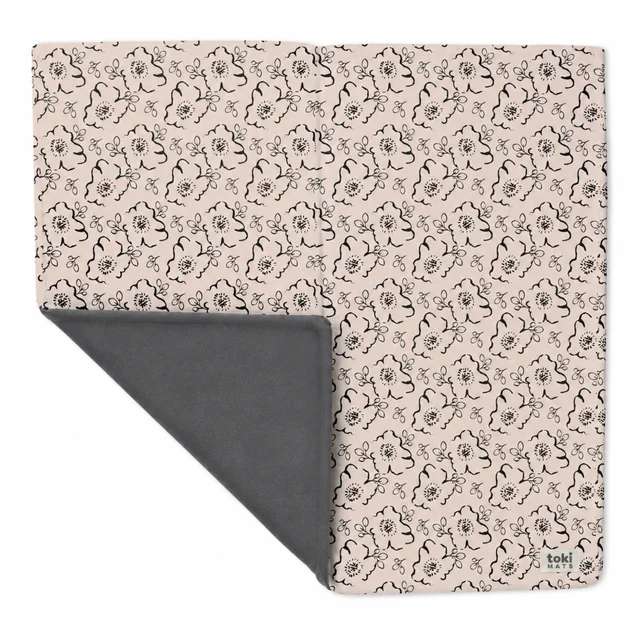
- Buy Toki Kids Poppy Organic Cotton Mat A GOTS organic cotton cover that unzips and machine washes, over a full inch of natural latex foam.
- Buy Toddlekind Premium Foam Haven Playmat Large 24 inch tiles with documented safety testing and a solid textured surface that ages better than print. Amazon
- It depends House of Noa Little Nomad Play Mat The same EVA tile format as our pick, bought for hand illustrated rug designs printed on a top film layer. Amazon
- Skip ProSource Kids Puzzle Alphabet & Numbers Play Mat Cheap 12 inch alphabet tiles with pop out letters and no infant age rating on the maker page. Amazon
What actually matters
- Named material with published testing. The useful question is not "is EVA safe" but "what did this brand test for, and can I check it?" EN71, ASTM F963, CPSIA, OEKO-TEX and GOTS are verifiable standards. "Non toxic" printed on a listing is marketing text with no definition behind it.
- Construction format. One piece mats have no seams and no gaps, but they only come in fixed sizes, so you get an island. Interlocking tiles scale to any room shape and ship flat, but every joint is a crumb trap and a finger hold. Folding mats sit in between: no seams, but a hinge line and a fixed footprint.
- Tile size, if you go modular. Large format tiles roughly halve the seam length over the same floor area compared with the classic small puzzle tiles, and they need far more leverage to lift, so a toddler is much less likely to win.
- Surface finish. A solid colour with an textured texture wears anonymously, because a scuff on solid foam is just a scuff. A printed pattern usually lives in a thin top film, so scrapes and edge wear read as damage and show the layer underneath.
- Cleanability. Sealed foam wipes with mild soap and water. A zip off cotton or blended cover goes in the machine, which is the only thing that truly deals with a soaked in spill. Check whether the cover tolerates heat drying before you buy, since many shrink.
- Thickness matched to stage. Around half an inch of closed cell foam is fine for crawling and cruising. A full inch is noticeably kinder for a newborn or young infant pressing elbows, knees and cheek into the floor for long tummy time sessions.
- Actual footprint. Most regret in this category is about size, not quality. Mats always look bigger online. Measure the space, tape out the dimensions on the floor, and check the largest configuration the system offers before you commit.
The specs, in plain English
Green flags vs red flags
Green flags
- The listing names the exact material and the certifications, ideally with a test report or certificate number you can look up rather than a badge graphic.
- Large format tiles, or a one piece construction with no seams at all.
- A solid colour with textured texture, or a removable cover, rather than a pattern printed into a thin top film.
- A removable, machine washable cover with a stated drying instruction, on any mat where the surface is fabric.
- Specific care limits stated up front in the manual: no heat drying, avoid prolonged standing water, keep heavy furniture legs off it. Brands that state limits usually know their product.
- Stated suitability from newborn or infant tummy time upward, rather than a rating that starts at three years old.
Red flags
- "Non toxic" or "eco friendly" as the only chemical claim, with no named standard and no test list behind it.
- A listing that advises airing the product out for several days before use. That is off gassing described in the product copy, and a nursery is the wrong room in which to do it.
- An age rating of three and up on a mat photographed with an infant. The rating usually reflects small parts or untested infant exposure, and it is the manufacturer's own position.
- Pop out letters, numbers or shapes. They are loose small parts by design, on the floor, under a child who mouths everything.
- Small puzzle tiles as the only format offered, which doubles the seam length and gives a toddler the leverage to disassemble the floor as a game.
- Thickness advertised as safety, cushioning against falls, or injury prevention. That claim is unsupportable at living room mat depths and tells you how the rest of the copy was written.
Who's who: the brands
- Toki Kids - Fabric first approach: GOTS organic cotton covers that unzip and machine wash over a natural latex core, with published contaminant testing. Sidesteps the plastic foam debate entirely, in three sizes, the largest 84 by 60 inches.
- Toddlekind - Large format EVA tile systems in muted, non cartoon colourways, with published EN71, ASTM F963 and CPSIA compliance. The mainstream choice when you need to cover a whole play area.
- House of Noa - Technically similar large format foam tiles bought for the look: hand illustrated designs that read as vintage rugs. The pattern lives in a printed top layer, which is also the wear surface.
- Gathre - Known for thin, wipeable coated mats that fold and travel well. Excellent for mess containment and portability, thin enough that they are a floor covering rather than a cushion.
- Parklon and Korean folding mat brands - The XPE and PE folding mat category: thick, springy, no seams, printed on both sides, often sold in large rectangles. Strong on tummy time comfort, with fixed sizes and a visible hinge line.
- ProSource and generic puzzle tile sellers - The budget alphabet tile end of the market. Cheap coverage, small tiles, loose pop out letters, and often little published age or testing information. Fine for an older child's playroom, not a nursery floor.
How to read a listing without getting fooled
Start by finding the material, and treat a listing that will not name it as an answer in itself. Then look for what the brand tested for and against which standard, because EN71, ASTM F963, CPSIA, OEKO-TEX and GOTS are checkable while "non toxic" is not. Next, convert the tile dimension into seam length in your head: covering the same floor with tiles half the size roughly doubles the joints you will be sweeping under, and halves the effort needed to pop one loose. Read the thickness as a comfort number and mentally delete any sentence connecting it to fall protection. Find the cleaning instruction and decide whether "wipe with mild soap" or "cover unzips and machine washes" fits the mess you actually make. Then check two things buyers routinely skip: the stated age suitability, which can be three and up, or missing, even on mats photographed with infants, and the largest configuration offered, because the photo will be shot to make the mat look like it covers the room. Finally, read the warnings section rather than the bullet points. Advice to air the product out, avoid heat drying, or keep standing water off it is where the real product description lives.
How much should you spend?
This is a category where the entry level is genuinely worse rather than merely smaller, so the cheapest option is the one to be most careful about. Budget puzzle tiles win on coverage per unit of spend and lose on everything else: small tiles, doubled seams, loose letter pieces, thin foam, and sometimes an age rating that excludes the baby you bought them for. The mid tier is where most of the real improvement lands. Paying up from budget buys larger tiles, published safety testing, calmer styling and a surface that wipes rather than scuffs, and that step delivers more per unit of spend than anything above it. Beyond that, higher spend buys two different things. Fabric covered mats over a natural core cost the most because you are buying comfort, washability and a completely different material story, which is worth it for a baby doing daily tummy time on a hard floor. Design led printed mats charge a premium purely for aesthetics over a functionally equivalent product, which is a legitimate reason to spend more only if the look is what gets a play mat into your living room at all. What is not worth paying for is extra thickness marketed as safety, extra features on a small tile format, or a printed pattern on a mat that will live under a ride on toy. Measure your space and buy the size you need in the tier that publishes its testing, and skip the rest.
Questions, answered
Is XPE, TPU or latex genuinely safer than EVA or PVC?
The acronym matters less than the testing behind it. EVA has a documented history of trace formamide in children's foam tiles, which pushed European regulators to force reformulation, so reputable brands now test for it alongside phthalates, lead and formaldehyde. XPE and PE foams and TPU films are usually chosen to avoid PVC and its plasticisers, and a fabric cover over natural latex or a certified polyurethane core avoids the vinyl question entirely. But any of these can be made badly. What actually separates a good mat from a bad one is whether the brand names the material and publishes checkable testing such as EN71, ASTM F963, CPSIA, OEKO-TEX or GOTS. A mat that only says "non toxic" has told you nothing.
How thick does a baby play mat need to be?
Thicker than most people expect for comfort, and thicker than anything on the market for safety. Around half an inch of closed cell foam is adequate for crawling and cruising on a hard floor. A full inch is noticeably better for tummy time, when a baby's elbows, knees and cheek are pressed into the surface for long stretches. What no living room mat provides is real fall attenuation for a standing toddler, which requires playground grade depth. Treat thickness as a joint comfort and sound damping spec, and keep climbable furniture away from the mat rather than expecting the foam to do that job.
Do interlocking tiles really come apart, and do the seams get gross?
Yes to both, and tile size decides how bad it gets. Crumbs, milk and sand migrate into every joint, so any tile mat needs periodic lifting and sweeping underneath. Toddlers also treat puzzle edges as a puzzle, and small tiles give them the leverage to win. A mat built from large format tiles has roughly half the seam length of one built from small tiles over the same floor and is much harder to pull apart. If seams are a dealbreaker, buy a one piece or folding mat and accept the smaller, fixed footprint.
Why does a new foam mat smell, and what should I do?
That smell is residual solvents and processing agents off gassing from the foam. Some sellers state it outright and advise airing the product out for several days, which is useful disclosure but also tells you what you are buying. If a mat arrives with a strong odour, unroll it in a ventilated room well away from where the baby sleeps, give it several days, and wipe the surface down before use. Do not put it into service while it still smells. A mat still smelling strongly after a week is worth returning.
Can my baby nap on a play mat?
No. Play mats are supervised playtime surfaces, not sleep surfaces. Established safe sleep guidance is consistent that infants should sleep alone, on their back, on a firm flat surface in a crib, bassinet or play yard with no soft bedding. Soft cushioned mats, fabric covered foam and raised bumper edges are the wrong environment for unsupervised sleep. Use the mat for tummy time and play while you are watching, and move the baby to a proper sleep space when they doze off. This is general information rather than medical advice, so follow your pediatrician or health visitor for guidance specific to your child.
One big mat or tiles for the whole room?
It depends on which problem you are solving. A one piece mat solves comfort and cleanability for a baby who plays in a defined corner: no seams, softer surface, and on fabric versions a cover that goes in the machine. A tile system solves coverage: it scales to the shape of your room, ships flat, wipes clean in seconds, and protects a hard floor across a whole play area. Households with a large open plan space frequently end up with both, tiles across the floor and a soft mat laid on top wherever the baby spends the most time.
Or jump to the head-to-head: Toki Kids Poppy Organic Cotton Mat vs Toddlekind Premium Foam Haven Playmat.