Explained
Baby Gates, Explained
After reading this, you'll know exactly which type of gate belongs in each spot in your home and how to read a gate listing without being misled.
In this guide
A baby gate looks like the simplest purchase in the baby aisle - a barrier with a door in it - but it hides one genuine safety decision most listings gloss over: how the gate attaches to your home determines where it can safely go. First-time buyers routinely put the wrong type of gate at the top of stairs, or buy a gate that doesn't fit their opening because they measured in the wrong place. This guide decodes the mounting types, fit ranges, and latch jargon so neither happens to you.
The 30-second version
- The mount type is a safety decision, not a convenience preference: only hardware-mounted gates - the kind that screw into studs or another solid surface - belong at the top of stairs.
- Pressure-mounted gates are for flat ground: doorways, hallways, and the bottom of stairs, where a dislodged gate falls onto the floor rather than down a flight.
- Measure at gate height, not the floor, because trim and baseboards change the width of an opening - and compare that number to the fit range on the box.
- A one-handed latch matters more than you think: you will open the gate dozens of times a day, usually while carrying a child, and a fiddly latch eventually gets left open.
- Most homes with stairs need more than one gate: a hardware-mounted gate for the staircase, plus cheaper pressure gates for doorways - one gate rarely covers every spot safely.
The products this guide is about
Our verdict on each, with the full reasoning on the companion review.
- Buy Toddleroo by North States Easy Swing & Lock Gate Series 2 The hardware-mounted stairway gate that does the one job pressure gates can't - and does it with a genuinely one-handed latch. Amazon
- Buy Regalo Easy Step Extra Tall Safety Gate The budget workhorse for doorways and hallways - extra height, a walk-through door, and a quick pressure fit. Amazon
- It depends Summer by Ingenuity Extra Tall Décor Safety Gate A tall, handsome metal gate that can install by pressure or hardware - worth it if looks and height matter, overkill if they don't. Amazon
- Skip Regalo Retractable Baby Gate The rollaway mesh idea is appealing, but owner reports on everyday operation make it hard to recommend over a rigid gate.
What actually matters
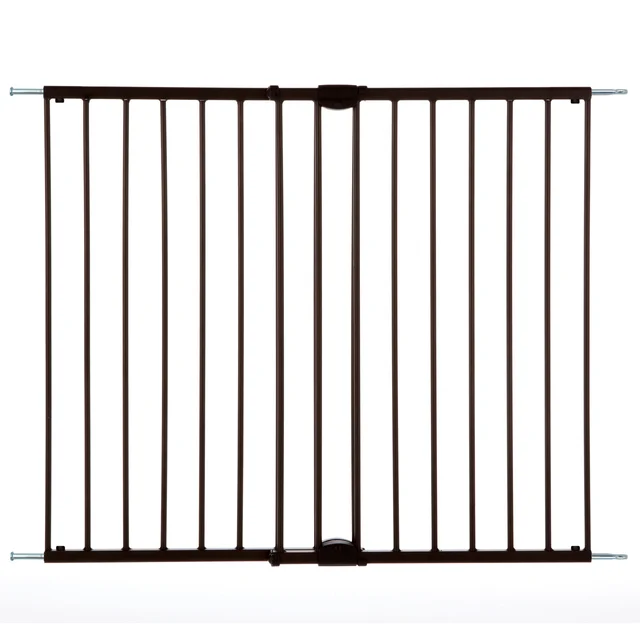
- Mounting method - the single most important spec. Hardware-mounted gates screw into wall studs or another solid surface and are far harder to push over; pressure-mounted gates hold themselves in place by tension against the walls. The mount determines where the gate can safely go, full stop.
- Placement fit - match the gate to the exact spot before comparing anything else. Top of stairs demands hardware mounting and ideally no bottom bar; doorways and hallways are fine with pressure gates; awkward angled openings may need special hardware or a retractable design.
- Fit range - every gate lists a minimum and maximum opening width. Measure your opening at the height the gate will sit, and check whether reaching the top of the range requires buying a separate extension.
- Latch design - the part you touch fifty times a day. Look for a latch adults can work with one hand but toddlers can't figure out; owner reports are the best guide to how a latch behaves after months of use.
- Bottom threshold bar - the horizontal bar many pressure gates run across the floor for rigidity. It's a known trip point, which is tolerable in a doorway and dangerous at the top of a staircase.
- Height - standard gates are climbable surprisingly early. Extra-tall models buy time against a determined climber (and matter more if you also have a large dog), but no gate outlasts a child who can climb or unlatch it.
- Certification - Baby Safety Alliance certification and ASTM compliance are the recognized safety standards for gates. Prefer these over vague marketing claims about being 'sturdy' or 'heavy-duty'.
The specs, in plain English
Green flags vs red flags
Green flags
- Baby Safety Alliance certification or explicit ASTM compliance stated on the listing, not just adjectives like 'heavy-duty'
- A stair-specific design: hardware mount, no bottom threshold bar, and a swing stop that keeps the door from opening over the steps
- A latch owners consistently describe as one-handed after months of use - not just in the product photos
- Wall cups included in the box with a pressure gate
- A clearly stated fit range plus honest notes about when an extension is needed
- Steel or solid metal construction with bar spacing a toddler can't squeeze through
Red flags
- A pressure-mounted gate marketed with staircase photos or vague 'great for stairs' language
- A retractable mesh gate positioned as a top-of-stairs solution because 'it screws in'
- Owner reports that the latch takes two hands, real force, or a knack to operate
- No certification mentioned anywhere on the listing - only strength adjectives
- Recurring owner complaints about tension loosening, sagging, or the gate popping out of place
- A fit range that only covers your opening with a separately sold extension the listing buries
Who's who: the brands
- Toddleroo by North States - Longtime US gate specialist known for hardware-mounted stairway gates with stair-specific details like swing stops and bar-free thresholds.
- Regalo - The budget-to-midrange volume brand - its pressure-mounted walk-through gates are the default doorway gate in an enormous number of homes.
- Summer by Ingenuity - Known for extra-tall and décor-styled metal gates that convert between pressure and hardware mounting.
- Evenflo - Broad baby-gear brand whose gates cover the affordable end, including simple pressure gates and wide-opening barriers.
- Cardinal Gates - Smaller specialist focused on hardware-mounted stair gates, including angled and outdoor installations that mainstream gates don't handle.
How to read a listing without getting fooled
Start with the mount type, because it filters everything else: if the listing says pressure-mounted, the gate is disqualified from the top of stairs no matter what the photos imply, and stock imagery of staircases is a marketing choice, not a safety claim. Next find the fit range and compare it to your own measurement taken at the height the gate will sit - then check whether the top of that range quietly depends on a separately sold extension. Look for Baby Safety Alliance or ASTM wording rather than strength adjectives; 'ultra-sturdy' is copywriting, certification is a test result. Finally, read owner reports specifically about the latch and about tension holding over time: a gate that is stiff, two-handed, or prone to loosening reveals itself in the reviews long before it reveals itself in your hallway.
How much should you spend?
What drives cost in this category is mounting hardware, height, and finish - not safety per se, since certified gates exist at every tier. Basic pressure-mounted doorway gates sit at the affordable end and are genuinely good; this is one category where the budget option is often the right option for flat-floor openings. Hardware-mounted stairway gates cost more because of the bracketry and stair-specific engineering, and that premium is worth paying without hesitation for the one gate that absolutely cannot fail. The décor-styled and extra-tall models charge extra for looks and height - worth it if the gate lives in your sightline all day or you have an early climber, unnecessary otherwise. The value sweet spot for most families is a system: one properly mounted stair gate where the stakes are highest, plus one or two inexpensive pressure gates everywhere else.
Questions, answered
Where should I use a hardware-mounted gate versus a pressure-mounted one?
The rule is simple and worth memorizing: hardware-mounted only at the top of stairs; pressure-mounted for doorways, hallways, and openings between rooms. A hardware gate screws into studs or another solid surface, so a leaning or falling child can't dislodge it. A pressure gate just wedges against the walls - fine on flat ground, where a knocked-loose gate lands on the floor, but at the top of a staircase the gate and the child can go down together. The bottom of stairs is acceptable pressure-gate territory, since it only has to stop a crawler from climbing up. If you place just one gate correctly in the whole house, make it the hardware-mounted one at the top of the stairs.
How do I measure my opening so the gate actually fits?
Measure the width at the height where the gate will sit - not at the floor. Baseboards, trim, and molding make openings narrower at the bottom, and a floor-level measurement can leave you with a gate that won't tension properly. Compare your number to the fit range on the box, and check whether reaching the top of that range requires a separately sold extension. For pressure gates, plan to use the included wall cups; they make the stated range fit more securely in real doorways.
Are retractable mesh gates a good idea?
They solve one real problem: the barrier rolls completely away, so there's nothing to step over and nothing visible when open, which suits porches and odd angled openings where rigid gates won't fit. But owner reports are consistent about the trade-offs - latching usually takes two hands and real force, the mesh can sag over time, and pets and determined toddlers test the bottom edge. And because the barrier is flexible fabric rather than rigid bars, a retractable is a poor choice at the top of stairs even though it screws into the wall. Treat retractables as a niche tool for spaces no rigid gate fits, not as your everyday main gate.
What does gate certification actually mean?
Gate makers cite Baby Safety Alliance certification and compliance with ASTM safety standards for gates. It's not a review score; it's a pass/fail on recognized safety criteria. On a listing, explicit Baby Safety Alliance or ASTM wording is worth far more than adjectives like 'heavy-duty' or 'ultra-secure', which are marketing and test nothing.
What makes a gate 'one-handed', and why does it matter so much?
A one-handed latch is one you can open and relatch with a single hand - for example a lever handle - without setting down the child, laundry, or coffee in your other arm. It matters because you'll operate the gate dozens of times a day, and a gate that's annoying to close is a gate that eventually gets left open, which defeats the entire purchase. Product pages all claim easy operation; owner reports after months of use are where the truth lives.
When should we stop using baby gates?
Gates are generally positioned for children up to around two years old. The real endpoint, though, is ability rather than age: once your child can open the latch or climb over the top - which comes earlier for confident climbers - the gate stops being a barrier and starts being a hazard to fall from. At that point retire it and rely on supervision and locked doors. Extra-tall gates delay that day but don't change it.
Or jump to the head-to-head: Toddleroo by North States Easy Swing & Lock Gate Series 2 vs Regalo Easy Step Extra Tall Safety Gate.