

Baby & Family
The Best Baby Gates: 4 Compared (and One to Skip)
Four current baby gates - hardware-mount and pressure-mount - compared on stair safety, install, one-hand use, and durability.
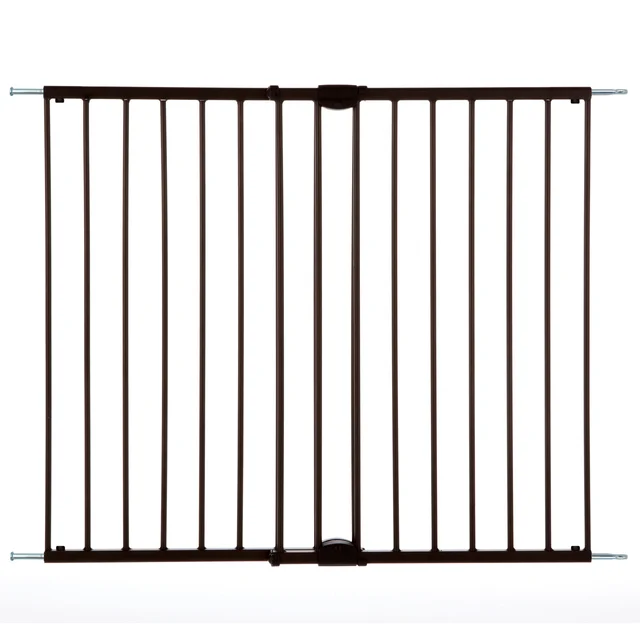
The short version
Buy the Toddleroo by North States Easy Swing & Lock Gate Series 2 for the top of the stairs - it is hardware-mounted, has no bottom bar to trip on, and its one-hand latch and swing control are built for exactly that spot. For doorways and hallways, the pressure-mounted Regalo Easy Step Extra Tall does the job in minutes for a fraction of the price. The Summer by Ingenuity Extra Tall Décor gate is the conditional pick: worth it for climbers and visible living spaces, unnecessary otherwise. Skip the Regalo Retractable - owners widely report two-handed operation and sagging mesh, which defeats the point of a gate you open fifty times a day. Whatever you buy, the rule is simple: pressure gates do not go at the top of stairs. Best for: parents gating a staircase properly first, then filling in doorways with cheap, reliable pressure gates.
Our picks at a glance
- Toddleroo by North States Easy Swing & Lock Gate Series 2 - Buy. The hardware-mounted stairway gate that does the one job pressure gates can't - and does it with a genuinely one-handed latch.
- Regalo Easy Step Extra Tall Safety Gate - Buy. The budget workhorse for doorways and hallways - extra height, a walk-through door, and a quick pressure fit.
- Summer by Ingenuity Extra Tall Décor Safety Gate - It depends. A tall, handsome metal gate that can install by pressure or hardware - worth it if looks and height matter, overkill if they don't.
- Regalo Retractable Baby Gate - Skip. The rollaway mesh idea is appealing, but owner reports on everyday operation make it hard to recommend over a rigid gate.
The verdict in 30 seconds
What mattered most
- Mount type
- Safe for top of stairs
- Barrier style
- Fits openings
- One-handed use
- Install effort
A baby gate is one of the few pieces of baby gear where the mounting method is a genuine safety decision, not a convenience preference. Hardware-mounted gates screw into studs and are the only kind that belong at the top of stairs; pressure-mounted gates are quicker to fit and fine for doorways and hallways. We compared four current, widely available gates across both types: two are easy recommendations, one makes sense only for specific homes, and one popular style we would skip for most families.
The hardware-mounted stairway gate that does the one job pressure gates can't - and does it with a genuinely one-handed latch.
Best for: The top of stairs and any opening where the gate must not move - the one to buy first.
- Hardware-mounts into studs or another solid surface, so it is appropriate for the top of stairs
- No bottom threshold bar to trip over on a stair landing
- One-hand latch and a swing control that stops the door opening out over the stairs
- Steel build, Baby Safety Alliance and ASTM certified, fits openings from roughly 29 to 48 inches
- Installation requires drilling and careful measuring - plan on a real DIY session
- Hardware mount only, so it must attach to a solid surface such as a wooden stud, and pressure-mount adapters are not supported
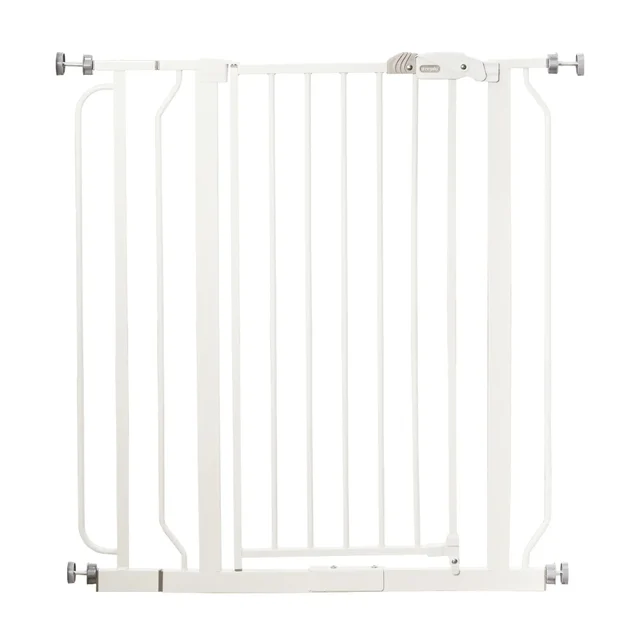
The budget workhorse for doorways and hallways - extra height, a walk-through door, and a quick pressure fit.
Best for: Doorways, hallways, and kitchen openings on a budget - the sensible second gate.
- Pressure-mounts in minutes with included wall cups - no drilling for doorway use
- Extra-tall frame buys time against early climbers
- Lever-style handle most adults can work one-handed while carrying a child
- Easy to move between rooms or take down for guests
- Pressure mount means it must not be used at the top of stairs
- Bottom threshold bar sits across the floor - a known trip point in busy doorways
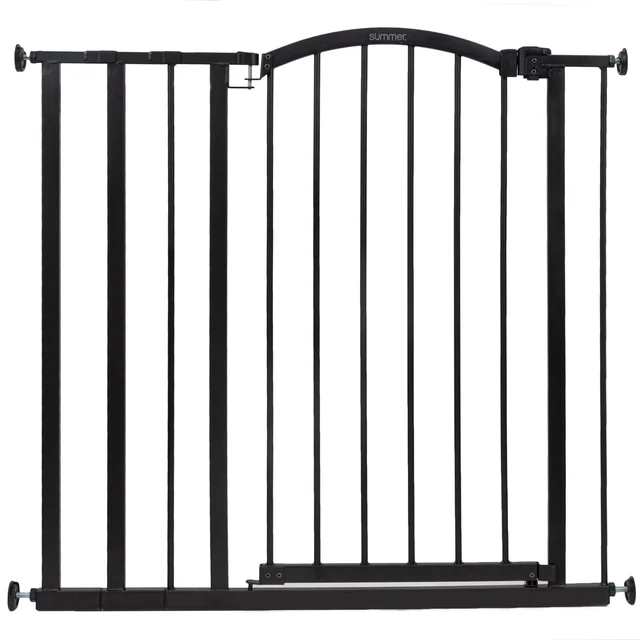
A tall, handsome metal gate that can install by pressure or hardware - worth it if looks and height matter, overkill if they don't.
Best for: Households with a climber, a large dog, or open-plan sightlines where the gate is always visible.
- Tall 36 inch barrier - one of the better answers to a determined climber
- Converts between pressure mount and included hardware mount
- Décor styling and finish that owners say blends in better than basic white gates
- Heavier door swing and a latch owners describe as stiff until it breaks in
- Pressure fit on trim and baseboards can loosen and needs periodic re-tightening
- Costs meaningfully more than plain gates that block the same opening
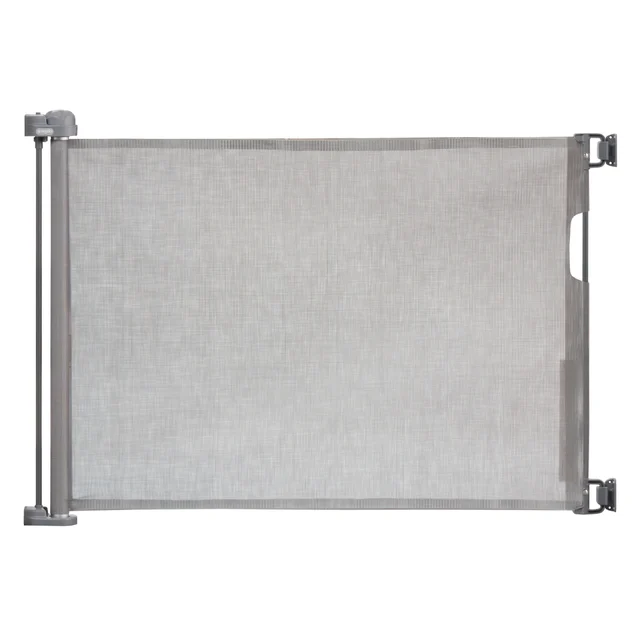
The rollaway mesh idea is appealing, but owner reports on everyday operation make it hard to recommend over a rigid gate.
Best for: Only for openings where no rigid gate physically fits - most families will be happier with a conventional gate.
- Retracts completely out of the way - nothing to step over and nothing visible when open
- Useful for odd spots like porches and angled openings where rigid gates won't fit
- Owners widely report the latch-and-lock motion takes two hands and real force - the opposite of what you want while holding a baby
- Mesh can sag and stretch over time, and determined toddlers and pets test the bottom edge
- Despite being screw-mounted, the flexible mesh barrier is a poor choice for the top of stairs
| Criteria | Toddleroo by North States Easy Swing & Lock Gate Series 2 Top pick Buy it Buy | Regalo Easy Step Extra Tall Safety Gate Buy it Buy | Summer by Ingenuity Extra Tall Décor Safety Gate It depends Buy | Regalo Retractable Baby Gate Skip it Buy |
|---|---|---|---|---|
| Best for | The top of stairs and any opening where the gate must not move - the one to buy first. | Doorways, hallways, and kitchen openings on a budget - the sensible second gate. | Households with a climber, a large dog, or open-plan sightlines where the gate is always visible. | Only for openings where no rigid gate physically fits - most families will be happier with a conventional gate. |
| Price tier | $$$ · premium | $ · budget | $$ · mid-range | $$ · mid-range |
| Mount type | Hardware (screws into a stud or solid surface) | Pressure (wall cups included) | Pressure or hardware (both included) | Hardware (screw-in brackets) |
| Safe for top of stairs | Yes - designed for it | No - never | Only in hardware mode, with care | Not recommended despite screws |
| Barrier style | Rigid steel bars, no bottom bar | Rigid steel bars, bottom threshold bar | Rigid metal bars, extra tall | Flexible retractable mesh |
| Fits openings | Roughly 29 to 48 inches | Roughly 29 to 36.5 inches | Roughly 29 to 40 inches | Up to roughly 50 inches, retracts flat |
| One-handed use | Yes - one-hand latch | Yes - lever handle | Mostly - latch stiff at first | No - owners report two hands |
| Install effort | Drilling and measuring required | Minutes, tool-free | Tool-free or drilled, your choice | Drilling required on both sides |
| Price tier | $$$ · premium | $ · budget | $$ · mid-range | $$ · mid-range |
Which one is right for you?
- The top of stairs and any opening where the gate must not move - the one to buy first. Buy it Toddleroo by North States Easy Swing & Lock Gate Series 2
- Doorways, hallways, and kitchen openings on a budget - the sensible second gate. Buy it Regalo Easy Step Extra Tall Safety Gate
- Households with a climber, a large dog, or open-plan sightlines where the gate is always visible. It depends Summer by Ingenuity Extra Tall Décor Safety Gate
- Only for openings where no rigid gate physically fits - most families will be happier with a conventional gate. Skip it Regalo Retractable Baby Gate
How we judged the field
We synthesized independent testing of current baby gates with large volumes of owner reports - the daily-use experiences that show up only after months of opening a gate one-handed with a child on your hip. Four things mattered most: whether the mounting method matches the placement it will actually be used in (the top of stairs is a hardware-mount-only zone, full stop); how the latch behaves in real one-handed use; how the gate holds up mechanically - tension drift, sagging, latch wear; and whether the stated fit range survives contact with real doorframes, trim, and banisters. We did not run our own lab; where we cite behavior, it is what reviewers and owners consistently report.
Toddleroo by North States Easy Swing & Lock Gate Series 2
Buy itThis is the gate the whole category is trying to be when the stakes are real. It hardware-mounts into studs or another solid surface, which makes it one of the relatively few mainstream gates genuinely appropriate for the top of a staircase. Just as important is what it leaves out: there is no bottom threshold bar, so there is nothing to catch a foot on at the exact spot where a trip is most dangerous. The latch opens with one hand, and you choose the swing direction so the door cannot open out over the steps - a small detail that marks a proper stair gate. The steel build is Baby Safety Alliance and ASTM certified and covers openings from roughly 29 to 48 inches. The cost is effort: you will measure, drill, and level, and it needs a solid surface such as a stud to attach to. That is an evening of work for the one gate in the house that absolutely cannot fail.
Regalo Easy Step Extra Tall Safety Gate
Buy itRegalo’s Easy Step line is the default doorway gate in an enormous number of homes, and the Extra Tall version is the one we would pick: the added height meaningfully delays the era of the climbing toddler for very little extra money. It pressure-mounts in minutes using included wall cups, the lever handle opens with one hand, and the whole thing comes down without a trace when grandparents visit. Owners note the usual pressure-gate realities - the fit needs occasional re-tightening, and the bottom threshold bar that gives the frame its rigidity is also something adults step over hundreds of times. The safety rule is not negotiable: this is a doorway and hallway gate, never a top-of-stairs gate. Within its lane, it is the best value in the category.
Summer by Ingenuity Extra Tall Décor Safety Gate
It dependsThis gate answers two specific complaints about basic gates: they are too short for climbers, and they are ugly. The Extra Tall Décor is a tall, dark-metal gate that owners genuinely like looking at, and it ships with both pressure fittings and a hardware-mount kit, so one purchase can serve a doorway now and a drilled installation later. The trade-offs are equally specific. It is heavier than plain gates, the latch is stiff out of the box and takes a firm push until it breaks in, and the pressure fit against trim and baseboards drifts and needs periodic re-tightening - a common owner note. If you have a climber, a large dog, or a gate that lives in the middle of your sightline all day, the premium over a basic gate is money well spent. If you just need to block a hallway, the Regalo does that for less.
Regalo Retractable Baby Gate
Skip itThe pitch is excellent: a mesh barrier that rolls away completely, leaving a clean doorway with nothing to step over. The practice, according to a consistent thread of owner reports, is a gate you fight with. Extending and locking the mesh typically takes both hands and real tension, which is precisely the motion you cannot spare while holding a child - and a gate that is annoying to close is a gate that eventually gets left open. Over time the mesh can sag and stretch, pets and persistent toddlers probe the bottom edge, and although the gate screws into the wall on both sides, a flexible fabric barrier is still the wrong answer for the top of stairs. Retractables have a legitimate niche - porches, angled openings, spots where no rigid gate fits - but as an everyday main gate, a rigid walk-through does the job better at the same price.
Toddleroo by North States Easy Swing & Lock Gate Series 2 vs Regalo Easy Step Extra Tall Safety Gate: which should you buy?
These two are not really rivals - they are a system. The question is which one your specific opening needs. If the opening is at the top of stairs, there is no decision to make: the Toddleroo is hardware-mounted, bottom-bar-free, and swing-limited, and the Regalo is disqualified by its pressure mount before the comparison starts. For a doorway or hallway, the logic flips. The Regalo installs in minutes, costs a fraction as much, opens with one hand, and gives up nothing that matters on flat ground. The Toddleroo’s drilled installation buys permanence you do not need between the kitchen and the living room. Most families with stairs should buy one of each: the Toddleroo guards the staircase, and one or two Easy Steps handle everywhere else. If you must pick a single gate for a single flat-floor opening, buy the Regalo and bank the difference.
What to look for
- Match the mount to the placement. Hardware-mounted only at the top of stairs; pressure-mounted is fine for doorways, hallways, and the bottom of stairs.
- No bottom bar at stair landings. A threshold bar at the top step is a trip hazard exactly where you cannot afford one.
- A latch you can work one-handed. You will open the gate dozens of times a day, usually carrying something or someone.
- Swing control for stair gates. The door should be stoppable so it never swings out over the steps.
- Measure the opening at gate height and check whether the top of the fit range needs a separate extension.
- Look for Baby Safety Alliance / ASTM certification rather than marketing language about strength.
- Re-check pressure gates regularly. Tension drifts with use - a weekly push test takes five seconds.
Our final take
Gate the staircase properly first: the Toddleroo by North States Easy Swing & Lock Gate Series 2 is the best combination of correct mounting, thoughtful stair-specific details, and everyday usability in this group, and it is worth the drilling. Fill in the flat-floor openings with the Regalo Easy Step Extra Tall - cheap, quick, and reliable in the role pressure gates were designed for. Choose the Summer by Ingenuity Extra Tall Décor when height or looks are a real requirement rather than a nice-to-have. And skip the Regalo Retractable unless your doorway genuinely cannot take a rigid gate: a barrier you can operate with one hand, every time, without thinking about it, is what actually keeps a curious toddler where they belong.
Questions, answered
Which type of gate is safe at the top of stairs?
Only a hardware-mounted gate - one that screws into wall studs or a solid banister - should ever be used at the top of stairs. A pressure-mounted gate holds itself in place by pushing against the walls, and a leaning or falling child can dislodge it; at the top of a staircase that means the gate and the child go down together. Also choose a stair gate with no bottom threshold bar, and set it so the door cannot swing out over the steps.
Are pressure-mounted gates safe anywhere?
Yes - in the right spots. Doorways, hallways, and openings between rooms on the same level are exactly what pressure gates are for. At the bottom of stairs they are acceptable to keep a crawler from climbing up, since a dislodged gate there falls onto the floor, not down a flight. Check the tension every week or two; pressure fittings loosen with use, especially on baseboards and trim.
Why not just use a retractable mesh gate everywhere?
Retractable gates solve a real problem - they disappear when open and fit awkward spaces - but owner reports are consistent about the trade-offs: latching usually takes two hands, the mesh can sag or stretch, and pets and determined toddlers test the bottom edge. Because the barrier is flexible fabric rather than rigid bars, they are also a poor choice at the top of stairs even though they screw into the wall. Treat them as a niche tool, not a default.
How do I know a gate will actually fit my opening?
Measure the opening at the height the gate will sit, not at the floor, since trim and baseboards change the width. Compare that number to the range printed on the box, and check whether hitting the top of the range requires a separate extension. For pressure gates, use the included wall cups - they spread the load, protect drywall, and make the fit noticeably more secure.
When should we stop using baby gates?
Manufacturers and safety bodies generally position gates for children up to around two years old. Once a child can open the latch or climb over the top - which often comes earlier for confident climbers - the gate can become a hazard rather than a barrier, so retire it and rely on supervision and locked doors instead. Extra-tall models buy some time but do not change the endpoint.
Deciding between the top two? See our head-to-head: Toddleroo by North States Easy Swing & Lock Gate Series 2 vs Regalo Easy Step Extra Tall Safety Gate.
More in Baby & Family
Baby Gates, Explained Plain-English guide → Toddleroo by North States Easy Swing & Lock Gate Series 2 vs Regalo Easy Step Extra Tall Safety Gate Head-to-head →  The Best Baby Nail Clippers: 4 Compared (and One to Skip)
  The Best Baby Play Mats: 4 Compared (and One to Skip)
  The Best Baby Proofing Kits: 4 Compared (and One to Skip)
  The Best Baby Sleep Sacks: 4 Compared (and One to Skip)