Explained
Acoustic Guitars, Explained
After reading, you'll understand what each line of an acoustic guitar spec sheet means and which ones matter most for a beginner.
In this guide
First-time buyers often choose an acoustic guitar by looks or by how much comes in the box. The specs that decide whether a beginner keeps playing are less obvious: scale length, neck width, string gauge and whether the top is solid wood. Spec sheets also use vague wording that hides cheaper materials. This guide explains the terms so you can read a listing with confidence.
The 30-second version
- A solid top is the clearest quality marker, and a listing that avoids the word solid usually means a laminate top.
- Shorter scale means less stretch, which makes chords easier for small hands and young players.
- String gauge decides how sore your fingers get, so lighter strings are kinder while calluses form.
- Body shape changes both comfort and sound, with dreadnoughts louder and fuller and smaller bodies easier to hold.
- Starter-pack extras are rarely worth much, so judge the guitar first and the bag, strap and picks second.
The products this guide is about
Our verdict on each, with the full reasoning on the companion review.
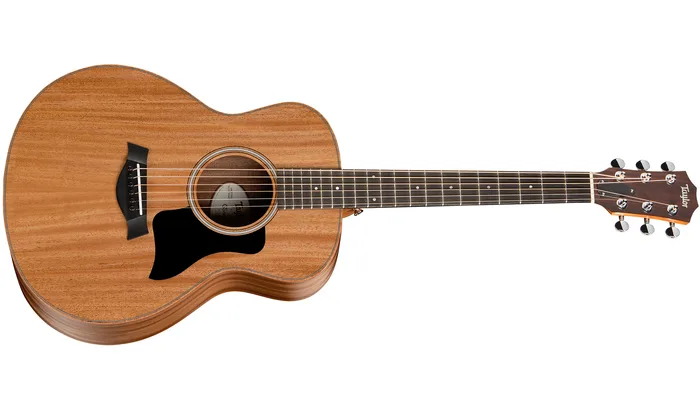
- Buy Taylor GS Mini Mahogany A scaled-down guitar with a solid mahogany top, a 23-1/2 inch scale, ebony fretboard and a structured gig bag in the box.
- Buy Yamaha FG800J Yamaha's standard solid-top dreadnought, with scalloped bracing, a 25 inch scale and a 43 mm nut.
- It depends Martin D-10E Retro Sapele An all-solid sapele dreadnought with Martin E1 electronics, a built-in tuner and a softshell case.
- Skip Washburn Apprentice AD5CE Pack A cutaway dreadnought starter pack whose spec sheet leaves out the details that matter most.
What actually matters
- Top wood - The top vibrates most and shapes the sound. A solid top is generally more resonant than a laminate one, so look for the word solid on the spec sheet.
- Scale length - This is the vibrating string length from nut to saddle. Shorter scales reduce string tension and the stretch between frets, which helps beginners.
- Body shape and size - Dreadnoughts are big and loud with strong bass. Concert and scaled-down bodies are easier to hold and reach over.
- Nut width - The width of the neck at the first fret affects how crowded chords feel. Most beginner guitars sit around 1-11/16 inches, with some at 1-3/4.
- String gauge - Gauge is the thickness of the strings, usually named by the thinnest string. Lighter sets are easier to press down but sound slightly thinner.
- Setup and action - Action is how high the strings sit above the frets. Low, well-set action makes any guitar easier to play, so a setup is worth paying for.
- Electronics - A pickup and preamp let you plug into an amp or PA. They add cost, so they are worth it only if you will use them.
The specs, in plain English
Green flags vs red flags
Green flags
- The spec sheet says solid for the top wood
- A named fretboard wood such as ebony, rosewood or walnut
- A published scale length and nut width
- A structured gig bag or case included
- A maker that states the action can be adjusted
Red flags
- Vague top descriptions like select spruce with no mention of solid
- Engineered wood fretboards on a guitar sold as a long-term instrument
- Electronics mentioned with no model or controls listed
- Packs padded with picks and straps but no tuner
- Medium or heavy strings on a guitar sold to beginners, unless you plan to change them
Who's who: the brands
- Yamaha - Its FG series has been a standard first guitar for decades, known for solid tops at budget prices.
- Taylor - Known for comfortable necks and its patented bolt-on Taylor Neck, with the GS Mini as its popular small-body line.
- Martin - A long-established American maker associated with the dreadnought shape, with the Road Series as its more accessible range.
- Washburn - Sells a wide range of budget acoustic guitars, including the Apprentice series and starter packs.
How to read a listing without getting fooled
Read an acoustic guitar spec sheet from the top down. First, check the top wood and look for the word solid; if it is missing, assume laminate. Then read back and sides, which are often layered on beginner guitars and that is fine. Next, find scale length and nut width, the two numbers that most affect playability, and compare them to guitars you have held. Check the fretboard and bridge wood, since a named wood is usually a better sign than engineered or select hardwood. Look at the factory string gauge, then the electronics line for a named preamp and tuner. Finally, read what is included: a structured bag or case is worth more than a strap and picks.
How much should you spend?
Budget guitars can still offer a solid top, as the Yamaha FG800J shows, but usually come with layered back and sides and few extras. Mid-range guitars add better woods for the fretboard and bridge, more careful finishing and often a structured gig bag. Premium models add all-solid construction, named electronics and better cases. Starter packs sit at the budget end and add accessories, but compare the guitar's own specs to a plain budget model before assuming the pack is the better deal.
Questions, answered
Should a beginner learn on steel or nylon strings?
Nylon strings are softer and easier on fingertips, and classical guitars have wider necks. Steel strings are louder and suit pop, rock and folk strumming. If the music you want to play uses steel strings, start on steel with light strings. Motivation matters more than the small difference in comfort.
Is a setup worth paying for on a new guitar?
Usually, yes. A setup adjusts the neck relief, string height and nut slots so the guitar is easier to play. Many beginner guitars leave the factory with action higher than ideal. Taylor notes on its GS Mini page that the action is fully adjustable, which is true of most acoustics.
How do I protect an acoustic guitar from humidity?
Solid wood reacts to changes in humidity, so keep the guitar away from heaters and air vents. Storing it in its case or bag helps. In dry winters, many players use a case humidifier. Laminate guitars are more forgiving but still benefit from care.
Do left-handed players need a special guitar?
Many left-handed players use a left-handed model, where the bracing, nut and saddle are reversed. Some makers offer left-handed versions of popular models, such as the Martin D-10E Retro Sapele. Restringing a right-handed guitar upside down is possible but needs a new nut and often a new saddle.
Or jump to the head-to-head: Taylor GS Mini Mahogany vs Yamaha FG800J.