Explained
Bass Amps, Explained
After reading, you will understand how to read a bass amp spec sheet and which features matter for practice and small gigs.
In this guide
Bass amp listings throw around watts, driver sizes, ports and direct outs, and the headline number is rarely the whole story. A model name can say 100 while the manual rates 60 W RMS. A smaller speaker can look fine on paper and still struggle with low notes. A first-time buyer also tends to forget weight and connections until the amp is home.
The 30-second version
- Read the RMS rating, not the model name or a peak figure.
- Speaker size and a ported cabinet affect low-end more than a few extra watts.
- An XLR output matters the moment you want to feed a PA or recorder.
- Weight is a real spec, and the stated figures here run from 18 lb to 37 lb.
- A headphone output and aux input turn a practice amp into a quiet, play-along tool.
The products this guide is about
Our verdict on each, with the full reasoning on the companion review.
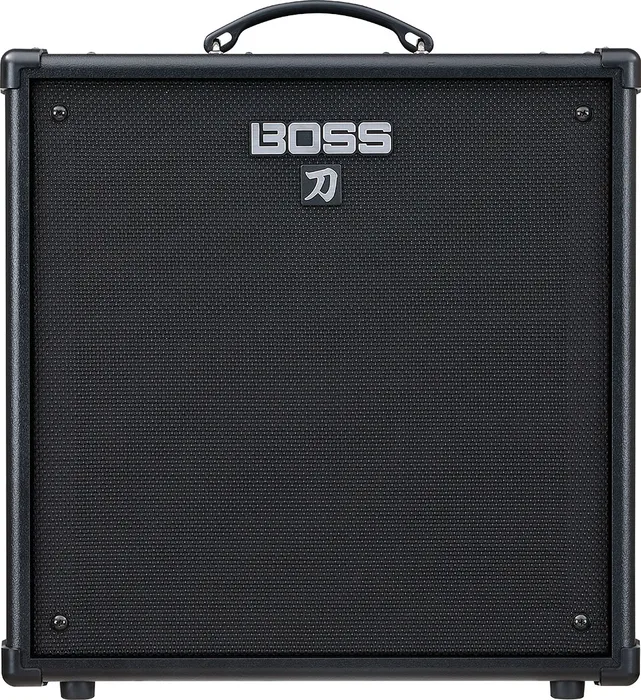
- Buy BOSS Katana-110 Bass A 10 in combo with a tweeter, three amp voicings, onboard effects and a Power Control switch for quiet playing. Amazon
- Buy Fender Rumble 40 A light 40 W combo with a 10 in speaker, overdrive, three voicing buttons and an XLR line out. Amazon
- Buy Ampeg Rocket Bass RB-110 A 50 W 1x10 combo with Ampeg voicing, Super Grit overdrive and an XLR direct output. Amazon
- It depends Orange Crush Bass 50 A 50 W analogue combo with a 12 in ported cabinet, a sweepable mid, a blend control and a CabSim headphone output. Amazon
- It depends Peavey MAX 100 A feature-rich combo with a built-in tuner, Kosmos-C bass enhancement and an XLR out, rated 60 W RMS in the manual. Amazon
- Skip Hartke HD50 A 50 W combo with a hybrid paper and aluminum 10 in cone, held back by weight and a thin feature list.
What actually matters
- Rated power - Look for continuous (RMS) power at a stated impedance. Peak figures and model numbers can be much higher than the continuous rating.
- Speaker size - A 10 in or 12 in driver moves more air than an 8 in one. Maker pages state the driver size, and some manuals leave it out.
- Ported cabinet - A tuned port extends low-end response from a small cabinet. Orange and Peavey list ported enclosures.
- XLR direct output - It sends a balanced signal to a PA or interface. Check that the spec lists it rather than assuming.
- Headphone and aux - A headphone jack allows silent practice and an aux input lets you play along with a phone or player.
- Weight - A 37 lb combo and an 18 lb combo feel very different on a bus or stairs. Use the maker's stated weight.
- Effects loop - A loop puts pedals after the preamp, and some practice amps list none.
The specs, in plain English
Green flags vs red flags
Green flags
- The maker states an RMS rating and the speaker size
- A listed XLR direct output if you plan to play out
- A weight you can carry up your stairs
- A headphone output and aux input on the spec sheet
- A clear owner's manual with a full spec table
Red flags
- Only a peak wattage or a model number as the power claim
- No speaker size anywhere in the listing
- No direct output when you plan to feed a PA
- A weight far above similar combos in the same size class
- A feature list that leaves out basic connections such as headphones
Who's who: the brands
- Fender - Known for the lightweight Rumble series of practice and small-venue combos.
- Ampeg - A classic bass amp name, now part of Yamaha Guitar Group, with the Rocket Bass entry combos.
- BOSS - Brings its Katana modeling approach, effects and memories to a bass combo.
- Orange - Offers the Crush Bass series with analogue circuitry and a sweepable mid.
- Peavey - Sells the MAX series with built-in tuners and many voicing switches.
How to read a listing without getting fooled
Start with the continuous power rating and the speaker size, then check weight. Next look for the connections you need: XLR out, headphone jack, aux in and an effects loop. If a feature is not on the spec sheet, treat it as not included. Compare numbers across makers carefully, because some use RMS and some quote peak figures.
How much should you spend?
Entry practice combos sit in the budget to mid-range tiers and cover the basics: a 10 in speaker, a headphone jack and an aux input. The mid-range tier adds an XLR out, overdrive and a bit more power. The premium tier, where the BOSS sits, pays for effects, memories and quiet-play features. Weigh weight and connections before price.
Questions, answered
Is a 10 in or 12 in speaker better for bass?
A 12 in speaker generally gives more low-end and volume, but it makes the cabinet bigger and heavier. A 10 in speaker is easier to carry and tends to sound tighter. The Orange here lists a 12 in speaker at 31.85 lb, and the 10 in combos range from 18 lb to 37 lb. Pick the size that matches how you play and carry.
What does a tweeter do on a bass amp?
It adds high-frequency detail, which helps slap, pick and bright tones cut through. Some amps let you switch it off. The BOSS Katana-110 Bass lists a tweeter with an on/off button. Combos without one rely on the main speaker for highs.
Can I plug a bass amp straight into a PA?
Often you can, using an XLR direct output if the amp has one. The BOSS, Fender, Ampeg and Peavey list one. Use the ground lift switch if you hear hum. If the amp has no direct out, you may need a separate direct box or a microphone.
Do I need a different cable for bass?
A standard instrument cable works for most basses. Active basses with a battery may need a pad or lower input if the amp lists one. Ampeg lists 0 dB and -15 dB inputs and Orange lists a -6 dB pad for that reason. Check the manual if your bass is very hot.
Or jump to the head-to-head: BOSS Katana-110 Bass vs Fender Rumble 40.