

Audio & Headphones
Bass Amps: Which to Buy and Which to Skip
We compared six bass combo amps for practice and small gigs on stated power, speaker size, weight, direct outputs and headphone and aux features.
The short version
The BOSS Katana-110 Bass is the best overall: a 10 in woofer with a tweeter, a four-band EQ, three voicings, six memories and a Power Control switch for quiet playing. The Fender Rumble 40 is the value pick, the lightest amp here at 18 lb with a 10 in speaker, overdrive and an XLR line out. The Ampeg Rocket Bass RB-110 is the straightforward 50 W choice with an XLR direct output. The Orange Crush Bass 50 depends on whether you want a 12 in ported cabinet and a pedal loop and can carry 31.85 lb with no XLR output listed. The Peavey MAX 100 depends on reading its 60 W RMS rating rather than its name, and offers a built-in tuner. Skip the Hartke HD50 for most buyers, since it weighs 34 lb and lists no XLR out, loop or overdrive. Best for: the Katana-110 Bass for most bassists.
Our picks at a glance
- BOSS Katana-110 Bass - Buy. A 10 in combo with a tweeter, three amp voicings, onboard effects and a Power Control switch for quiet playing.
- Fender Rumble 40 - Buy. A light 40 W combo with a 10 in speaker, overdrive, three voicing buttons and an XLR line out.
- Ampeg Rocket Bass RB-110 - Buy. A 50 W 1x10 combo with Ampeg voicing, Super Grit overdrive and an XLR direct output.
- Orange Crush Bass 50 - It depends. A 50 W analogue combo with a 12 in ported cabinet, a sweepable mid, a blend control and a CabSim headphone output.
- Peavey MAX 100 - It depends. A feature-rich combo with a built-in tuner, Kosmos-C bass enhancement and an XLR out, rated 60 W RMS in the manual.
- Hartke HD50 - Skip. A 50 W combo with a hybrid paper and aluminum 10 in cone, held back by weight and a thin feature list.
The verdict in 30 seconds
What mattered most
- Stated output power
- Speaker
- Weight
- Tone controls
- Headphone output
- Aux input
A bass amp has to move low notes without distortion, and that takes more speaker and power than a guitar amp of the same size. We looked at six well-known combos from six different brands, using each maker's own spec page or manual, and kept to what the makers state. The group runs from a light 40 W practice amp to a 12 in ported combo and a modeling amp with effects. If you also need a guitar to plug in, see our best bass guitars review, and for the guitar side our best guitar amps and best beginner electric guitars pages.
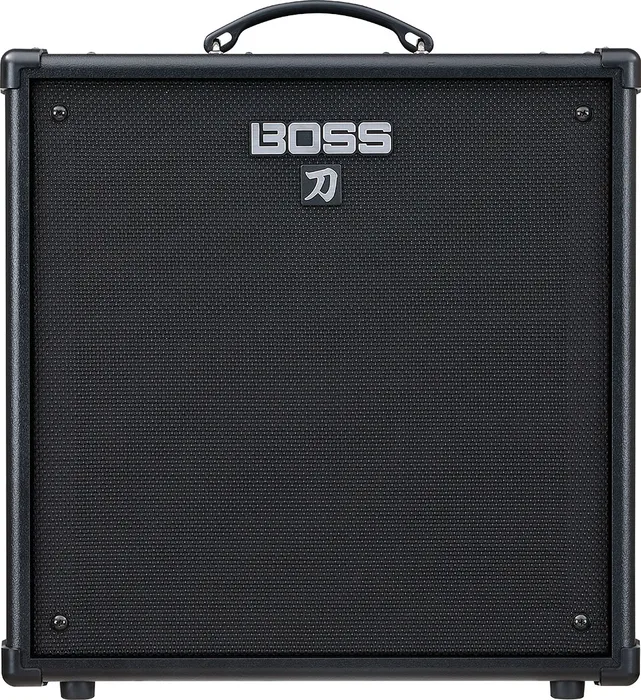
A 10 in combo with a tweeter, three amp voicings, onboard effects and a Power Control switch for quiet playing.
Best for: A bassist who wants one amp for bedroom practice, recording and small gigs and will use the effects and memories.
- BOSS lists a 10 in woofer plus a tweeter with an on/off button, and the spec table gives 60 W continuous (RMS) and 110 W peak.
- A four-band EQ with selectable low-mid and high-mid frequencies, three voicings (Vintage, Flat, Modern) and six tone memories give it the widest tone control here.
- The Power Control switch (Standby, 1 W, Max), a phones/recording output with cabinet emulation, USB and a balanced XLR output cover home, studio and stage.
- At 37 lb (16.8 kg) it is the heaviest 10 in combo in this group apart from the Hartke.
- The amount of panel controls and effects takes longer to learn than a simple three-knob amp.
- The Bluetooth adapter, GA-FC foot controller and footswitches are listed as sold separately.
Own the BOSS Katana-110 Bass? Tell us how it held up.
Thanks. Counted, and shown once enough owners have weighed in.
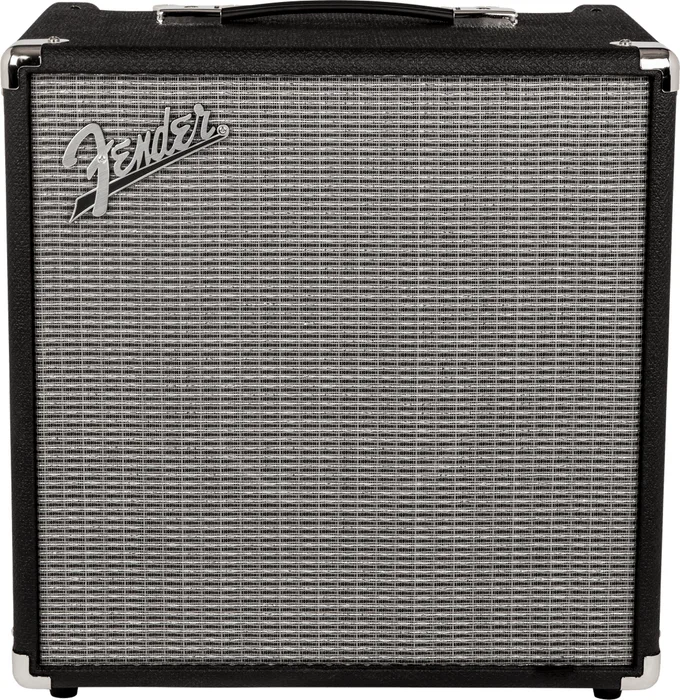
A light 40 W combo with a 10 in speaker, overdrive, three voicing buttons and an XLR line out.
Best for: A beginner or home player who wants something light, familiar and easy to carry to lessons.
- Fender lists the Rumble 40 (V3) at 18 lb (8.16 kg), the lightest amp in this comparison.
- Controls are Gain, Bass, Low-Mid, High-Mid, Treble and Master Volume, plus Bright, Contour and Vintage buttons and an overdrive circuit.
- It has a headphone output, a 1/8 in stereo auxiliary input and an XLR line out with ground lift.
- Fender's spec sheet lists the effects loop as NA, so there is no loop for pedals.
- At 40 W into 8 ohms it has the lowest stated output here, so it suits quiet rehearsals more than loud drummers.
- The overdrive footswitch is listed as optional and not included.
Own the Fender Rumble 40? Tell us how it held up.
Thanks. Counted, and shown once enough owners have weighed in.
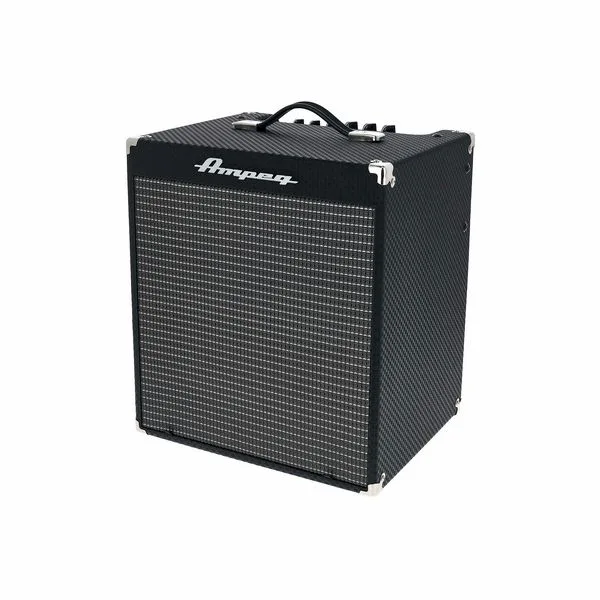
A 50 W 1x10 combo with Ampeg voicing, Super Grit overdrive and an XLR direct output.
Best for: A bassist who wants an Ampeg-voiced practice and small-venue combo with an XLR out and no complications.
- Ampeg lists 50 W from a 1x10 combo with a classic 3-band EQ and Super Grit Technology overdrive.
- It has an XLR direct output for a PA or recorder, plus an auxiliary input and a headphone output.
- Ampeg states 22.5 lb (10.2 kg) and two inputs (0 dB and -15 dB), which handles both passive and hotter basses.
- The feature list names no effects loop (the 100 W RB-112 does list one).
- The tone controls are a plain three-band EQ with no sweepable mid.
- It has no built-in tuner listed on Ampeg's page.
Own the Ampeg Rocket Bass RB-110? Tell us how it held up.
Thanks. Counted, and shown once enough owners have weighed in.
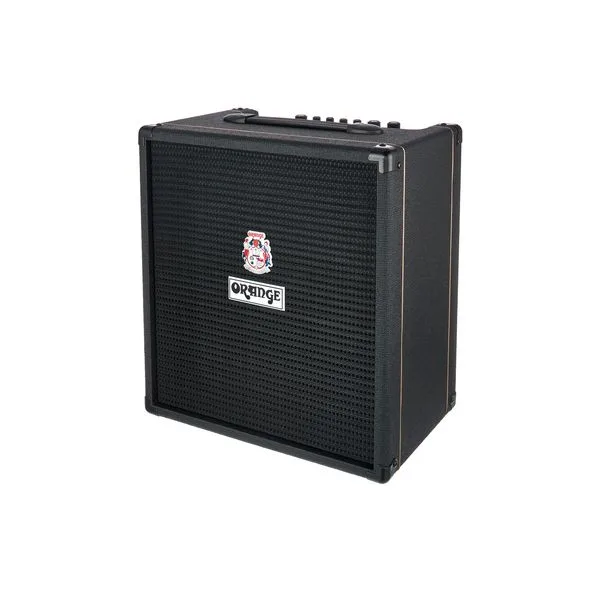
A 50 W analogue combo with a 12 in ported cabinet, a sweepable mid, a blend control and a CabSim headphone output.
Best for: A bassist who wants a bigger 12 in sound and a pedal loop and can carry the extra weight.
- Orange lists a 12 in speaker in a ported cabinet, the largest driver in this group.
- The active 3-band EQ has a parametric mid sweeping from 300 Hz to 2.7 kHz, plus footswitchable Blend and Gain controls.
- A buffered effects loop, chromatic tuner, aux input and CabSim-loaded headphone output are all listed.
- Orange states 31.85 lb (14.45 kg) unboxed, much heavier than the Fender or Ampeg.
- The feature list shows no XLR or DI output, which matters if you plan to feed a PA.
- Fewer voicing presets than the Fender or BOSS, so it rewards players who like to shape the mid by hand.
Own the Orange Crush Bass 50? Tell us how it held up.
Thanks. Counted, and shown once enough owners have weighed in.
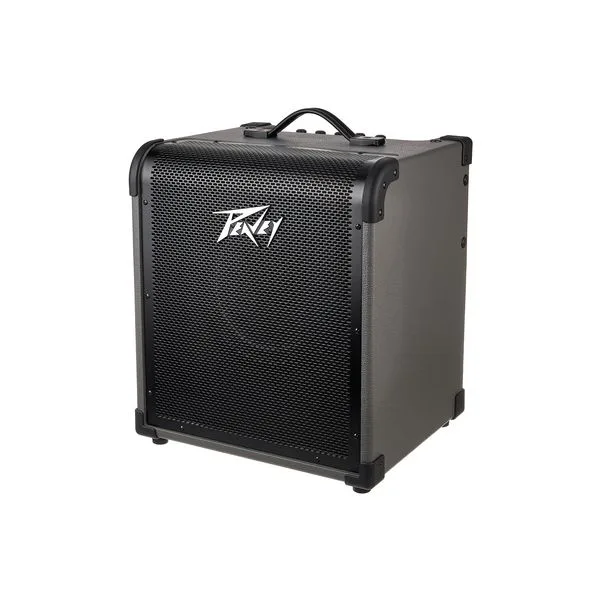
A feature-rich combo with a built-in tuner, Kosmos-C bass enhancement and an XLR out, rated 60 W RMS in the manual.
Best for: A player who values a built-in tuner and plenty of voicing switches and reads the 60 W rating correctly.
- Peavey's manual lists a chromatic tuner with mute, an overdrive, Contour, Mid-Shift and Bright switches and a three-band EQ.
- It has a 1/8 in headphone output, a 1/8 in auxiliary input and an XLR direct output with ground lift.
- The manual gives 23.8 lb and an optional footswitch that controls overdrive and mute.
- The model name says 100, but the manual rates it at 60 W (rms) into 8 ohms, so compare that number, not the name.
- The operating manual does not state the speaker size for this model.
- The Kosmos-C low-end enhancement is a taste item and its effect depends on the source.
Own the Peavey MAX 100? Tell us how it held up.
Thanks. Counted, and shown once enough owners have weighed in.
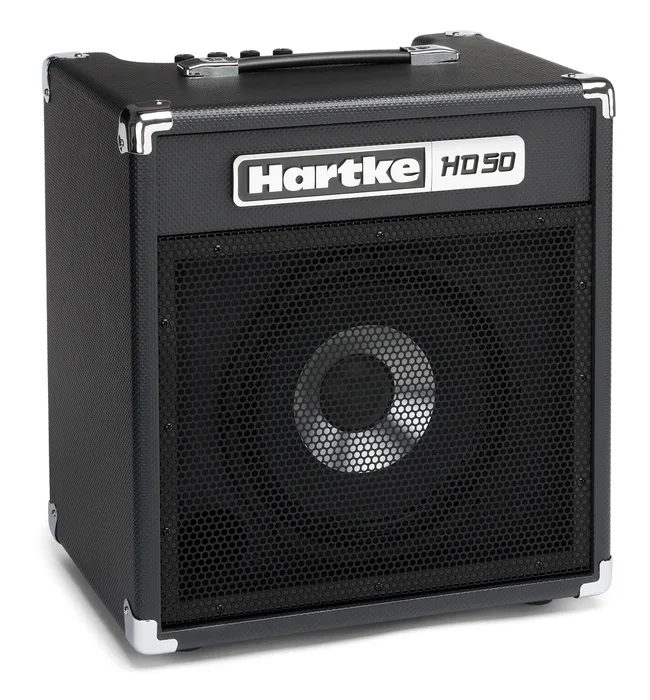
A 50 W combo with a hybrid paper and aluminum 10 in cone, held back by weight and a thin feature list.
Best for: Only a bassist who finds one at a bargain and wants the simplest possible panel.
- Hartke lists a 10 in HyDrive hybrid paper and aluminum cone and 50 W rated output.
- It has a 1/8 in stereo aux input, a 1/4 in headphone output and a built-in limiter.
- The controls are simple: Volume, Bass, Mid and Treble.
- Hartke states 34 lb (15.4 kg), about 11 lb more than the 50 W Ampeg RB-110 with the same 10 in size.
- The feature list shows no XLR or direct output, no effects loop, no overdrive and no tuner.
- Tone shaping is limited to three tone knobs with no voicing switches.
Own the Hartke HD50? Tell us how it held up.
Thanks. Counted, and shown once enough owners have weighed in.
| Criteria | BOSS Katana-110 Bass Top pick Buy it Buy | Fender Rumble 40 Buy it Buy | Ampeg Rocket Bass RB-110 Buy it Buy | Orange Crush Bass 50 It depends Buy | Peavey MAX 100 It depends Buy | Hartke HD50 Skip it Buy |
|---|---|---|---|---|---|---|
| Best for | A bassist who wants one amp for bedroom practice, recording and small gigs and will use the effects and memories. | A beginner or home player who wants something light, familiar and easy to carry to lessons. | A bassist who wants an Ampeg-voiced practice and small-venue combo with an XLR out and no complications. | A bassist who wants a bigger 12 in sound and a pedal loop and can carry the extra weight. | A player who values a built-in tuner and plenty of voicing switches and reads the 60 W rating correctly. | Only a bassist who finds one at a bargain and wants the simplest possible panel. |
| Price tier | $$$ · premium | $$ · mid-range | $$ · mid-range | $$ · mid-range | $$ · mid-range | $$ · mid-range |
| Stated output power | 60 W RMS, 110 W peak | 40 W at 8 ohms | 50 W | 50 W | 60 W (rms) into 8 ohms | 50 W |
| Speaker | 10 in woofer plus tweeter | 10 in Fender Special Design | 10 in (1x10) | 12 in, ported | Not stated in manual, ported enclosure | 10 in HyDrive |
| Weight | 37 lb (16.8 kg) | 18 lb (8.16 kg) | 22.5 lb (10.2 kg) | 31.85 lb unboxed (14.45 kg) | 23.8 lb | 34 lb (15.4 kg) |
| Tone controls | 4-band EQ, 3 voicings | Bass, low-mid, high-mid, treble, 3 voicing buttons | 3-band EQ, Super Grit overdrive | Active 3-band, sweepable mid, blend and gain | 3-band EQ, Contour, Mid-Shift, Bright | Bass, mid, treble |
| Headphone output | Yes, with cabinet emulation | Yes | Yes | Yes, CabSim | Yes, 1/8 in | Yes, 1/4 in |
| Aux input | Stereo mini jack | 1/8 in stereo | Yes | Yes | 1/8 in | 1/8 in stereo |
| XLR or direct out | Balanced XLR, selectable | XLR with ground lift | XLR direct | Not listed | XLR with ground lift | Not listed |
| Effects loop | Send and return | None (NA) | Not listed | Buffered loop | Not confirmed for this model | Not listed |
Which one is right for you?
- A bassist who wants one amp for bedroom practice, recording and small gigs and will use the effects and memories. Buy it BOSS Katana-110 Bass
- A beginner or home player who wants something light, familiar and easy to carry to lessons. Buy it Fender Rumble 40
- A bassist who wants an Ampeg-voiced practice and small-venue combo with an XLR out and no complications. Buy it Ampeg Rocket Bass RB-110
- A bassist who wants a bigger 12 in sound and a pedal loop and can carry the extra weight. It depends Orange Crush Bass 50
- A player who values a built-in tuner and plenty of voicing switches and reads the 60 W rating correctly. It depends Peavey MAX 100
- Only a bassist who finds one at a bargain and wants the simplest possible panel. Skip it Hartke HD50
How we judged the field
Five things matter on a bass combo. Stated power and speaker size set how loud and how low the amp can go without breaking up. Weight decides whether you will actually carry it. Direct outputs, an XLR out above all, decide whether the amp can feed a PA or a recorder. Headphone and aux inputs decide how useful it is for quiet practice and playing along. Tone controls and effects decide how much you can shape the sound without extra pedals.
The field splits into simple practice combos (Fender, Ampeg, Hartke), a bigger ported combo with a pedal loop (Orange), a tuner-equipped amp with many voicing switches (Peavey) and a modern amp with effects and memories (BOSS). We picked one model from each of six brand families. Ampeg is Yamaha-owned and is counted once, and we left out any figure a maker does not publish.
BOSS Katana-110 Bass
Buy itThe Katana-110 Bass is the most complete combo here. BOSS lists a 10 in woofer with a tweeter that has an on/off button, and the spec table gives 60 W continuous (RMS) and 110 W peak. Three amp voicings (Vintage, Flat, Modern) combine with a Shape switch and a four-band EQ whose low-mid and high-mid frequencies can be selected. The Blend section mixes in some dry signal, and four effects sections cover compressor, drive and two effects slots. Six memories store your settings. For quiet use the Power Control switch has Standby, 1 W and Max positions, and the phones/recording output offers cabinet emulation. USB, a balanced XLR output and a send and return are listed too. The cost is 37 lb (16.8 kg), a busy panel and optional extras such as the Bluetooth adapter. It is for the bassist who wants one amp to grow into.
Fender Rumble 40
Buy itThe Rumble 40 is the easy, light choice. Fender’s spec sheet lists 40 W at 8 ohms, a 10 in Fender Special Design speaker and a weight of 18 lb (8.16 kg), the lowest in this group. The panel has Gain, Bass, Low-Mid, High-Mid, Treble and Master Volume, with Bright, Contour and Vintage buttons and an overdrive circuit. It has a single 1/4 in input, a 1/8 in stereo aux input, a headphone output and an XLR line out with ground lift. The effects loop is listed as NA, the footswitch is optional and the 40 W rating is the lowest of the group, so a loud drummer will test it. For a first amp, lessons and quiet rehearsals, it is hard to fault. It is for the player who values weight and simplicity over features.
Ampeg Rocket Bass RB-110
Buy itThe RB-110 is the plain, well-known 50 W choice. Ampeg describes a 50 W 1x10 combo with an Ampeg Legacy preamp, a classic 3-band EQ and Super Grit Technology overdrive. It lists 0 dB and -15 dB inputs, an auxiliary input with a headphone output and an XLR direct output for a PA or recorder. The weight is 22.5 lb (10.2 kg), light enough for a bag and a bass. Ampeg’s feature list names no effects loop or tuner, and the EQ has no sweepable mid, so it is less flexible than the BOSS or Orange. Ampeg’s site credits Yamaha Guitar Group, and the larger RB-112 adds a 12 in speaker and a loop if you outgrow the 10 in. It suits a bassist who wants the Ampeg sound at practice and small-venue level with the XLR out.
Orange Crush Bass 50
It dependsThe Crush Bass 50 is the big-speaker option. Orange lists 50 W into a 12 in speaker in a ported cabinet and an all-analogue signal path. The active EQ has a sweepable parametric mid from 300 Hz to 2.7 kHz, and the Blend and Gain controls can be switched by footswitch. A buffered effects loop, chromatic tuner, aux input, a -6 dB pad and a CabSim-loaded headphone output are all listed. Orange gives 31.85 lb (14.45 kg) unboxed, noticeably heavier than the Fender or Ampeg, and the feature list shows no XLR or DI output. That makes it a better fit for a rehearsal room or a bassist who runs pedals than for one who needs to feed a PA. It is for the player who wants a 12 in voice and a hands-on mid control and does not mind carrying it.
Peavey MAX 100
It dependsThe MAX 100 packs many features into a mid-size cabinet, with a caveat on the name. Peavey’s manual lists a built-in chromatic tuner with mute, a tuned and ported enclosure, a 1/8 in headphone output, a 1/8 in aux input and an XLR direct output with ground lift on all MAX models. The tone section has a three-band EQ, Contour, Mid-Shift, Bright, an overdrive and the Kosmos-C low-end enhancement. The manual rates the MAX 100 at 60 W (rms) into 8 ohms and gives 23.8 lb, and an optional footswitch controls overdrive and mute. The manual does not state the speaker size for this model, and the 60 W rating is the figure to compare. It suits a bassist who values a tuner and many voicing choices at a reasonable weight.
Hartke HD50
Skip itThe HD50 is a capable-sounding idea held back by its spec sheet. Hartke lists 50 W, a 10 in HyDrive hybrid paper and aluminum cone, volume, bass, mid and treble controls, a 1/8 in stereo aux input, a 1/4 in headphone output and a built-in limiter. The page does not list an XLR or direct output, an effects loop, an overdrive or a tuner. It weighs 34 lb (15.4 kg), about 11 lb more than the 50 W Ampeg RB-110 with the same 10 in size and an XLR output. For small gigs without a direct out you rely on a mic or on what the room provides, and for practice the Fender gives more features at about half the weight. We would pick any other amp here. It suits only a buyer who finds one at a bargain and wants the simplest panel.
Sources
Specs in this review come from these pages.
BOSS Katana-110 Bass vs Fender Rumble 40: which should you buy?
The Katana-110 Bass and the Rumble 40 sit at opposite ends of the same job. The BOSS has the stated 60 W RMS and 110 W peak, a tweeter, a four-band EQ, effects, six memories and a Power Control switch, but it weighs 37 lb. The Fender states 40 W, a single 10 in speaker, overdrive and three voicing buttons at 18 lb, with no effects loop.
Choose the BOSS if you will gig, record or want tone options without buying pedals, and you accept the weight and the learning curve. Choose the Fender if you mostly practice, take lessons or carry the amp by hand, and you want a simple panel. Both list an XLR output, a headphone output and an aux input, so the connection set is similar and the real difference is features against weight.
Who should buy which
- Most bassists: the BOSS Katana-110 Bass. It combines a 10 in woofer with a tweeter, effects, six memories, a Power Control switch and an XLR output.
- First amp or light carry: the Fender Rumble 40. At 18 lb it is the lightest here and still has overdrive, a headphone output and an XLR line out.
- Ampeg tone with an XLR out: the Ampeg Rocket Bass RB-110. A 50 W 1x10 combo with Super Grit overdrive and an XLR direct output at 22.5 lb.
- Wants a 12 in speaker and a pedal loop: the Orange Crush Bass 50. It lists a 12 in ported cabinet, a parametric mid and a buffered effects loop.
- Wants a built-in tuner: the Peavey MAX 100. Its manual lists a chromatic tuner with mute, an XLR out and many voicing switches.
What to look for
- Stated power: Compare continuous (RMS) figures at a stated impedance. The Peavey MAX 100 is rated 60 W (rms) into 8 ohms in its manual, and the BOSS lists 60 W RMS and 110 W peak.
- Speaker size and cabinet: Larger speakers and ported cabinets move more low-end. Orange lists a 12 in ported speaker, while the Fender, Ampeg and Hartke list 10 in drivers.
- Weight: A bass combo lives in a gig bag or a trunk. Makers here state 18 lb to 37 lb, a big spread for the same 10 in class.
- XLR direct out: It lets you feed a PA or recorder. The BOSS, Fender, Ampeg and Peavey list one, and the Orange and Hartke pages do not.
- Headphone and aux: Quiet practice and play-along need both. All six list them, and the BOSS and Orange add cabinet emulation to the headphone signal.
- Effects loop and tone controls: A loop lets pedals sit after the preamp. The BOSS and Orange list one, the Fender lists NA, and the others do not list one.
Our final take
The BOSS Katana-110 Bass is the amp to buy if you want one cabinet to cover practice, recording and small gigs, because it adds quiet-play and effects to a 10 in woofer and tweeter. The Fender Rumble 40 is the better buy if you mostly practice and want the lightest, simplest amp, and the Ampeg Rocket Bass RB-110 is the neutral 50 W alternative with an XLR out. The Orange and Peavey fit narrower needs, a 12 in ported speaker with a pedal loop or a built-in tuner, and the Hartke HD50 is the one to leave on the shelf because it is heavy and lists no direct output.
Questions, answered
How many watts does a bass combo need for practice and small gigs?
For bedroom practice, the 40 W to 50 W stated for the Fender, Ampeg, Orange and Hartke here is plenty. Small gigs with a loud drummer are harder, and most players run the XLR output to a PA to help. Makers rate power differently, so the BOSS lists 60 W RMS and 110 W peak and the Peavey is rated 60 W (rms) into 8 ohms in its manual. Compare the continuous number, not the model name. Speaker size and cabinet design matter as much as the figure.
Can I use a guitar amp for bass?
Often it sounds weak or distorts, because guitar speakers and cabinets are not built for low notes. A bass combo uses a larger speaker and a tuned or ported enclosure. Maker pages here describe 10 in and 12 in speakers, and the Orange and Peavey list ported cabinets. If you already own a guitar amp, see our best guitar amps review, then compare with a bass combo before you spend.
Do I need an XLR direct output?
You do if you will play small venues or record, because it sends your signal to a PA or an interface. The BOSS, Fender, Ampeg and Peavey each list an XLR output. The Orange and Hartke pages do not list one. If you only practice at home, you can skip it, but it is a cheap future-proofing feature.
Is a headphone output worth having?
Yes for apartment practice. All six amps here list a headphone output. The BOSS and Orange add cabinet emulation on that output, which makes headphone playing sound more like a speaker cabinet. The BOSS also has a Power Control switch with a 1 W setting for quiet playing through the speaker.
Which of these is the easiest to carry?
The Fender Rumble 40 at 18 lb (8.16 kg) is the lightest listed. The Ampeg RB-110 follows at 22.5 lb and the Peavey MAX 100 at 23.8 lb. The Orange at 31.85 lb unboxed, the Hartke at 34 lb and the BOSS at 37 lb are heavier. Weight figures come from the makers, so check a final listing before you order.
Deciding between the top two? See our head-to-head: BOSS Katana-110 Bass vs Fender Rumble 40.
More in Audio & Headphones
Bass Amps, Explained Plain-English guide → BOSS Katana-110 Bass vs Fender Rumble 40 Head-to-head →  Electric Bass Guitars: Which to Buy and Which to Skip
 The Best Beginner Electric Guitars: 6 Compared (and One to Skip)
 Which Bluetooth Audio Transmitter Should You Buy? 7 Compared
 The Best Bone-Conduction Headphones: 4 Compared (and One to Skip)