

Audio & Hi-Fi
The Best Acoustic Guitars for Beginners: 4 Compared (and One to Skip)
We compared four steel-string acoustic guitars for new players on body size, scale length, top wood, neck width, strings, electronics and what comes in the box.
The short version
The Taylor GS Mini Mahogany is the best overall: a solid mahogany top on a scaled-down body with a short 23-1/2 inch scale, an ebony fretboard and a structured gig bag. The Yamaha FG800J is the value pick, a full-size dreadnought with a solid spruce top that Yamaha says it can recommend to all beginners, though no case is included. The Martin D-10E Retro Sapele depends: all-solid sapele, E1 electronics and a softshell case, but a large dreadnought at a premium tier. Skip the Washburn Apprentice AD5CE Pack, which does not state a solid top, uses an engineered wood fretboard and pads the box with a strap and picks. Best for: adult and teen beginners choosing a first steel-string guitar.
Our picks at a glance
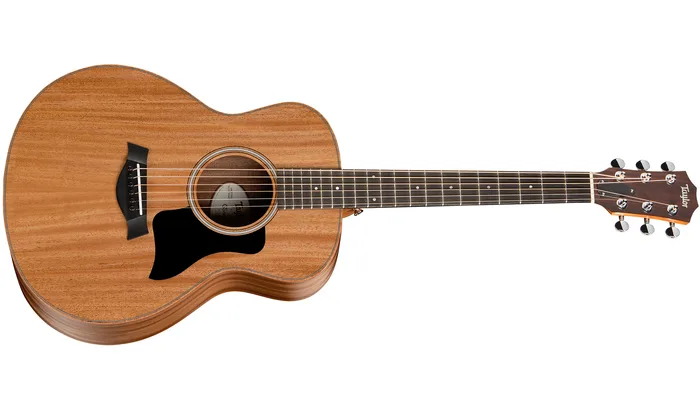
- Taylor GS Mini Mahogany - Buy. A scaled-down guitar with a solid mahogany top, a 23-1/2 inch scale, ebony fretboard and a structured gig bag in the box.
- Yamaha FG800J - Buy. Yamaha's standard solid-top dreadnought, with scalloped bracing, a 25 inch scale and a 43 mm nut.
- Martin D-10E Retro Sapele - It depends. An all-solid sapele dreadnought with Martin E1 electronics, a built-in tuner and a softshell case.
- Washburn Apprentice AD5CE Pack - Skip. A cutaway dreadnought starter pack whose spec sheet leaves out the details that matter most.
The verdict in 30 seconds
What mattered most
- Body
- Top
- Back and sides
- Scale length
- Nut width
- Fretboard
A first acoustic guitar has to be easy enough to play that a beginner keeps going, and good enough to sound like music once they do. The specs that decide that are body size, scale length, neck width, string gauge and whether the top is solid wood. We compared four current models from four makers: two we would buy for most beginners, one that suits a more committed player, and one popular starter pack we would pass on. Every spec here comes from the maker's own page.
A scaled-down guitar with a solid mahogany top, a 23-1/2 inch scale, ebony fretboard and a structured gig bag in the box.
Best for: Beginners, younger teens and travellers who want a comfortable small guitar that still sounds full.
- The 23-1/2 inch scale is the shortest here, which reduces the stretch between frets for smaller hands.
- Taylor lists a solid mahogany top, an ebony fretboard and bridge, and a Nubone nut with a Micarta saddle.
- A structured gig bag is included, and Taylor staff on the product page say the action is fully adjustable.
- It ships with D'Addario XS medium strings (.013 to .056), which are heavier and harder on new fingertips than lights.
- The back and sides are layered sapele, not solid wood.
- The smaller body gives less bass than a full-size dreadnought.
- This version has no electronics, so playing through an amp needs an added pickup or the GS Mini-e models.
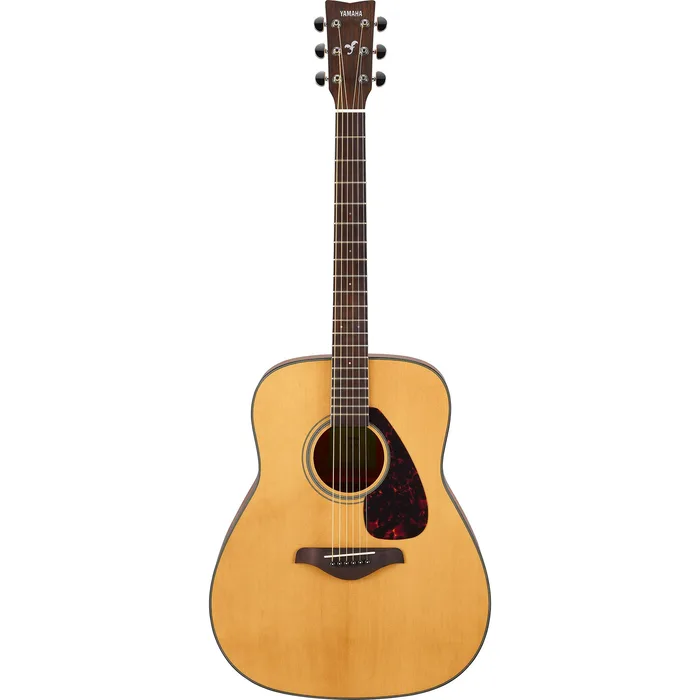
Yamaha's standard solid-top dreadnought, with scalloped bracing, a 25 inch scale and a 43 mm nut.
Best for: Beginners on a budget who want a full-size guitar with a solid top from a maker with a long beginner track record.
- Yamaha lists a solid spruce top with scalloped bracing and says the guitar can be confidently recommended to all beginner guitarists.
- The listed 634 mm (25 inch) scale is shorter than the Martin's 25.4 inch and the Washburn's 25.5 inch.
- Strings are listed as .012 to .052, a lighter set than the Taylor's mediums.
- No case or gig bag is included; Yamaha lists only a hex wrench as an accessory.
- The back and sides are listed as nato/mahogany, with only the top described as solid.
- A full dreadnought body (412 mm wide, 100 to 118 mm deep) can feel bulky for small players.
- There are no electronics.
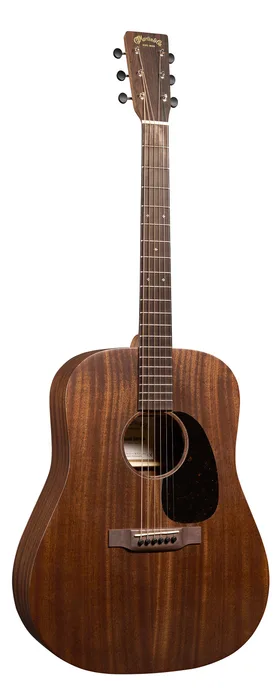
An all-solid sapele dreadnought with Martin E1 electronics, a built-in tuner and a softshell case.
Best for: Committed beginners or returning players who want a solid-wood guitar they can also plug in and will not outgrow.
- Martin lists a solid sapele top, back and sides with scalloped X-bracing, the only all-solid guitar here.
- E1 electronics with a built-in tuner let you plug into an amp or PA from day one.
- A softshell case with backpack straps is included, and a left-handed version is available.
- It is a full-size D-14 fret dreadnought with a 25.4 inch scale, a big body for a first guitar.
- The 1-3/4 inch nut is wider than the 1-11/16 inch on the Taylor and Yamaha, which some small hands find a stretch.
- The fingerboard and bridge are listed as select hardwood rather than a named species.
- It sits in a much higher price tier than the two buy picks.
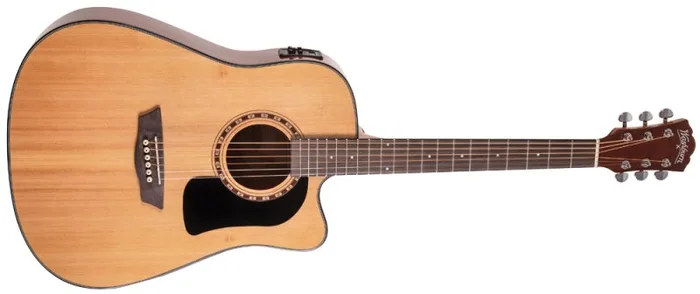
A cutaway dreadnought starter pack whose spec sheet leaves out the details that matter most.
Best for: Not recommended; a budget buyer gets a stated solid top from the Yamaha FG800J instead.
- It is a cutaway dreadnought with electronics, mahogany back and sides and quarter-sawn scalloped bracing.
- Washburn includes a gig bag, a strap and picks.
- It ships with coated light strings, which are easier on new fingertips than mediums.
- The top is listed as select spruce, and Washburn does not say it is solid, while the Yamaha FG800J at the same tier does.
- The fretboard is engineered wood and the nut is plastic.
- The electronics are mentioned but no preamp model, controls or tuner are listed.
- The pack extras are a strap and picks, which cost little bought separately; no tuner is listed.
| Criteria | Taylor GS Mini Mahogany Top pick | Yamaha FG800J | Martin D-10E Retro Sapele | Washburn Apprentice AD5CE Pack |
|---|---|---|---|---|
| Verdict | Buy it | Buy it | It depends | Skip it |
| Best for | Beginners, younger teens and travellers who want a comfortable small guitar that still sounds full. | Beginners on a budget who want a full-size guitar with a solid top from a maker with a long beginner track record. | Committed beginners or returning players who want a solid-wood guitar they can also plug in and will not outgrow. | Not recommended; a budget buyer gets a stated solid top from the Yamaha FG800J instead. |
| Price tier | $$ · mid-range | $ · budget | $$$ · premium | $ · budget |
| Body | GS Mini, scaled-down | Dreadnought | Dreadnought (D-14 fret) | Dreadnought cutaway |
| Top | Solid mahogany | Solid spruce | Solid sapele | Select spruce (solid not stated) |
| Back and sides | Layered sapele | Nato/mahogany | Solid sapele | Mahogany |
| Scale length | 23-1/2 in | 25 in (634 mm) | 25.4 in | 25.5 in |
| Nut width | 1-11/16 in | 43 mm (1-11/16 in) | 1-3/4 in | Not published |
| Fretboard | Ebony | Rosewood | Select hardwood | Engineered wood |
| Strings (factory) | Medium .013-.056, coated | .012-.052 | Light, Lifespan 2.0 | Coated light |
| Electronics | None | None | Martin E1 with tuner | Yes, model not listed |
| Included | Structured gig bag | Hex wrench only | Softshell case | Gig bag, strap, picks |
Which one is right for you?
- Beginners, younger teens and travellers who want a comfortable small guitar that still sounds full. Buy it Taylor GS Mini Mahogany
- Beginners on a budget who want a full-size guitar with a solid top from a maker with a long beginner track record. Buy it Yamaha FG800J
- Committed beginners or returning players who want a solid-wood guitar they can also plug in and will not outgrow. It depends Martin D-10E Retro Sapele
- Not recommended; a budget buyer gets a stated solid top from the Yamaha FG800J instead. Skip it Washburn Apprentice AD5CE Pack
How we judged the field
Five things decide whether a first acoustic guitar helps or hinders. Body size and scale length come first, because a shorter scale and smaller body reduce the stretch and make the guitar easier to hold. Neck width at the nut affects how cramped chords feel. String gauge decides how hard you have to press, and heavy strings are the quickest way to sore fingers. The top wood matters for sound, and a solid top is the clearest quality marker on a spec sheet. Finally, what comes in the box: a bag or case protects the guitar, and electronics matter only if you will plug in.
The beginner field splits into small-body travel guitars, full-size budget dreadnoughts, premium solid-wood models and all-in-one starter packs. We picked the Taylor GS Mini Mahogany as the easiest to play, the Yamaha FG800J as the budget benchmark with a stated solid top, the Martin D-10E Retro Sapele for players ready to spend on all-solid wood, and the Washburn Apprentice AD5CE Pack as a popular pack whose specs do not hold up.
The Taylor GS Mini Mahogany is the easiest guitar here to live with as a beginner. Its scaled-down body and 23-1/2 inch scale shorten the reach between frets, and Taylor staff on the product page give the nut width as 1-11/16 inches. Taylor lists a solid mahogany top over layered sapele back and sides, a mahogany neck, a West African Crelicam ebony fretboard and bridge, a Nubone nut and a Micarta saddle, all in a matte finish. A structured gig bag is included, and Taylor says the action is fully adjustable through the truss rod, saddle and its bolt-on neck shim system. The trade-offs: it ships with D’Addario XS medium strings (.013 to .056), heavier than most beginners want, so ask for lights at setup. The small body gives less low end than a dreadnought, and this version has no pickup. It is for beginners, teens and anyone who wants a small, solid-topped guitar that is easy to pick up every day.
The Yamaha FG800J is the value pick and the guitar Yamaha itself describes as its standard acoustic. Yamaha says it can be confidently recommended to all beginner guitarists, and the spec backs it up: a solid spruce top with scalloped bracing, nato/mahogany back and sides, a rosewood fingerboard and bridge, urea nut and saddle, and die-cast chrome tuners. The listed scale is 634 mm (25 inches) with a 43 mm (1-11/16 inch) nut, and the factory strings are listed as .012 to .052, a lighter set than the Taylor’s. The body is a full dreadnought, 412 mm wide and 100 to 118 mm deep, with a gloss body and matte neck. What you give up is any case or bag, since Yamaha lists only a hex wrench, and there are no electronics. Budget for a gig bag and a clip-on tuner. It is for beginners who want a full-size guitar with a solid top and the lowest sensible outlay.
The Martin D-10E Retro Sapele suits a player who already knows they will stick with guitar. Martin lists a solid sapele top, back and sides with scalloped X-bracing, the only all-solid build in this group, on a D-14 fret dreadnought body. The neck is Martin’s PA profile with a high-performance taper, the nut is White Corian, the scale is 25.4 inches and the nut width is 1-3/4 inches. Martin E1 electronics with a built-in tuner are fitted, a softshell case with backpack straps is included, and Martin says the guitar is Plek’d and offered left-handed. The catches are size and spend. A full dreadnought with a wider nut is more guitar than many first-timers need, and the fingerboard and bridge are listed only as select hardwood. It sits well above the two buy picks. It is for committed beginners, returning players and anyone who wants to plug into an amp or PA without buying a second guitar later.
The Washburn Apprentice AD5CE Pack is the kind of starter bundle that sells on its contents list. Washburn describes a dreadnought cutaway with a select spruce top, mahogany back, sides and neck, quarter-sawn scalloped bracing, a 25.5 inch scale, coated light strings and electronics, plus a gig bag, a strap and picks. The problem is what the spec sheet does not say. The top is listed as select spruce, not solid, while the Yamaha FG800J in the same budget tier states a solid spruce top. The fretboard is engineered wood and the nut is plastic. The electronics are mentioned without a preamp model, controls or a tuner, and no nut width is published. The pack extras are a strap and picks, both cheap to buy on their own, and there is no tuner listed in the box. Skip it, and put the same budget toward the FG800J plus a gig bag and tuner.
Taylor GS Mini Mahogany vs Yamaha FG800J: which should you buy?
The Taylor GS Mini Mahogany and Yamaha FG800J both list solid tops and the same 1-11/16 inch nut width, so the choice comes down to size, strings and what is in the box. The Taylor has a much shorter 23-1/2 inch scale and a smaller body, an ebony fretboard and a structured gig bag. The Yamaha is a full-size dreadnought with a 25 inch scale, lighter factory strings and nothing in the box beyond a hex wrench, for a much smaller spend.
Choose the Taylor if the player has smaller hands, is a younger teen, wants a guitar to take travelling, or simply finds a full dreadnought awkward to hold. Ask for a set of light strings when you buy it. Choose the Yamaha if the budget is tight, the player is comfortable with a full-size body, or you want the bigger, fuller sound a dreadnought gives. Add a gig bag and a clip-on tuner and you have a complete setup for less than the Taylor alone.
What to look for
- A solid top: the spec should say solid spruce, mahogany, cedar or sapele; vague terms like select spruce usually mean it is not solid.
- Scale length and body size: a shorter scale and smaller body make chords easier for small hands, while a dreadnought gives a bigger sound.
- Nut width: 1-11/16 inches is common and comfortable for most beginners; wider necks give more room but more stretch.
- String gauge: light strings, starting around .012, are easier on new fingertips than mediums starting at .013.
- What is in the box: a structured gig bag or case protects a guitar far better than a thin bag, and a strap and picks add little value.
- Electronics only if you need them: a pickup adds cost, so buy one only if you will play through an amp or PA.
Our final take
For most beginners, the Taylor GS Mini Mahogany is the guitar to buy. Its short scale and small body make it easy to play, it has a solid mahogany top, and a structured gig bag comes with it; just swap the medium strings for lights. If the budget is tight or the player wants a full-size sound, the Yamaha FG800J gives you a stated solid spruce top for much less, though you will need a bag and tuner. The Martin D-10E Retro Sapele is worth it only for a committed player who wants all-solid wood and electronics. Skip the Washburn Apprentice AD5CE Pack, whose spec sheet does not back up its starter-pack appeal.
Questions, answered
Should a beginner start on a smaller guitar?
A smaller body and shorter scale make a guitar easier to hold and fret, which helps anyone with smaller hands or a shorter reach. The Taylor GS Mini's 23-1/2 inch scale is noticeably shorter than the 25 to 25.5 inch scales on the full-size guitars here. Many adults are comfortable on a full-size dreadnought like the Yamaha FG800J. If possible, sit with both sizes for a few minutes before buying. Comfort is what keeps a beginner practising.
What does a solid top mean, and does it matter?
A solid top is cut from a single thickness of wood, while a laminate or layered top is several thin layers glued together. Solid tops are generally associated with a more resonant sound, and the top does most of the work in an acoustic guitar. Three of the guitars here list a solid top. Washburn lists 'select spruce' for the Apprentice without saying solid, which is why we do not assume it is. Layered back and sides, as on the Taylor, are common and durable.
Do I need an acoustic-electric guitar?
Only if you plan to play through an amp or PA, or record with a cable. For practising at home, a plain acoustic is fine and often costs less for the same build quality. The Martin D-10E includes E1 electronics with a built-in tuner, which is useful for open mics and lessons. Taylor sells GS Mini-e versions with electronics if you like the GS Mini but want to plug in.
Are starter packs a good deal?
Sometimes, but read what the pack actually contains. The Washburn pack adds a gig bag, a strap and picks, which are inexpensive bought separately, and it does not list a tuner. A guitar with better published specs plus a separately bought tuner and bag can be the better buy. Judge the guitar first and the extras second.
What strings should a beginner use?
Lighter gauges are easier to press down and kinder to new fingertips. The Yamaha FG800J's listed set starts at .012 and the Washburn uses coated lights, while the Taylor GS Mini ships with mediums starting at .013. A shop can restring a guitar with lights during a setup. Coated strings, like those on the Taylor and Washburn, usually last longer before sounding dull.
Deciding between the top two? See our head-to-head: Taylor GS Mini Mahogany vs Yamaha FG800J.
More Audio & Hi-Fi reviews
 The Best Acoustic Panels: 4 Compared (and One to Skip)
  The Best USB Audio Interfaces for Home Recording: 4 Compared (and One to Skip)
  The Best Small Audio Mixers for Podcasting: 4 Compared (and One to Skip)
  The Best AV Receivers: 4 Compared (and One to Skip)
  The Best Bluetooth Audio Transmitters: 4 Compared (and One to Skip)
  The Best Bone-Conduction & Open-Ear Headphones: 4 Compared (and One to Skip)