

Audio & Headphones
The Best AV Receivers: 4 Compared (and One to Skip)
We compared four current AV receivers from Denon, Onkyo, Marantz, and Yamaha on room correction, HDMI 2.1 gaming, sound, and value.
The short version
After weighing independent testing and owner reports, the Denon AVR-X3900H is our pick: nine amplified channels behind 11.4 channels of processing, four independent subwoofer outputs and six 8K HDMI inputs make it the most complete all-rounder on paper. The Onkyo TX-RZ50 is the smart-money runner-up, delivering Dirac Live room correction and THX-certified cinema muscle for less, with the only real trade-off being three 8K inputs. The Marantz Cinema 50 is a it-depends upgrade: genuinely more refined in sound and build, but you pay extra for gains that are subtle. The Yamaha RX-A8A is beautifully made yet hard to recommend, costing the most while omitting the standard Dirac Live its cheaper rivals include. Best for: most people, the Denon AVR-X3900H is the safest, most future-proof choice.
Our picks at a glance
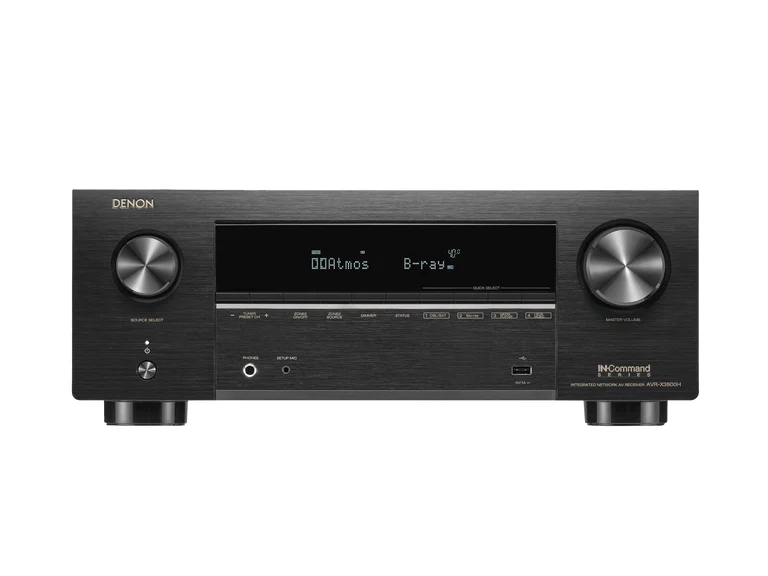
- Denon AVR-X3900H - Buy. The all-rounder that gets nearly everything right for the money.
- Onkyo TX-RZ50 - Buy. THX certification and Dirac Live room correction at a price that undercuts the competition.
- Marantz Cinema 50 - It depends. A more refined, better-built receiver for people who care as much about music and looks as movies.
- Yamaha AVENTAGE RX-A8A - Skip. A beautifully built flagship that is hard to justify once you see what cheaper rivals include.
The verdict in 30 seconds
What mattered most
- Amplifier channels
- Room correction
- 8K HDMI 2.1 inputs
- 4K/120 gaming (VRR, ALLM)
- Sound character
- Streaming / multiroom
An AV receiver is the brain of a home theater: it decodes surround sound, powers your speakers, and switches your 4K/8K sources. We synthesized independent testing and owner reports across four current-generation models to find where the money is well spent. Two earn a clear buy, one is a it-depends premium play, and one flagship is hard to justify at its price.
The all-rounder that gets nearly everything right for the money.
Best for: Anyone building a 5.1.4 or 7.1.2 theater who wants the best balance of features, power, and long-term flexibility.
- Nine channels of amplification plus four independent subwoofer outputs for flexible speaker layouts
- Six 8K-capable HDMI 2.1 inputs, so multiple game consoles and a 4K player can all stay connected
- Audyssey included and Dirac Live available as an upgrade, giving a genuine room-correction path
- Denon rates it at 105 watts per channel into 8 ohms across the full 20Hz to 20kHz band, a conservative full-bandwidth figure rather than a single-frequency one
- The on-screen menu system is deep and can feel overwhelming during setup
- Denon does not list a front-panel HDMI input for temporary connections
- New enough that there is no independent measurement record yet
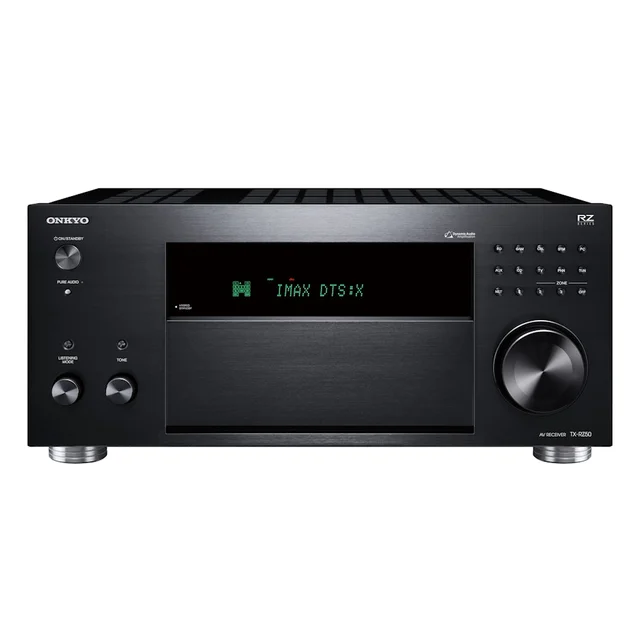
THX certification and Dirac Live room correction at a price that undercuts the competition.
Best for: Value-focused buyers who want serious room correction and cinema punch without paying premium-tier prices.
- Dirac Live room correction is supported out of the gate, a feature usually reserved for pricier receivers
- THX Certified with a muscular, room-filling sound that owners praise for movies
- Nine channels of amplification with pre-outs for up to 7.2.4 processing if you add external amps later
- Broad streaming support including Chromecast built-in, DTS Play-Fi, and Works with Sonos
- Only three HDMI 2.1 (8K) inputs, so heavy gamers with several consoles may run short
- Physically large and heavy, and the styling is more utilitarian than premium
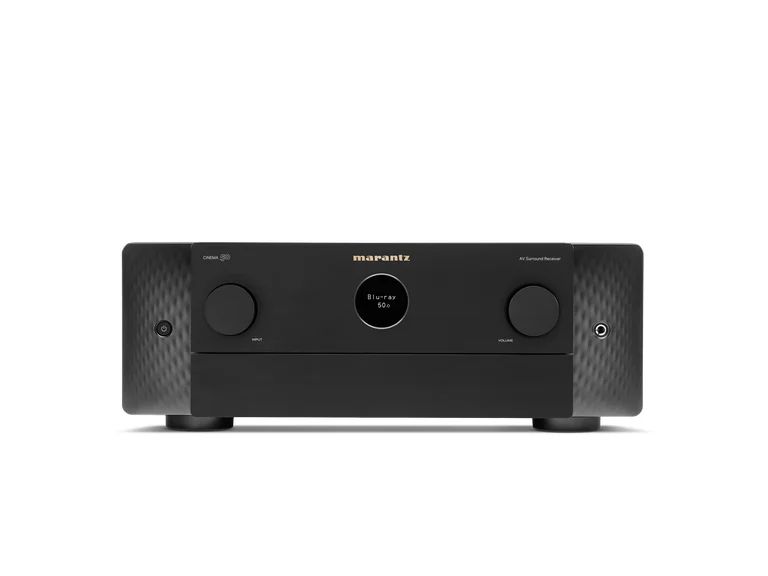
A more refined, better-built receiver for people who care as much about music and looks as movies.
Best for: Buyers who split time between movies and serious music listening and want a receiver that looks and feels like a centerpiece.
- Distinctive premium build with the signature Marantz porthole OLED display
- Owners and reviewers highlight a warmer, more refined sound that flatters two-channel music
- Nine channels plus four subwoofer outputs, with Audyssey now and Dirac Live available as an upgrade
- Full 8K HDMI 2.1 connectivity and current gaming features across the inputs
- Costs meaningfully more than the closely related Denon for similar core capability
- The sonic and cosmetic upgrades are real but subtle, so the value depends on how much you weigh them
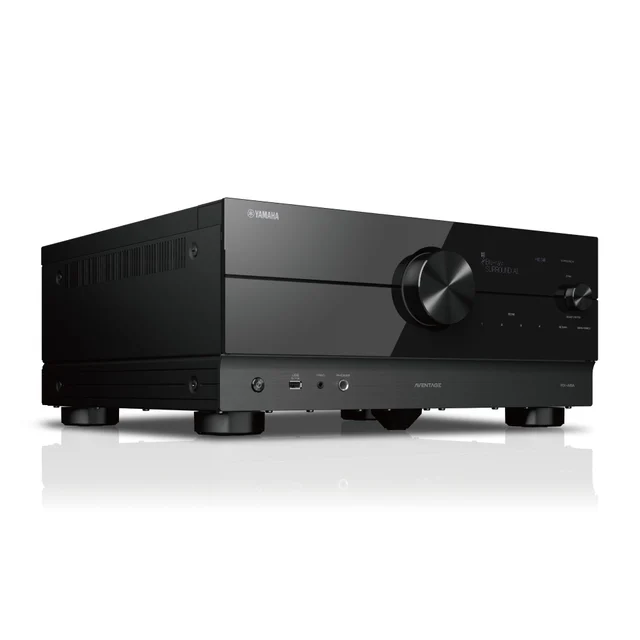
A beautifully built flagship that is hard to justify once you see what cheaper rivals include.
Best for: Yamaha loyalists who specifically want Surround:AI and flagship build, and are willing to pay a premium for it.
- Eleven channels of amplification and a heavyweight AVENTAGE chassis with excellent fit and finish
- ESS Sabre DACs and Yamaha's Surround:AI processing draw praise for a refined, spacious sound
- Comprehensive 8K HDMI 2.1 support and MusicCast whole-home streaming
- Sits in the flagship price tier, yet it lacks the standard Dirac Live that the cheaper Onkyo offers
- Yamaha's YPAO room correction is competent but generally rated a step behind Dirac Live
- Early units shipped with an HDMI 2.1 board fault that caused 4K/120 black-screen issues, so verify a corrected unit
| Criteria | Denon AVR-X3900H Top pick Buy it Buy | Onkyo TX-RZ50 Buy it Buy | Marantz Cinema 50 It depends Buy | Yamaha AVENTAGE RX-A8A Skip it Buy |
|---|---|---|---|---|
| Best for | Anyone building a 5.1.4 or 7.1.2 theater who wants the best balance of features, power, and long-term flexibility. | Value-focused buyers who want serious room correction and cinema punch without paying premium-tier prices. | Buyers who split time between movies and serious music listening and want a receiver that looks and feels like a centerpiece. | Yamaha loyalists who specifically want Surround:AI and flagship build, and are willing to pay a premium for it. |
| Price tier | $$$ · premium | $$ · mid-range | $$$ · premium | $$$$ · flagship |
| Amplifier channels | 9 (9.4 config) | 9 (11.2 processing) | 9 (9.4 config) | 11 (11.2 config) |
| Room correction | Audyssey; Dirac Live upgrade | Dirac Live + AccuEQ | Audyssey; Dirac Live upgrade | YPAO R.S.C. |
| 8K HDMI 2.1 inputs | Six | Three | Six | Seven (7 HDMI 2.1 inputs) |
| 4K/120 gaming (VRR, ALLM) | Yes | Yes | Yes | Yes (verify HDMI board) |
| Sound character | Not independently assessed yet | Bold, muscular, THX | Warm, refined, musical | Refined, spacious, Surround:AI |
| Streaming / multiroom | HEOS Built-in | Chromecast, Play-Fi, Sonos | HEOS Built-in | MusicCast |
| Price tier | $$$ · premium | $$ · mid-range | $$$ · premium | $$$$ · flagship |
Which one is right for you?
- Anyone building a 5.1.4 or 7.1.2 theater who wants the best balance of features, power, and long-term flexibility. Buy it Denon AVR-X3900H
- Value-focused buyers who want serious room correction and cinema punch without paying premium-tier prices. Buy it Onkyo TX-RZ50
- Buyers who split time between movies and serious music listening and want a receiver that looks and feels like a centerpiece. It depends Marantz Cinema 50
- Yamaha loyalists who specifically want Surround:AI and flagship build, and are willing to pay a premium for it. Skip it Yamaha AVENTAGE RX-A8A
How we judged the field
We do not run our own lab. Instead, we synthesize independent testing, expert measurements, and aggregated owner reports to figure out which receivers earn their keep. For AV receivers, a handful of things matter more than spec-sheet bragging rights.
First is room correction - the automatic system that measures your room and tunes the sound. It has more impact on real-world quality than almost anything else, and Dirac Live is widely regarded as the best of the mainstream options. Second is connectivity, specifically how many HDMI 2.1 (8K) inputs a receiver has, because those are the ports that carry 4K/120 gaming from modern consoles. Third is amplification and layout flexibility - how many speakers and subwoofers you can run without buying external amps. Finally, we weigh sound character, build quality, and value, drawing on the consensus of reviewers and long-term owners rather than any single opinion.
Denon AVR-X3900H
Buy itThe Denon is the receiver we would put in most rooms. It offers nine channels of amplification and, unusually, four independent subwoofer outputs, so you can build a properly balanced 5.1.4 or 7.1.2 system with room to fine-tune bass. Six of its HDMI inputs are 8K-capable, which is generous and means several game consoles and a 4K disc player can all live on the receiver at once.
Out of the box it uses Audyssey, and Denon states Dirac Live is available as an upgrade for those who want the best correction. Behind the nine amplifiers sit 11.4 channels of processing and a full 11.4-channel pre-out set, so the receiver can drive a bigger system later through external amplification without being replaced. Denon rates the amplifier at 105 watts into 8 ohms measured across the whole 20Hz to 20kHz band at 0.08% distortion, which is the conservative way to quote a figure. The menus are deep, Denon does not list a front HDMI input, and this generation is new enough that there is no independent measurement record for it yet.
Onkyo TX-RZ50
Buy itThe Onkyo is the value play, and a strong one. It is THX Certified and, crucially, supports Dirac Live room correction without an upfront upgrade - a feature that usually pushes receivers into a higher price bracket. Owners describe a bold, muscular sound that fills a room, and the nine amplified channels plus 7.2.4 pre-outs leave a clear upgrade path if you later add external amps.
The main compromise is connectivity: it has three 8K HDMI inputs rather than the six on the Denon and Marantz, so multi-console households should count their ports carefully. It is also a big, heavy, utilitarian-looking box. But for the money, the combination of Dirac Live and cinema-grade punch is hard to beat.
Marantz Cinema 50
It dependsThe Marantz shares much of its engineering with the Denon, but it is pitched as the more refined, more indulgent option. It has the same nine channels and four subwoofer outputs, along with full 8K connectivity, but adds a distinctive premium build and the signature porthole display, which make it feel like a piece of hi-fi rather than a black box.
Reviewers consistently note a warmer, more musical balance that flatters two-channel listening. The catch is price: it costs meaningfully more than the closely related Denon for similar core capability, and the sonic and cosmetic gains, while genuine, are subtle. Whether it is worth it depends entirely on how much you value music playback and having a receiver that looks the part.
Yamaha AVENTAGE RX-A8A
Skip itThere is a lot to admire about the Yamaha. It is an eleven-channel flagship with a heavyweight AVENTAGE chassis, ESS Sabre DACs, and Yamaha’s well-regarded Surround:AI processing, and it is built beautifully. The problem is value. It sits in the flagship price tier, above everything else in this comparison, yet it relies on Yamaha’s YPAO room correction, which independent testing generally rates a step behind the Dirac Live that the cheaper Onkyo includes as standard.
Early units also shipped with an HDMI 2.1 board fault that caused black-screen issues with 4K/120 sources; Yamaha addressed it with a board-replacement program, but it is something to verify before buying. For Yamaha loyalists who specifically want Surround:AI and flagship build, it makes sense. For everyone else, the money buys more elsewhere.
Denon AVR-X3900H vs Onkyo TX-RZ50: which should you buy?
These are our two recommended models, and the choice comes down to priorities. The Denon wins on connectivity and flexibility: six 8K HDMI inputs versus three, four independent subwoofer outputs, and 11.4 channels of processing with a matching pre-out set for expanding later. If you have several 4K/120 sources, or you want maximum bass flexibility, the Denon is the safer long-term buy. The Onkyo has the longer track record of the two, since the X3900H is the newer product.
The Onkyo wins on value and cinema muscle. It includes Dirac Live without an upgrade fee, carries THX certification, and delivers a bold, room-filling sound for less money. If your source count is modest and you would rather spend the savings on speakers, the Onkyo is the smarter buy. Both are genuinely good; there is no wrong answer here.
What to look for
- Count your 8K HDMI inputs. Each modern console and 4K player wants one. Three ports is fine for a simple setup; six gives you headroom.
- Prioritize room correction. It affects sound quality more than watts do. Dirac Live is the gold standard; Audyssey and YPAO are solid but a rung below.
- Match channels to your speaker plan. Nine channels covers 5.1.4 or 7.1.2 with no extra amps. Only go to eleven if you truly need a bigger immersive layout.
- Check subwoofer outputs. Multiple independent sub outputs make it far easier to get smooth, even bass across your seats.
- Confirm gaming features. Look for 4K/120, VRR, and ALLM on the inputs you will actually use for consoles.
- Weigh build and sound character last. Warmer or more refined presentations are real, but they are a smaller factor than correction and connectivity for most rooms.
Our final take
For the widest range of home theaters, the Denon AVR-X3900H is the receiver to buy: it is powerful, flexible, generously connected, and sounds excellent, with a clear upgrade path to Dirac Live. If your budget is tighter or your source count is small, the Onkyo TX-RZ50 delivers Dirac Live and THX cinema punch for less, and gives up little that most people will miss. The Marantz Cinema 50 is a rewarding upgrade for those who care about music and design and will pay for subtle refinement, while the Yamaha RX-A8A, for all its build quality, asks too much for what it leaves out. Buy the Denon, save with the Onkyo, indulge with the Marantz - and let the Yamaha go unless you are already sold on the brand.
Questions, answered
How many channels do I actually need?
For a standard surround setup with a few overhead or height speakers, a nine-channel receiver like the Denon, Onkyo, or Marantz here handles a 5.1.4 or 7.1.2 layout with no extra amps. You only need eleven channels, or external amplification, if you plan a large 7.2.4 immersive system. Most living rooms are well served by nine channels.
Is Dirac Live room correction worth choosing a receiver for?
Room correction has an outsized effect on how good your system sounds, and independent testing generally rates Dirac Live above the built-in Audyssey and YPAO systems. The Onkyo includes it, while the Denon and Marantz offer it as a paid upgrade. If you have an acoustically tricky room, prioritizing a Dirac-capable model is a sound decision.
Will these receivers handle 4K/120 gaming from a PS5 or Xbox Series X?
Yes. All four support HDMI 2.1 features including 4K/120, VRR, and ALLM on their 8K inputs. The difference is how many 8K inputs each has: the Denon and Marantz offer six, the Yamaha lists seven HDMI 2.1 inputs, and the Onkyo offers three. If you connect several consoles plus a 4K player, count your 8K ports before buying.
The Denon and Marantz look similar inside. What is the real difference?
They share a lot of core engineering, so their feature sets are close. Reviewers report the Marantz is tuned for a warmer, more refined sound and has a more premium build and look, while the Denon is more neutral and dynamic and costs less. Whether the Marantz upgrade is worth it depends on how much you value music playback and aesthetics.
Should I worry about the Yamaha RX-A8A's HDMI issues?
Early production RX-A8A units had an HDMI 2.1 board fault that could cause a black screen with 4K/120 sources, which Yamaha addressed with a board replacement program. Current stock should be corrected, but if you buy one, confirm it has the updated HDMI board before finalizing the purchase.
Deciding between the top two? See our head-to-head: Denon AVR-X3900H vs Onkyo TX-RZ50.
More in Audio & Headphones
AV Receivers, Explained Plain-English guide → Denon AVR-X3900H vs Onkyo TX-RZ50 Head-to-head →  The Best Bluetooth Audio Transmitters: 4 Compared (and One to Skip)
  The Best Bone-Conduction Headphones: 4 Compared (and One to Skip)
  The Best Bookshelf Speakers (Passive and Powered), Weighed Against the Hype
  Best Budget Noise-Cancelling Headphones: Three Picks