

Audio
The Best XLR Microphone Cables: 4 Compared (and One to Skip)
We compared four XLR microphone cables on the things a maker can actually be held to: conductor gauge and stranding, shield type and coverage, published capacitance, connector brand, and whether a broken cable can be opened up and repaired.
The short version
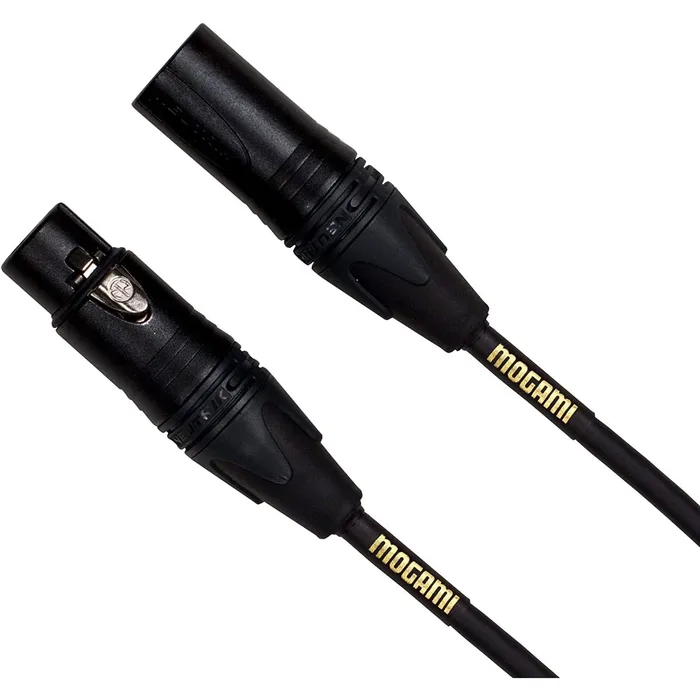
The Mogami Gold Studio is our overall pick: it is wired with Mogami's Neglex studio quad, it comes in nine lengths from very short to very long, and it carries a lifetime warranty, which for a cable that gets coiled and stepped on for a decade matters more than any sonic claim. The Hosa Pro Microphone Cable is the value pick and it is not a compromise on the parts that fail, because it uses REAN connectors made by Neutrik AG, 20 AWG oxygen-free copper conductors and a 90 percent braided shield. Belden 1192A star quad is the 'depends' pick: it is the best-documented cable here, with published capacitance, inductance and a 92 percent tinned copper braid, but it is sold as bulk cable, so you need a soldering iron and a bag of connectors. Star quad earns its keep near dimmers, motors and lighting rigs, and buys you close to nothing in a quiet spare bedroom. The VOVOX sonorus direct S is the skip: it is a premium, unshielded microphone cable whose own maker says its design is based 'mainly on material science and not electrical engineering' and that, electrically, its much-discussed directionality does not exist. If your room is quiet and your interface is decent, almost any well-built shielded balanced cable will already be inaudible, and the money is better spent elsewhere. Best for: anyone who wants a microphone cable chosen on published construction and repairability rather than on adjectives.
Our picks at a glance
- Mogami Gold Studio - Buy. A quad-wired studio cable with a lifetime warranty and nine length options, from a maker that publishes real engineering data.
- Hosa Pro Microphone Cable (HMIC) - Buy. REAN connectors made by Neutrik AG, 20 AWG oxygen-free copper and a 90 percent braid, at a price that lets you buy eight of them.
- Belden 1192A Star Quad Microphone Cable - It depends. The best-documented cable here by a distance, sold as bulk, so it is a great answer only if you own a soldering iron.
- VOVOX sonorus direct S - Skip. A premium unshielded microphone cable sold on material-science language, from a maker that openly admits the directionality it markets has no electrical basis.
The verdict in 30 seconds
What mattered most
- Cable geometry
- Conductor gauge and stranding
- Shield type and coverage
- Capacitance published
- Connector brand
- Jacket and diameter
XLR is the one corner of audio where the engineering is genuinely settled and the marketing is genuinely not. A balanced pair inside a shield, wired to a differential input, rejects interference for reasons you can write down and measure, and every serious cable maker publishes numbers for it. The same category also sells directional arrows, exotic copper and burn-in periods that nobody has published a measurement for. We picked four cables that sit at different points on that line, and we checked every spec against the manufacturer's own sheet.
A quad-wired studio cable with a lifetime warranty and nine length options, from a maker that publishes real engineering data.
Best for: Someone buying a cable once, for a studio they intend to keep, who wants the quad geometry and a warranty that outlasts the gear.
- Wired with Mogami's Neglex studio quad, a four-conductor construction built specifically to cancel magnetically coupled hum.
- Nine length options from two feet to one hundred feet, so you can buy the length you need instead of coiling slack behind the desk.
- Lifetime warranty, which is the honest answer to the fact that cables die at the connector, not in the middle.
- Mogami does not name the connector brand on the product page, only 'black body 3-pin XLR connectors and gold contacts'.
- Conductor gauge, shield coverage and capacitance are not published for the finished assembly, only for Mogami's bulk Neglex quad range.
- Quad construction carries more capacitance than a twisted pair, and Mogami itself recommends its two-conductor cable when high frequencies and long runs matter most.
- Premium outlay for a difference you are unlikely to hear in a room with no dimmers or motors in it.
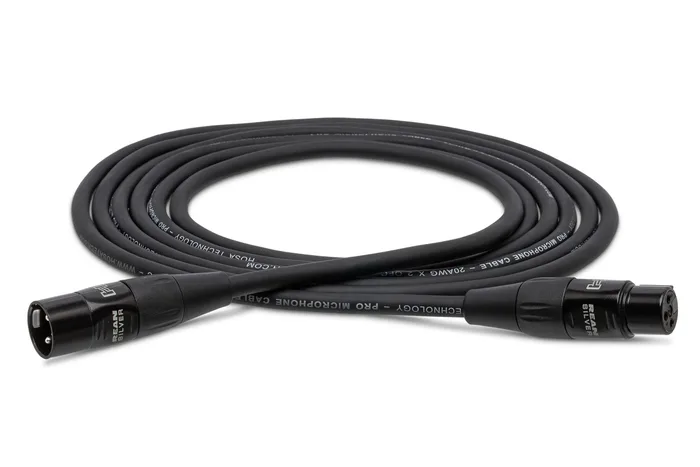
REAN connectors made by Neutrik AG, 20 AWG oxygen-free copper and a 90 percent braid, at a price that lets you buy eight of them.
Best for: Anyone kitting out a home studio, podcast setup or rehearsal room who wants a serviceable, properly specified cable and needs several of them.
- Hosa names the connector brand: REAN by Neutrik AG, with silver-plated contacts, so the part that fails first is a known quantity.
- Published construction you can check: 20 AWG oxygen-free copper conductors and a 90 percent oxygen-free copper braided shield.
- Lifetime warranty across Hosa's cables and adapters, and nine lengths from three feet to one hundred feet.
- Two-conductor twisted pair, not star quad, so it has less magnetic hum rejection near dimmers and lighting rigs.
- Hosa does not publish capacitance per foot, jacket material or overall diameter for this cable.
- A 90 percent braid is good but not the highest coverage in this comparison.
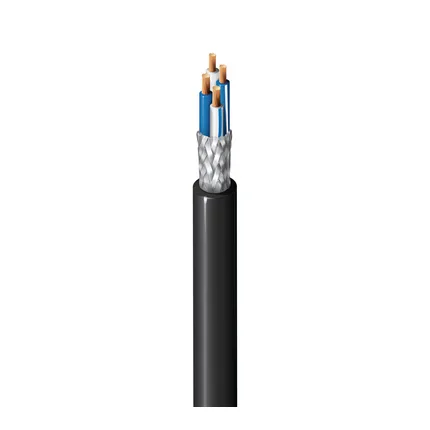
The best-documented cable here by a distance, sold as bulk, so it is a great answer only if you own a soldering iron.
Best for: Someone wiring a studio, a stage or a broadcast rack who needs non-standard lengths, wants documented specs, and is comfortable terminating cable.
- Fully published construction: four 24 AWG (42 x 40) bare copper conductors, polyethylene insulation, 92 percent tinned copper braid over a paper tape, PVC jacket at 6.22 mm nominal diameter.
- Published electrical data including 39.2 pF/ft (129 pF/m) conductor-to-conductor capacitance, 0.21 uH/ft inductance and 26.6 ohm per 1000 ft conductor resistance.
- Belden lists its intended application as microphone and low-noise use in high-EMI environments, which is exactly where star quad pays for itself.
- It is bulk cable. You buy connectors separately and solder both ends yourself, or pay a shop to do it.
- Star quad's benefit is against magnetically coupled hum from nearby high-current gear, so in a quiet room there is little for it to cancel.
- Its published conductor-to-conductor capacitance is higher than Mogami's figure for quad-connected Neglex, which matters on very long runs.
- No warranty terms are published for bulk cable the way they are for finished assemblies.
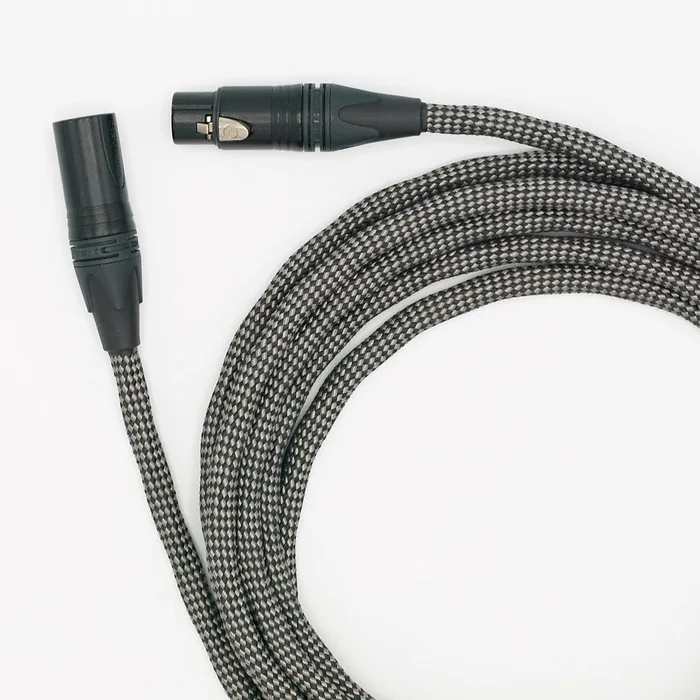
A premium unshielded microphone cable sold on material-science language, from a maker that openly admits the directionality it markets has no electrical basis.
Best for: Only a listener who has already decided they want this specific philosophy, in a permanently quiet mastering or hi-fi setting, and is buying on preference rather than on data.
- Genuinely good hardware where it counts: Neutrik XLR connectors with gold-plated contacts.
- VOVOX is unusually candid, stating plainly that from an electrical engineering point of view there is no difference between the running directions.
- Three-year guarantee, and VOVOX says defective cables are normally repaired rather than replaced.
- It has no shield. VOVOX's own page says the cable is not shielded and that this brings 'a certain risk of interference', and recommends the shielded version for live use.
- The core claims are adjectives, not measurements: 'refined crystal structure', 'copper of the highest purity class', 'higher resolution'. We found no published measurement supporting any of them.
- VOVOX states that its design and production are 'based mainly on material science and not electrical engineering', and publishes no capacitance, gauge, shield or noise figures.
- It costs premium money and VOVOX's own product page rates its noise resistance below its sound rating.
| Criteria | Gold Studio Top pick | Pro Microphone Cable (HMIC) | 1192A Star Quad Microphone Cable | sonorus direct S |
|---|---|---|---|---|
| Verdict | Buy it | Buy it | It depends | Skip it |
| Best for | Someone buying a cable once, for a studio they intend to keep, who wants the quad geometry and a warranty that outlasts the gear. | Anyone kitting out a home studio, podcast setup or rehearsal room who wants a serviceable, properly specified cable and needs several of them. | Someone wiring a studio, a stage or a broadcast rack who needs non-standard lengths, wants documented specs, and is comfortable terminating cable. | Only a listener who has already decided they want this specific philosophy, in a permanently quiet mastering or hi-fi setting, and is buying on preference rather than on data. |
| Price tier | $$$ · premium | $ · budget | $$ · mid-range | $$$ · premium |
| Cable geometry | Star quad, 4 conductor (Neglex studio quad) | Twisted pair, 2 conductor | Star quad, 4 conductor | Solid core signal pair plus separate ground conductor |
| Conductor gauge and stranding | Not published for the finished assembly | 20 AWG oxygen-free copper, stranding not published | 24 AWG, 42 x 40 bare copper | Not published |
| Shield type and coverage | Not published for the finished assembly | 90% oxygen-free copper braid | 92% tinned copper braid over paper tape | None, unshielded by design |
| Capacitance published | No | No | Yes, 39.2 pF/ft (129 pF/m) conductor to conductor | No |
| Connector brand | Not named, described as black body 3-pin XLR with gold contacts | REAN by Neutrik AG, silver-plated contacts | You supply them; 6.22 mm jacket sits inside Neutrik NC3 range | Neutrik XLR with gold-plated contacts |
| Jacket and diameter | Not published for the finished assembly | Not published | PVC, 6.22 mm nominal | Not published |
| Length options | 2, 3, 6, 10, 15, 25, 50, 75, 100 ft | 3, 5, 10, 15, 20, 25, 30, 50, 100 ft | Bulk, cut to any length | 1.0, 2.0, 3.5, 5.0, 7.5, 10.0 m |
| Warranty | Lifetime | Lifetime | Not published for bulk cable | Three years, repair first |
Which one is right for you?
- Someone buying a cable once, for a studio they intend to keep, who wants the quad geometry and a warranty that outlasts the gear. Buy it Mogami Gold Studio
- Anyone kitting out a home studio, podcast setup or rehearsal room who wants a serviceable, properly specified cable and needs several of them. Buy it Hosa Pro Microphone Cable (HMIC)
- Someone wiring a studio, a stage or a broadcast rack who needs non-standard lengths, wants documented specs, and is comfortable terminating cable. It depends Belden 1192A Star Quad Microphone Cable
- Only a listener who has already decided they want this specific philosophy, in a permanently quiet mastering or hi-fi setting, and is buying on preference rather than on data. Skip it VOVOX sonorus direct S
How we judged the field
Five things decide whether a microphone cable is any good, and none of them are subjective. First, the balanced geometry: two signal conductors carrying the same audio in opposite polarity inside a shield, so that interference coupling into the pair arrives as a common-mode voltage the receiving input can subtract away. Second, the shield: what it is made of, and what percentage of the cable it covers, because a low-coverage shield leaks radio frequency interference. Third, capacitance per unit length, which sets how much top end you lose over a long run. Fourth, the connector, because that is where cables actually die, and specifically whether the connector is a named part with a real strain relief and whether the cable can be opened and resoldered. Fifth, honesty: does the maker publish numbers, or does it publish adjectives?
The field splits cleanly along that last line. On one side are companies that put full construction and electrical data in public: Belden publishes conductor stranding, shield coverage, capacitance, inductance and bend radius for 1192A; Mogami publishes capacitance, inductance, flex life and tensile strength for its Neglex quad range; Neutrik publishes contact resistance and mating cycles; Hosa at least names its connector brand, its conductor gauge and its shield coverage. On the other side are cables sold on metallurgy, directionality and burn-in, where no measurement is offered at all. We picked one premium finished cable, one budget finished cable, one bulk cable for people who terminate their own, and one well-distributed boutique cable that lets us show what an unmeasured claim looks like in the maker’s own words.
Mogami Gold Studio
Buy itThe Mogami Gold Studio is the default answer for a reason, and the reason is not mysticism. Mogami wires it with Neglex studio quad, a four-conductor construction where opposite pairs are joined so that magnetic interference induces the same voltage in both signal legs and the preamp’s differential input cancels it. Mogami’s own technical catalogue explains why the geometry works and puts the expected improvement over a twisted pair at more than 26 dB against electromagnetic coupling. The finished cable comes in nine lengths from two feet to one hundred, is terminated with black-body three-pin XLRs with gold contacts, and carries a lifetime warranty. The frustration is that Mogami publishes rich data for its bulk cable and very little for this assembly: no gauge, no shield coverage, no capacitance, and it does not name the connector maker. Buy it for the geometry, the length range and the warranty, and accept that you are trusting the brand for the rest. It suits the person building a studio they mean to keep.
Hosa Pro Microphone Cable (HMIC)
Buy itThe Hosa Pro Microphone Cable is the one we would actually buy eight of. Hosa does the thing most budget brands avoid: it names the parts. The connectors are REAN, made by Neutrik AG, with silver-plated contacts. The conductors are 20 AWG oxygen-free copper, a heavier gauge than the 24 AWG used in both star quad cables here. The shield is a 90 percent oxygen-free copper braid, and braid is the construction that survives repeated coiling without opening gaps. It is a twisted pair rather than star quad, so it has less magnetic hum rejection near a lighting rig, and Hosa does not publish capacitance, jacket material or diameter. It also carries a lifetime warranty and runs from three feet to one hundred. In a quiet room, into a competent interface, this will be electrically silent, and the money you did not spend buys a better microphone stand. It is the right pick for a home studio, a podcast rig or a rehearsal room.
Belden 1192A Star Quad Microphone Cable
It dependsBelden 1192A is what a spec sheet should look like. Four 24 AWG conductors of 42 x 40 stranded bare copper, polyethylene insulation at 0.41 mm nominal thickness, a 92 percent tinned copper braid over a paper tape, and a PVC jacket at 6.22 mm nominal diameter. Belden publishes 39.2 pF/ft (129 pF/m) conductor-to-conductor capacitance, 0.21 uH/ft inductance, 26.6 ohm per 1000 ft conductor resistance and a 2.5 in minimum bend radius, and states the intended application as microphone and low-noise use in high-EMI environments. It even prints the quad connection scheme on the datasheet. The catch is that it is bulk cable. You buy connectors separately and solder both ends, though the 6.22 mm jacket sits comfortably inside the 3.5 to 8.0 mm range Neutrik specifies for its NC3 shells. If you want custom lengths, documented specs and cables you can repair forever, this is the answer. If you want to plug in tonight, it is not.
VOVOX sonorus direct S
Skip itThe VOVOX sonorus direct S is a real product from a real Swiss manufacturer, it uses genuine Neutrik XLRs with gold-plated contacts, and VOVOX is more candid than most of its peers. It is still the one to skip. It has no shield at all, which VOVOX states openly along with the admission that this brings ‘a certain risk of interference’, and it recommends the shielded version for live use. The reasons to pay premium money for it are entirely qualitative: solid core conductors, ‘copper of the highest purity class’, ‘refined crystal structure’, a natural fibre coating, and a claimed ‘higher resolution’. No capacitance, gauge, shield or noise figure is published. VOVOX’s own FAQ says the design is ‘based mainly on material science and not electrical engineering’, and, on the directionality it marks on every cable, that ‘from a purely electrical engineering point of view, there is no difference between the running directions’. That is a maker telling you the marketing is not measurable. Believe it.
Sources
Specs in this review come from these pages.
- Mogami Technical Catalogue (Neglex quad specifications and star-quad cancellation theory) (mogamicable.com)
- Belden Online Catalog, 1192A Microphone Cable, Star Quad (catalog.belden.com)
- Neutrik NC3MXX XLR cable connector, technical information (neutrik.com)
- Jensen Transformers Application Note AN-003, interfacing balanced and unbalanced lines (CMRR figures) (jensen-transformers.com)
- Rane Note 110, Sound System Interconnection (balanced lines and AES48 shield practice) (ranecommercial.com)
- Hosa Pro Microphone Cable, REAN XLR3F to XLR3M product specifications (hosatech.com)
Mogami Gold Studio vs Hosa Pro Microphone Cable (HMIC): which should you buy?
The choice between the Mogami Gold Studio and the Hosa Pro is mostly a choice about where your noise is coming from. If your microphone cable runs anywhere near lighting dimmers, a power distro, a large transformer or a motor, the four-conductor Neglex quad geometry inside the Mogami is doing real, quantifiable work: the two signal legs share nearly the same position in space, so a magnetic field induces the same voltage in both and the preamp cancels it. Mogami puts the expected improvement over a twisted pair at more than 26 dB. If your cable runs across a carpet in a spare room, that 26 dB is cancelling a hum that was never there, and the Hosa’s twisted pair with a 90 percent braid will measure and sound exactly as quiet.
The second axis is what you are paying for beyond the cable. The Mogami buys you a wider length range starting at two feet, gold contacts and a lifetime warranty on a premium-priced item. The Hosa buys you a named connector from Neutrik’s own value brand, a heavier 20 AWG conductor and the same lifetime warranty for a small fraction of the outlay. Our rule of thumb: buy the Hosa for the everyday cables in a quiet room, and buy the Mogami for the two or three runs that live in a difficult spot or that you want to still be using in fifteen years. Buying eight premium cables to sit in a quiet bedroom is the most common way people overspend in this category.
What to look for
- A named connector brand: Neutrik is the reference part and its NC3MXX sheet publishes contact resistance of 3 milliohms or less and more than 1000 mating cycles, so ‘Neutrik’ or ‘REAN by Neutrik’ on a listing is a checkable fact rather than a mood.
- Ends that unscrew: a soldered connector can be opened and repaired when the joint eventually cracks, and a moulded end cannot, which matters far more over a decade than any difference in copper.
- A published shield coverage number: Hosa states 90 percent oxygen-free copper braid and Belden states 92 percent tinned copper braid over a paper tape, and a maker that will not give you a number is telling you something.
- Star quad only where it pays: the four-conductor geometry buys you magnetic hum rejection near dimmers, motors and distros, and near enough nothing in a quiet room, so do not pay a premium for it by reflex.
- Capacitance per foot if you run long: Belden publishes 39.2 pF/ft for 1192A, and Mogami openly recommends its two-conductor cable over its quad cables when high frequencies and long runs matter, because quad geometry raises capacitance.
- Numbers over adjectives: ‘refined crystal structure’ and ‘higher resolution’ are not specifications, and when a maker has real data it publishes it, as Belden, Mogami and Neutrik all do.
Our final take
Buy the Mogami Gold Studio if you want one cable that will still be working when your interface is two generations obsolete, and buy the Hosa Pro for everything else in a quiet room, because a named Neutrik-family connector and a 90 percent braid is genuinely most of the engineering. Take the Belden 1192A route only if you solder, in which case it is the best-documented cable on this page and you will never buy a wrong length again. Skip the VOVOX: it removes the shield, charges a premium, and sells the difference on language its own FAQ concedes has no electrical basis. The physics of a balanced line is settled and cheap. Pay for the parts that break.
Questions, answered
Does a more expensive XLR cable actually sound better?
For a normal studio or stage run, the honest answer is that a well-built shielded balanced cable is already transparent, and the differences between good cables are not what most marketing implies. What a cable can genuinely change is noise pickup and high-frequency loss on long runs, and both of those are governed by published numbers: shield type and coverage, capacitance per foot, and how well the two signal legs are matched. Belden publishes 39.2 pF/ft conductor-to-conductor for its 1192A star quad, and Mogami publishes capacitance, inductance and resistance for its Neglex quad range, so you can compare like for like. Where you cannot compare is when a maker publishes only adjectives. Spend the extra money on construction and a repairable connector, not on a description of copper crystal structure.
What is star quad, and do I need it at home?
Star quad uses four conductors instead of two, with the diagonally opposite pairs joined together at each end so each pair acts as one signal leg. Belden spells the scheme out on its 1192A sheet: the two wires directly opposite one another are connected together to form one conductor, and the remaining two form the second. Because the two legs now occupy nearly the same average position in space, a magnetic field from a nearby dimmer or motor induces almost identical voltage in both, and the differential input cancels it. Mogami's technical catalogue puts the expected improvement in cancelling electromagnetic coupling at over 26 dB compared with a twisted pair. That is a big number, and it is a big number specifically in high-EMI places, which is why Belden lists 1192A for low-noise use in high-EMI environments. In a quiet spare bedroom with no lighting rig, there is very little for it to cancel.
Do XLR cables have a direction, and does burn-in do anything?
We looked for a published measurement supporting either idea and did not find one. The most interesting source here is VOVOX, a boutique maker that actually marks direction on its cables. Its own FAQ says that direction-related differences are 'often perceived' but adds, plainly, 'We cannot offer a definitive explanation for this phenomenon,' and then, 'From a purely electrical engineering point of view, there is no difference between the running directions. The cables work perfectly in both directions.' On burn-in, none of the makers here publish a before-and-after measurement of any kind. Contrast that with what the same industry does publish when it has real data: Neutrik specifies contact resistance at 3 milliohms or less and more than 1000 mating cycles for its NC3MXX. When a claim can be measured, this industry measures it.
My cable crackles when I wiggle it near the plug. What failed?
Almost certainly the solder joint or the strain relief at the connector, not the wire in the middle. This is the single most common way a microphone cable dies, and it is why connector design matters more than conductor metallurgy. Neutrik's NC3MXX addresses it directly with a chuck-type strain relief for higher pull-out force and a boot with a polyurethane gland that Neutrik says gives high protection against cable bending stresses. The important practical point is that a connector like that is assembled with solder contacts, which means it can be opened, resoldered and put back into service. A moulded cable cannot. If you are buying a cable you expect to coil and step on for ten years, buy one whose ends unscrew.
How long can an XLR run be before it starts to matter?
Longer than most people need, which is the whole point of balanced wiring. The limiting factors are cumulative capacitance, which rolls off the top end, and total resistance. Belden publishes 39.2 pF/ft for 1192A, so a 50 foot run is roughly 2000 pF between conductors, which is inconsequential at microphone impedances into a modern preamp. Mogami is more useful here than most because it says the quiet part out loud: it recommends its two-conductor cable rather than its quad cables when high frequencies matter and long runs are needed, precisely because quad geometry raises capacitance. So for very long runs, a good twisted pair with a high-coverage braid can be the better engineering choice, and star quad is the better choice when the run passes close to dimmers, motors or power distribution.
Deciding between the top two? See our head-to-head: Mogami Gold Studio vs Hosa Pro Microphone Cable (HMIC).
More Audio reviews
 The Best XLR Microphones: 4 Compared (and One to Skip)
  The Best Speaker Stands: 4 Compared (and One to Skip)
  The Best Acoustic Guitars for Beginners: 4 Compared (and One to Skip)
  The Best Acoustic Panels: 4 Compared (and One to Skip)
  The Best USB Audio Interfaces for Home Recording: 4 Compared (and One to Skip)
  The Best Small Audio Mixers for Podcasting: 4 Compared (and One to Skip)