

Tech & Gadgets
The Power Banks Worth Buying (and the 'Mega-mAh' One to Skip)
We compared three good mid-range portable chargers against the cheap high-capacity trap that fools thousands of buyers.
The short version
The Anker Nano Power Bank (30W, 10K, Built-In USB-C Cable) is our pick because its attached USB-C cable removes the one thing that strands you, a forgotten cord, while 30W refills most phones to about half in half an hour. The UGREEN Nexode 145W 25000mAh wins if you charge a laptop, delivering 140W from a single port. Skip no-name 30,000mAh+ packs: their capacity claims rarely survive testing and many omit basic safety protection. Best for phone-first travelers who want capacity, speed, and one less cable to lose.
Our picks at a glance
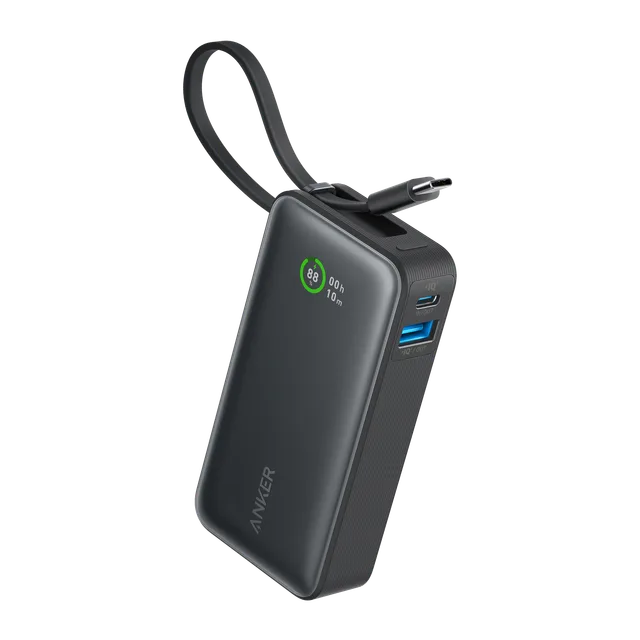
- Anker Nano Power Bank (30W, 10K, Built-In USB-C Cable) - Buy. The best everyday carry: a pocketable 10,000mAh pack with its own cable and a screen that never lies to you.
- Anker MagGo Power Bank (10K, Qi2) - It depends. A cable-free MagSafe pack that's excellent for iPhones and pointless for everyone else.
- UGREEN Nexode 145W 25000mAh 3-Port Power Bank - Buy. A do-everything travel brick that fast-charges a laptop and two phones at once.
- Generic / unbranded No-name 'high-capacity' Amazon power bank (30,000mAh+ for a bargain price) - Skip. The giant number is fiction: testing shows many deliver a fraction of the claim, with real fire risk.
The verdict in 30 seconds
What mattered most
- Rated capacity
- Capacity transparency
- Max output
- Ports & cable
- Safety and standards info
- Price tier
A power bank's advertised mAh is the most misleading number in consumer tech, so we leaned on hands-on testing instead of spec sheets. The consensus: buy a certified pack from Anker, UGREEN, Belkin or similar and match the capacity to how you actually charge. Below are three we'd hand a friend, plus the popular 'huge capacity, tiny price' listing you should walk past.
The best everyday carry: a pocketable 10,000mAh pack with its own cable and a screen that never lies to you.
Best for: Most people who just want to top up one phone through a long day without carrying a cable.
- Built-in USB-C cable, plus a second USB-C port and a USB-A port, so you never dig for a cord
- Color display shows battery percentage at a glance
- Refills itself to 50% in about 45 minutes and is pocket-sized
- 10,000mAh is roughly 1.5-2 phone charges, not a multi-day pack
- The secondary USB-A port tops out slower at 22.5W
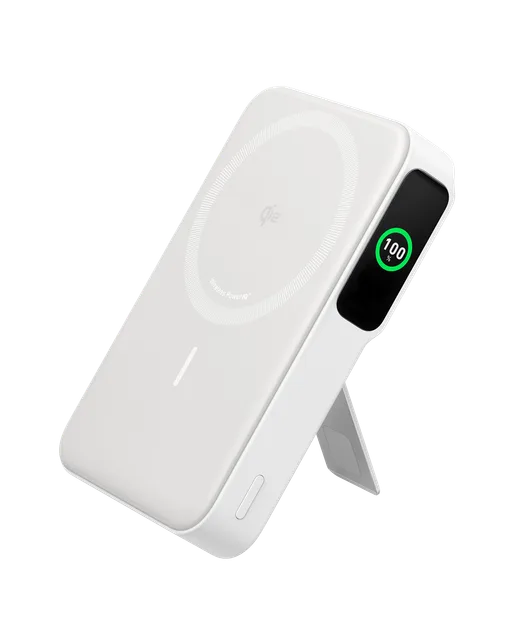
A cable-free MagSafe pack that's excellent for iPhones and pointless for everyone else.
Best for: IPhone owners who want to prop up and top up their phone wirelessly with zero cables.
- Qi2-certified 15W magnetic charging is noticeably faster than older MagSafe banks
- Snaps to the back of an iPhone with no cable, and the kickstand props it up
- Smart display shows charge level at a glance
- The magnetic/Qi2 benefit only applies to iPhone 12 and later
- Wireless charging is less efficient than wired, and it costs more than plain 10K packs
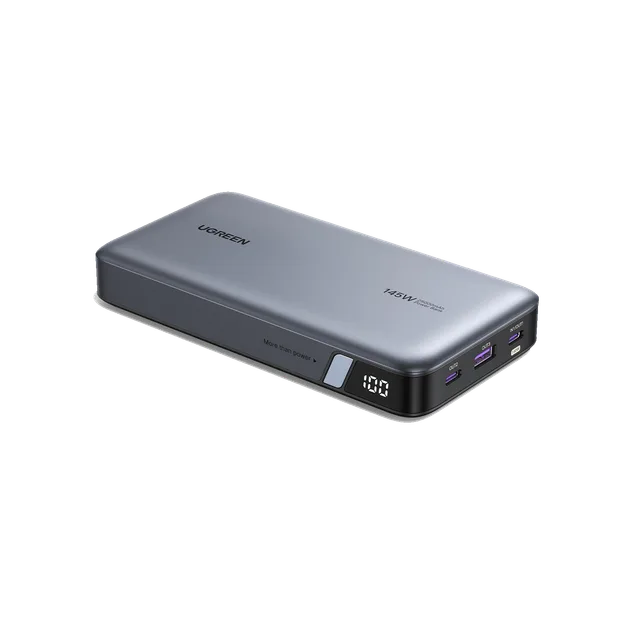
A do-everything travel brick that fast-charges a laptop and two phones at once.
Best for: Travelers and remote workers who need to refuel a laptop plus phones away from an outlet.
- 25,000mAh with 145W output can meaningfully charge a MacBook Air, not just phones
- Three ports (dual USB-C + USB-A) power a laptop and phones at once
- UGREEN labels it airline-friendly (25,000mAh works out to roughly 90Wh, under the 100Wh carry-on cap), and a TFT display shows remaining charge, voltage and current
- Heavy and bulky compared to a 10K pocket pack
- No built-in cable, and it's overkill if you only ever charge a phone
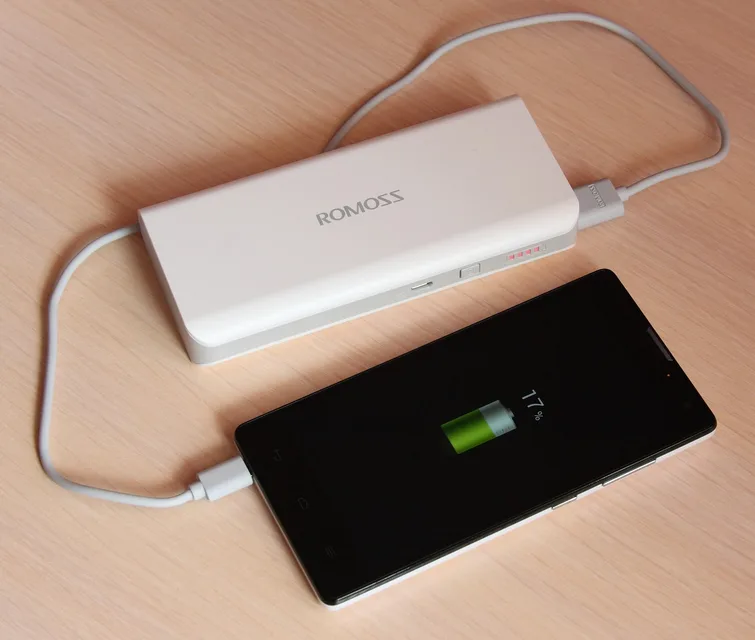
The giant number is fiction: testing shows many deliver a fraction of the claim, with real fire risk.
Best for: Nobody. The capacity math doesn't add up, and the safety risk isn't worth the small saving.
- Cheap and advertises an eye-catching capacity number
- Independent tests repeatedly find cheap packs delivering a fraction of their rated capacity
- No UL/ETL/TUV safety certification, and light, hollow builds point to inflated or unsafe cells
- Rarely lists watt-hours (Wh), the one spec that would expose the exaggeration
| Criteria | Nano Power Bank (30W, 10K, Built-In USB-C Cable) Top pick | MagGo Power Bank (10K, Qi2) | Nexode 145W 25000mAh 3-Port Power Bank | No-name 'high-capacity' Amazon power bank (30,000mAh+ for a bargain price) |
|---|---|---|---|---|
| Verdict | Buy it | It depends | Buy it | Skip it |
| Best for | Most people who just want to top up one phone through a long day without carrying a cable. | IPhone owners who want to prop up and top up their phone wirelessly with zero cables. | Travelers and remote workers who need to refuel a laptop plus phones away from an outlet. | Nobody. The capacity math doesn't add up, and the safety risk isn't worth the small saving. |
| Price tier | $$ · mid-range | $$ · mid-range | $$ · mid-range | $ · budget |
| Rated capacity | 10,000mAh | 10,000mAh | 25,000mAh | '30,000mAh+' (claim only) |
| Capacity transparency | Named brand; 10,000mAh works out to about 37Wh | 38.5Wh printed by Anker; wireless loses some | Labeled airline-friendly; about 90Wh by cell math | Often no Wh figure at all; claims rarely add up |
| Max output | 30W USB-C | 15W wireless / 27W USB-C | 145W across 3 ports | Unspecified / low |
| Ports & cable | Built-in USB-C cable + USB-C + USB-A | MagSafe/Qi2 wireless + USB-C | 2x USB-C + USB-A, no built-in cable | 1-2 USB, no data given |
| Safety and standards info | Named brand with published specs | Qi2 certified, Wh printed on the label | Named brand, 24-month warranty | None listed (fire risk) |
| Price tier | $$ · mid-range | $$ · mid-range | $$ · mid-range | $ · budget |
Which one is right for you?
- Most people who just want to top up one phone through a long day without carrying a cable. Buy it Anker Nano Power Bank (30W, 10K, Built-In USB-C Cable)
- Travelers and remote workers who need to refuel a laptop plus phones away from an outlet. Buy it UGREEN Nexode 145W 25000mAh 3-Port Power Bank
- IPhone owners who want to prop up and top up their phone wirelessly with zero cables. It depends Anker MagGo Power Bank (10K, Qi2)
- Nobody. The capacity math doesn't add up, and the safety risk isn't worth the small saving. Skip it Generic / unbranded No-name 'high-capacity' Amazon power bank (30,000mAh+ for a bargain price)
How we judged the field
We judged these on delivered capacity, charging speed for the devices people actually carry, port flexibility, weight, and safety certification. The biggest source of marketing noise is the mAh figure stamped on the case: it describes raw cell capacity at 3.7V, not the energy that survives conversion to your phone’s battery, so a ‘30,000mAh’ label can mislead badly. We do not run our own lab; instead we synthesize independent testing and owner reports across many units, then weight consistency over peak claims. Our pick is the Anker Nano Power Bank (30W, 10K, Built-In USB-C Cable) for everyday phone charging, with the UGREEN Nexode 145W 25000mAh as the runner-up for anyone who also charges a laptop.
Anker Nano Power Bank (30W, 10K, Built-In USB-C Cable)
Buy itThis is a 10,000mAh pocket pack whose defining trick is a USB-C cable built into the body, so the cord you always forget is permanently attached. A second USB-C port lets you charge another device or recharge the bank itself, a USB-A port adds a third output at up to 22.5W, and a small color display reports remaining percentage. Output tops out at 30W, enough, by Anker’s figure, to bring an iPhone 14 to 50% in about thirty minutes, and the bank itself refills to 50% in about 45 minutes. It weighs 7.6 ounces.
What owners liked more: the integrated cable removes a daily failure point, and 30W is fast enough that you are not tethered for long. The readout, while modest, takes the guesswork out of when to recharge.
What they liked less: the built-in cable is short and non-replaceable, so a frayed connector effectively ends the unit’s life; some owners call the display a gimmick they ignore in favor of their phone. At 10,000mAh it is a two-charge pack, not a multi-day one.
Right buyer: a phone-first commuter or traveler who wants speed and one less cable. Wrong buyer: anyone needing to power a laptop.
Anker MagGo Power Bank (10K, Qi2)
It dependsThe MagGo is the same 10,000mAh capacity (38.5Wh on Anker’s label) reimagined around Qi2 magnetic wireless charging. It snaps to the back of a MagSafe-compatible iPhone and delivers a true 15W, and a foldable kickstand props the phone in portrait or landscape while it charges. A smart display shows battery status and live output, and a USB-C port adds up to 27W wired charging when you want speed.
What owners liked more: 15W Qi2 matches Apple’s own MagSafe pace, and over the 27W USB-C port Anker quotes an iPhone 15 reaching 60% in 30 minutes; the magnets hold securely enough to use the phone one-handed while charging. The kickstand makes it a passable video stand.
What they liked less: wireless transfer is lossy and runs warm, so the effective capacity you get is lower than the same cells over a cable, and it is heavier than a slim pack. Anker lists it as not compatible with Android devices, since it depends on magnetic alignment, so non-iPhone owners see little benefit.
It depends: worthwhile for iPhone owners who value cable-free convenience; skip it if you carry Android or prioritize maximum delivered energy per gram.
UGREEN Nexode 145W 25000mAh 3-Port Power Bank
Buy itThis is the heavyweight of the group: 25,000mAh with 145W of total output across two USB-C ports and one USB-A. A single USB-C port pushes up to 140W, enough, by UGREEN’s figure, to charge a 16-inch MacBook Pro to full in about 90 minutes; with both USB-C ports in use the output splits 100W and 45W. A TFT display reports remaining charge, voltage and current, UGREEN includes a 100W USB-C cable, and the pack recharges from empty in about two hours with a 65W charger. It carries a 24-month warranty.
What owners liked more: the single-port 140W charges laptops at wall-charger pace, and the live voltage and current readout is a practical way to confirm a device is fast-charging rather than trickling. Capacity is deep enough for a full day of phone, tablet, and laptop top-ups.
What they liked less: it is a brick, noticeably heavier and bulkier than a phone pack, and at roughly 90 watt-hours by cell math (UGREEN labels it airline-friendly but prints no Wh figure on its product page) it sits just under the 100Wh airline carry-on limit, so it must travel in your cabin bag. For phone-only users the extra size and weight buy nothing.
Right buyer: anyone charging a USB-C laptop away from outlets. Wrong buyer: a phone-and-earbuds carrier who values pocketability.
No-name ‘high-capacity’ Amazon power banks (30,000mAh+)
Skip itThese are the packs that dominate marketplace search by shouting the biggest number: 30,000mAh, 50,000mAh, often for the price of a lunch. Treated fairly, the appeal is obvious, huge headline capacity and a low sticker.
The problem is that the numbers rarely survive scrutiny. Independent testing repeatedly finds these units delivering a fraction of their labeled capacity, because the figure describes theoretical cell energy, or is simply fabricated. More seriously, many lack the temperature and over-current protection that reputable packs build in, and some ship with unprotected or reclaimed cells that can swell or overheat.
What there is to like: nothing durable, the low cost is the entire pitch, and even that erodes once you account for slow real-world output and short lifespan.
What to dislike: unverifiable capacity, missing safety certification, and misleading claims around the watt-hour rating that matters for air travel.
Right buyer: no one who values their data, devices, or a fire-free bag. Buy a known brand with published certification instead; the modest premium buys capacity you can actually count on.
Sources
Specs in this review come from these pages.
- Anker - Nano Power Bank (30W, Built-In USB-C Cable) A1259 product page (ports, 22.5W USB-A, 50% in 45 minutes, 7.58 oz) (anker.com)
- Anker - MagGo Power Bank (10K) A1654 product page (38.5Wh, 15W Qi2, 27W USB-C, iPhone 12 to 15 compatibility) (anker.com)
- UGREEN - 145W 25000mAh 3-Port Power Bank 90597A product page (140W single port, 100W + 45W split, TFT display, airline-friendly, 24-month warranty) (ugreen.com)
- FAA PackSafe - Lithium batteries (100Wh limit per battery, 101 to 160Wh with airline approval, spares in carry-on only) (faa.gov)
Anker Nano vs UGREEN Nexode: which should you buy?
The decision comes down to what you charge. The Anker Nano is a phone-first tool: pocketable, with an attached cable and 30W that refills a handset quickly, but its 10,000mAh runs dry after about two phone charges and it cannot meaningfully power a laptop. The UGREEN Nexode inverts every trade-off, 25,000mAh and 140W turn it into a genuine laptop charger, at the cost of real bulk and weight you feel in a bag all day.
If your carry is a phone, earbuds, and maybe a tablet, the Anker Nano is the one you will actually keep with you, and portability is what makes a power bank useful. If a USB-C laptop is part of your daily kit and you are regularly away from outlets, the Nexode’s capacity and output justify the size. Most people should start with the Anker Nano and add the Nexode only when a laptop enters the equation.
What to look for
Start with the devices, not the capacity number. List what you charge and how far each is from an outlet during a normal day; that tells you both the capacity and the output you need. For phones, 20 to 30W is plenty and anything higher is wasted, because handsets cap their own intake. For a USB-C laptop, look for a single port rated near 100W or more, since splitting output across ports lowers per-device speed.
Read watt-hours (Wh), not just mAh, especially for travel: airlines cap lithium packs at 100Wh for carry-on, and a Wh figure lets you compare packs on a common scale regardless of cell voltage. Favor units that publish safety certification and clear output specs; vague listings that lead with a giant mAh number and little else are a warning sign.
Finally, weigh portability realistically. The most capable pack is useless if it is too heavy to carry, and a pack you leave at home has zero capacity. Match size to habit: a slim pack for daily carry, a brick only when a laptop demands it.
Our final take
For most people, the Anker Nano Power Bank (30W, 10K, Built-In USB-C Cable) is the pack to buy: it is pocketable, fast enough for any phone, and its attached cable removes the most common reason a power bank fails you. Move up to the UGREEN Nexode 145W 25000mAh only when a laptop joins your daily carry and you need real output and capacity. Whatever you choose, avoid no-name mega-mAh packs, the capacity you are promised is not the capacity you get, and the missing safety protection is not worth the savings.
Questions, answered
Is a 10,000mAh power bank enough?
For most phones, yes. A 10,000mAh pack delivers roughly two full smartphone charges, enough for a travel day. If you also top up a tablet, earbuds, and a laptop, step up to the UGREEN Nexode's 25,000mAh so you are not rationing power across devices.
Can I take these power banks on a plane?
Generally yes. The FAA caps spare lithium-ion batteries at 100 watt-hours without airline approval, and spares must ride in carry-on, never checked luggage. Anker prints 38.5Wh on the MagGo and the Nano's 10,000mAh works out to about 37Wh; UGREEN calls the Nexode airline-friendly, and its 25,000mAh works out to roughly 90Wh, under the limit but close.
Why not just buy a cheap 30,000mAh power bank?
Because the numbers usually do not hold up. Independent testing repeatedly shows no-name 30,000mAh packs delivering a fraction of their label, and many skip temperature and over-current protection. You pay less for a heavier brick that charges slower and carries real safety risk.
Do I need the 145W model to charge a phone?
No. 145W is meant for laptops; a phone caps around 30W regardless. If you only charge phones, earbuds, and a tablet, the Anker Nano is lighter and cheaper. Choose the UGREEN Nexode only if a MacBook or USB-C laptop shares the pack.
Deciding between the top two? See our head-to-head: Anker Nano Power Bank (30W, 10K, Built-In USB-C Cable) vs UGREEN Nexode 145W 25000mAh 3-Port Power Bank.
More Tech & Gadgets reviews
 The Best Portable Power Stations: 4 Compared (and One to Skip)
  The Best Portable Projectors: 4 Compared (and One to Skip)
  The Best Portable SSDs: Fast, Rugged, and Which One to Skip
  The Best PC Power Supplies: 4 Compared (and One to Skip)
  The Best Prebuilt Gaming PCs: 4 Compared (and One to Skip)
  The Best RC Cars for Gifts: 4 Compared (and One to Skip)